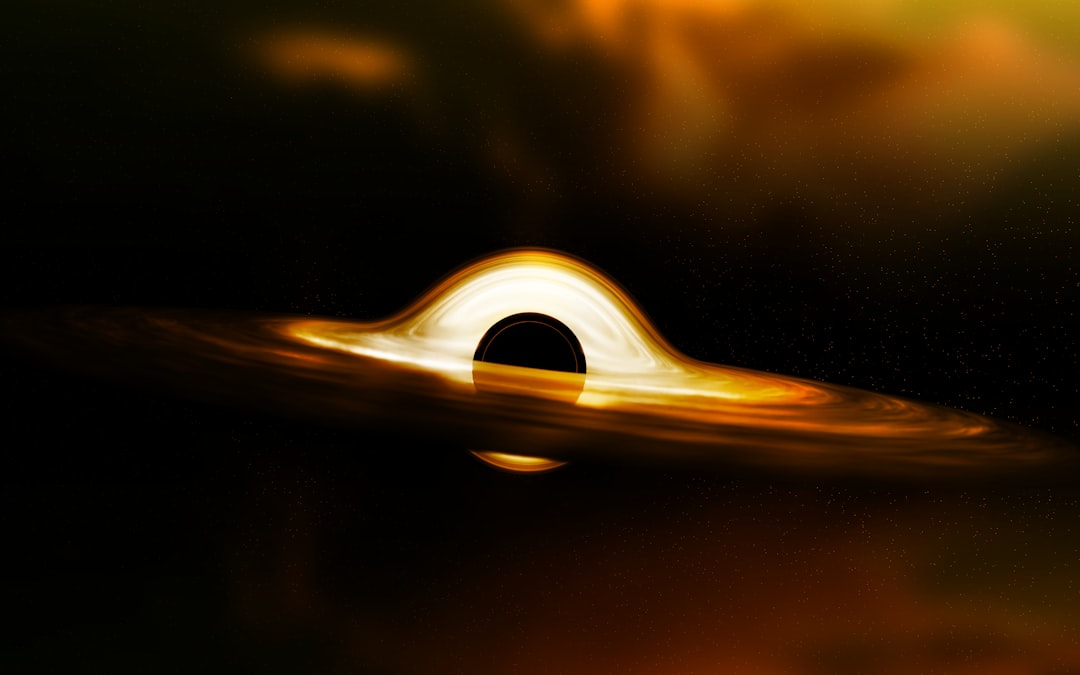
When a massive star ventures too close to a supermassive black hole, the result can be one of the most spectacular light shows in the universe. These catastrophic encounters, known as tidal disruption events (TDEs), transform the gravitational death of a star into a brilliant beacon that can outshine entire galaxies. Recent groundbreaking research from Syracuse University and the University of Zurich has unveiled the intricate physics behind these cosmic fireworks, using sophisticated computer simulations to explain why each stellar destruction event produces its own unique signature of light.
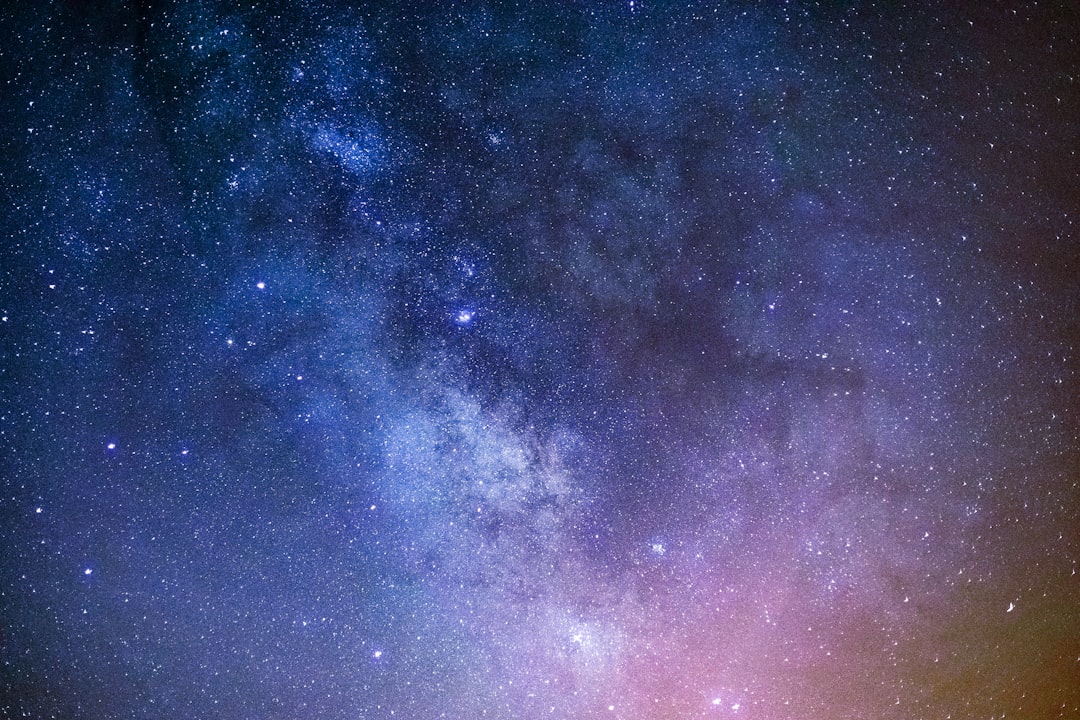
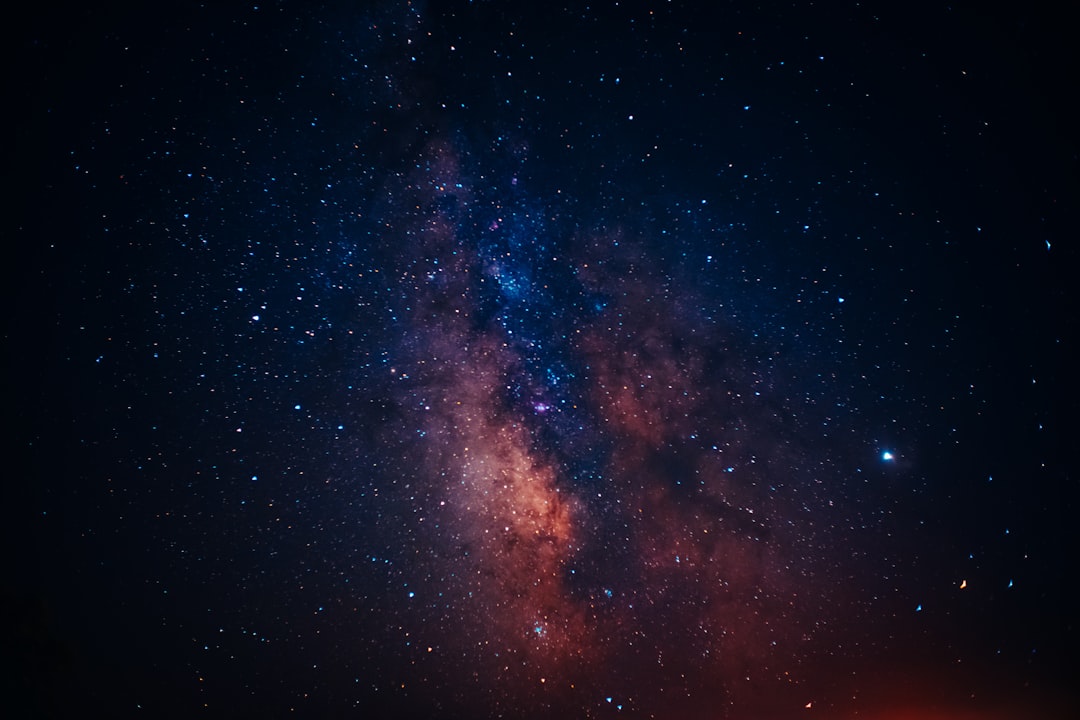
The story begins with a near-miss that occurred in 2014, when astronomers worldwide held their breath as a mysterious object designated G2 made a close pass by Sagittarius A* (Sag A*), the supermassive black hole lurking at the center of our Milky Way Galaxy. The astronomical community anticipated a spectacular show—perhaps witnessing the object's violent disintegration in real-time. Instead, the cosmic encounter proved anticlimactic. G2 survived its close approach, emerging intact though on a modified orbit. Subsequent observations revealed that G2 wasn't merely a diffuse gas cloud as initially suspected, but rather a dusty protostellar object shrouded in gas and dust, or possibly several stars that had merged together.
Had G2's trajectory been more direct, astronomers might have witnessed exactly the kind of luminous spectacle that this new research seeks to explain. Understanding these tidal disruption events is crucial because they provide one of the few windows into studying the behavior of supermassive black holes, objects so massive and gravitationally dominant that they shape the evolution of entire galaxies, yet remain largely hidden from direct observation.
The Violent Physics of Stellar Destruction
The research team, led by Eric Coughlin, assistant professor of physics at Syracuse University, has developed high-resolution computer models that simulate the complex physics of stellar destruction with unprecedented detail. These simulations reveal a process far more intricate than simply a star falling into a black hole. As a star spirals inward toward its doom, the extreme tidal forces exerted by the supermassive black hole overcome the star's own gravity, literally pulling it apart at the seams.
The shredded stellar material doesn't immediately disappear into the black hole's event horizon. Instead, the debris forms a narrow, coherent stream that follows a predictable orbital path around the black hole. This stream of stellar remnants eventually collides with itself, creating what scientists describe as a "self-intersection" point. The violent collision of debris particles traveling at significant fractions of the speed of light generates tremendous friction and heat, causing the material to emit intense radiation across the electromagnetic spectrum—from X-rays to visible light.
"We can study tidal disruption events to learn more about black holes hidden from view," explained Coughlin. "These events offer one of the few ways to probe the properties of supermassive black holes, including those obscured by gas and dust or located in distant galaxies."
This is particularly important for studying black holes like our own Sagittarius A*, which sits behind thick clouds of interstellar gas and dust from our vantage point. Astronomers must rely on X-ray telescopes like NASA's Chandra Observatory, radio arrays, and infrared instruments to peer through this cosmic fog and observe the black hole's behavior.
Revolutionary Simulation Techniques Reveal Hidden Complexity
The breakthrough in understanding TDEs came through the application of a sophisticated computational method called smoothed particle hydrodynamics (SPH). This technique represents a fundamental shift in how scientists model the behavior of stellar material under extreme conditions. Rather than treating the star as a continuous fluid, the SPH method decomposes it into countless individual particles—in this case, tens of billions of computational particles—that interact with one another according to the fundamental equations governing fluid dynamics.
Think of it like modeling water flowing through a pipe, but instead of treating the water as a continuous substance, you track every individual molecule and how it interacts with its neighbors. This particle-based approach allows the simulation to capture the complex, chaotic behavior of stellar debris as it responds to the black hole's gravitational field with extraordinary precision. The computational power required for such simulations is staggering, requiring supercomputers to track the trajectories and interactions of billions of particles over extended periods of simulated time.
The simulations revealed something unexpected: rather than dispersing chaotically after the star is torn apart, the debris maintains a surprising degree of coherence. The stellar material forms a well-defined stream that wraps around the black hole multiple times before the critical moment when it crashes into itself. This self-intersection point is where the magic happens—where gravitational potential energy is converted into the brilliant light that astronomers observe from Earth.
The Black Hole's Spin: A Critical Variable
One of the most significant findings from this research concerns the role of black hole spin in determining the characteristics of tidal disruption events. Not all supermassive black holes are created equal—they vary not only in mass but also in how rapidly they rotate. A black hole's spin can range from zero (non-rotating) to nearly the speed of light at its event horizon, and this rotation profoundly affects the surrounding spacetime.
When a black hole is spinning, it drags spacetime along with it in a phenomenon known as frame-dragging or the Lense-Thirring effect. This warping of spacetime influences the orbital dynamics of the stellar debris, potentially causing what astronomers call nodal precession—a gradual shift in the orientation of the debris stream's orbital plane. Depending on the strength of this precession, the debris stream may be shifted in such a way that the self-intersection point moves, weakens, or even fails to occur at all.
The implications are profound. Consider these key factors that influence each TDE:
- Black hole mass: More massive black holes produce stronger tidal forces but over larger distances, affecting how quickly and completely a star is disrupted
- Spin rate: Faster-spinning black holes create more pronounced frame-dragging effects, potentially delaying or preventing the debris stream collision that produces the visible flare
- Spin orientation: The angle between the black hole's spin axis and the orbital plane of the stellar debris determines the strength of nodal precession effects
- Stellar properties: The star's mass, composition, and internal structure affect how it responds to tidal forces during disruption
- Approach trajectory: The star's initial orbit determines how close it passes to the black hole and how violently it's torn apart
Explaining the Diversity of Observed Events
This comprehensive understanding of the physics involved helps explain one of the most puzzling aspects of TDE research: no two events look exactly alike. Astronomers have observed dozens of tidal disruption events over the past few decades using facilities like the European Space Agency's XMM-Newton telescope and ground-based surveys. Each event displays its own unique light curve—the pattern of brightening and fading over time.
Some TDEs rise to peak brightness within days and fade within weeks. Others take months to reach maximum luminosity and can remain visible for years. The peak brightness varies by orders of magnitude between events. Some produce strong X-ray emission, while others are dominated by optical and ultraviolet light. Previous models struggled to account for this remarkable diversity, often attributing it solely to differences in black hole mass or the type of star being disrupted.
The new simulations demonstrate that black hole spin may be the missing piece of the puzzle. In some scenarios, the spin-induced precession can delay the debris stream collision by several orbital periods, causing the flare to appear much later than expected. In extreme cases, the precession might prevent the collision entirely, resulting in a much fainter event or no visible flare at all. This could explain why some predicted TDEs fail to produce the expected brilliant display.
Observational Implications and Future Research
The research team's findings have important implications for how astronomers interpret observations of tidal disruption events. By carefully analyzing the light curve of a TDE—how quickly it brightens, when it peaks, and how long it takes to fade—scientists can potentially deduce properties of the supermassive black hole responsible for the disruption, including its spin rate and orientation.
This is particularly valuable because measuring black hole spin directly is extraordinarily difficult. Most supermassive black holes spend most of their time in a relatively quiescent state, accreting material slowly and producing little observable radiation. TDEs provide rare opportunities to study these objects when they're actively feeding, revealing characteristics that would otherwise remain hidden.
The next generation of astronomical facilities promises to revolutionize TDE science. The Vera C. Rubin Observatory, currently under construction in Chile, will conduct the Legacy Survey of Space and Time (LSST), scanning the entire visible sky every few nights. This unprecedented survey speed will likely discover hundreds or even thousands of new TDEs, providing a statistical sample large enough to test the predictions of these simulations rigorously.
Similarly, NASA's Nancy Grace Roman Space Telescope, scheduled for launch in the mid-2020s, will survey large areas of the sky in infrared light, potentially catching TDEs in dusty galactic environments that are difficult to observe from ground-based telescopes. The combination of these facilities with existing instruments will provide multi-wavelength coverage of TDEs, revealing details of the physics at work during these extreme events.
Broader Implications for Galaxy Evolution
Understanding tidal disruption events has implications that extend far beyond the immediate physics of stellar destruction. Supermassive black holes play a crucial role in galaxy evolution, and TDEs represent one mechanism by which these black holes interact with their host galaxies. When a black hole accretes material from a disrupted star, it can launch powerful jets and winds that inject energy into the surrounding interstellar medium, potentially affecting star formation rates across the entire galaxy.
Moreover, studying TDEs helps astronomers understand the population of stars orbiting close to supermassive black holes. The rate at which TDEs occur in a galaxy depends on the density of stars in the galactic nucleus and their orbital dynamics. By observing TDE rates across different types of galaxies, scientists can constrain models of how stars migrate toward galactic centers over cosmic time.
The research also has implications for understanding gravitational wave astronomy. While TDEs involve single stars being disrupted by black holes, similar physics applies when two stellar-mass objects orbit close to a supermassive black hole. Understanding the complex orbital dynamics revealed by these simulations helps predict the gravitational wave signals that future space-based detectors like LISA (Laser Interferometer Space Antenna) might observe.
Looking Forward: The Next Frontier
As computational power continues to increase and observational facilities become more sophisticated, the study of tidal disruption events stands poised for rapid advancement. Future simulations will incorporate even more physics, including magnetic fields, radiation pressure, and the effects of general relativity with greater precision. These enhanced models will provide increasingly accurate predictions that can be tested against the growing catalog of observed TDEs.
The ultimate goal is to turn TDEs into precision tools for studying supermassive black holes. Just as astronomers use supernovae as "standard candles" to measure cosmic distances, TDEs might become "standard flares" that reveal the properties of black holes across cosmic time. This would provide crucial insights into how supermassive black holes grow and evolve, how they influence their host galaxies, and how they shape the large-scale structure of the universe.
The story that began with the anticlimactic flyby of G2 past Sagittarius A* has evolved into a sophisticated understanding of one of the universe's most violent phenomena. While we may have missed the spectacular show in 2014, the theoretical and computational tools developed to understand what might have happened are now revealing the hidden physics of stellar destruction across the cosmos. As new telescopes come online and computational models grow more refined, the field of TDE science promises to illuminate not just the dark hearts of galaxies, but the fundamental physics governing the most extreme environments in the universe.