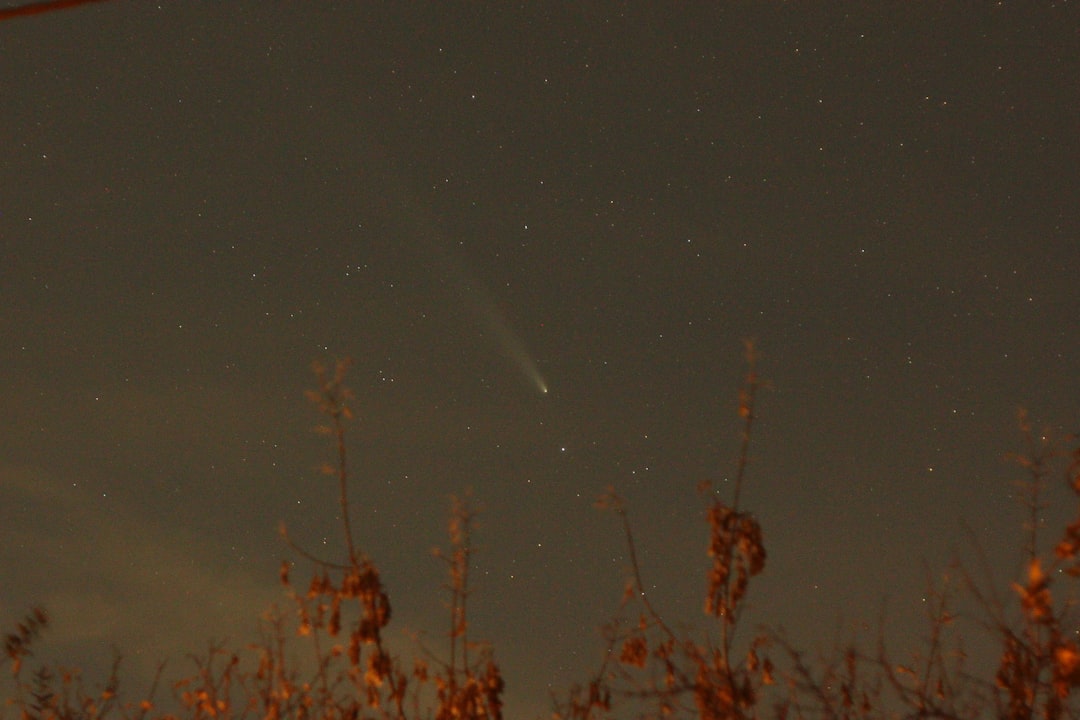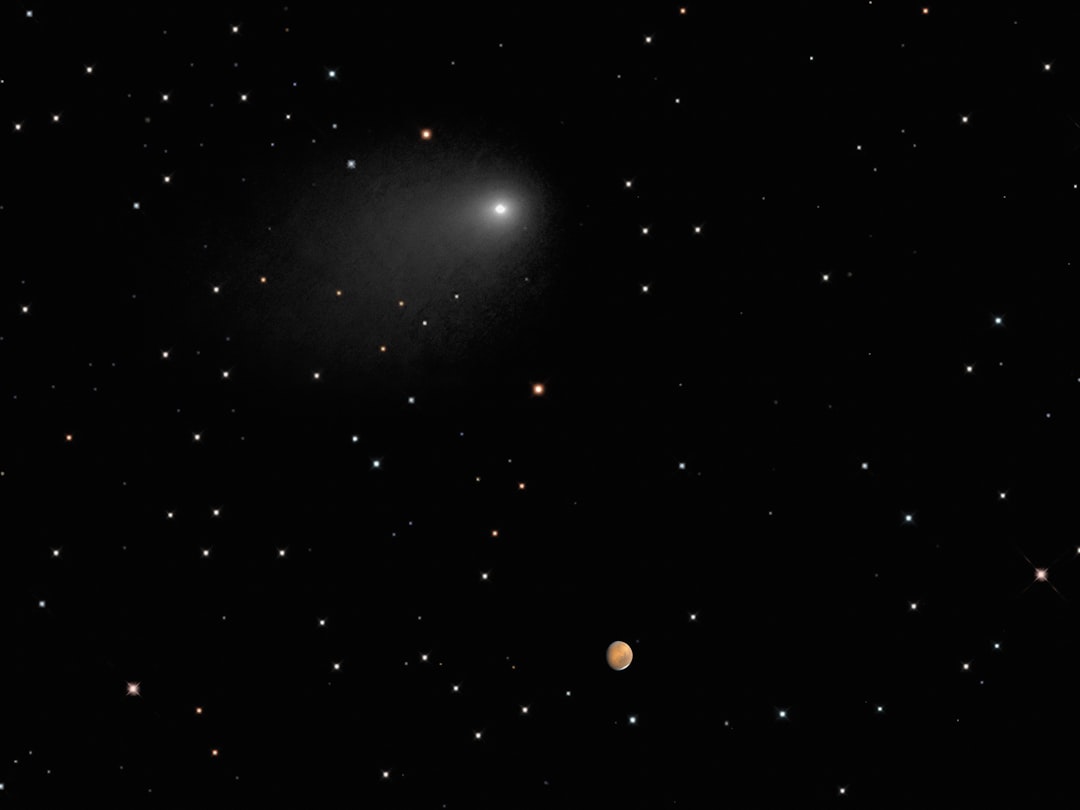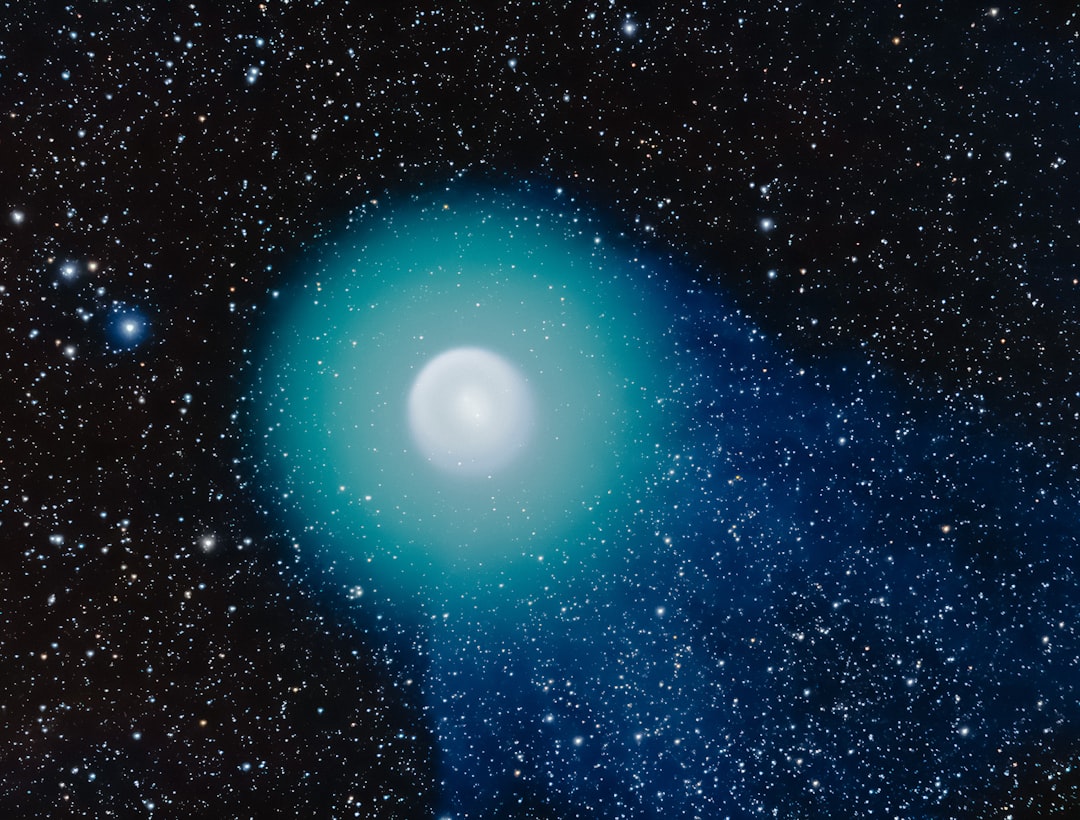
A rare visitor from beyond our solar system is painting the night sky with an ethereal green glow, captivating astronomers and space enthusiasts worldwide. Interstellar comet 3I/ATLAS, the third confirmed object from beyond our cosmic neighborhood, has revealed stunning new colors as it continues its dramatic journey through our solar system. Fresh observations from the Gemini North Telescope on Hawaii's Maunakea have captured the comet displaying a distinctive verdant hue—a stark contrast to the reddish tones observed just weeks earlier from its sister facility in Chile.
Since its initial detection on July 1st, 2025, this hyperbolic trajectory traveler has become one of the most intensively studied objects in recent astronomical history. The comet's appearance has mobilized an unprecedented international observing campaign, with some of humanity's most powerful telescopes—including the Hubble Space Telescope, the James Webb Space Telescope, and the Very Large Telescope—tracking its every move as it speeds through our celestial backyard at velocities far exceeding those of previous interstellar visitors.
What makes this cosmic wanderer particularly fascinating is not just its extrasolar origins, but the dynamic chemical transformation it's undergoing as solar radiation interacts with its ancient, pristine material—offering scientists a rare window into the composition of matter from another star system.
The Remarkable Color Transformation of an Interstellar Visitor
The dramatic color shift observed in 3I/ATLAS tells a compelling story of chemical evolution under extreme conditions. When Gemini South captured images of the comet in September 2025, the object exhibited a distinct reddish hue. However, the latest observations from Gemini North, taken after the comet's closest approach to the Sun on October 29th, reveal a striking green luminescence that has transformed the comet's appearance entirely.
This color metamorphosis isn't merely an aesthetic curiosity—it's a direct window into the volatile composition of material formed in an alien stellar system. The green glow is produced by diatomic carbon (C₂), a highly reactive molecule that becomes energized as solar radiation penetrates the comet's coma—the diffuse cloud of gas and dust surrounding its solid nucleus. As these carbon molecules absorb ultraviolet light from the Sun, they become excited and re-emit energy at specific wavelengths in the green portion of the visible spectrum, creating the distinctive emerald glow that has captivated observers.
The earlier red coloration observed at Gemini South resulted from different volatile compounds sublimating from the comet's surface at lower temperatures and greater solar distances. This sequential release of different chemical species as a comet approaches and then recedes from the Sun is well-documented in solar system comets, but observing this phenomenon in an object from interstellar space provides invaluable comparative data about the chemical similarities and differences between our solar system and others.
Shadow the Scientists: Democratizing Astronomical Discovery
The spectacular new images of 3I/ATLAS emerged from an innovative public engagement initiative called "Shadow the Scientists," which represents a groundbreaking approach to science education and outreach. Led by Eureka Scientific research scientist Bryce Bolin, this program bridges the gap between professional astronomical research and public participation, allowing students and space enthusiasts to experience the thrill of scientific discovery in real-time.
"Sharing an observing experience in some of the best conditions available gives the public a truly front-row view of our interstellar visitor. Allowing the public to see what we do as astronomers and how we do it also helps demystify the scientific and data collection process, adding transparency to our study of this fascinating object," explains Bolin.
During live Zoom sessions, students from Chile and Hawaii—the host locations of Gemini South and Gemini North respectively—joined professional astronomers in the observatory control rooms. These young participants witnessed firsthand how cutting-edge astronomical observations are conducted, from telescope pointing and instrument configuration to data acquisition and real-time analysis. They asked questions, discussed scientific objectives, and experienced the excitement and occasional frustrations that come with observational astronomy.
This represents the second time the Shadow the Scientists program has focused on 3I/ATLAS, demonstrating the sustained public interest in this interstellar visitor and the program's commitment to inspiring the next generation of scientists through direct engagement with active research.
Unprecedented Speed and the Mystery of Missing Iron
What sets 3I/ATLAS apart from its interstellar predecessors—1I/'Oumuamua and 2I/Borisov—is its remarkable velocity. The comet is traveling significantly faster than either of the two previously confirmed interstellar objects, ensuring its eventual escape from our solar system's gravitational influence despite the Sun's pull. As it approached perihelion (closest point to the Sun), the comet accelerated under solar gravity, reaching peak velocity before beginning to decelerate as it climbed back out of the Sun's gravitational well.
Spectroscopic analysis of 3I/ATLAS has revealed an intriguing chemical anomaly that has puzzled researchers. While nickel has been detected in the comet's coma—a common finding in both solar system and interstellar comets—iron remains conspicuously absent from the spectral signatures. This is highly unusual because nickel and iron typically occur in approximately equal abundances in cometary material, reflecting their cosmic abundance ratios and their tendency to form together in stellar nucleosynthesis processes.
Several hypotheses might explain this discrepancy:
- Delayed sublimation: Iron-bearing compounds may require higher temperatures or longer solar heating to vaporize, and they might appear in future observations as the Sun's thermal energy penetrates deeper into the nucleus
- Chemical sequestration: Iron could be bound in refractory minerals that resist sublimation at the temperatures experienced so far
- Compositional differences: The parent star system of 3I/ATLAS may have had different chemical enrichment patterns, resulting in genuinely lower iron abundances
- Observational limitations: Iron emission lines might be present but masked by other spectral features or too weak to detect with current exposure times
The Thermal Memory Effect and Ongoing Observations
One of the most fascinating aspects of cometary science is the thermal lag phenomenon—the delayed response of a comet's nucleus to solar heating. The Sun's energy doesn't instantly penetrate to the center of a cometary nucleus; instead, it gradually conducts inward through layers of ice, dust, and rock. This means that a comet's maximum outgassing and chemical activity often occurs days or even weeks after perihelion passage.
For 3I/ATLAS, which reached its closest approach to the Sun on October 29th, this thermal memory effect suggests that the most dramatic changes may still be ahead. As stored solar energy continues to work its way through the nucleus, new volatile species may be released, potentially including the missing iron compounds that have so far eluded detection. This possibility has motivated an extended observing campaign involving multiple facilities worldwide.
The Gemini Observatory, with its twin 8.1-meter telescopes optimally positioned in both hemispheres, is particularly well-suited for continuous monitoring of 3I/ATLAS. The telescopes' Multi-Object Spectrograph capabilities allow simultaneous measurement of multiple wavelengths, enabling researchers to track the evolution of numerous chemical species as the comet's activity waxes and wanes.
Preparing for Future Interstellar Visitors
The arrival of 3I/ATLAS underscores both the opportunities and challenges presented by interstellar objects. By the time such visitors are detected approaching the inner solar system, they're already moving too rapidly for conventional spacecraft missions to intercept them with current propulsion technology. This limitation has spurred innovative mission concepts designed to overcome the temporal constraints of interstellar object encounters.
The European Space Agency's proposed Comet Interceptor mission represents one promising approach. This concept envisions a spacecraft parked at the Sun-Earth Lagrange Point 2 (L2), approximately 1.5 million kilometers from Earth, where it would remain in a dormant state until an appropriate interstellar target is identified. Once a suitable object is detected with sufficient advance warning, the spacecraft would activate and execute an intercept trajectory, potentially returning close-up images and in-situ measurements—or even samples—of pristine interstellar material.
The feasibility of such missions will be dramatically enhanced by the Vera C. Rubin Observatory and its ambitious Legacy Survey of Space and Time (LSST). When it begins full operations, this revolutionary facility will scan the entire visible sky every few nights, detecting faint, fast-moving objects far earlier than current surveys. Scientific projections suggest the Rubin Observatory will likely discover at least ten interstellar objects similar to 3I/ATLAS during its initial decade of operations, providing multiple opportunities for detailed study and potentially even spacecraft encounters.
Scientific Significance and Broader Implications
The study of interstellar objects like 3I/ATLAS represents far more than astronomical curiosity—it offers profound insights into the diversity of planetary system formation throughout our galaxy. Each interstellar visitor carries with it a chemical and physical record of conditions in its birth environment, potentially billions of kilometers away and formed around stars with different masses, compositions, and evolutionary histories than our Sun.
Key scientific questions that 3I/ATLAS and future interstellar objects can help answer include:
- Chemical universality: Are the basic building blocks of planetary systems—water ice, organic compounds, silicate minerals—similar across different stellar environments?
- Formation mechanisms: Do the processes that eject objects from planetary systems vary with stellar type, system architecture, or galactic location?
- Astrobiology implications: Could interstellar objects transport organic molecules or even microbial life between star systems, contributing to panspermia?
- Solar system context: How typical or unusual is our own solar system's composition compared to material from other stellar systems?
The continuing observations of 3I/ATLAS, combined with archived data from 'Oumuamua and Borisov, are building a comparative framework for understanding interstellar objects as a population rather than as isolated curiosities. Each new detection adds crucial data points, helping astronomers refine models of planetary system formation, dynamical evolution, and the exchange of material between stellar systems.
As 3I/ATLAS continues its journey back into the depths of interstellar space, traveling at speeds that will eventually carry it light-years from the Sun, it leaves behind a wealth of data and a renewed sense of wonder about our cosmic neighborhood. The green glow captured by Gemini North serves as a luminous reminder that our solar system is not isolated—it exists within a dynamic galactic ecosystem where objects regularly traverse the vast distances between stars, carrying with them the chemical signatures of alien worlds and offering tantalizing glimpses into the diversity of planetary systems throughout the Milky Way.
With advanced survey telescopes coming online and innovative mission concepts in development, humanity stands at the threshold of a new era in the study of interstellar visitors—one where these rare cosmic travelers transform from astronomical oddities into regular subjects of detailed scientific investigation, fundamentally expanding our understanding of the universe beyond our solar system's boundaries.