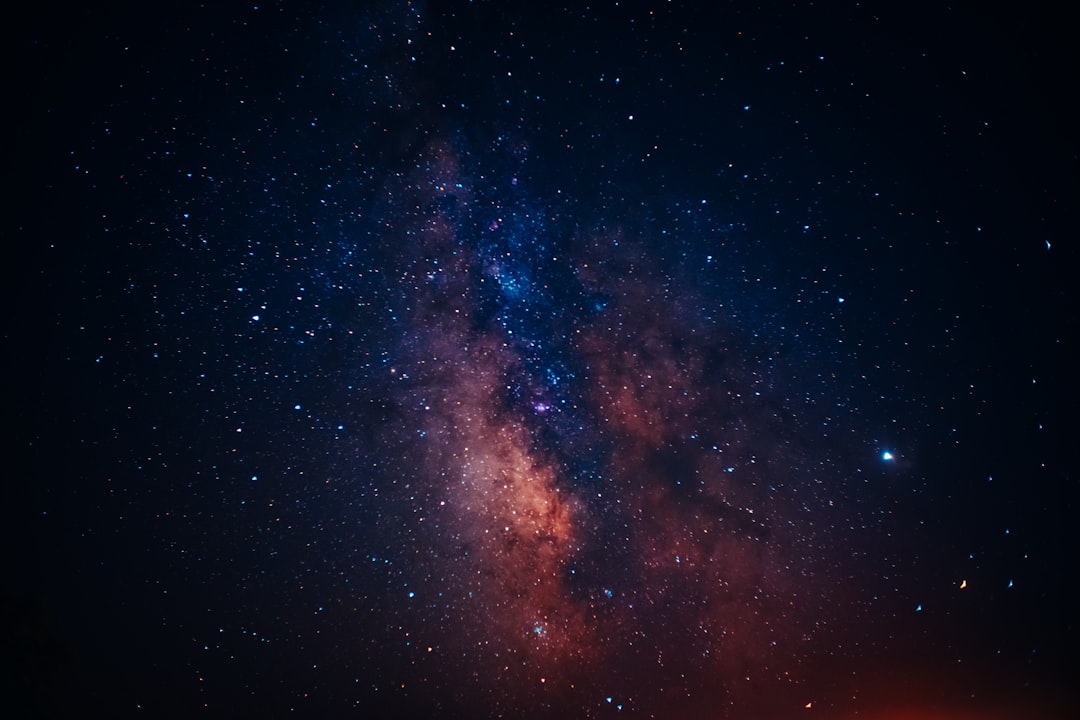
The James Webb Space Telescope has once again revolutionized our understanding of the cosmos, this time by revealing a galaxy so chemically primitive that it offers an unprecedented glimpse into the universe's infancy. An international team of astronomers has successfully characterized LAP1-B, an ultra-faint galaxy that existed merely 800 million years after the Big Bang, making it the most metal-poor galaxy ever observed in the early universe. This extraordinary discovery, published in the prestigious journal Nature, provides direct evidence of a galaxy caught in the act of inheriting the very first heavy elements forged by the universe's earliest stars.
What makes this finding particularly remarkable is that LAP1-B represents a cosmic time capsule, preserving the chemical signatures from an era when the universe was just beginning to transition from its primordial state of hydrogen and helium to the element-rich cosmos we observe today. The galaxy's oxygen abundance measures an astonishing 1/240th that of our Sun, combined with an elevated carbon-to-oxygen ratio that closely matches theoretical predictions for material dispersed by Population III stars—the universe's first generation of stellar objects. This discovery was made possible through the synergistic use of Webb's advanced infrared capabilities and the natural phenomenon of gravitational lensing, which magnified the galaxy's faint light by a factor of 100.
Led by Associate Professor Kimihiko Nakajima of Kanazawa University, the research team included scientists from Japan's National Astronomical Observatory, the Kavli Institute for the Physics and Mathematics of the Universe, Italy's Astrophysics and Space Science Observatory Bologna, Cambridge's Cavendish Laboratory, and Caltech's Infrared Processing and Analysis Center. Their collaborative effort required over 30 hours of deep spectroscopic observations, pushing the boundaries of what's technologically possible in modern astronomy.
Peering Through the Cosmic Dark Ages
The period between 380,000 and 1 billion years after the Big Bang represents one of the most enigmatic chapters in cosmic history. Known as the Epoch of Reionization, this era is colloquially referred to as the "Cosmic Dark Ages" because the universe was permeated with neutral hydrogen gas that absorbed most visible light. Any luminous sources from this period appear heavily redshifted when observed from Earth, placing them beyond the detection capabilities of conventional optical telescopes.
The James Webb Space Telescope, with its suite of sophisticated infrared instruments and high-resolution spectrometers, has fundamentally transformed our ability to study this obscured epoch. Unlike its predecessor, the Hubble Space Telescope, Webb can detect the stretched, infrared wavelengths of light from these ancient galaxies, effectively allowing astronomers to peer through the cosmic veil and witness galaxy formation in its earliest stages.
During the immediate aftermath of the Big Bang, the universe's chemical composition was remarkably simple, consisting almost entirely of the lightest elements: approximately 75% hydrogen and 25% helium, with only trace amounts of lithium. The heavier elements essential for life—carbon, nitrogen, oxygen, silicon, iron, and others—were completely absent. These elements, which astronomers collectively refer to as "metals" regardless of their chemical properties, could only be created through stellar nucleosynthesis in the cores of the first generation of stars.
The Quest for Population III Stars and Their Legacy
For decades, astronomers have pursued one of cosmology's most elusive quarries: Population III stars. These hypothetical stellar giants, thought to have masses ranging from 100 to 1,000 times that of our Sun, would have been composed solely of primordial hydrogen and helium. Their extreme masses would have made them incredibly hot and luminous, but also short-lived, burning through their nuclear fuel in just a few million years before exploding as spectacular supernovae.
These supernova explosions served a crucial cosmic purpose: they dispersed the newly forged heavy elements throughout the surrounding space, enriching the interstellar medium and providing the raw materials for subsequent generations of stars and, eventually, planets and life itself. However, directly observing Population III stars has remained beyond our technological reach. Instead, astronomers must search for indirect evidence of their existence by studying the chemical signatures they left behind in the galaxies they once inhabited.
The discovery of LAP1-B represents a significant breakthrough in this search. The galaxy's chemical composition provides what researchers describe as a "smoking gun" signature of Population III stellar activity. The specific ratio of carbon to oxygen observed in LAP1-B matches theoretical models of the nucleosynthetic yields expected from the first generation of massive stars, offering compelling evidence that these primordial giants once existed and shaped the galaxy's chemical evolution.
Gravitational Lensing: Nature's Cosmic Magnifying Glass
One of the most ingenious aspects of this research involved leveraging the phenomenon of gravitational lensing, predicted by Einstein's general theory of relativity. When light from a distant object passes near a massive foreground structure, such as a galaxy cluster, the fabric of spacetime becomes warped, bending the light's path and magnifying the background object's appearance.
In the case of LAP1-B, an intervening galaxy cluster fortuitously aligned between Earth and the target galaxy, creating a natural cosmic telescope that amplified LAP1-B's faint light by a factor of approximately 100. Without this gravitational boost, the galaxy would have remained far too dim for detailed spectroscopic analysis, even with Webb's unprecedented sensitivity. This technique, increasingly employed by astronomers studying the early universe, effectively extends our observational capabilities far beyond what would otherwise be possible with current technology.
The research team utilized Webb's Near-Infrared Spectrograph (NIRSpec) to conduct deep spectroscopic observations totaling more than 30 hours of exposure time. This intensive observational campaign allowed them to detect and measure the incredibly faint spectral lines of oxygen and other elements in LAP1-B's gas, providing the definitive chemical characterization that makes this discovery so significant.
Record-Breaking Chemical Primitiveness
The spectroscopic analysis revealed several extraordinary characteristics of LAP1-B that collectively establish it as the most chemically primitive galaxy observed in the early universe:
- Extreme Metal Deficiency: With an oxygen abundance of just 1/240th that of the Sun, LAP1-B exhibits the lowest metallicity ever measured in an early-universe galaxy, indicating it formed from gas that had been minimally enriched by previous stellar generations
- Elevated Carbon-to-Oxygen Ratio: The specific proportion of carbon relative to oxygen closely matches theoretical predictions for material ejected by Population III supernova explosions, providing direct evidence of first-generation stellar nucleosynthesis
- Remarkably Low Stellar Mass: With a stellar mass of less than 3,300 solar masses, LAP1-B is extraordinarily lightweight, suggesting that the majority of its mass consists of dark matter rather than ordinary baryonic matter
- Dominant Dark Matter Halo: The galaxy appears to be embedded within a substantial dark matter halo, a characteristic feature that helps explain how such a small, faint galaxy could have survived to the present day
"I was instantly thrilled by the extreme lack of oxygen revealed in the data. Finding a galaxy in such a primitive state is astonishing. It's a chemical signature that clearly indicates a primordial galaxy caught in the moments shortly after its formation," explained Associate Professor Nakajima. "Usually, we act like 'cosmic archaeologists,' trying to guess the past by looking at old stars in our own neighborhood. But now, we can analyze the gas directly from the original scene 13 billion years ago. We are witnessing the moment when a galaxy first inherited the chemical building blocks created by the universe's earliest stars."
Connecting Ancient Galaxies to Modern Cosmic Fossils
One of the most profound implications of this discovery lies in its connection to mysterious objects found in our cosmic neighborhood today. Ultra-Faint Dwarf galaxies (UFDs) are among the smallest, dimmest, and most ancient stellar systems known to exist. These diminutive galaxies, which orbit larger galaxies like our Milky Way, contain stars that are typically over 12 billion years old and exhibit remarkably low metallicities, earning them the designation as "cosmic fossils."
Astronomers have long suspected that UFDs might represent the surviving descendants of the universe's first galaxies, but establishing a direct evolutionary connection has been challenging. The discovery of LAP1-B provides the missing link in this cosmic genealogy. The galaxy's chemical composition, stellar mass, and dark matter content closely match what astronomers would expect for the progenitors of modern UFDs, suggesting that we're observing these fossil galaxies in their infancy.
Professor Masami Ouchi of the National Astronomical Observatory of Japan and the University of Tokyo elaborated on this connection: "UFDs are not only the faintest galaxies; they are composed of ancient stars over 12 billion years old and are often described as 'fossils of the universe.' Astronomers suspected they might be the remains of the universe's earliest galaxies because they lack heavy elements, but astronomers never had a direct link—until we found LAP1-B. It is a profound surprise to find that LAP1-B looks exactly like the 'ancestor' we had only imagined in theories."
This discovery helps resolve a long-standing puzzle in galactic archaeology: why have these ancient, chemically primitive galaxies survived in their current form rather than being disrupted or accreted by larger galaxies? The answer appears to lie in their substantial dark matter halos, which provide gravitational stability and protection from tidal disruption, allowing them to persist as intact structures across cosmic time.
Methodological Innovation and Technical Achievements
The successful characterization of LAP1-B required pushing observational astronomy to its technical limits. The galaxy's extreme faintness meant that even with gravitational lensing magnification, detecting its spectral features demanded extraordinary sensitivity and long integration times. The research team's use of Webb's NIRSpec instrument in its highest-resolution mode enabled the detection of emission lines from ionized oxygen, carbon, and other elements that would have been completely invisible to previous generations of telescopes.
The spectroscopic data also allowed the team to measure the galaxy's redshift with high precision, confirming that it existed approximately 800 million years after the Big Bang, corresponding to a redshift of z ≈ 6.6. This places LAP1-B firmly within the Epoch of Reionization, a critical period when the first galaxies began ionizing the neutral hydrogen gas that pervaded the universe, gradually making it transparent to ultraviolet and visible light.
Implications for Cosmic Chemical Evolution
The discovery of LAP1-B has far-reaching implications for our understanding of how the universe transitioned from its chemically simple primordial state to the element-rich cosmos we inhabit today. By studying galaxies at various stages of chemical enrichment, astronomers can map the gradual buildup of heavy elements across cosmic history, a process known as galactic chemical evolution.
This research provides crucial observational constraints for theoretical models of early star formation and supernova nucleosynthesis. The specific chemical abundances measured in LAP1-B can be compared with predictions from stellar evolution models, helping to refine our understanding of the masses, lifetimes, and explosive yields of Population III stars. Such comparisons are essential for determining whether the first stars were predominantly very massive objects or if they spanned a broader range of masses, a question that remains actively debated among astrophysicists.
Furthermore, the discovery highlights the importance of studying the most extreme objects in the universe. While LAP1-B is extraordinarily faint and required exceptional circumstances to observe, it may represent a more common population of chemically primitive galaxies that existed during the early universe but remain below current detection thresholds. Future surveys with Webb and other next-generation facilities may reveal many more such objects, providing a statistical sample that can illuminate the typical properties and evolution of the first galaxies.
Future Prospects and Unanswered Questions
While the discovery of LAP1-B represents a major milestone, it also raises numerous questions that will drive future research. How common were galaxies with such extreme chemical primitiveness during the Epoch of Reionization? What role did they play in the reionization process itself? How did they evolve over cosmic time to become the ultra-faint dwarf galaxies we observe today?
The research team is already planning follow-up observations to search for additional chemically primitive galaxies and, potentially, even more extreme examples that might harbor direct signatures of Population III stars. As Associate Professor Nakajima noted, "We hope this discovery marks a historic step in understanding how the elements that make up our own bodies were first born and accumulated across the Universe."
The ongoing JWST observing programs include several large surveys specifically designed to identify and characterize galaxies from the Epoch of Reionization. These programs will provide a much larger sample of early galaxies for detailed study, potentially revealing the full diversity of chemical compositions and evolutionary states present during this crucial cosmic epoch.
Additionally, upcoming ground-based facilities such as the Extremely Large Telescope (ELT) will complement Webb's observations with even higher-resolution spectroscopy and imaging capabilities. The synergy between space-based and ground-based observations will enable astronomers to construct a comprehensive picture of how galaxies formed, evolved, and chemically enriched the universe during its first billion years.
A Window Into Cosmic Dawn
The discovery of LAP1-B exemplifies the transformative impact of the James Webb Space Telescope on our understanding of the early universe. By revealing a galaxy caught in the act of receiving its first infusion of heavy elements from Population III stars, this research provides an unprecedented window into the cosmic dawn—the epoch when the universe's first stars and galaxies began transforming the primordial cosmos into the structured, chemically complex universe we observe today.
This finding underscores the profound connection between the largest scales of cosmic structure and the smallest scales of nuclear physics. The elements forged in the cores of the first massive stars, dispersed through supernova explosions, and gradually accumulated in successive generations of galaxies ultimately made possible the formation of planets, the emergence of life, and the existence of astronomers capable of reconstructing this cosmic history. In studying LAP1-B, we are quite literally examining the origins of the matter that composes our own bodies and everything around us.
As we continue to push the boundaries of observational astronomy, discoveries like LAP1-B remind us that the universe still holds many secrets waiting to be uncovered. Each new finding not only answers long-standing questions but also opens new avenues of inquiry, driving the endless cycle of scientific discovery that has characterized humanity's quest to understand the cosmos. The journey from the Big Bang to the present day is a story written in starlight, and with tools like the James Webb Space Telescope, we are finally learning to read its earliest chapters.