Imagine standing beneath a pristine night sky, far from city lights, watching as countless stars gradually emerge from the darkness. Each pinpoint of light represents a distant sun, and orbiting many of these stellar beacons are worlds beyond our own—exoplanets that have captivated astronomers and dreamers alike. Now, thanks to NASA's groundbreaking Transiting Exoplanet Survey Satellite (TESS), we have an unprecedented view of these distant worlds across the entire celestial sphere. The spacecraft has just unveiled a spectacular all-sky mosaic that maps thousands of confirmed and candidate exoplanets discovered since its operations began in 2018, fundamentally transforming our understanding of planetary systems throughout our cosmic neighborhood.
This remarkable achievement represents nearly eight years of continuous observation, during which TESS has scanned virtually every corner of the visible universe from Earth's perspective. The newly released mosaic showcases 679 confirmed exoplanets marked in blue, alongside more than 5,165 candidate exoplanets indicated in orange—each one a potential world awaiting further study and confirmation. This comprehensive map serves not only as a testament to human ingenuity and technological prowess but also as a roadmap for future astronomical investigations that could ultimately answer humanity's age-old question: Are we alone in the universe?
The Evolution of Exoplanet Discovery: From Kepler to TESS
To fully appreciate TESS's accomplishments, we must first understand the pioneering mission that paved the way for this all-sky survey. NASA's Kepler Space Telescope, launched in 2009, revolutionized exoplanet science by employing the transit method—detecting the subtle dimming of starlight when a planet passes in front of its host star. During its primary mission from 2009 to 2013, Kepler focused its unwavering gaze on a single patch of sky in the constellations Cygnus and Lyra, monitoring approximately 150,000 stars simultaneously.
This focused approach proved extraordinarily successful, but it came with limitations. The field of view covered roughly 0.25 percent of the entire sky—equivalent to holding your fist at arm's length and observing only that small section of the heavens. When two of Kepler's four reaction wheels, which provided precise pointing control, failed in 2013, the mission seemed destined to end prematurely. However, NASA engineers devised an ingenious solution, repurposing the spacecraft for the K2 mission, which operated from 2014 to 2018 and observed multiple fields across the ecliptic plane. Combined, both Kepler missions confirmed the existence of more than 3,000 exoplanets and identified another 3,000 candidates, fundamentally proving that planets are commonplace throughout our galaxy.
Launched in April 2018 aboard a SpaceX Falcon 9 rocket, TESS was designed to build upon Kepler's legacy while addressing its primary limitation: sky coverage. Rather than staring at one distant patch of sky, TESS surveys the entire celestial sphere, dividing it into 26 sectors that it observes for approximately 27 days each. This approach allows TESS to monitor stars that are 30 to 100 times brighter and closer to Earth than those studied by Kepler, making follow-up observations with ground-based telescopes and other space observatories significantly more feasible.
Understanding TESS's Revolutionary Survey Strategy
TESS operates in a unique highly elliptical orbit around Earth, carefully designed by orbital dynamics experts at the NASA Goddard Space Flight Center. This specialized orbit, known as a 2:1 lunar resonant orbit, takes the spacecraft as close as 108,000 kilometers and as far as 373,000 kilometers from Earth. This configuration provides TESS with an unobstructed view of space while minimizing interference from Earth's radiation belts and allowing for efficient data downloads during its closest approaches.
The spacecraft carries four identical wide-field cameras, each equipped with a 24-degree field of view. Together, these cameras create a combined field of view of 24 by 96 degrees, enabling TESS to monitor hundreds of thousands of stars simultaneously. The telescope's charge-coupled device (CCD) detectors capture images every two seconds for selected targets and every 30 minutes for full-frame images, generating an enormous dataset that requires sophisticated algorithms to analyze.
"Over the last eight years, TESS has become a fire hose of exoplanet science. It's helped us find planets of all different sizes, from tiny Mercury-like ones to those larger than Jupiter. Some of them are even in the habitable zone, where liquid water might be possible on the surface, an important factor in our search for life beyond Earth," explained Dr. Rebekah Hounsell, TESS associate project scientist at the University of Maryland Baltimore County and NASA's Goddard Space Flight Center.
Landmark Discoveries That Changed Exoplanet Science
Among TESS's most significant contributions to astronomy is the discovery of the TOI-700 system, located approximately 100 light-years from Earth in the constellation Dorado. This system, initially identified by TESS and subsequently confirmed through observations with ground-based telescopes including the European Southern Observatory's facilities, hosts at least four known planets orbiting a cool M-dwarf star (red dwarf).
The jewel of this system is TOI-700 d, an Earth-sized world orbiting within its star's habitable zone—the region where temperatures could potentially allow liquid water to exist on a planet's surface. Given that the host star is smaller and cooler than our Sun, TOI-700 d receives approximately 86 percent of the solar radiation that Earth receives, placing it in a potentially temperate environment. Later observations revealed additional planets in the system, including TOI-700 e, another habitable-zone candidate that further emphasizes the richness of this nearby planetary system.
Another groundbreaking discovery came with TOI-1338 b, the first circumbinary planet identified by TESS. Circumbinary planets orbit two stars simultaneously, creating complex gravitational dynamics and spectacular celestial views. The TOI-1338 system consists of an F-type star approximately 10 percent larger than our Sun and a smaller M-dwarf companion. The planet TOI-1338 b, roughly the size of Saturn, completes an orbit around both stars every 95 days, experiencing double sunsets reminiscent of the iconic scene from Star Wars' planet Tatooine.
The Diversity of TESS Discoveries
The all-sky mosaic reveals the remarkable diversity of planetary systems discovered by TESS, including:
- Ultra-short period planets: Worlds that complete orbits around their stars in less than 24 hours, subjected to extreme temperatures and tidal forces that create hellish surface conditions
- Super-Earths and sub-Neptunes: Planets with sizes between Earth and Neptune, representing a class of worlds absent from our own solar system but apparently common throughout the galaxy
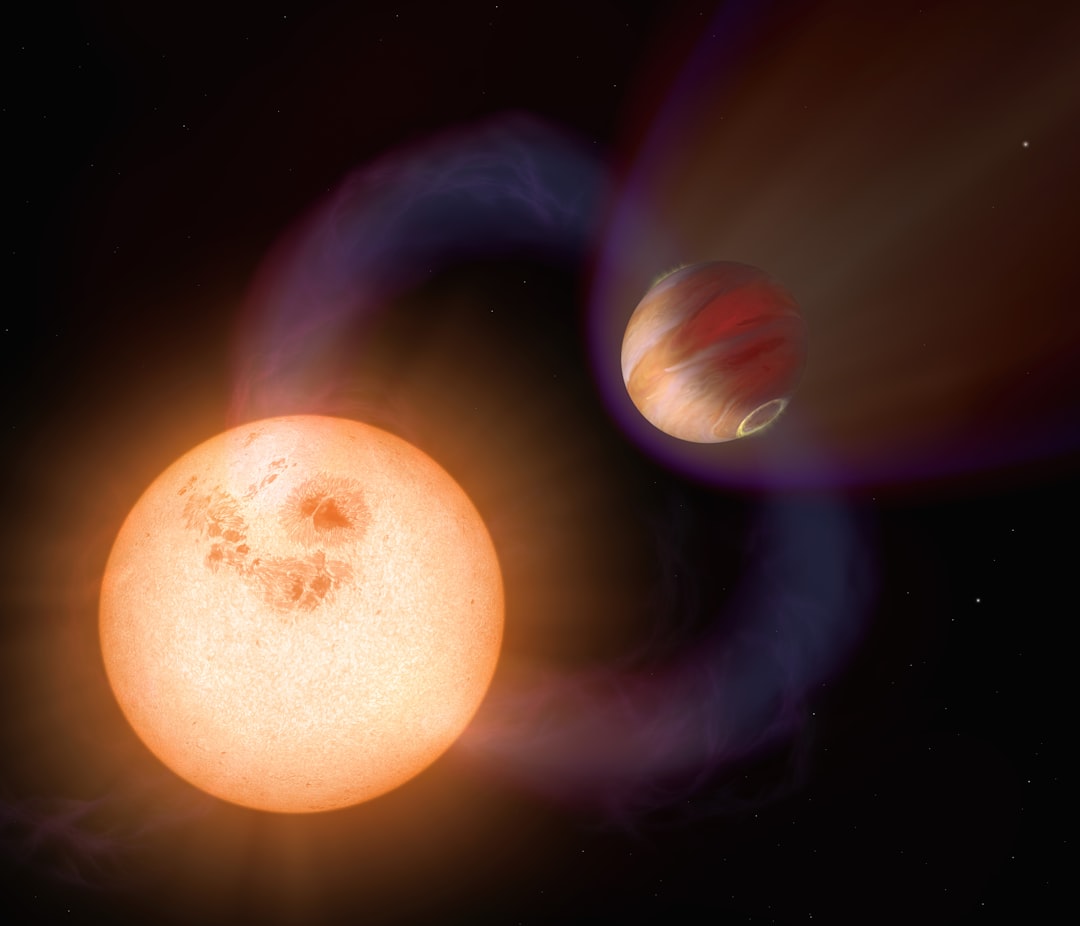
- Hot Jupiters: Gas giant planets orbiting extremely close to their host stars, completing orbits in just days and reaching temperatures exceeding 2,000 degrees Celsius
- Temperate rocky worlds: Earth-sized planets orbiting in or near their stars' habitable zones, representing prime targets for atmospheric characterization and the search for biosignatures
- Multi-planet systems: Stellar systems hosting multiple confirmed planets, providing insights into planetary formation and orbital dynamics
Advanced Follow-Up Observations and Characterization
TESS's discoveries serve as the crucial first step in a comprehensive process of planetary characterization. Once TESS identifies a potential exoplanet through the transit method, astronomers worldwide mobilize ground-based telescopes and space observatories to conduct follow-up observations. These confirmatory studies employ various techniques, including radial velocity measurements that detect the subtle wobble a planet induces in its host star's motion, allowing scientists to determine the planet's mass.
The James Webb Space Telescope (JWST) has become an invaluable partner in studying TESS-discovered exoplanets, using its powerful infrared capabilities to analyze planetary atmospheres through transmission spectroscopy. When a planet transits its star, some starlight filters through the planet's atmosphere, and different molecules absorb specific wavelengths of light. By analyzing this spectrum, scientists can identify atmospheric components such as water vapor, carbon dioxide, methane, and potentially even biosignature gases like oxygen or phosphine.
Ground-based observatories, including the Gemini Observatory and the Very Large Telescope, contribute crucial data through high-resolution spectroscopy and precise radial velocity measurements. This collaborative approach, combining space-based discovery with ground-based characterization, has created an unprecedented era of exoplanet science where we can not only find distant worlds but also begin to understand their properties, compositions, and potential habitability.
Extended Missions and the Future of TESS
TESS's success has led NASA to approve multiple mission extensions, ensuring that this productive spacecraft continues its celestial survey well into the future. According to a comprehensive review published in Space Science Reviews, TESS's third extended mission is funded through at least September 2028, with the possibility of further extensions depending on the spacecraft's health and scientific productivity.
These extended missions allow TESS to revisit previously observed sectors, increasing the likelihood of detecting planets with longer orbital periods that require multiple transits for confirmation. Additionally, repeated observations improve the precision of planetary parameters and enable the detection of smaller, Earth-sized planets that might have been missed during initial surveys. The extended mission also focuses on specialized observations, including studies of stellar variability, transient phenomena such as supernovae, and the search for planets around young stars where planetary systems are still forming.
Synergy With Future Missions
TESS's discoveries will provide crucial targets for upcoming missions and observatories designed to push the boundaries of exoplanet science even further. The Nancy Grace Roman Space Telescope, scheduled for launch in the mid-2020s, will use gravitational microlensing and direct imaging to discover planets at greater distances from their host stars, complementing TESS's focus on close-in planets. The Extremely Large Telescope (ELT), currently under construction in Chile, will have the capability to directly image and characterize Earth-sized exoplanets in habitable zones around nearby stars.
Furthermore, proposed missions such as the Habitable Worlds Observatory aim to conduct comprehensive searches for biosignatures in the atmospheres of potentially habitable exoplanets, many of which will likely be TESS discoveries. This long-term vision illustrates how TESS serves not just as a discovery mission but as a foundational survey that will guide exoplanet research for decades to come.
The Broader Impact on Our Understanding of Planetary Systems
The all-sky mosaic released by TESS represents more than just a catalog of distant worlds—it provides unprecedented statistical insights into the occurrence rates and properties of exoplanets throughout our galactic neighborhood. By surveying such a large fraction of the sky and monitoring hundreds of thousands of stars, TESS data allows astronomers to address fundamental questions about planetary formation and evolution with unprecedented statistical rigor.
Research based on TESS observations has revealed that small planets are remarkably common, with nearly every Sun-like star hosting at least one planet. Studies have also shown that the transition between rocky super-Earths and gaseous sub-Neptunes occurs at approximately 1.5 to 2 Earth radii, suggesting a fundamental threshold in planetary formation processes. Additionally, TESS has discovered numerous planetary systems with architectures vastly different from our own solar system, challenging theoretical models and expanding our understanding of how planetary systems form and evolve.
The mission has also contributed significantly to our understanding of stellar astrophysics. TESS's continuous monitoring of stellar brightness variations has enabled detailed studies of stellar rotation, magnetic activity, and pulsations. These observations provide crucial context for understanding the environments in which exoplanets form and evolve, including the effects of stellar flares and coronal mass ejections on planetary atmospheres and potential habitability.
Conclusion: A New Era of Cosmic Cartography
TESS's all-sky mosaic stands as a monument to human curiosity and technological achievement, mapping thousands of worlds across the celestial sphere and fundamentally transforming our perspective on our place in the cosmos. Each dot on this cosmic map represents not just a distant planet but a potential world with its own unique characteristics, history, and possibly even life. As TESS continues its extended mission through at least 2028, it will undoubtedly discover thousands more exoplanets, further refining our understanding of planetary systems and identifying the most promising targets for detailed study.
The true legacy of TESS lies not only in its discoveries but in the questions it enables us to ask and the future observations it makes possible. From characterizing potentially habitable worlds to understanding the diversity of planetary systems throughout the galaxy, TESS has provided the roadmap for the next generation of exoplanet research. As we continue to explore these distant worlds through increasingly powerful telescopes and sophisticated techniques, we move ever closer to answering the profound questions that have captivated humanity for millennia: How common are planets like Earth? Could life exist elsewhere in the universe? And ultimately, are we alone?
The answers to these questions may well be found among the thousands of worlds marked on TESS's remarkable all-sky mosaic—a testament to what we can achieve when we dare to look up and explore the cosmos with dedication, ingenuity, and an insatiable curiosity about the universe we call home.