Asteroid Mining Will Crash the Platinum Market — And That's Transformative News for Earth
Science fiction authors have been dreaming of robotic spacecraft harvesting fortunes from asteroids for decades, but humanity is now inching closer to that reality with remarkable speed. For years, the central critique leveled by asteroid mining skeptics has been a pointed economic one: what actually happens to the prices of rare materials once someone successfully brings them back from space? A pair of system dynamicists from MIT have directly tackled that question in a compelling new paper titled Will AstroForge Collapse the PGM Market? — and their findings paint a picture of an industry on the verge of a historic, disruptive transformation.
The Strategic Importance of Platinum Group Metals
Platinum Group Metals (PGMs) are among the most strategically critical materials in modern industrial civilization. The PGM family includes six elements — platinum, palladium, rhodium, iridium, osmium, and ruthenium — all of which share exceptional catalytic properties, extraordinary resistance to heat and corrosion, and remarkable electrical conductivity. Of these, platinum and palladium are the most heavily utilized, forming essential components in automotive catalytic converters, hydrogen fuel cells, laboratory equipment, medical devices, and cutting-edge electronics. The theft epidemic targeting catalytic converters in recent years is, in large part, a direct consequence of surging palladium and rhodium prices — a vivid illustration of just how economically significant these metals have become.
Yet these materials are extraordinarily scarce on Earth's surface. More than 80% of the planet's known PGM reserves are locked away in deep-shaft mines concentrated in just two nations: South Africa and Russia. South Africa's Bushveld Igneous Complex and Russia's Norilsk region represent the dominant global supply, creating a geopolitical chokehold over industries that are increasingly critical to the global clean-energy transition. This geographic concentration introduces significant supply chain vulnerability — a concern that has grown considerably in the wake of international sanctions and global disruptions in recent years.
"Platinum Group Metals are not merely commodities — they are the linchpin of a sustainable industrial future, underpinning hydrogen energy, emissions reduction technology, and next-generation electronics. Their scarcity is not a natural inevitability; it is a consequence of where they happen to be accessible on Earth."
The economics of terrestrial PGM extraction are staggering. With market prices reaching tens of millions of dollars per metric ton, these metals are priced far above gold for good reason: even in the richest known deposits, miners recover only a few grams of PGMs per ton of ore processed. The extraction process demands deep ventilation shafts, sophisticated cooling systems, heavy mechanized equipment, and thousands of human laborers working at dangerous depths — a labor-intensive, environmentally costly process that has changed little in its fundamental character over more than a century of industrial mining.
Metallic Asteroids: The Solar System's Hidden Treasure
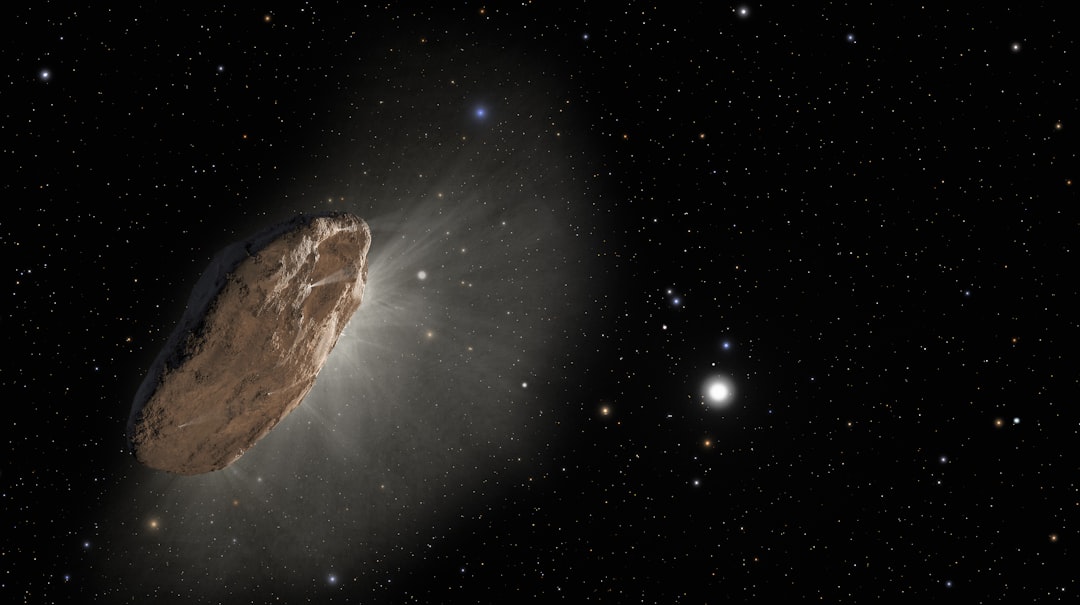
The cosmos, however, offers a radically different picture. M-type (metallic) asteroids are among the most scientifically fascinating objects in the solar system. Planetary scientists believe these bodies are the exposed, metallic cores of ancient protoplanets — embryonic worlds that formed in the earliest epochs of the solar system, only to be shattered by violent collisions during the chaotic period of planetary formation. Stripped of their rocky mantles, what remains are dense, metallic objects composed predominantly of iron and nickel, but also laced with extraordinarily high concentrations of PGMs.
The numbers are almost incomprehensible in their scale. While Earth's richest mines yield a few grams of PGMs per ton of rock, metallic asteroids can carry concentrations dozens of times higher than the best terrestrial deposits. A single kilometer-wide M-type asteroid is estimated to contain more PGMs than the entire quantity extracted by human civilization throughout recorded history. NASA's Psyche mission, currently en route to the metallic asteroid 16 Psyche, is expected to shed extraordinary light on the nature of these metal-rich worlds — potentially transforming our understanding of both planetary formation and the future of resource extraction.
- M-type asteroids are thought to be remnant cores of differentiated protoplanets destroyed in early solar system collisions.
- PGM concentrations in metallic asteroids can be 10 to 100 times higher than in Earth's richest ore deposits.
- A single 1-km metallic asteroid may contain more platinum than has ever been mined on Earth.
- Thousands of near-Earth asteroids (NEAs) have been catalogued, with many classified as potentially resource-rich targets.
- Unlike terrestrial mining, space-based extraction carries no acid mine drainage, no arsenic contamination, and no risk to underground workers.
It is precisely this staggering abundance — combined with the growing accessibility of near-Earth space — that has made PGM-bearing asteroids the central focus of a new generation of asteroid mining ventures. For more on the inventory of near-Earth objects, the NASA Center for Near Earth Object Studies (CNEOS) maintains a comprehensive and regularly updated catalogue of known asteroids and their orbital parameters.
AstroForge and the New Architecture of Space Mining
AstroForge, a California-based startup, represents the leading edge of a second wave of asteroid mining companies — one that has learned hard lessons from the ambitious but ultimately unsuccessful ventures of the previous decade, including Planetary Resources and Deep Space Industries. Rather than pursuing multi-billion-dollar, all-in-one mining platforms, AstroForge has adopted a philosophy centered on small, agile, low-cost spacecraft that can be developed and launched for a fraction of the price of traditional space infrastructure.
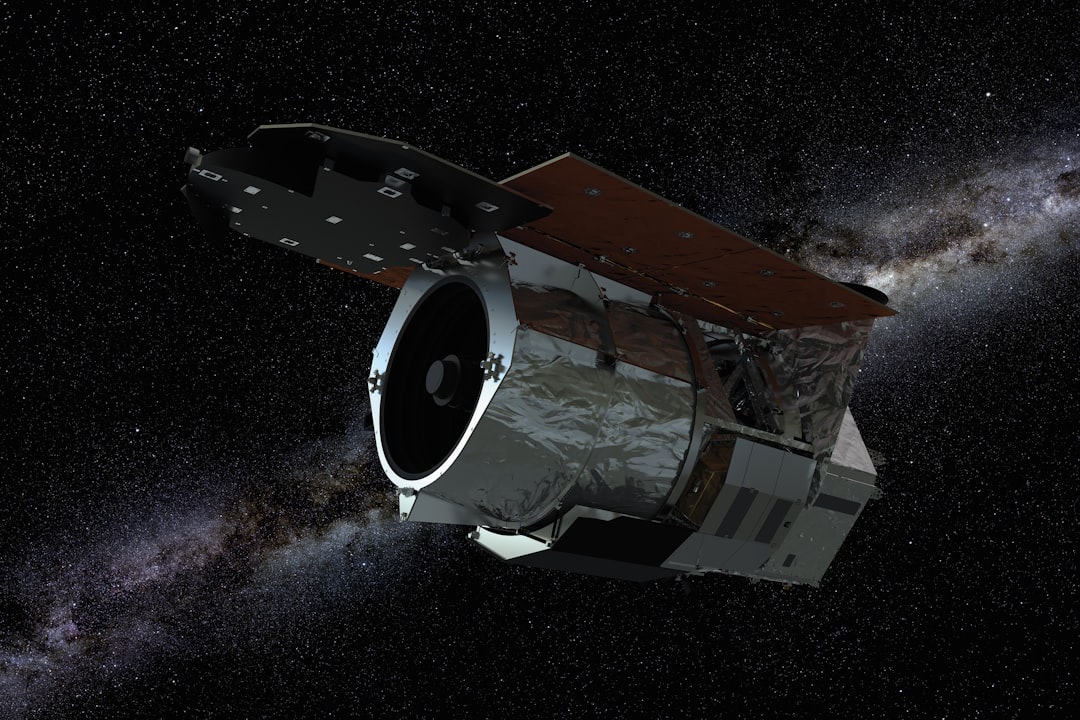
The company's proposed operational architecture is elegantly streamlined. Their prospecting probes would rendezvous with and attach to a metallic asteroid using powerful magnets. Once secured, high-powered lasers vaporize the asteroid's surface material, sublimating PGMs and other metals into a gas phase. An onboard refinery system then separates the valuable PGM vapors from the dominant but far less valuable iron and nickel that constitute the bulk of the asteroid's mass. The refined, high-purity PGM material is then loaded into a heat-shielded atmospheric re-entry capsule, which is returned to Earth — delivering concentrated, market-ready material without the enormous cost and energy penalty of transporting raw, unprocessed ore across interplanetary distances.
This "refine-in-space, return-the-value" model is a critical economic innovation. By only shipping the high-value fraction of extracted material, AstroForge sidesteps one of the fundamental economic objections to asteroid mining: the prohibitive cost of returning low-value bulk material through Earth's deep gravity well. The European Space Agency has examined similar in-situ resource utilization concepts as part of its broader exploration and sustainability agenda, underscoring the growing institutional recognition of space-based resource extraction as a viable long-term strategy.
The MIT Model: Two Phases of Market Disruption
To understand the economic implications of a successful PGM return mission, researchers Robert Nachtrieb and Steven Smith at MIT constructed a sophisticated dynamic systems simulation tracking the evolution of global PGM markets over a 20-year period following the first confirmed successful return of asteroid-sourced material. Their model incorporates terrestrial mining economics, global demand curves, production scaling dynamics, and the competitive response of incumbent producers — producing a nuanced, two-phase picture of market transformation.
Phase One: The Space Gold Rush
In the model's initial phase, the introduction of asteroid-derived PGMs onto the market is gradual enough that prices remain near historical highs. Early movers — the companies that successfully return material first — will be able to sell their product at prevailing market rates while enjoying extraordinarily low production costs compared to deep-shaft terrestrial mining. The result, according to Nachtrieb and Smith, is a period of astronomical profit margins that could drive industry profits to roughly eight times their current levels.
This profitability creates a powerful positive feedback loop in classic economic terms. High margins attract additional private capital investment, which funds expanded production capacity, which in turn accelerates the rate at which space-based supply enters the market. Early investors and successful pioneering companies stand to accumulate extraordinary wealth during this window — a dynamic that mirrors historical resource booms from the California Gold Rush to the early petroleum era, but compressed into a shorter and more technologically intense timeframe.
Phase Two: Equilibrium Collapse and Market Transformation
The second phase is where the model's most dramatic — and consequential — predictions emerge. As space-based production scales aggressively, global PGM supply begins to substantially exceed historical terrestrial output. Market prices enter a steep, sustained decline that the authors term "equilibrium collapse." High-cost terrestrial producers — particularly North American operations, which operate at thinner margins — are projected to be the first to cease operations as prices fall below their break-even thresholds.
Even the giants of terrestrial PGM mining — the dominant South African and Russian operations — are ultimately unable to withstand the pressure of structurally lower prices driven by the superior economics of space-based supply. According to the model, over a period of approximately fifteen years, space-mined PGMs progressively replace terrestrial supply, and global market prices decline by more than 75%. This is not a minor market correction — it represents a fundamental restructuring of one of the world's most strategically sensitive commodity sectors.
"The transition from terrestrial to space-based PGM supply is unlikely to be linear or gentle. Our model suggests a dramatic two-phase shift: an initial period of extraordinary profitability for early entrants, followed by a rapid and irreversible collapse of incumbent market structures." — Nachtrieb & Smith, Will AstroForge Collapse the PGM Market?
The Broader Implications: Green Technology and Environmental Relief
A 75% drop in PGM prices would, at first glance, appear to be catastrophic news — and for the terrestrial mining industry, it unambiguously is. The economic disruption to mining-dependent communities and national economies in South Africa and Russia would be profound, demanding careful policy responses and managed transitions for affected workers and regions. These are not trivial concerns, and they deserve serious attention from policymakers well in advance of the disruption arriving.
Yet the downstream benefits for the broader global economy — and for the planet's environmental future — could be transformative in scale. Consider the implications for clean energy technology:
- Hydrogen fuel cells rely heavily on platinum as a catalyst. Drastically cheaper platinum would dramatically reduce the cost of fuel cell vehicles and stationary power systems, accelerating the hydrogen economy.
- Electrolyzers for green hydrogen production — a cornerstone technology for decarbonizing heavy industry — use platinum and iridium. Lower PGM costs could make green hydrogen cost-competitive with fossil fuels far sooner than current projections suggest.
- Automotive catalytic converters and next-generation emissions control systems would become significantly cheaper, benefiting manufacturers and consumers alike.
- Advanced medical devices, laboratory equipment, and electronics incorporating PGMs would see cost reductions that could democratize access to critical technologies globally.
Beyond economics, the environmental calculus is compelling. Terrestrial PGM mining carries a severe environmental footprint: acid mine drainage contaminates waterways, arsenic and heavy metal pollution devastates ecosystems surrounding mining operations, and the energy demands of deep-shaft extraction are enormous. Workers in these mines face extraordinary physical hazards. NASA has long emphasized that in-space resource utilization could dramatically reduce humanity's environmental impact by moving the most damaging forms of extraction off-planet entirely.
The vision, ultimately, is one in which the solar system's abundant resources subsidize Earth's transition to a cleaner, more sustainable civilization — a concept that the broader space science community increasingly views not as utopian speculation, but as a tractable long-term engineering challenge.
Engineering Reality: Challenges and Progress
The gap between model predictions and operational reality remains significant. AstroForge, like all pioneering aerospace ventures, has encountered its share of high-profile setbacks during its development cycle. Early missions have faced hardware and mission challenges — a pattern that is entirely consistent with the history of "new space" companies operating at the cutting edge of what is technically possible. SpaceX, now the most successful private launch company in history, experienced numerous early failures before achieving reliable operations. The cadence of iteration and failure is not a disqualifying feature of these ventures; it is a characteristic signature of rapid, ambitious technological development.
The fundamental technical hurdles facing asteroid mining remain substantial. These include precise rendezvous and anchoring with low-gravity, irregularly shaped rotating bodies; reliable in-situ processing of materials in microgravity and vacuum; safe atmospheric re-entry of return capsules carrying refined material; and the economic challenge of achieving sufficient throughput to make the business model viable at scale. The Planetary Society's coverage of the Psyche mission offers an accessible overview of what current science suggests about the nature and composition of metallic asteroids — knowledge that will be essential for designing effective extraction systems.
Yet the trajectory is unmistakably forward. Advances in small satellite technology, miniaturized propulsion systems, autonomous spacecraft navigation, and commercial launch economics have collectively made missions that would have been prohibitively expensive a decade ago now achievable for a fraction of the cost. The convergence of these enabling technologies with growing commercial ambition and institutional scientific interest suggests that the question surrounding asteroid mining is no longer if, but increasingly when — and who gets there first.
A New Economic and Environmental Paradigm
The MIT researchers' model offers more than a forecast of commodity price movements — it sketches the outline of a genuinely new relationship between humanity and the resources it depends upon. For most of recorded history, civilization's material prosperity has been extracted from Earth's crust at increasing environmental and human cost. Asteroid mining represents the possibility of decoupling economic growth from terrestrial environmental degradation — sourcing the raw materials of modern technology from a solar system that contains, by any reasonable measure, resources of effectively inexhaustible abundance relative to human needs.
If AstroForge — or any of its competitors — successfully delivers asteroid-derived PGMs to market within the coming decade, the cascade of economic and technological consequences could be one of the most significant industrial transitions in modern history. Those who pioneer the technology stand to accumulate wealth of a scale rarely seen outside of the great technological revolutions of the past two centuries. And the rest of humanity stands to inherit a cleaner planet, cheaper clean energy, and a template for a future in which the limits of Earth's geology no longer constrain the