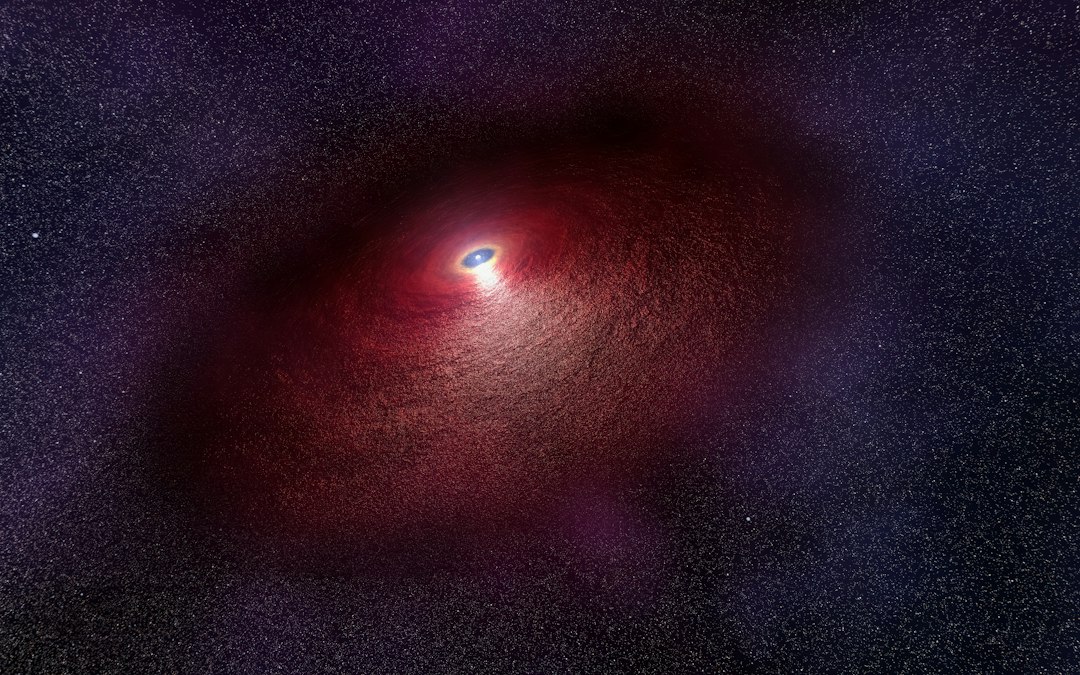
XRISM Makes First-Ever Detection of a Pulsar Feeding from a Companion's Stellar Wind
In a landmark achievement for high-energy astrophysics, scientists using the X-ray Imaging and Spectroscopy Mission (XRISM) observatory have directly observed, for the first time, the process by which a neutron star pulsar captures ionized gas streaming from its massive stellar companion. The target of this historic observation was BP Crucis, a remarkable high-mass X-ray binary (HMXB) system located approximately 13,000 light-years away in the southern constellation Crux. The findings, published in the peer-reviewed journal Science Advances, are already being hailed as a breakthrough in our understanding of stellar wind accretion — one of the most energetically extreme processes in the known Universe.
A Cosmic Odd Couple: The BP Crucis System
At the heart of this discovery lies a fascinating gravitational partnership between two radically different objects. The dominant member of the binary is Wray 977, a blue hypergiant star with a mass approximately 40 times that of our Sun. Stars of this extreme class are among the most luminous and massive objects in the galaxy, and they are extraordinarily short-lived on cosmic timescales, burning through their nuclear fuel in just a few million years. Wray 977 is so immense and energetically active that it continuously sheds its outer layers in the form of a powerful, high-velocity stellar wind — a relentless torrent of ionized gas and plasma that streams outward into space at hundreds of kilometers per second.
Orbiting this stellar titan at close range is its diminutive but extraordinarily dense companion: GX 301-2, a neutron star pulsar. Despite having a mass roughly 1.5 times that of the Sun, GX 301-2 is compressed into a sphere only about 20 kilometers in diameter — roughly the size of a city. As it rotates, it sweeps a powerful beam of X-ray radiation toward Earth with a remarkably precise period of approximately 11 minutes, earning it the classification of an X-ray pulsar. The extreme gravitational field of this neutron star acts like a cosmic vacuum, drawing in the wind material expelled by Wray 977 and converting the kinetic energy of that in-falling matter into intense bursts of X-ray radiation.
"The BP Crucis system is an ideal laboratory for studying wind-fed pulsar accretion, and XRISM's sensitive, high-resolution Resolve spectrometer is an ideal instrument for advancing our understanding of the processes involved." — Brian Williams, XRISM Project Scientist, NASA Goddard Space Flight Center
XRISM: A New Generation of X-ray Eyes
The X-ray Imaging and Spectroscopy Mission (XRISM), a collaborative effort between JAXA, NASA, and the European Space Agency (ESA), represents a quantum leap in humanity's ability to study the X-ray Universe. Launched in September 2023, XRISM carries a revolutionary instrument called the Resolve microcalorimeter spectrometer, which can measure the energies of individual X-ray photons with unprecedented precision. Unlike earlier X-ray telescopes, Resolve can resolve fine spectral features that reveal the physical conditions, chemical composition, velocities, and ionization states of cosmic plasmas in extraordinary detail — making it the ideal tool for dissecting the complex environment around a wind-accreting pulsar.
The Observation: Catching a Pulsar in the Act
The critical observations were conducted on February 1st, 2025, near the peak of one of BP Crucis's stronger X-ray flaring episodes. Over a continuous 16-hour observing window, XRISM's Resolve instrument captured highly detailed X-ray spectra, revealing rapidly changing absorption lines in the system's X-ray emission. Of particular significance were spectral signatures from highly ionized iron — iron atoms stripped of many of their electrons by the extreme radiation field surrounding the neutron star.
These absorption features provided a direct diagnostic of the plasma's motion. The research team, drawn from an international collaboration spanning several prestigious institutions, found that the observed absorption lines were consistently redshifted — displaced toward lower energies relative to their rest-frame values. In the language of astrophysics, this redshift is an unambiguous signature of material moving away from the observer along the line of sight, confirming that the ionized stellar wind was being funneled toward the pulsar — and thus receding from Earth — at a measured velocity of approximately 540,000 km/h (335,000 mph). This is the first time such a direct kinematic measurement of wind capture around a neutron star has ever been achieved.
"It was clear that these observations were groundbreaking, but at the same time this meant the analysis had to be especially detailed. We could see how the dense stream of plasma acts very close to the neutron star." — Nazma Islam, Assistant Professor, Manipal Centre for Natural Sciences, and co-author of the study
The Physics of Wind Accretion: Confirming a Long-Held Theory
The XRISM data did more than simply capture the stellar wind in transit — it allowed astronomers to validate a detailed theoretical framework for how wind accretion operates in pulsar binary systems. This framework, long suspected but never directly confirmed through spectroscopic observation, describes a dynamic and evolving sequence of events tied to the pulsar's orbital position within the stellar wind stream:
- Disk Formation Phase: As the pulsar enters a dense stream of ionized gas from its companion, the angular momentum of the infalling material is sufficient to prevent direct infall. Instead, the gas is swept into a thick, turbulent accretion disk around the neutron star — conceptually analogous to the accretion disks observed around supermassive black holes at the centers of active galaxies.
- Disk Accretion Phase: Within this disk, gas spirals inward under gravity, experiencing intense heating through friction and compression. Temperatures reach hundreds of millions of degrees, generating the powerful X-ray flares that make these systems detectable across thousands of light-years.
- Disk Breakdown and Direct Accretion: As the pulsar moves deeper into the stellar wind stream, the angular momentum of the incoming gas decreases. The disk can no longer be sustained and breaks down, allowing plasma to flow directly onto the neutron star's surface. This phase of direct, quasi-spherical accretion corresponds precisely to what XRISM captured during its February 2025 observation.
- Transient Retrograde Disk: As the pulsar nears the far edge of the wind stream and begins to exit, theory predicts — and this observation supports — that a brief retrograde accretion disk forms, spinning in the opposite direction to the initial disk, before similarly dissolving as the pulsar fully exits the stream.
The fact that XRISM caught the system during the direct accretion phase, and that the spectral data so clearly encoded the velocity and direction of the infalling plasma, represents a triumph for both observational technique and theoretical astrophysics. It is the first time the theoretical life cycle of a wind-fed accretion episode has been directly mapped through spectroscopic evidence.
A Broad International Collaboration
The research was carried out by scientists from a wide array of institutions, reflecting the global nature of modern astrophysics. Contributing organizations included:
- The Astrophysics Science Division at NASA's Goddard Space Flight Center
- The Center for Space Science and Technology (CSST)
- The Manipal Centre for Natural Sciences (MCNS), India
- The Israel Institute of Technology (Technion)
- The US Naval Academy
- The Lawrence Livermore National Laboratory (LLNL)
- Multiple partner universities across the United States, Europe, and Asia
Broader Implications for High-Energy Astrophysics
The significance of these findings extends well beyond the BP Crucis system itself. High-mass X-ray binaries are among the most powerful X-ray sources in the galaxy, and understanding how they accrete matter is fundamental to a range of open questions in astrophysics. The processes at work in systems like BP Crucis are closely related to those governing neutron star spin evolution, the production of gravitational waves in close compact binaries, and even the conditions that may ultimately lead to the merger events detectable by observatories such as LIGO and Virgo.
Furthermore, the ability to directly measure plasma velocities in the immediate environs of a neutron star opens new avenues for testing models of radiation pressure, magnetic field interactions, and the structure of the neutron star magnetosphere. As XRISM continues its mission and accumulates observations of more X-ray binary systems, researchers anticipate a wave of new discoveries that will reshape our understanding of compact object physics and stellar evolution in binary systems.
For now, the detection of Wray 977's stellar wind being captured in real time by GX 301-2 stands as a milestone — a rare moment when cutting-edge technology and theoretical foresight converge to reveal the Universe operating exactly as our best models predict, yet with a richness and detail that only direct observation can provide.