In the heart of our galaxy lies Sagittarius A*, a supermassive black hole that appears deceptively quiet today. But groundbreaking observations from the XRISM X-ray astronomy telescope have revealed a dramatic secret: this cosmic giant was far more violent just a few centuries ago, blazing with intense radiation that illuminated the surrounding molecular clouds like a celestial lighthouse. This discovery, detailed in research soon to be published in The Astrophysical Journal Letters, fundamentally changes our understanding of the Milky Way's recent history and demonstrates how supermassive black holes can rapidly transition between dormant and active states.
The research team, led by Dr. Stephen DiKerby from Michigan State University's Department of Physics and Astronomy, used unprecedented high-resolution X-ray spectroscopy to peer into the galactic center's turbulent past. By analyzing the iron emission signatures from a molecular cloud designated G0.11-0.11, they've essentially created a time machine that reveals when Sagittarius A* last feasted on stellar material—likely within the past 200 to 1,000 years. This timeline means that during humanity's medieval period or Renaissance era, our galaxy's central black hole was actively consuming matter and blazing with X-ray radiation, though the light from that event is only now reaching the molecular clouds we can observe.
Understanding this transition from active to quiet states is crucial for astrophysicists studying galactic evolution and the behavior of supermassive black holes. The findings were presented at the 247th Meeting of the American Astronomical Society, generating significant excitement in the astronomical community about XRISM's capabilities and what these observations reveal about the dynamic nature of our galaxy's core.
The Extreme Environment at Our Galaxy's Heart
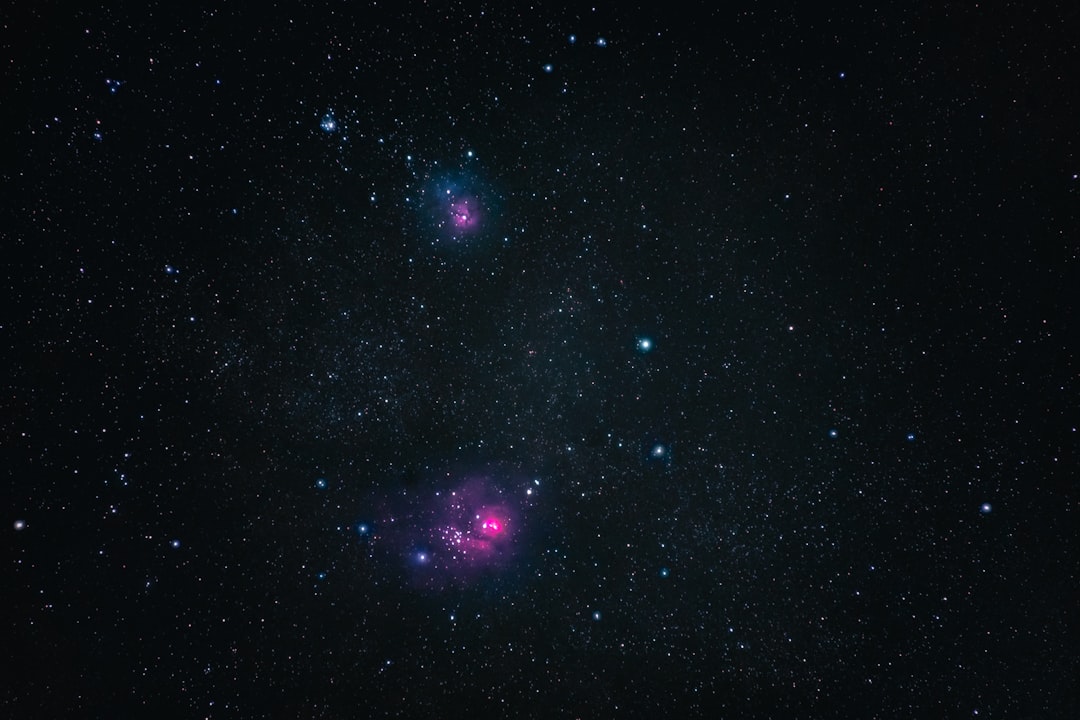
The galactic center represents one of the most extreme and chaotic environments in the entire Milky Way. As DiKerby explained during his press conference, this region contains hundreds of millions of stars packed into a space just a few hundred parsecs across—a density unimaginable compared to our relatively quiet solar neighborhood. Within this crowded stellar metropolis, Sagittarius A* sits like a gravitational king, its mass equivalent to approximately 4 million suns compressed into a region smaller than Mercury's orbit.
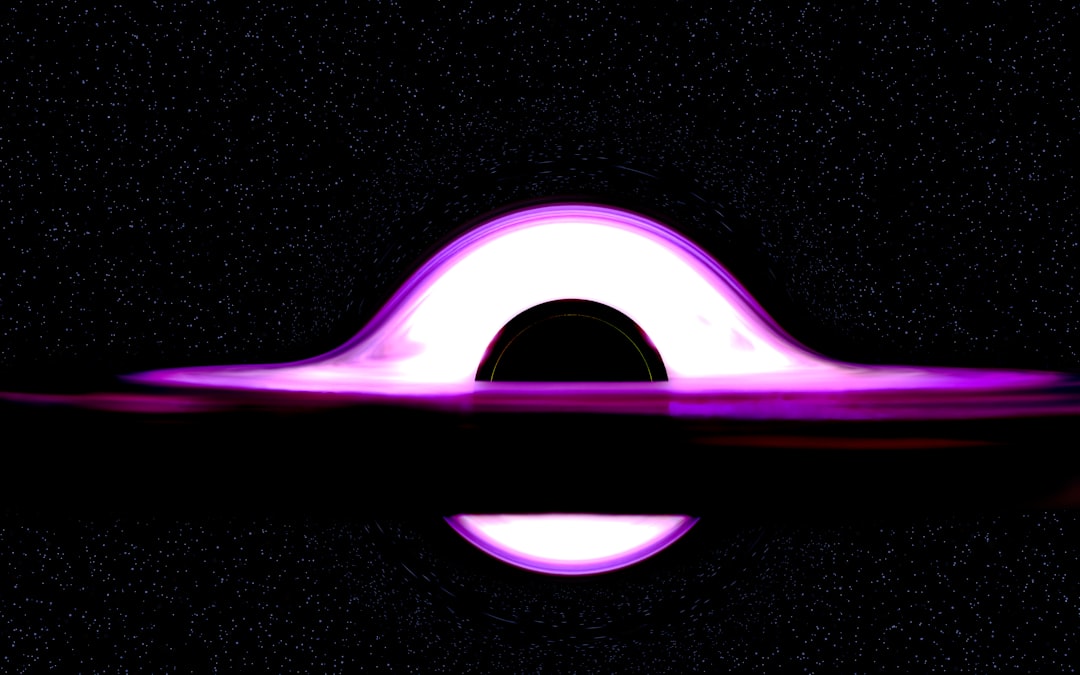
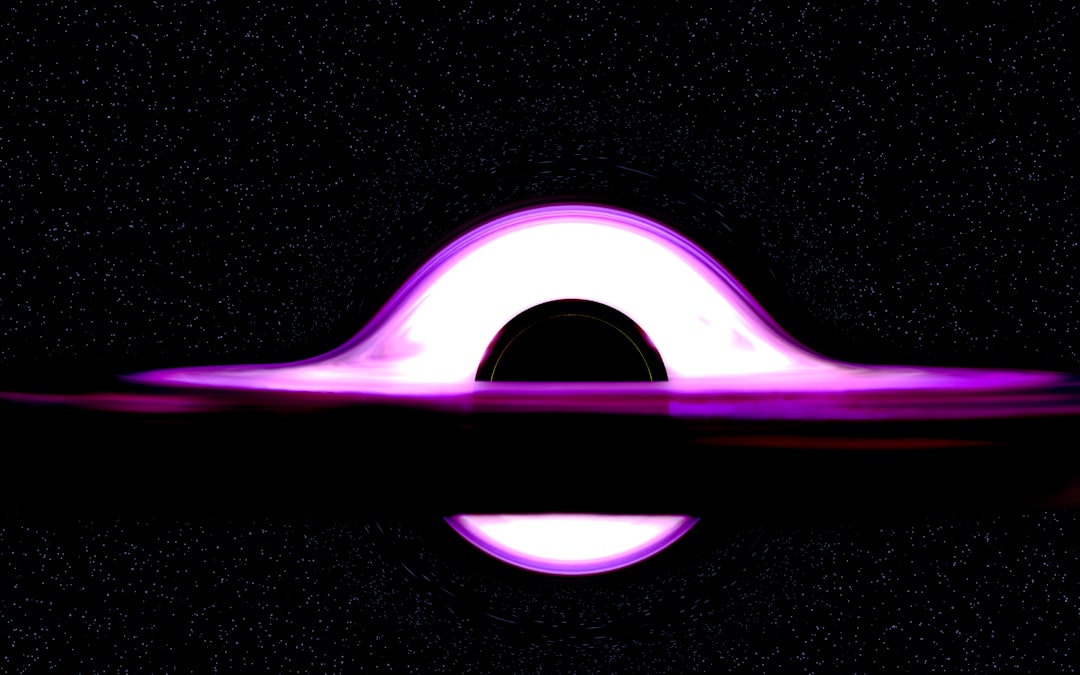
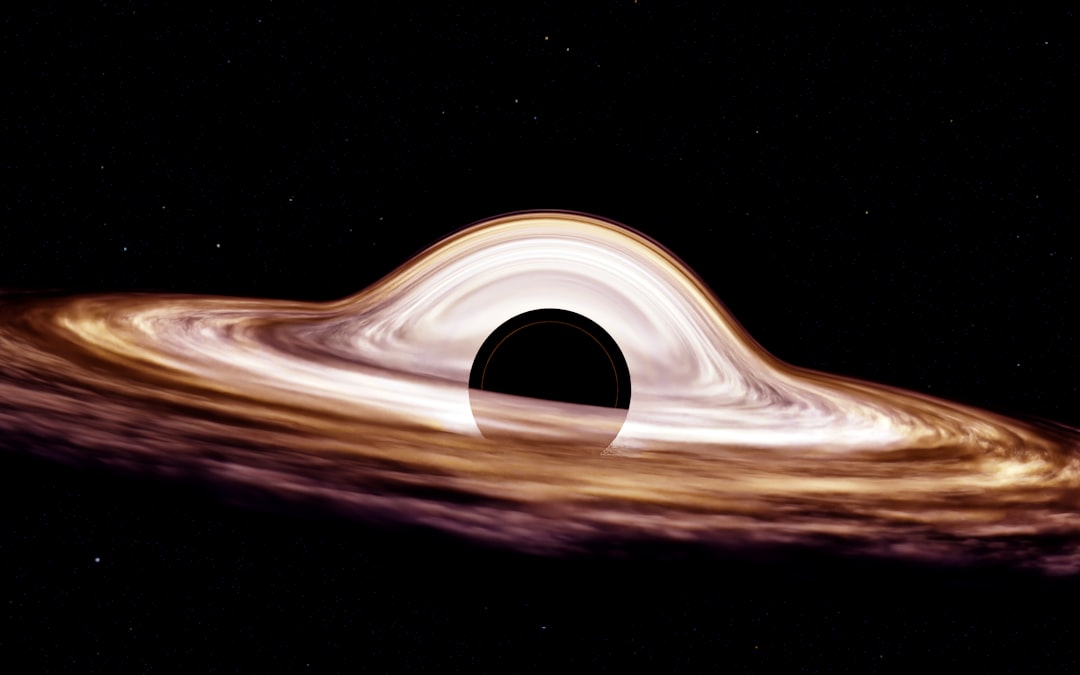
Black holes fundamentally warp the fabric of spacetime itself, creating gravitational fields so intense that not even light can escape once it crosses the event horizon. But the regions surrounding these cosmic monsters—particularly supermassive black holes like Sagittarius A*—create spectacular displays of energy when they're actively feeding. The combination of intense gravitational forces, magnetic fields, and high-energy radiation transforms the area into what astronomers call an active galactic nucleus (AGN), which can outshine entire galaxies when fully active.
These AGN are visible across vast cosmic distances, allowing astronomers to study supermassive black holes in galaxies billions of light-years away. However, Sagittarius A* has long puzzled researchers because it's remarkably quiet compared to other supermassive black holes of similar mass. It barely emits any radiation at all—a stark contrast to the brilliant AGN observed in distant galaxies. This quiescence has led scientists to wonder: has our galaxy's central black hole always been this dormant, or are we simply observing it during a quiet phase?
Revolutionary X-Ray Spectroscopy Unlocks the Past
The key to unlocking Sagittarius A*'s hidden history lies in the molecular gas clouds that orbit within the galactic center. These clouds, composed primarily of hydrogen molecules along with heavier elements like iron, act as cosmic mirrors that can reflect X-ray emissions from past events. The cloud designated G0.11-0.11 has become particularly important in this detective work, serving as a time capsule that preserves evidence of the black hole's previous activity.
The XRISM (X-Ray Imaging and Spectroscopy Mission), a collaborative project between JAXA, NASA, and ESA, represents a quantum leap in X-ray astronomy capabilities. Unlike previous X-ray telescopes, XRISM can resolve individual photon energies with extraordinary precision, allowing researchers to distinguish between different emission mechanisms with unprecedented clarity. This capability proved crucial for determining whether the X-rays from G0.11-0.11 originated from cosmic ray ionization or X-ray fluorescence—a distinction that reveals whether the cloud is being bombarded by high-energy particles or reflecting ancient light from past black hole activity.
"Nothing in my professional training as an X-ray astronomer had prepared me for something like this. This is an exciting new capability and a brand-new toolbox for developing these techniques," said Dr. Stephen DiKerby, emphasizing the revolutionary nature of XRISM's observational power.
The researchers focused their analysis on the Fe Kα emission line complex, one of the most powerful and informative spectral features in X-ray astronomy. This emission line occurs when iron atoms are ionized—stripped of their innermost electrons—and subsequently release X-ray photons as outer electrons fall into the vacant inner shells. The Fe Kα line is particularly useful for studying extreme environments around black holes and neutron stars because iron is relatively abundant in space and its emission signature is distinctive and strong.
Decoding the Iron Emission Signatures
The breakthrough came when XRISM's high-resolution spectroscopy resolved the Fe Kα doublet—essentially splitting what appears as a single emission line into its component parts with such precision that the team could determine the physical processes responsible for the X-ray emission. Previous X-ray telescopes, including the venerable XMM-Newton observatory, lacked the spectral resolution to make this crucial distinction, seeing only a blurred emission feature where XRISM revealed fine details.
The research team identified two potential mechanisms that could produce the observed Fe Kα emissions from G0.11-0.11:
- X-ray Fluorescence: In this scenario, X-rays from a past outburst of Sagittarius A* illuminate the molecular cloud, causing iron atoms to fluoresce and emit their characteristic X-ray signature. This process acts like an echo, with the cloud reflecting light from an event that occurred hundreds of years ago but is only now reaching the cloud's location.
- Cosmic Ray Ionization: Alternatively, high-energy cosmic rays—charged particles accelerated to near-light speeds—could bombard the cloud, ionizing iron atoms and producing similar X-ray emissions. This mechanism would indicate ongoing particle acceleration in the galactic center rather than past black hole activity.
- Velocity Measurements: XRISM's spectroscopy also revealed the cloud's motion through space with unprecedented precision, providing additional clues about the timing and nature of the illuminating event.
- Spectral Line Profiles: The detailed shape and width of the emission lines contain information about the temperature, density, and ionization state of the gas, helping researchers reconstruct the intensity of the original X-ray outburst.
Through meticulous analysis of the spectral data, the team conclusively determined that X-ray fluorescence was responsible for the emissions—definitive proof that Sagittarius A* experienced a major outburst in the relatively recent past. This finding transforms our understanding of the galactic center's history and demonstrates that supermassive black holes can undergo dramatic changes in activity on timescales of mere centuries.
Timeline of Ancient Outbursts
Dating the precise timing of Sagittarius A*'s past activity requires careful consideration of the cloud's location and the light travel time from the black hole. The researchers examined two competing models for the galactic center's recent history:
The "one-flare" model suggests a single major outburst occurred approximately 200-230 years ago, with X-rays from this event gradually illuminating different molecular clouds as the radiation expands outward at the speed of light. Under this scenario, all the observed X-ray emissions from various galactic center clouds can be explained by echoes from this single event, with different clouds being illuminated at different times based on their geometric positions relative to Sagittarius A*.
Alternatively, the "two-flare" model proposes that Sagittarius A* experienced two separate feeding events—one approximately 230 years ago and another more recent outburst around 130 years ago. In this interpretation, different molecular clouds are reflecting X-rays from different outbursts. The Bridge cloud, for example, might be illuminated by the more recent flare, while G0.11-0.11 and other clouds reflect the earlier event. Intriguingly, if this model is correct, the X-rays from the more recent flare should reach G0.11-0.11 within the next few decades, potentially allowing astronomers to observe the cloud "light up" in real-time.
What Triggered the Black Hole's Awakening?
The evidence of recent outbursts raises a fascinating question: what caused Sagittarius A* to transition from its current dormant state to an active, radiation-blazing phase? The answer likely lies in a feeding event—the black hole consuming a substantial amount of matter, either from a wandering star that ventured too close or a massive gas cloud that fell into the gravitational well.
When matter approaches a supermassive black hole, it doesn't fall straight in. Instead, it forms an accretion disk—a swirling vortex of superheated material that gradually spirals inward. Friction within this disk heats the matter to millions of degrees, causing it to emit intense radiation across the electromagnetic spectrum, particularly in X-rays. The magnetic fields threading through the accretion disk can also launch powerful jets of particles perpendicular to the disk, contributing to the overall energy output.
For Sagittarius A*, astronomers estimate that the recent outburst required the black hole to consume matter equivalent to several times the mass of our Sun—a cosmic feast by any measure, though modest compared to the black hole's total mass. The European Southern Observatory's Very Large Telescope has been monitoring stars orbiting close to Sagittarius A*, and future observations may reveal which stellar or gas cloud victim triggered the ancient outburst.
"By resolving the iron lines with such clarity, we can now read the galactic center's past activity in unprecedented detail. This remarkable measurement shows just how powerful XRISM is for uncovering the hidden history of the center of our galaxy," explained Professor Shuo Zhang, director of the laboratory behind this groundbreaking work.
Implications for Galactic Evolution and Black Hole Physics
This discovery carries profound implications for our understanding of supermassive black hole behavior and galactic evolution. The fact that Sagittarius A* can switch between quiet and active states on century timescales suggests that such transitions might be common among supermassive black holes throughout the universe. Many galaxies we observe today with quiet central black holes might have been blazing AGN just a few centuries ago, and vice versa.
The research also provides crucial insights into the feeding mechanisms of supermassive black holes. Understanding how these cosmic giants acquire matter, how quickly they can consume it, and how the resulting energy output affects the surrounding galaxy helps astronomers build more accurate models of galactic evolution over cosmic time. The intense radiation from active black holes can heat surrounding gas, potentially suppressing star formation in the galactic center—a phenomenon known as AGN feedback that plays a crucial role in regulating galaxy growth.
Furthermore, the ability to map past outbursts through X-ray echoes opens an entirely new window into studying black hole activity. As DiKerby enthusiastically noted, "One of my favorite things about being an astronomer is realizing I'm the first human to ever see this part of the sky in this way." This technique of using molecular clouds as cosmic mirrors could be applied to other galaxies, allowing astronomers to study the historical activity of distant supermassive black holes in unprecedented detail.
Future Observations and Unanswered Questions
The research team emphasizes that this work represents just the beginning of a comprehensive mapping effort of the galactic center's X-ray echo system. Future observations will test the competing "one-flare" and "two-flare" models by monitoring multiple molecular clouds and tracking how their X-ray emissions evolve over time. If the two-flare model is correct, astronomers should observe G0.11-0.11 brightening again within decades as X-rays from the more recent outburst arrive.
XRISM will continue observing other galactic center molecular clouds, each potentially revealing different aspects of Sagittarius A*'s past behavior. By studying the unique dynamics of each cloud—their velocities, densities, and chemical compositions—researchers can create a three-dimensional map of the galactic center and reconstruct a detailed timeline of black hole activity stretching back centuries or even millennia.
The Chandra X-ray Observatory and other space-based telescopes will complement XRISM's observations, providing additional data on the galactic center's high-energy environment. Ground-based observatories continue monitoring the orbits of stars around Sagittarius A*, potentially identifying candidates for future feeding events that might trigger the next outburst.
A New Era in Galactic Archaeology
This research exemplifies the power of modern astronomical techniques to reconstruct cosmic history. Just as archaeologists piece together ancient human civilizations from fragmentary evidence, astronomers are now developing the tools to read the historical record written in light echoes and emission signatures across the galaxy. The combination of cutting-edge instrumentation like XRISM with sophisticated theoretical models allows scientists to witness events that occurred before telescopes existed, before humanity understood the nature of black holes, and before we even knew our galaxy had a supermassive black hole at its center.
The journey from initial observation to published discovery represents countless hours of data analysis, theoretical modeling, and peer review—the rigorous process that ensures scientific findings are robust and reliable. DiKerby's team had to develop entirely new analysis techniques to handle XRISM's unprecedented data quality, pioneering methods that will benefit future X-ray astronomy research across numerous fields.
As we stand on the threshold of new discoveries about our galaxy's violent past, we're reminded of how much remains unknown about the universe. Sagittarius A* sits just 26,000 light-years away—practically in our cosmic backyard—yet we're only now beginning to understand its behavior and history. The black hole's recent awakening, revealed through these X-ray echoes, demonstrates that our galaxy is far more dynamic and changeable than we might have imagined from observing it during a single human lifetime.
The implications extend beyond pure science to our place in the cosmic story. During the time when Sagittarius A* blazed with intense radiation, humans on Earth were building cathedrals, writing poetry, and developing the scientific method that would eventually allow us to understand what was happening at our galaxy's heart. The X-rays from that ancient outburst have been traveling through space ever since, finally reaching the molecular clouds where XRISM could detect their faint echoes—a cosmic message in a bottle revealing our galaxy's turbulent recent past.