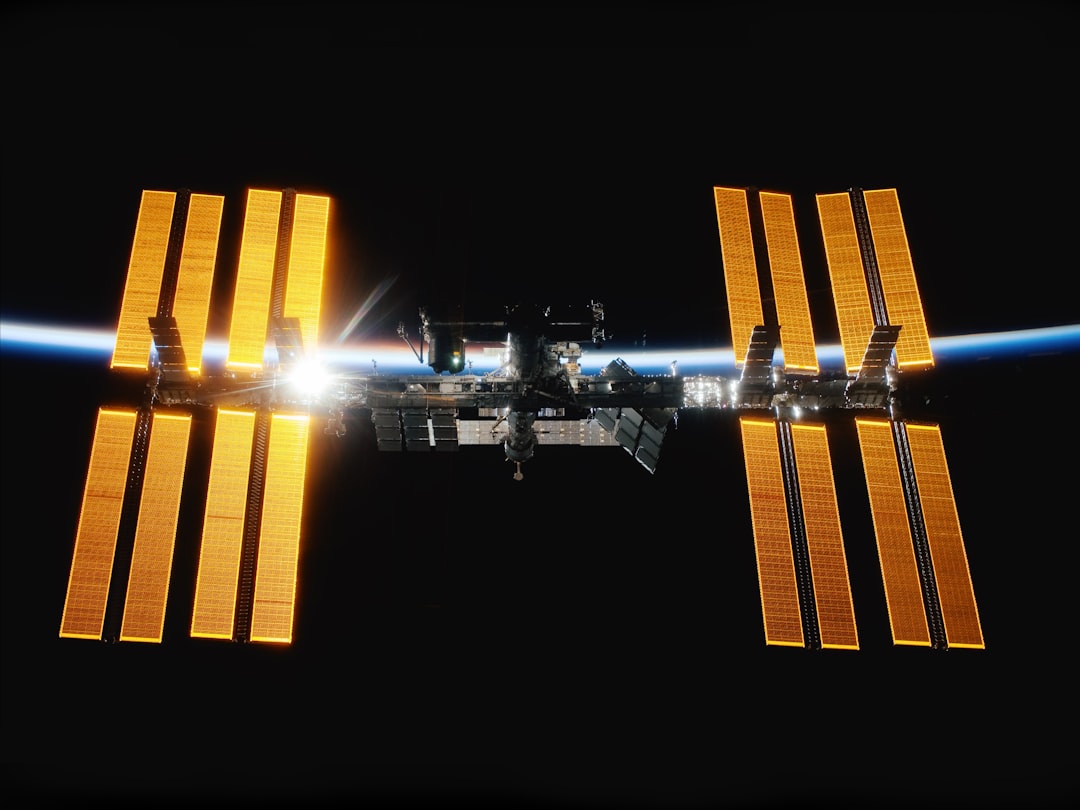
As humanity stands at the threshold of a new era in orbital infrastructure, the impending retirement of the International Space Station (ISS) in 2030 marks both an ending and a beginning. After more than three decades of continuous human presence in Low Earth Orbit (LEO), the aging station will give way to an unprecedented constellation of next-generation platforms—many of them commercially operated. This transformation represents a fundamental shift in how humanity will live, work, and conduct research beyond Earth's atmosphere.
The commercial space sector has evolved dramatically over the past two decades, transitioning from a supporting role to becoming a primary driver of innovation in orbital operations. Companies that once merely supplied cargo and crew transportation are now designing entire orbital habitats, complete with advanced life support systems, research facilities, and even entertainment venues. This evolution mirrors the broader commercialization trend that has revolutionized space access, with private entities now capable of undertaking projects that were once the exclusive domain of national space agencies.
The diversity of commercial station concepts currently in development reflects both the maturation of the private space industry and the varied opportunities that Low Earth Orbit presents. From modest temporary platforms to ambitious rotating structures that simulate gravity, these designs showcase innovative approaches to the fundamental challenges of long-duration spaceflight. According to NASA's LEO Economy initiative, this commercial transition is essential for enabling the agency to focus resources on deep space exploration while maintaining robust research capabilities in orbit.
Blue Origin's Orbital Reef: A Mixed-Use Business Park in Space
Among the most ambitious commercial station concepts is Orbital Reef, a collaborative venture between aerospace giants Blue Origin and Sierra Space. Selected by NASA in December 2021 as part of the Commercial LEO Destinations (CLD) program, this project envisions what its creators describe as a "mixed-use business park" in orbit—a paradigm-shifting concept that treats orbital real estate as a platform for diverse commercial activities rather than solely scientific research.
The partnership backing Orbital Reef reads like a who's-who of aerospace and technology innovation. Beyond the primary developers, the consortium includes Amazon, Boeing, Redwire Space, Genesis Engineering Solutions, and Arizona State University. This diverse coalition brings expertise spanning cloud computing infrastructure, spacecraft manufacturing, in-space construction, and academic research—all critical components for a truly multipurpose orbital facility.
As of mid-2024, the project has achieved several critical developmental milestones that validate its technical approach. Most notably, Sierra Space successfully conducted burst tests of its revolutionary Large Integrated Flexible Environment (LIFE) modules, demonstrating that inflatable habitat technology can withstand the extreme pressures required for human spaceflight. These tests, which pushed the modules beyond their design limits, proved that expandable structures can offer more internal volume per kilogram of launch mass than traditional rigid modules—a crucial advantage for cost-effective station construction.
Modular Architecture and Technical Specifications
Orbital Reef's design philosophy centers on maximum flexibility and compatibility. The station will provide approximately 830 cubic meters (29,310 cubic feet) of pressurized volume—roughly equivalent to the habitable space in a large commercial airliner—capable of supporting up to ten occupants simultaneously. The modular architecture allows for customization based on customer needs, whether those involve pharmaceutical research, materials science, Earth observation, or space tourism.
The station's four initial modules each serve distinct but complementary functions:
- The Core Module: Serving as the station's nerve center, this 250-cubic-meter module houses command and control systems, data processing capabilities, and communications infrastructure. It features six of the largest windows ever designed for spaceflight, offering unprecedented views of Earth for both scientific observation and the psychological well-being of crew members. The module also contains critical life support systems, including an Environmental Control and Life Support System (ECLSS) and waste management facilities.
- The Research Module: Comparable in size to the Core, this laboratory space features a payload airlock and cupola for deploying and retrieving experiments. Its customizable interior can be reconfigured to support diverse research programs, from biological studies requiring specific temperature and lighting conditions to materials science experiments that need exposure to the space environment.
- The Power and Thermal Module: This critical infrastructure component, known as "the Mast," generates 100 kilowatts of electrical power through deployable solar arrays—enough to power a small neighborhood on Earth. It manages thermal control through radiators that dissipate waste heat into space and serves as the mounting point for external robotics, communications antennas, and docking mechanisms.
- The LIFE Module: Sierra Space's innovative inflatable habitat measures 10 meters long and 8.5 meters in diameter when fully deployed, yet launches in a compact configuration. This module will house four crew members and includes exercise equipment, medical facilities, and the Astro Garden® system for growing fresh food—addressing both nutritional and psychological needs during extended missions.
The Node module, with its 40 cubic meters of volume, serves as a versatile connection point featuring two International Docking System Standard (IDSS) ports. This standardization is crucial: it allows Orbital Reef to accommodate virtually every operational crew vehicle, including SpaceX's Dragon 2, Boeing's Starliner, Sierra Space's Dream Chaser, and even Russia's Soyuz spacecraft. This interoperability transforms the station into a true commercial hub accessible to customers worldwide.
"Orbital Reef represents a fundamental reimagining of what a space station can be. Rather than a single-purpose research facility, we're creating an ecosystem where multiple customers can pursue their unique objectives simultaneously, from cutting-edge materials science to immersive entertainment experiences," explained Brent Sherwood, Senior Vice President of Advanced Development Programs at Blue Origin.
Axiom Station: Evolutionary Transition from the ISS
While Orbital Reef envisions a clean-sheet design, Houston-based Axiom Space has pursued a different strategy: evolutionary transition. In partnership with European aerospace manufacturer Thales Alenia Space, Axiom is developing a modular station that will initially attach to the ISS before becoming an independent orbital outpost. This approach offers a unique advantage—operational experience and infrastructure validation while the ISS remains functional, reducing risk during the transition period.
The concept emerged from NASA's CLD program but has evolved into something far more ambitious than the original single-module proposal. Axiom's vision encompasses a five-module complex that will match or exceed the ISS's research capabilities while adding substantial commercial functionality. The phased deployment strategy demonstrates sophisticated planning: each module addition expands capabilities incrementally, allowing the company to generate revenue and refine operations before the station becomes fully independent.
Phased Deployment Strategy
The Payload Power Thermal Module (PPTM) will launch first, scheduled for no earlier than 2027. This foundational element will dock with the ISS at one of the ports currently used by cargo spacecraft, establishing the infrastructure necessary for power generation, thermal management, and payload support. Thales Alenia Space has already begun fabricating the primary structures in Italy, with final assembly and integration planned for Houston before launch.
By 2028, the PPTM will detach from the ISS and dock with Habitation Module-1 (HAB-1), creating the nucleus of an independent station. HAB-1, measuring 11 meters long and 4.2 meters in diameter, provides quarters for four crew members along with space for research and manufacturing applications. Critically, this module contains propulsion, guidance, navigation, and station control systems—enabling autonomous operations independent of the ISS.
The Airlock module, scheduled for the late 2020s, will facilitate extravehicular activities (EVAs) and enable the deployment of external payloads. Combined with HAB-2, which adds quarters for four additional crew members, the station will achieve full operational capability. HAB-2 brings complete ECLSS support, commercial satellite communications, and a remote manipulator arm analogous to the Canadarm-3 system being developed for the Lunar Gateway.
The Research and Manufacturing with Earth Observation (RMF) module, expected in the 2030s, will enable advanced research, product development, and space manufacturing in microgravity. A glass-walled cupola will serve as an Earth observatory, supporting climate research, disaster monitoring, and perhaps offering the most spectacular views available to humans in orbit.
Specialized Modules and Future Expansion
Beyond the core station, Axiom has partnered with innovative companies to add specialized capabilities. The Space Entertainment Enterprise (SEE-1) module—a spherical six-meter inflatable structure—will serve as the first entertainment production studio in space. This module has already attracted attention from the film industry, with plans for productions featuring high-profile talent. Such ventures demonstrate how commercial stations can support entirely new industries beyond traditional aerospace applications.
Additionally, Axiom plans to repurpose one or more of the Raffaello Multi-Purpose Logistics Modules (MPLMs) that currently serve the ISS. These proven structures, originally built by Thales Alenia Space for the Space Shuttle program, offer substantial volume and could be modified for storage, additional habitation, or specialized research functions—exemplifying the practical reuse of existing space hardware.
Innovative Concepts: From Temporary Platforms to Rotating Cities
While Orbital Reef and Axiom Station represent near-term commercial ventures with substantial backing and development progress, several other concepts showcase the breadth of vision within the commercial space sector. These range from modest temporary platforms to audacious structures that could house hundreds of people in artificial gravity.
Haven-1: Minimalist Approach to Commercial Access
Vast Space's Haven-1 represents the opposite end of the complexity spectrum from massive multi-module stations. This compact platform offers 45 cubic meters of habitable volume—roughly equivalent to a small studio apartment—and relies on SpaceX's Crew Dragon for life support during crewed missions. This symbiotic relationship exemplifies efficient design: rather than duplicating systems, Haven-1 leverages existing spacecraft capabilities while providing dedicated space for research, manufacturing, and storage.
The station can sustain four crew members for up to 30 days and will launch with 150 kilograms of preloaded cargo supporting various commercial activities. Scheduled for launch in early 2027 aboard a SpaceX Falcon 9, Haven-1 could become operational before larger stations, offering early commercial customers access to microgravity environments at potentially lower costs. This approach may prove particularly attractive for pharmaceutical research, materials science experiments, and proof-of-concept demonstrations that don't require extensive facilities.
VERA Station: Artificial Gravity Through Rotation
The Gateway Foundation's Voluminous Environment Rotating Architecture (VERA) represents perhaps the most ambitious commercial station concept currently proposed. This enormous rotating structure—reminiscent of the iconic station in Stanley Kubrick's 2001: A Space Odyssey—would address one of spaceflight's most significant challenges: the physiological effects of prolonged weightlessness.
The design features two concentric tori (ring-shaped structures) measuring 84 meters in diameter and containing a staggering 369,523 cubic meters of pressurized volume—more than the entire ISS by a factor of nearly a thousand. The dual-torus configuration enables two different levels of simulated gravity through rotation: the outer ring would provide stronger centripetal acceleration, while the inner ring offers a gentler environment. This versatility could support research into the minimum gravity levels required for human health and provide acclimation zones for people traveling between different gravitational environments.
The Inner Torus, containing 85,278 cubic meters, would house crew quarters, maintenance facilities, and station control. Importantly, it serves as a safe haven during emergencies—if problems arise in the outer ring, occupants can retreat inward without requiring emergency evacuation vehicles. The Gateway Foundation plans to construct VERA using their proposed Sargon Construction Ring, an automated system employing "Panel Construction" techniques. This involves welding hull plates with pre-attached Whipple shielding (protection against micrometeorite impacts) in orbit, enabling rapid assembly of large pressurized volumes.
VERA serves as a stepping stone toward the Foundation's ultimate vision: the Gateway Spaceport, a massive 488-meter-diameter facility capable of accommodating 150 crew members and up to 1,250 guests within 11.9 million cubic meters of pressurized volume. This colossal structure would feature distinct gravity zones—a Lunar Gravity Area (0.16 g) and Mars Gravity Area (0.38 g)—allowing travelers to acclimate to the gravity they'll experience at their destinations. While such ambitious projects face enormous technical and financial challenges, they illustrate the long-term vision driving commercial space development.
European Innovation: Airbus LOOP and Starlab Station
European aerospace giant Airbus has developed two distinct commercial station concepts, each addressing different aspects of the post-ISS orbital economy. These projects leverage Airbus's extensive experience building ISS modules and spacecraft, including the European Service Module for NASA's Orion spacecraft.
The LOOP: Multipurpose Modular Design
The LOOP concept showcases European expertise in creating versatile, human-centered space habitats. This eight-meter-diameter cylindrical module features a rigid outer shell with windows, airlocks, and multiple docking ports enabling both visiting vehicles and additional module attachment. The interior comprises three decks connected by a central tunnel, with greenhouse elements providing both fresh food and psychological benefits through the presence of living plants.
What distinguishes LOOP is its emphasis on adaptability. The modular deck design allows configurations to be swapped or added based on mission requirements—whether that involves scientific research, medical facilities, manufacturing, entertainment, or tourism. The bottom deck contains an innovative centrifuge system with multiple pods where crew members can exercise while experiencing partial gravity, potentially mitigating some of the physiological deconditioning that occurs in weightlessness.
LOOP's life support systems include body-mounted radiators for thermal control—a departure from traditional external radiator panels that could offer advantages in terms of micrometeorite protection and system redundancy. Solar-electric power generation and multiple communication systems ensure operational independence, while the design accommodates four crew members normally and up to eight during crew rotation periods.
Starlab Station: Ensuring Continuity in LEO Research
Airbus's collaboration with Starlab Space LLC on the Starlab Station takes a more focused approach: ensuring seamless continuity of microgravity research when the ISS retires. This 17-meter-tall, 7.7-meter-wide station will accommodate four regular crew members (eight during turnover) and is specifically designed to maintain the research momentum built over decades of ISS operations.
With a target operational date of 2030—coinciding with the ISS retirement—Starlab represents a bridge between eras of orbital research. The design teams reached the Critical Design Review phase in late 2025, a significant milestone indicating that major technical challenges have been resolved and detailed engineering can proceed. This timeline positions Starlab as one of the most likely candidates to achieve operational status by the end of the decade.
"The transition from ISS to commercial stations must preserve the scientific capabilities and international cooperation that have made orbital research so productive. Starlab is designed specifically to enable researchers to continue their work without interruption, while adding new capabilities that only commercial operations can provide," stated a senior Airbus representative during the project's announcement.