In a groundbreaking study that could reshape our understanding of where life might exist beyond Earth, researchers from China have demonstrated that stellar flares from small stars may actually expand the regions where life could potentially thrive. This research, recently published in The Innovation, challenges conventional thinking about habitable zones and suggests that the violent outbursts we once considered harmful might actually be essential ingredients for the emergence of life around K-type and M-type stars.
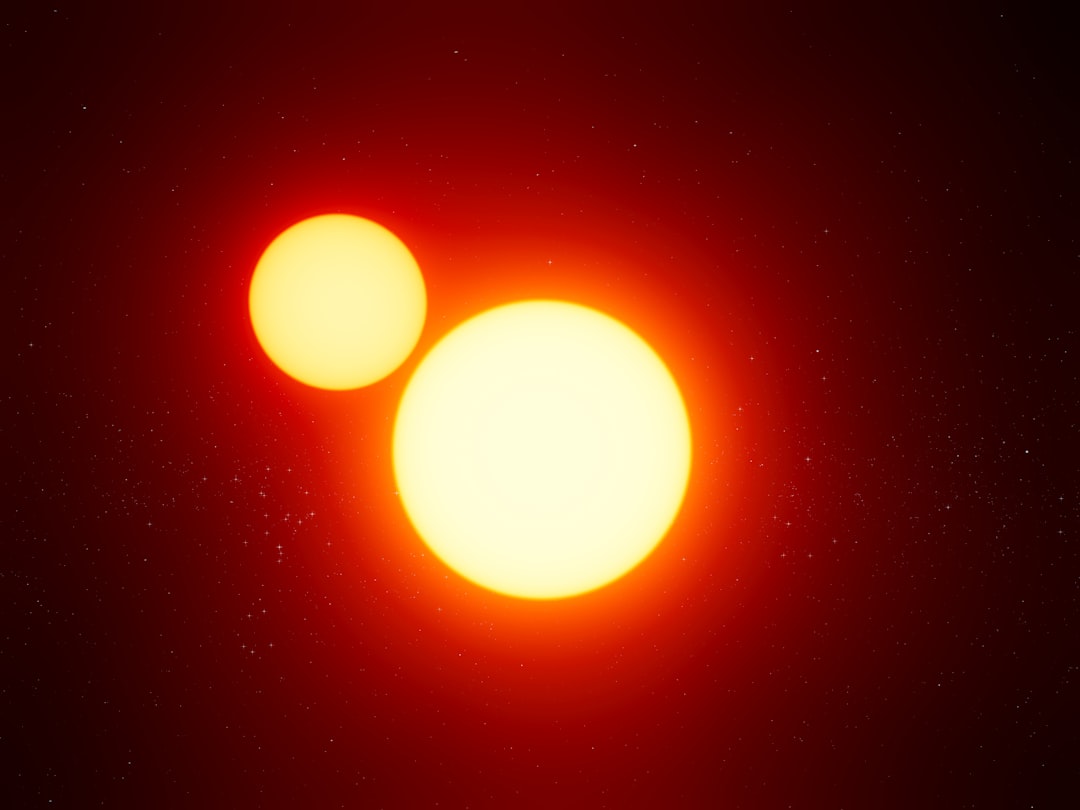
For decades, the quest to find extraterrestrial life has concentrated primarily on planets orbiting Sun-like G-type stars, simply because that's the environment we know best. However, the astronomical community has increasingly turned its attention to smaller, cooler stars—particularly K-type and M-type dwarfs—which dominate our galaxy and offer some tantalizing advantages. These diminutive stellar powerhouses can burn steadily for tens of billions to even trillions of years, providing vastly longer windows for life to develop compared to our Sun's relatively modest 10-billion-year lifespan.
The study introduces a refined understanding of the ultraviolet radiation habitable zone (UV-HZ), a concept distinct from the traditional liquid water habitable zone (LW-HZ) that most people associate with habitability. While the LW-HZ defines the orbital distance where temperatures allow liquid water to exist on a planet's surface, the UV-HZ considers whether a star provides sufficient ultraviolet radiation to drive the chemical reactions necessary for life's building blocks—specifically, the synthesis of RNA precursors—without delivering so much radiation that it becomes sterilizing.
Understanding the Dual Nature of Habitable Zones
The concept of habitable zones has evolved considerably since the term was first coined. The liquid water habitable zone remains the gold standard for initial habitability assessments, representing the orbital distance range where a planet's surface temperature could theoretically support liquid water—a prerequisite for life as we know it. For small stars, this zone sits much closer to the star than Earth's distance from the Sun, sometimes just a few million kilometers away compared to our 150-million-kilometer orbital radius.
However, the UV radiation habitable zone adds another crucial dimension to this picture. Ultraviolet light, particularly in specific wavelength ranges, can drive photochemical reactions that scientists believe were essential for the origin of life on Earth. According to research from NASA's Astrobiology Program, UV radiation may have been instrumental in synthesizing the organic compounds that eventually led to the first self-replicating molecules. Too little UV radiation, and these crucial reactions might never occur; too much, and the radiation destroys organic molecules faster than they can form.
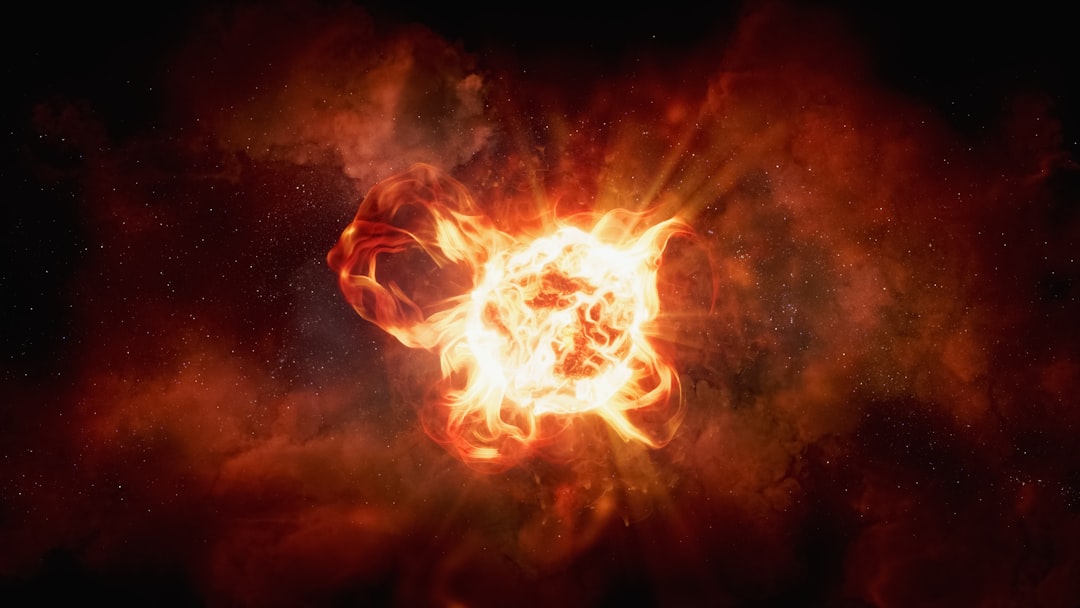
What makes this study particularly innovative is its recognition that stellar flares—those explosive releases of magnetic energy that cause stars to brighten dramatically for minutes or hours—might actually help expand the UV-HZ around small stars. While flares are often viewed as threats to planetary habitability due to their potential to strip away atmospheres, the research suggests they could also provide the periodic bursts of UV energy necessary to jumpstart prebiotic chemistry on planets that would otherwise receive insufficient ultraviolet radiation.
Methodology: Modeling Flares and Chemical Pathways
The research team employed sophisticated computational models to simulate the UV radiation environments around K-type and M-type stars, taking into account both their baseline UV output and the additional radiation contributed by stellar flares. Unlike our relatively calm Sun, these smaller stars can be remarkably active, with some M-dwarfs producing flares thousands of times more powerful than the largest solar flares ever recorded.
The scientists focused specifically on evaluating the likelihood of RNA precursor synthesis—the chemical processes that create the nucleotides and other molecular building blocks from which RNA is constructed. This focus on RNA rather than DNA reflects the scientific consensus around the "RNA World" hypothesis, which posits that early life may have relied exclusively on RNA for both genetic storage and catalytic functions before DNA and proteins evolved.
Using spectroscopic data and flare frequency statistics compiled by missions like NASA's Kepler Space Telescope, the team calculated how much UV radiation planets at various orbital distances would receive over time. They then compared these UV radiation levels against the thresholds required for RNA precursor chemistry, determining where the UV-HZ boundaries would fall for each star in their sample.
Examining Nine Worlds: A Survey of Potential Habitats
The researchers applied their refined UV-HZ framework to nine confirmed or candidate exoplanets orbiting K-type and M-type stars. This sample included a diverse array of worlds:
- Kepler-1540 b: A Neptune-like planet orbiting a K-type star, representing the gas giant category in their analysis
- KOI-7703.01: A rocky world candidate around a K-type star, one of the three planets found within the overlapping habitable zones
- KOI-8047.01: An M-dwarf planet candidate that sits within both the UV-HZ and LW-HZ, making it particularly intriguing for astrobiology
- Kepler-155 c: A K-type star planet requiring further observation to confirm its surface temperature and habitability potential
- KOI-5879.01: An M-type star planet candidate that falls outside the optimal overlap zone
- Kepler-1512 b: A confirmed rocky planet orbiting an M-dwarf, though not within the overlapping habitable zones
- Kepler-438 b: One of the most Earth-like exoplanets known, orbiting an M-dwarf and requiring additional study to confirm its habitability
- KOI-7706.01: A K-type star planet candidate that falls outside the optimal habitability overlap
- KOI-8012.01: An M-dwarf planet that successfully resides within both habitable zone definitions
The analysis revealed that only three of the nine surveyed worlds—KOI-8012.01, KOI-8047.01, and KOI-7703.01—orbit within the overlapping region where both liquid water and appropriate UV radiation levels coincide. This finding underscores how restrictive the requirements for habitability become when we consider multiple environmental factors simultaneously.
The Special Case of TRAPPIST-1
While not part of the nine-planet survey, the study's findings have significant implications for the TRAPPIST-1 system, perhaps the most famous M-dwarf planetary system discovered to date. This remarkable system, located just 40 light-years from Earth, hosts seven rocky planets, three of which orbit within the traditional liquid water habitable zone. Research from the European Southern Observatory has shown that these worlds are roughly Earth-sized and could potentially harbor atmospheres.
However, TRAPPIST-1 presents a complex habitability puzzle. The star is highly active, producing frequent flares that bombard its planets with radiation. Additionally, the planets orbit so close to their star—with periods ranging from just 1.5 to 12 days—that they are almost certainly tidally locked, always showing the same face to their star just as our Moon does to Earth. This configuration creates extreme temperature differences between the permanent day and night sides, potentially making surface habitability challenging.
Yet the new UV-HZ framework suggests that TRAPPIST-1's flare activity might not be entirely detrimental. Those same flares that threaten to erode atmospheres could also provide the UV energy pulses necessary for prebiotic chemistry, potentially creating habitable niches even in an otherwise harsh environment.
"Although many exoplanets have been studied statistically, assessing the habitability of individual planets in the habitable zone is still challenging from both astrobiological and observational perspectives. Evaluating habitable zones around stars in various aspects helps us better understand exoplanet habitability. By re-evaluating the habitable zones and creating a comprehensive catalog of planets within them, we can infer that terrestrial planets in both liquid water and UV radiation habitable zones are more likely to support life."
Why Small Stars Matter: The Demographics of Stellar Populations
The focus on K-type and M-type stars isn't arbitrary—it's driven by compelling demographic realities about our galaxy's stellar population. M-type stars alone comprise approximately 70% of all stars in the Milky Way, making them by far the most common stellar type. K-type stars add another significant fraction to this total. In contrast, G-type stars like our Sun represent only about 7% of the galaxy's stellar population.
This demographic dominance has profound implications for the search for life. If we restrict our attention solely to Sun-like stars, we're ignoring the vast majority of potential planetary systems. Moreover, the extraordinary longevity of these small stars provides a compelling advantage: while our Sun will burn for approximately 10 billion years total, K-type stars can shine steadily for 15 to 70 billion years, and M-type stars can persist for anywhere from 100 billion years to an almost incomprehensible 14 trillion years for the smallest red dwarfs.
This extended lifespan means that even if life takes billions of years to emerge and evolve—as it did on Earth—there would still be vast epochs available for the development of complex ecosystems and potentially intelligent civilizations. Indeed, many M-type stars will still be shining long after our Sun has exhausted its fuel and died.
Implications for Future Exoplanet Characterization
This research arrives at a pivotal moment for exoplanet science. The James Webb Space Telescope has begun characterizing the atmospheres of rocky exoplanets, and upcoming missions will dramatically expand our ability to study these distant worlds. Understanding which planets sit within overlapping UV-HZ and LW-HZ regions will help prioritize observational targets and focus limited telescope time on the most promising candidates.
The study identifies Kepler-438 b as particularly deserving of follow-up observations. This planet, orbiting an M-dwarf star, has long been considered one of the most Earth-like worlds known, with an Earth Similarity Index of 0.88. However, questions remain about its actual surface temperature and whether it retains an atmosphere despite its host star's flare activity. The new UV-HZ framework suggests that if Kepler-438 b does possess an atmosphere, it might occupy a sweet spot where stellar flares provide beneficial UV radiation without being destructive.
Similarly, Kepler-155 c and Kepler-1540 b warrant additional scrutiny. While Kepler-1540 b is likely a Neptune-like gas planet and thus not a candidate for surface-based life, it could potentially host habitable moons—an intriguing possibility that the UV-HZ framework could help evaluate.
Challenges and Future Directions
Despite this study's important contributions, significant challenges remain in assessing exoplanet habitability around small stars. Atmospheric characterization remains extremely difficult, especially for planets orbiting the most common M-dwarfs, which are intrinsically faint. Distinguishing between a planet with a life-supporting atmosphere and one that has been stripped bare by stellar radiation requires detailed spectroscopic observations that push current technology to its limits.
Additionally, the study's focus on UV radiation and RNA precursor synthesis represents just one piece of the habitability puzzle. Other factors—including magnetic field strength, atmospheric composition, geological activity, and the presence of volatile elements—all play crucial roles in determining whether a world can support life. Future research will need to integrate these multiple constraints into comprehensive habitability assessments.
The research team also notes that their models make certain assumptions about the efficiency of prebiotic chemistry under different UV radiation regimes. Laboratory experiments simulating the atmospheric conditions and radiation environments of M-dwarf planets will be essential for validating and refining these models.
A New Era in the Search for Life
This study represents a maturation in how we think about habitability. Rather than relying solely on the simple "Goldilocks zone" concept of liquid water, astrobiologists are developing increasingly sophisticated frameworks that consider multiple environmental factors simultaneously. The recognition that stellar flares might expand rather than contract habitable zones exemplifies this more nuanced approach.
As our observational capabilities continue to improve, we'll be able to test these theoretical frameworks against real data from exoplanet atmospheres. Upcoming missions and instruments—including the ESA's ARIEL mission dedicated to studying exoplanet atmospheres—will provide unprecedented insights into the atmospheric chemistry and radiation environments of rocky planets around small stars.
The finding that only three of nine surveyed planets occupy the overlapping UV-HZ and LW-HZ zones might seem discouraging, but it actually provides valuable guidance for future searches. By understanding which specific orbital distances around different stellar types offer the best combination of liquid water stability and UV radiation for prebiotic chemistry, we can design more targeted surveys and make better use of our limited observational resources.
As the authors conclude, creating comprehensive catalogs of planets that satisfy multiple habitability criteria—not just liquid water, but also appropriate UV radiation, atmospheric retention, and other factors—will ultimately lead us to the worlds most likely to harbor life. In the coming years and decades, as we survey thousands more planets around K-type and M-type stars, this refined understanding of habitable zones will prove invaluable in answering humanity's most profound question: Are we alone in the universe?
The universe, it seems, may be far more hospitable to life than we previously imagined—not despite the violent flares of small stars, but in part because of them. This paradigm shift reminds us that in science, as in exploration, we must continually question our assumptions and remain open to unexpected possibilities. The search for life beyond Earth continues, guided by ever-more sophisticated understanding of what makes a world truly habitable.