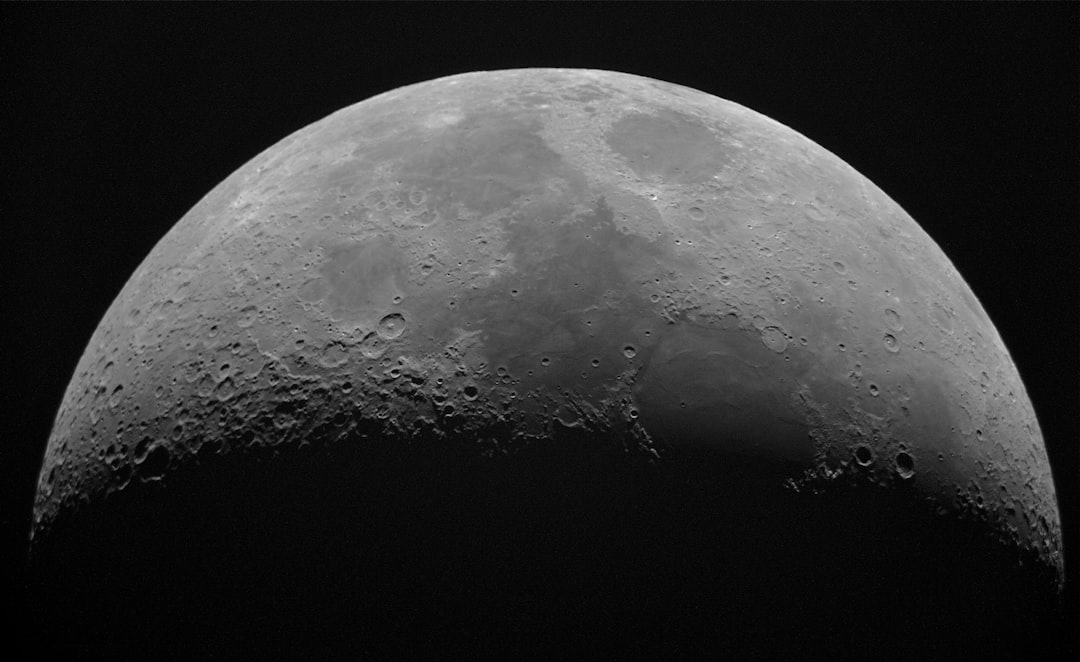
Stargazers across the Northern Hemisphere are in for a spectacular celestial treat as May's planetary alignment reaches its crescendo during the week of May 18-20, 2026. This remarkable astronomical event brings together our Moon, the solar system's two brightest planets—Venus and Jupiter—and the elusive Mercury in a dazzling display that ranks among the year's most impressive sky shows. The convergence occurs at a perfect time when spring temperatures transition into summer observing conditions, making evening sky-watching particularly comfortable for amateur astronomers and casual observers alike.
What makes this event particularly noteworthy is the rare combination of favorable viewing conditions and the close proximity of multiple celestial objects. According to NASA's Solar System Exploration resources, such multi-planet configurations provide excellent opportunities for public engagement with astronomy and offer stunning photographic possibilities for astrophotographers worldwide.
For observers in the Southern Hemisphere, this planetary dance comes with an additional bonus: Comet C/2025 R3 PanSTARRS continues its journey through the constellation Orion, passing near the brilliant star Sirius. This dual celestial spectacle—combining both planetary motion and cometary activity—creates an exceptionally rich observing environment that hasn't been seen in several years.
Understanding the Lunar Cycle and Celestial Timing
The cosmic choreography begins with the New Moon phase occurring on Saturday, May 16th at 20:02 Universal Time (UT), marking the commencement of Brown Lunation Number 1279. This lunation numbering system, maintained by astronomical organizations worldwide, provides a standardized method for tracking lunar cycles—a practice that dates back centuries and remains crucial for both professional astronomers and navigation systems.
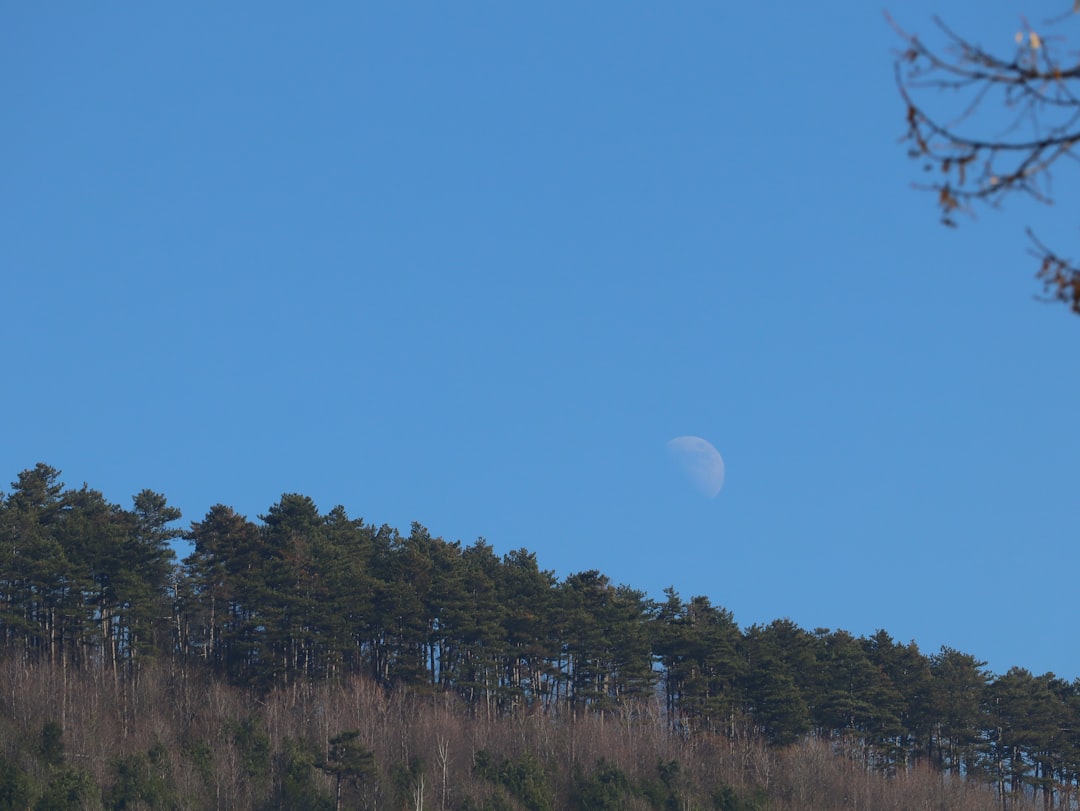
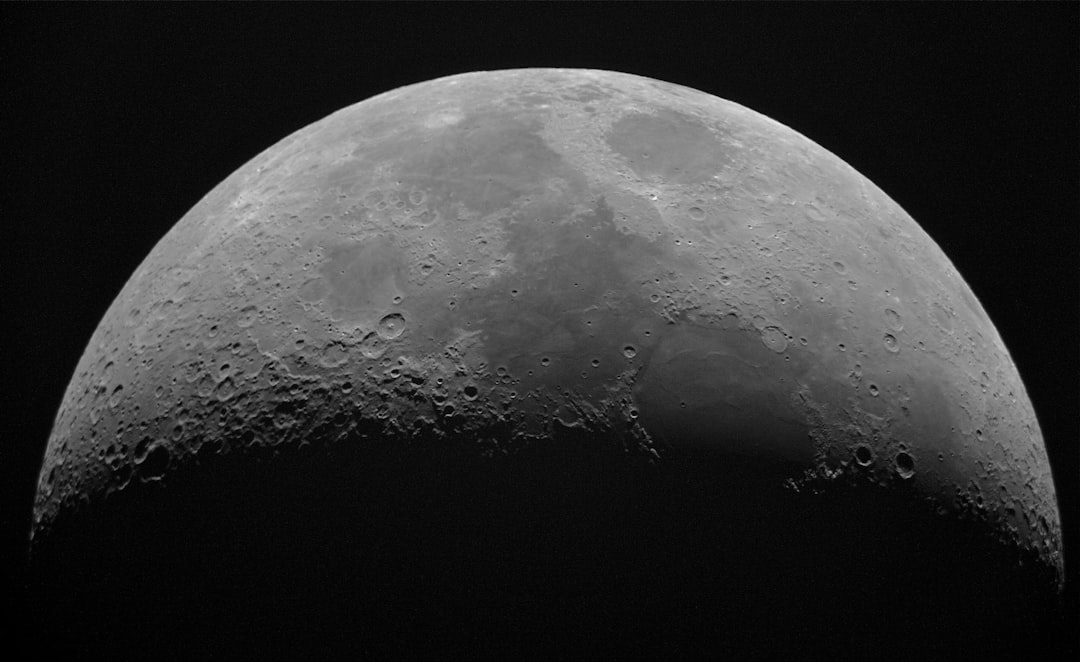
Following the New Moon, observers should begin their viewing attempts on Sunday evening, May 17th, when the extremely slender crescent Moon first becomes visible low on the western horizon shortly after sunset. At this stage, the Moon will display less than 5% illumination, creating that delicate arc of light that has captivated humanity throughout recorded history. By Monday evening, May 18th, the lunar crescent will have grown more prominent, reaching approximately 8% illumination and climbing higher above the horizon, making it far easier to spot even from urban locations affected by light pollution.
Interestingly, this lunation also features a "Blue Moon" on May 31st—not the atmospheric phenomenon that actually tints the Moon blue, but rather the calendrical quirk of having two Full Moons within a single calendar month. This occurs roughly every 2.7 years and has become popularized in modern culture, though the term's astronomical origins remain somewhat debated among historians of science.
The Venus-Moon Conjunction: A Brilliant Pairing
The first major act in this celestial drama unfolds on Tuesday, May 19th at 3:00 UT, when the waxing crescent Moon passes within 3 degrees of Venus. To put this angular separation in perspective, three degrees is roughly equivalent to the width of three fingers held at arm's length—a close approach that will fit comfortably within the field of view of binoculars and create a stunning naked-eye spectacle.
Venus, often called Earth's "sister planet" due to its similar size, will be shining at an impressive magnitude -4, making it the third-brightest natural object in our sky after the Sun and Moon. At this time, Venus presents an 83% illuminated gibbous disk when viewed through telescopes, revealing the planet's phase similar to how we observe lunar phases. This occurs because Venus orbits closer to the Sun than Earth does, allowing us to see varying amounts of its sunlit hemisphere depending on its position relative to Earth and the Sun.
"Planetary conjunctions with the Moon serve as excellent 'stepping stones' for locating planets that might otherwise be challenging to identify among the stars. Venus's extraordinary brightness makes it an ideal target for introducing newcomers to observational astronomy," notes the Sky & Telescope observing guides.
The contrast between Venus's brilliance and the Moon's delicate 8% crescent creates a visually striking composition that photographers will find irresistible. The best viewing window occurs during the 30-60 minutes following sunset, when the sky has darkened sufficiently to reveal Venus's full brilliance while maintaining enough twilight glow to capture atmospheric color gradients in photographs.
Jupiter's Close Encounter and the Double Shadow Transit
Following the Venus conjunction, the Moon continues its eastward journey across the sky, setting up the second major event: a close approach to Jupiter on Wednesday, May 20th at 15:00 UT. By this evening, the Moon will have grown to approximately 19% illumination, presenting a thicker crescent that provides more reflected sunlight while still maintaining that elegant curved form that makes crescent phases so photogenic.
Jupiter, the solar system's largest planet, will shine at magnitude -1.7—significantly dimmer than Venus but still remarkably bright compared to background stars. The King of Planets will appear as a brilliant steady point of light, easily distinguished from the twinkling stars by its unwavering glow. This steadiness occurs because planets are close enough to Earth that they present small disks rather than point sources, making their light less susceptible to atmospheric turbulence.
Telescope users have an additional treat during this period: a remarkable double shadow transit involving Jupiter's moons Europa and Ganymede on Friday evening, May 15th. During this event, both moons will simultaneously cast their shadows onto Jupiter's cloud tops—a phenomenon visible through backyard telescopes as small dark spots crossing the planet's banded atmosphere. According to NASA's Juno mission, such transits provide amateur astronomers with opportunities to observe the same types of phenomena that professional missions study, creating a direct connection between public engagement and cutting-edge planetary science.
The Art and Science of Daytime Planet Spotting
Both the Venus and Jupiter conjunctions offer excellent opportunities for daytime planet observation—a challenging but rewarding aspect of amateur astronomy that few enthusiasts attempt. Venus, with its exceptional brightness, becomes surprisingly easy to locate in broad daylight when the Moon serves as a nearby reference point. Jupiter presents a more difficult target, requiring careful positioning and often optical aid, but remains achievable for determined observers with clear skies.
Historical records document the public's fascination with such daytime celestial sightings. During President Abraham Lincoln's second inauguration on March 4th, 1865, attendees were treated to a daytime conjunction of the Moon and Venus, which contemporary accounts describe as a memorable addition to the day's ceremonies. Such events demonstrate astronomy's unique ability to connect historical moments with cosmic clockwork that continues unchanged across centuries.
Mercury Emerges and Additional Lunar Encounters
Adding complexity to this already rich sky scene, Mercury makes its appearance in the May evening sky. The innermost planet recently passed through what astronomers call an "anti-transit"—passing behind the Sun from Earth's perspective on May 14th. This positioning marks the beginning of Mercury's emergence into evening visibility, though it remains the most challenging of the visible planets to observe due to its proximity to the Sun and its low altitude above the horizon during twilight.
Mercury reaches greatest eastern elongation—its maximum apparent separation from the Sun—on June 15th, when it will sit 24.5 degrees from our star. This represents the optimal viewing period for this elusive world, though observers should note that Mercury transits (when the planet crosses directly in front of the Sun's disk) won't occur again until November 12-13, 2032, according to predictions from NASA's Eclipse and Transit Page.
The Moon's journey through May includes two additional noteworthy events beyond the planetary conjunctions. On May 21st, the waxing crescent passes through Messier 44 (Praesepe), also known as the Beehive Cluster—an open star cluster visible to the naked eye under dark skies and spectacular through binoculars. This ancient star grouping, located approximately 577 light-years from Earth, contains over 1,000 stars and serves as an important laboratory for studying stellar evolution.
Then on May 23rd, the Moon—now at 49% illumination and approaching First Quarter phase—will occult the bright star Regulus as seen from the Pacific region. Regulus, the brightest star in the constellation Leo, shines at magnitude +1.4 and marks the heart of the celestial lion. This occultation belongs to a series of lunar occultations of Regulus extending through December 28th, 2026, caused by the Moon's orbital path carrying it repeatedly across the star's position as seen from Earth.
Looking Ahead: The Venus-Jupiter Conjunction
While May's Moon-planet conjunctions provide immediate viewing opportunities, an even more spectacular event looms on the horizon. Throughout May, Venus and Jupiter gradually converge in the evening sky, approaching each other night by night in a celestial pas de deux that will culminate on June 9th when the two brightest planets pass just 1.6 degrees apart—closer than the apparent diameter of your thumb held at arm's length.
This close planetary pairing will create a stunning sight visible even from light-polluted urban environments, as both planets will appear together in a single binocular or telescope field of view. Such conjunctions have historically generated considerable public interest and, occasionally, confusion. In 2013, military patrols along the China-India border reported mysterious bright objects hovering over the Himalayan mountains night after night. Investigation by astronomers at the Indian Institute of Astrophysics in Bengaluru revealed these "UFOs" to be Venus and Jupiter in conjunction—a reminder that astronomical knowledge serves practical purposes beyond pure science, potentially preventing misidentifications that could escalate into diplomatic incidents.
Observing Tips and Scientific Context
To maximize your viewing experience during this planetary alignment, consider the following recommendations:
- Timing is crucial: Begin observations 30-45 minutes after sunset when the sky has darkened sufficiently but the planets remain well above the horizon. The optimal viewing window typically lasts 60-90 minutes.
- Location matters: Find an observing site with a clear view toward the western horizon, free from buildings, trees, or hills that might obstruct low-altitude objects. Even a few degrees of additional elevation can make the difference between success and frustration.
- Optical aids enhance the experience: While naked-eye viewing reveals the basic configuration, binoculars transform the scene by showing Venus's phase, Jupiter's four Galilean moons, and additional background stars. Telescopes provide even more detail, including Jupiter's cloud bands and the Great Red Spot.
- Photography opportunities abound: Modern smartphone cameras can capture the Moon-planet conjunctions, though DSLR cameras with tripods produce superior results. Experiment with exposure times between 1-4 seconds to balance sky brightness with planetary detail.
- Weather contingencies: Monitor weather forecasts and have backup viewing dates prepared. The Moon's position changes rapidly, but Venus and Jupiter remain prominent throughout the period, offering multiple observation opportunities.
From a scientific perspective, these conjunctions represent apparent alignments rather than physical proximity. The Moon orbits Earth at an average distance of 384,400 kilometers, while Venus currently resides approximately 100 million kilometers away, and Jupiter sits roughly 780 million kilometers distant. These objects appear close together only from our Earthly vantage point—a perspective effect similar to how distant mountains might appear to touch nearby trees when viewed from a specific location.
Understanding this geometry helps appreciate the three-dimensional nature of the solar system, which our two-dimensional view from Earth's surface tends to obscure. Educational institutions and planetariums often use planetary conjunctions as teaching moments, helping students visualize orbital mechanics and the true scale of interplanetary distances.
The Broader Significance of Public Astronomy Events
Events like this May planetary alignment serve purposes beyond simple aesthetic appreciation. They represent accessible entry points into astronomy for people who might never visit an observatory or attend a star party. The visibility of bright planets from urban areas means that millions of people worldwide can participate in this shared experience, regardless of their access to dark-sky locations or specialized equipment.
Research in science education consistently demonstrates that direct observational experiences create stronger connections to scientific concepts than abstract lessons alone. When someone personally observes the Moon passing near Venus and Jupiter, they're witnessing the same celestial mechanics that govern satellite orbits, interplanetary missions, and the long-term stability of Earth's climate. These connections between everyday observations and fundamental physics help build scientific literacy across diverse populations.
Furthermore, regular sky-watching cultivates an awareness of natural cycles and cosmic time scales that modern life often obscures. The Moon's monthly journey across the sky, the planets' annual paths through the zodiacal constellations, and the seasonal shifts in stellar visibility all reflect the clockwork precision of gravitational dynamics playing out across millions of kilometers. Reconnecting with these rhythms provides perspective on humanity's place within the larger cosmos—a perspective that many find both humbling and inspiring.
As we approach this week's celestial showcase, take advantage of the clear spring evenings to step outside and witness the cosmic dance unfolding above. Whether you observe with naked eyes, binoculars, or telescopes—or simply enjoy the beauty of bright planets adorning the twilight sky—you'll be participating in a tradition of sky-watching that connects us to countless generations who have looked upward in wonder at the same celestial objects, following the same eternal paths through space.