Rebooting a Spacecraft 140 Million Kilometres From Home: ESA's Hera Mission Clears a Critical Hurdle
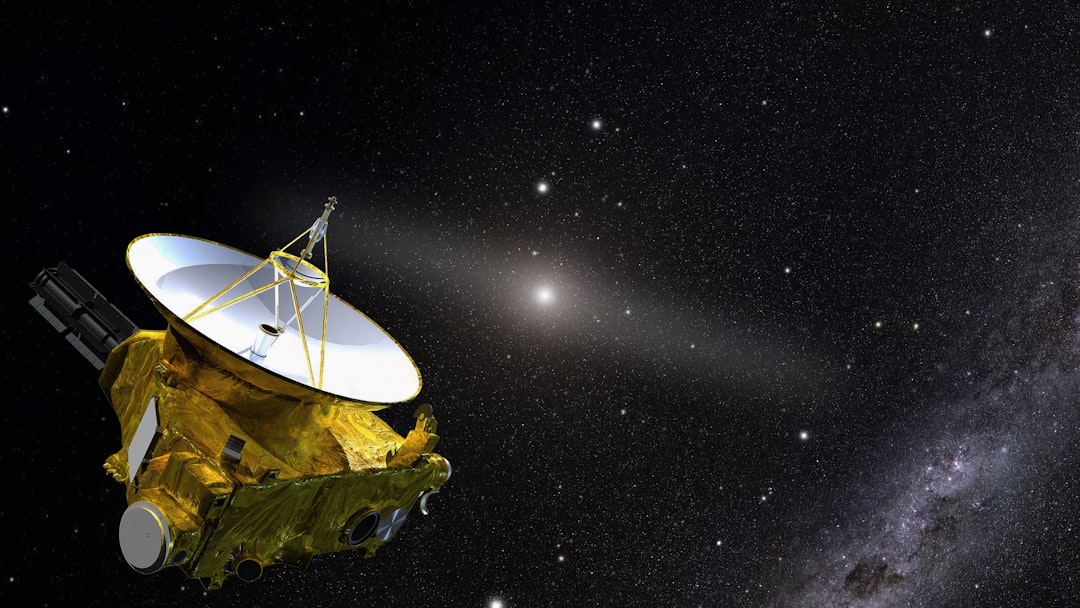
How do you install new software onto a computer you can never touch, hurtling through deep space at more than twelve kilometres every second? That was the extraordinary challenge facing the flight control team behind ESA's Hera mission, who have just pulled off exactly that feat — leaving the spacecraft fully prepared to begin the most consequential phase of its interplanetary journey. It is the kind of achievement that makes even seasoned mission engineers exhale with quiet relief, a triumph of meticulous planning over the unforgiving realities of deep space operations.
Hera is currently approximately 140 million kilometres from Earth, tracing a carefully calculated arc through the inner Solar System toward the Didymos binary asteroid system — a pair of rocky bodies locked in a gravitational embrace, consisting of the larger Didymos (roughly 780 metres in diameter) and its diminutive moonlet, Dimorphos (approximately 150 metres across). Every instruction sent to the spacecraft must travel via a 35-metre deep-space tracking dish, aimed with extraordinary precision at the correct patch of sky. Even travelling at the speed of light — approximately 299,792 kilometres per second — that signal takes nearly eight minutes just to arrive at the spacecraft, with another eight minutes required for any acknowledgement to complete the round trip. There is no opportunity to physically intervene if something goes wrong, no cable to replug, no reset button within human reach.
"There is no popping out to fix something if it goes wrong. The team had to be absolutely certain before a single command was ever sent to the real spacecraft."
A Software Upgrade Unlike Any Other
The successful upload of the new flight software package was itself a remarkable accomplishment, but the team's most nerve-wracking moment came immediately afterward: rebooting the entire spacecraft — not once, but twice. Hera's onboard computer operates on two parallel processing streams, a redundancy architecture designed to protect the mission against the failure of any single component in the harsh radiation environment of deep space. Each processing stream required its own carefully sequenced reboot and a thorough evaluation of system health before the team could proceed. The seven-strong core control team sat at their consoles, acutely aware that the spacecraft might simply fail to check back in at the expected time. Both reboots executed exactly as planned.
The software upgrade is not a minor patch. It represents the delivery of full autonomous operational capability — the suite of instructions Hera will rely upon when it arrives at Didymos later this year and begins operating largely independently, too far from Earth for real-time human oversight to be practical. The new software governs how Hera navigates in proximity to the asteroids, how it manages its own safety in the event of unexpected situations, and critically, how it will communicate with and coordinate the two small CubeSat companions it is scheduled to release early next year.
Eighteen Months of Rehearsal on "the Bench"
Nothing about this process was left to chance. Before a single command was transmitted to the real spacecraft, the software underwent eighteen months of rigorous testing across fifty dedicated ground test days, conducted using a fully functional engineering replica of Hera at the facilities of its prime contractor, OHB in Bremen, Germany. This replica — affectionately known among the team as "the Bench" — is an Avionics Test Bench that mirrors the real spacecraft's computer hardware, software environment, and sensor interfaces with extraordinary fidelity. Engineers used it to rehearse every piece of autonomous behaviour the spacecraft will need at its destination, stress-testing edge cases and failure scenarios that could never safely be explored on the actual mission hardware.
This kind of parallel ground testing infrastructure is a cornerstone of modern planetary mission design. It allows engineers to separate the risk of software development from the irreplaceable flight asset — a lesson learned across decades of interplanetary exploration, from early Mars missions to the complex orbital choreography of ESA's Rosetta comet rendezvous mission.
Why the Software Wasn't Ready at Launch
A natural question arises: why was Hera launched without its complete operational software already installed? The answer lies in the uncompromising mathematics of orbital mechanics. Hera launched from Cape Canaveral in October 2024, timing its departure to take advantage of a gravitational assist flyby past Mars in March 2025. This so-called gravity assist manoeuvre — in which a spacecraft borrows energy from a planet's gravitational field to alter its speed and trajectory — was essential to delivering Hera to Didymos on schedule and within its fuel budget. Missing that specific launch window would not simply have delayed the mission by weeks; it would have pushed the arrival at Didymos back by years, potentially squandering the unique scientific opportunity the mission represents.
Rather than hold the launch until every last line of code was perfected, the mission team made the pragmatic decision to continue software development and testing in parallel with the cruise phase, transmitting the completed package to the spacecraft once it was ready. In this way, the long, quiet months of interplanetary travel became productive working time — a feature of the mission rather than dead time. It is a strategy increasingly considered for ambitious deep space missions where launch windows are narrow and development timelines are tight.
The Scientific Legacy: Following in DART's Footsteps
To fully appreciate what Hera is travelling toward, it helps to understand the extraordinary event that preceded it. On 26 September 2022, NASA's Double Asteroid Redirection Test (DART) spacecraft deliberately collided with Dimorphos at a relative speed of approximately 6.1 kilometres per second, making Dimorphos the first object in the Solar System whose orbit was intentionally altered by human action. The impact was powerful enough to be observed from ground-based and space-based telescopes worldwide, producing a dramatic plume of ejected material — a debris trail that stretched thousands of kilometres into space and was even imaged by ESA's LICIACube CubeSat that accompanied DART.
Measurements confirmed that DART successfully shortened Dimorphos's orbital period around Didymos by approximately 33 minutes — significantly more than pre-impact models had predicted, suggesting that the recoil from the ejected material amplified the deflection effect considerably. Yet for all the triumph of that experiment, fundamental questions remain unanswered:
- What is the precise physical structure of Dimorphos — is it a solid rock, a loosely bound rubble pile, or something in between?
- What does the impact crater look like up close, and how much material was excavated?
- How did the internal mass distribution of the asteroid influence the deflection outcome?
- What are the detailed properties of the debris field and any changes to Dimorphos's shape?
- How can the DART results be generalised into reliable models for future planetary defence scenarios?
These are precisely the questions Hera is designed to answer. Arriving at Didymos in autumn 2025, the spacecraft will conduct a detailed, close-range survey of the impact site using its suite of scientific instruments, including cameras, a thermal infrared imager, and a radar system capable of probing beneath the asteroid's surface. It will also deploy its two CubeSat companions — Milani and Juventas — to carry out their own complementary measurements at close range, including the first-ever low-frequency radar sounding of an asteroid's interior.
Why Planetary Defence Science Matters
The Hera mission sits at the heart of a broader international effort to develop credible, evidence-based strategies for protecting Earth from asteroid impacts. While no known asteroid currently poses a significant threat to our planet in the near term, the geological and historical record makes clear that large impacts are not merely theoretical — they have shaped Earth's history profoundly, most famously in the Chicxulub impact event approximately 66 million years ago. At the smaller end of the scale, the 2013 Chelyabinsk meteor — a body roughly 20 metres across — released energy equivalent to roughly 30 times the Hiroshima atomic bomb over Russia, injuring over 1,500 people.
The NASA Planetary Defense Coordination Office and ESA's Planetary Defence Office both regard kinetic impactors — spacecraft deliberately crashed into threatening asteroids to nudge them onto safer trajectories — as among the most promising deflection technologies available. But the effectiveness of such an approach depends critically on understanding the physical properties of the target. A deflection attempt applied to a loosely bound rubble pile behaves very differently from one applied to a solid monolithic rock. Hera's findings at Dimorphos will provide the ground truth that turns DART's bold demonstration into a scientifically validated, repeatable technique.
Hera is now on its way to transform one of humanity's boldest experiments into knowledge we can actually rely upon — should we ever need to nudge a genuinely dangerous asteroid off course for real.
Looking Ahead
With its new software successfully installed, its dual processors healthy, and Mars now receding in its wake, Hera is on course for its autumn 2025 arrival at the Didymos system. The coming months will see further instrument checkouts, CubeSat preparations, and approach navigation rehearsals — all executed across the void, command by patient command, eight minutes of silence between each question and each answer.
For the engineers in their control rooms and the scientists waiting for their first close-up views of a human-made crater on an alien world, the successful software reboot is more than a technical milestone. It is the moment the most sophisticated phase of the mission became possible — the moment Hera truly became ready to do its job.
For more information on ESA's Hera mission and its scientific objectives, visit the official ESA Hera mission page. For background on the DART impact and its results, see the Johns Hopkins APL DART mission site. Further context on planetary defence efforts can be found at the NASA Planetary Defense Coordination Office.