New Study Shows That Earth and Mars Had Fundamentally Different Origins
One of the most enduring questions in planetary science is deceptively simple: how did the rocky planets in our Solar System actually form? According to the widely accepted Nebular Hypothesis, the Solar System coalesced approximately 4.5 billion years ago from a swirling accretion disk of gas and dust surrounding our nascent Sun. Yet despite decades of research, scientists have remained divided on the precise mechanisms that transformed that primordial cloud into the diverse family of worlds we see today.
Two competing pathways have dominated the debate. In the first, planets emerge from violent collisions between planetesimals — rocky bodies ranging from meters to hundreds of kilometers in diameter. In the second, planetesimals gradually sweep up vast quantities of smaller rocks, dust, and ice particles known as pebbles, accumulating mass through a process called pebble accretion. For years, neither model alone could fully account for the chemical and physical characteristics we observe in Earth and Mars today.
Now, groundbreaking new research from the Center for Star and Planet Formation at the University of Copenhagen has offered compelling evidence that could finally settle the debate — and the answer is more nuanced, and more surprising, than anyone expected. Their findings suggest that a hybrid model, merging both formation pathways, is necessary to explain the origins of rocky planets, and that Earth and Mars — despite forming in the same solar neighborhood — took remarkably different paths to reach their current states.
A Novel Forensic Approach to Planetary Origins
The research was led by Assistant Professor Haiyang S. Wang and Professor Anders Johansen, both researchers at the Center for Star and Planet Formation, part of the Globe Institute at the University of Copenhagen. They collaborated with colleagues from the Institute for Particle Physics and Astrophysics at ETH Zürich, the Nevada Center for Astrophysics (NCfA), the Lunar and Planetary Laboratory, and multiple partner universities. Their findings were published in the prestigious peer-reviewed journal Nature Astronomy.
What sets this study apart is its innovative methodology. Rather than relying solely on traditional isotope-based analysis — a widely used but often ambiguous approach — the team focused on the volatile element abundances locked within the crusts and mantles of Earth and Mars. Specifically, they examined elements such as sodium (Na), zinc (Zn), and potassium (K): chemical species characterized by relatively low melting and boiling points that make them highly sensitive to the thermal conditions present during planetary formation.
The logic is elegant. During the violent, heat-intensive processes of planet building, volatile elements behave differently depending on how a planet forms. Pebble accretion, which involves material drifting inward through a hot protoplanetary disk, tends to drive off volatiles more efficiently than the collision of large, already-differentiated planetesimals. By carefully measuring the current abundances of these elements in planetary mantles — which have remained chemically stable for billions of years — the researchers could work backwards to reconstruct the conditions of formation.
"It is a major detective job to figure out what happened back then when most of the evidence disappeared long ago. But even after 4.5 billion years, the compositions of Earth's and Mars' mantles remain the same. You can think of them as an imprint of the formation process." — Professor Anders Johansen
This approach was then coupled with advanced statistical modeling to calculate the most probable formation scenarios for both planets, allowing the team to assign quantitative estimates to the contributions of each formation pathway.
A Surprising Divergence: Two Planets, Two Histories
The results were striking. Rather than finding that Earth and Mars shared a broadly similar formation history — as one might intuitively expect of two neighboring rocky worlds in the same solar system — the data pointed to fundamentally divergent pathways.
For Earth, the model suggests that at least 75 percent of its mass originated from two large protoplanets that grew predominantly through pebble accretion, with planetesimal collisions accounting for the remaining 25 percent or less. This is consistent with the well-known Giant Impact Hypothesis, which proposes that the early Earth was struck by a Mars-sized body called Theia, ultimately giving rise to our Moon — though the new findings add an important new dimension by characterizing the pre-impact growth phase.
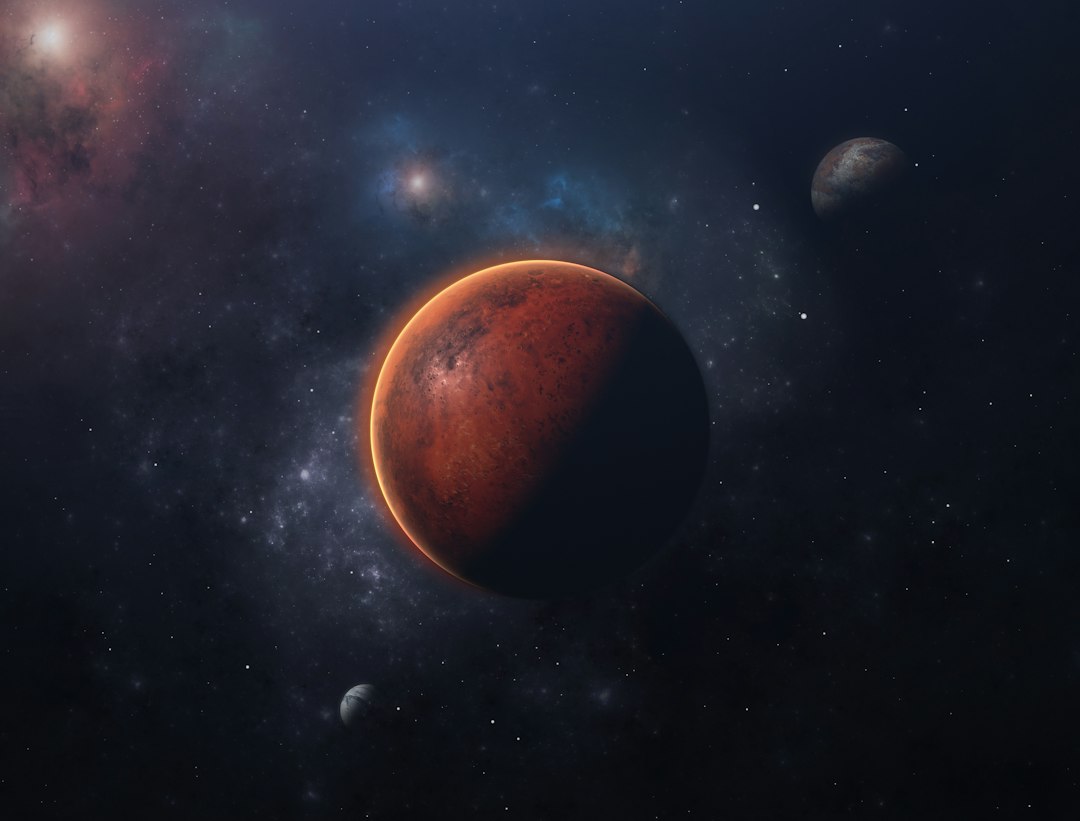
For Mars, however, the picture is almost exactly reversed. Approximately three-quarters of Mars' mass appears to derive from planetesimal collisions, with pebble accretion contributing only the remaining quarter. This aligns with Mars' status as a planetary embryo — a world that formed quickly in the early Solar System and was then gravitationally isolated by Jupiter's influence before it could grow further.
"The most surprising result was that Earth and Mars appear to have formed in different ways. You might have expected that two planets formed side by side in the same solar system would share a more similar formation history." — Assistant Professor Haiyang S. Wang
Both Earth and Mars are differentiated bodies — meaning their interiors are organized into distinct layers of varying density, including a metallic core, a silicate mantle, and a thin crust. This internal structure is itself a product of the heat generated during formation, and the new findings offer fresh insight into how the thermal histories of the two planets may have differed from the very beginning.
Understanding the Role of Volatile Elements in Planet Formation
The significance of volatile elements in this study goes beyond their role as chemical tracers. Volatiles — which include not only sodium, zinc, and potassium, but also water (H₂O), carbon dioxide (CO₂), nitrogen (N₂), and sulfur compounds — are among the most critical ingredients for habitability. They form the basis of oceans, atmospheres, and the biochemical cycles that sustain life as we know it.
Understanding how and when planets lose or retain volatile elements during formation is therefore directly relevant to the search for life beyond Earth. The new study demonstrates that volatile depletion is closely tied to the dominant formation mechanism: pebble accretion, occurring within the hot inner regions of a protoplanetary disk, tends to vaporize and expel volatiles more aggressively than the merger of cooler, more mature planetesimals.
- Pebble accretion leads to greater volatile loss due to high temperatures in the inner disk environment.
- Planetesimal collisions can preserve more volatiles, particularly if the impacting bodies formed in cooler outer disk regions.
- The final volatile inventory of a planet — including its water content — is therefore a direct function of its formation pathway.
- Earth's relatively volatile-rich composition compared to Mars may partly reflect its more pebble-dominated early growth phase, followed by late-stage volatile delivery.
- Mars' smaller size and faster formation timeline likely contributed to its thinner atmosphere and reduced volatile retention over geological time.
Caveats, Assumptions, and the Road Ahead
The researchers are careful to emphasize that their conclusions rest on a foundation of statistical modeling that necessarily incorporates certain assumptions. Chief among these is the presumed initial chemical composition of the early Solar System's accretion disk — a quantity that must be inferred from meteorite data and solar spectroscopy rather than measured directly. Additionally, because Mars shares several geochemical similarities with Earth, the team assumed that the planetesimal building blocks of Mars were chemically analogous to asteroid Vesta, one of the largest objects in the asteroid belt and a well-characterized remnant of the early Solar System.
Furthermore, the traditional assumption that volatile loss is more efficient during pebble accretion than during giant impacts introduces an additional layer of uncertainty. However, as Wang noted, sensitivity analyses consistently upheld the study's central finding:
"The exact percentages may vary somewhat, but our analyses consistently indicate that Earth and Mars formed in two different ways. Our method provides a more precise and direct way of understanding planet formation than the more widely used isotope-based approach, which can often be interpreted in multiple ways." — Assistant Professor Haiyang S. Wang
Future work will likely involve applying this volatile-element framework to other rocky bodies in the Solar System, including Venus and Mercury, as well as to the growing catalog of well-characterized meteorites. Comparisons with lunar samples, particularly those returned by NASA's Artemis program, could also provide additional constraints on Earth's early formation environment.
Implications for the Search for Habitable Exoplanets
Perhaps the most far-reaching implication of this research lies not within our own Solar System, but across the galaxy. The search for habitable exoplanets has accelerated dramatically in recent years, driven by powerful new observatories capable of detecting and characterizing worlds orbiting distant stars. Understanding the formation pathways of rocky planets — and how those pathways determine volatile budgets — is essential to predicting which exoplanets might be capable of supporting life.
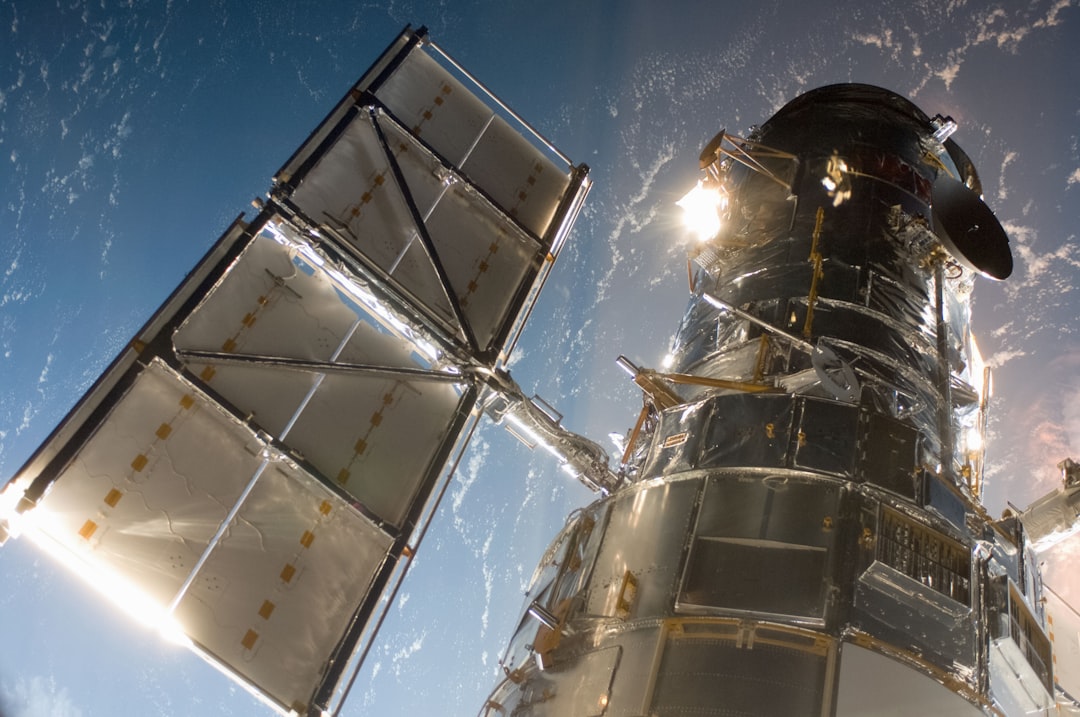
The recently launched Nancy Grace Roman Space Telescope, equipped with a Wide Field Instrument offering a field of view more than 100 times larger than that of the Hubble Space Telescope, will survey vast swaths of the sky and contribute statistical data on planetary populations. Scheduled for deployment in the 2040s, the Habitable Worlds Observatory (HWO) promises even greater sensitivity and angular resolution, with the explicit goal of directly imaging and spectroscopically characterizing Earth-like planets around nearby stars.
Ground-based facilities equipped with extremely large primary mirrors and cutting-edge adaptive optics (AO) systems — such as the Extremely Large Telescope (ELT) currently under construction in Chile — will complement these space-based efforts by providing high-resolution atmospheric spectra of nearby exoplanets. Together, this new generation of observatories will allow scientists to measure the chemical compositions of distant worlds and assess whether they possess the volatile inventories necessary for habitability.
The volatile-element modeling approach pioneered by Wang, Johansen, and their colleagues could provide a crucial theoretical framework for interpreting these future observations. If astronomers can characterize the bulk chemical composition of an exoplanet's atmosphere and surface, the new methodology could, in principle, be used to infer whether that world formed primarily through pebble accretion, planetesimal collisions, or a hybrid of both — and by extension, how much water and other life-sustaining material it is likely to harbor.
"If we understand how planets lose volatile elements during their formation, we can also become better at predicting how much water and other life-supporting substances they ultimately retain." — Professor Anders Johansen
A New Chapter in Planetary Science
The discovery that Earth and Mars — siblings of the inner Solar System — followed divergent formation pathways is a powerful reminder that planetary science is far from a settled field. Even the worlds we know best continue to yield fundamental surprises. By developing a more chemically precise and statistically robust method for reconstructing planetary origins, the University of Copenhagen team has opened a new avenue of inquiry that bridges cosmochemistry, planetary physics, and astrobiology.
As next-generation telescopes come online and as sample-return missions bring fresh material from Mars, the Moon, and near-Earth asteroids back to Earth's laboratories, the volatile-element fingerprinting approach described in this study is poised to become an increasingly powerful tool — not just for understanding our own cosmic backyard, but for making sense of the billions of rocky worlds that populate the Milky Way. For further details, readers are encouraged to consult the original research via Nature Astronomy and the Globe Institute at the University of Copenhagen.