Nautilus Array: A Revolutionary Constellation of Space Telescopes to Track the Mystery of Missing Exoplanet Atmospheres
Among the most compelling frontiers in modern astrophysics is the study of exoplanet atmospheres — the thin, often fragile envelopes of gas that surround worlds orbiting distant stars. These atmospheres have become prime targets for astrobiologists in the search for life beyond Earth, serving as a kind of chemical fingerprint that may one day reveal the presence of biology on another world. Since the rocky surfaces of exoplanets remain far beyond the resolving power of even our most advanced telescopes, astronomers must instead analyze starlight filtered through or reflected off these atmospheric layers to search for so-called biosignatures — chemical markers like oxygen, methane, and water vapor that could hint at living processes.
Today, powerful observatories such as the Atacama Large Millimeter/submillimeter Array (ALMA) and NASA's James Webb Space Telescope (JWST) are pushing the boundaries of what is scientifically possible, delivering unprecedented data on exoplanet atmospheric composition. Yet even these transformative instruments have fundamental limitations in both light-collecting area and observing efficiency. A critical and enduring puzzle persists: how did exoplanet atmospheres form, how do they evolve over billions of years, and what does their fate mean for the broader search for life beyond Earth?
Introducing the Nautilus Space Observatory
A team of researchers from institutions across the United States and United Kingdom is now proposing an ambitious solution to this challenge. In a white paper draft posted on arXiv, they outline the mission concept known as the Nautilus Space Observatory, formally designated the Nautilus Deep Space Observatory (NDSO). Far from a conventional single-telescope mission, Nautilus represents a paradigm shift in how humanity might observe the cosmos — and potentially, how future space science infrastructure is conceived and deployed.
"Answering these questions requires the high spatial resolution, broad-wavelength coverage, large effective area, and parallelized multiple units that Nautilus provides. By isolating the physical processes that govern the evolution of planets and their atmospheres, these science objectives directly support NASA's Cosmic Origins and Exoplanet Exploration Programs."
Led by the University of Arizona and first proposed in the late 2010s, the Nautilus concept envisions a constellation of space telescopes — not a single monolithic instrument, but a coordinated fleet of 35 individual units working in concert. This modular, scalable architecture is designed to be both fast to manufacture and straightforward to deploy, while achieving a combined scientific capability that dwarfs any single existing or planned observatory.
A Fleet Unlike Any Other: The Technical Architecture of Nautilus
The engineering philosophy behind Nautilus is as innovative as its scientific goals. Rather than relying on the large, precision-ground mirrors that define observatories like JWST and the Hubble Space Telescope, each Nautilus unit will be built around a novel diffractive lens — specifically, a type of optical element that guides and focuses light through diffraction rather than reflection or refraction. This approach could dramatically reduce both the mass and the manufacturing complexity of each telescope unit.
Key technical specifications of the Nautilus array include:
- A total of 35 individual space telescope units operating as a coordinated constellation
- A combined effective aperture of 14 meters (46 feet) in total collecting area
- Each unit featuring an 8.5-meter (28-foot) diffractive lens as its primary optical element
- A total light-collecting power more than double that of JWST
- More than 10 times the light-gathering area of the Hubble Space Telescope
- Approximately 100 times the collecting area of ESA's proposed Ariel mission
- Each unit equipped with a dedicated instrument package, solar panels, and an inflatable Mylar balloon for structural support
The use of a Mylar balloon as a structural component is particularly inventive, offering a lightweight means of deploying and stabilizing the large-diameter lens in space without the complex unfolding mechanisms required by mirrors like those on JWST. This design philosophy prioritizes scalability — if one unit fails, the array continues to operate, and additional units can theoretically be launched to restore or even expand its capabilities.
The Science of Missing Atmospheres: Sub-Neptunes, Super-Earths, and the Radius Gap
Super-Earths and sub-Neptunes are, remarkably, the most abundant planet types detected in our galaxy, yet our own Solar System contains none of them. Scientists estimate that between 30 to 50 percent of Sun-like stars host at least one planet in these size categories. This statistical prevalence makes them central to our understanding of planetary formation and the potential for habitability across the Milky Way.
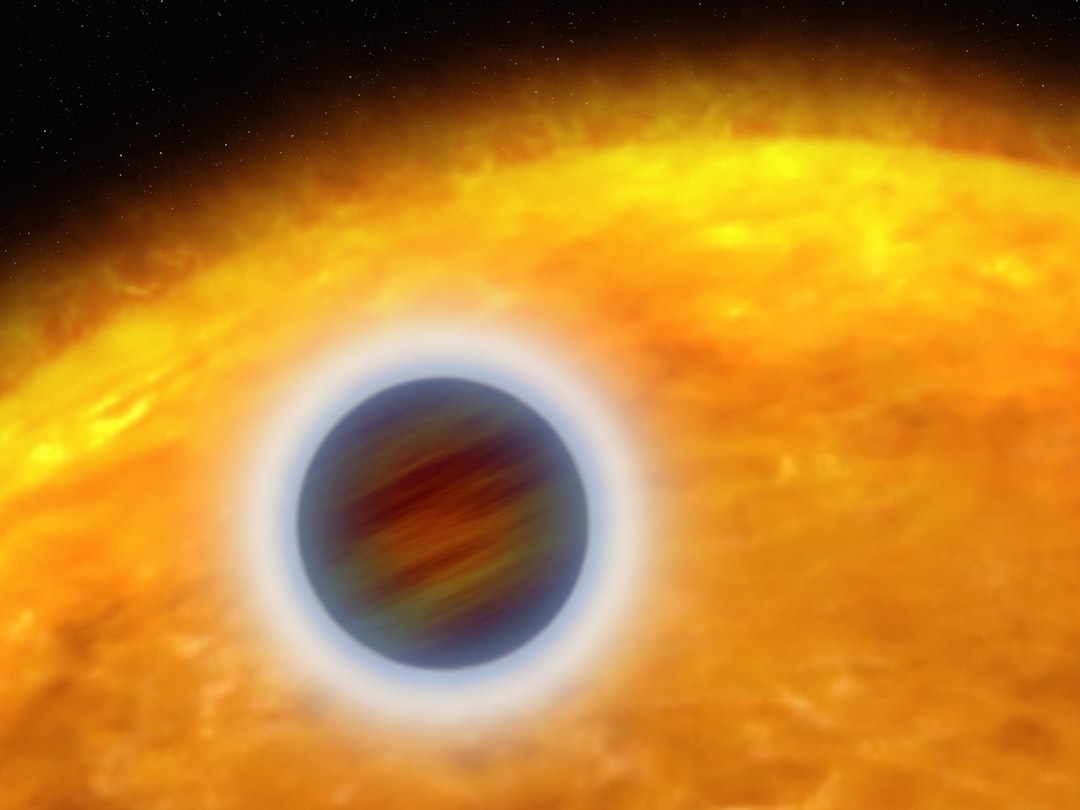
One of the most intriguing phenomena in exoplanet science is the so-called "radius gap" — a statistical deficit of planets with radii between approximately 1.5 and 2.0 Earth radii. This gap is thought to arise because planets in this size range are particularly vulnerable to atmospheric stripping, whereby high-energy radiation from their host stars drives the loss of their primordial hydrogen-helium envelopes. The result is a population of planets that either retain thick atmospheres (sub-Neptunes) or are stripped down to their rocky cores (super-Earths). Understanding this transition is one of the most pressing goals in exoplanet science, and it is precisely here that Nautilus is designed to excel.
The white paper outlines several interconnected scientific objectives that Nautilus is uniquely positioned to address:
- Atmospheric mass loss timescales: Determining how quickly and at what epochs planets lose their primordial gaseous envelopes to processes like photoevaporation and core-powered mass loss
- Sub-Neptune to super-Earth evolution: Tracing the physical transition of planets across the radius gap and identifying the stellar and planetary conditions that drive this transformation
- Carbon-to-oxygen ratios: Measuring the C/O ratio in exoplanet atmospheres, a diagnostic tool for understanding where in a protoplanetary disk a planet formed and how its chemistry evolved
- Helium-dominated atmospheres: Studying the rare but scientifically revealing cases where atmospheric escape has preferentially stripped hydrogen, leaving a helium-rich envelope — a process that can be detected via near-infrared observations
- Temporal baselines spanning billions of years: Comparing planets across stellar systems of different ages, from the protoplanetary disk phase (0–10 million years) through full planetary maturity (~4.6 billion years), to construct a complete evolutionary timeline
Why Existing Telescopes Fall Short
While JWST has already delivered stunning early results in atmospheric characterization — including the detection of carbon dioxide, sulfur dioxide, and water vapor in exoplanet atmospheres — it is fundamentally a single-aperture telescope with finite observing time. Studying the statistical properties of atmospheric evolution across hundreds or thousands of exoplanet systems requires a level of observing throughput that no single telescope, however powerful, can realistically achieve within a useful scientific timeframe.
This is the core motivation behind Nautilus's parallelized architecture. By operating as a fleet, the 35-unit array can simultaneously observe multiple target systems, dramatically accelerating the pace of atmospheric survey science. The NASA Exoplanet Exploration Program, which serves as the primary institutional framework for studying exoplanetary systems and their formation, has identified this kind of high-throughput survey capability as a critical need for the next generation of space science infrastructure.
Context: The Growing Census of Known Exoplanets
The timing of the Nautilus white paper reflects the extraordinary pace of exoplanet discovery over the past three decades. NASA's confirmed exoplanet catalog currently stands at just under 6,300 confirmed worlds, with the breakdown revealing the statistical dominance of smaller planet types. Among confirmed exoplanets, nearly 2,200 are classified as Neptune-like or sub-Neptune in size, while over 1,800 are categorized as super-Earths. This rich dataset, assembled primarily through transit photometry by missions like NASA's Kepler and K2 missions and the ongoing TESS mission, provides the statistical foundation that a mission like Nautilus would transform into deep physical understanding.
Yet the sheer number of known planets also underscores the challenge: most of these worlds have been detected and characterized only minimally, their atmospheric properties remaining largely or entirely unknown. Bridging this gap between detection and characterization — moving from knowing that a planet exists to understanding what it is made of and how it came to be — is precisely the scientific mission that Nautilus is designed to fulfill.
Alignment With NASA's Strategic Vision
The Nautilus white paper explicitly situates the mission within two of NASA's major astrophysics programs. The Cosmic Origins Program is focused on understanding the formation and evolution of the large-scale structures of the universe — galaxies, stars, and the heavy elements that ultimately make planets and life possible. The Exoplanet Exploration Program is the dedicated institutional driver for characterizing exoplanets and their potential for hosting life. Nautilus's ability to address questions spanning atmospheric physics, planetary formation, and chemical evolution makes it a natural contributor to both programmatic pillars.
From Concept to Reality: The Road Ahead
As with most transformative mission concepts, Nautilus faces significant engineering challenges on its path from white paper to flight hardware. Current prototype lenses remain considerably smaller than the target 8.5-meter diameter, and scaling diffractive optics to this aperture while maintaining the optical quality required for spectroscopic characterization is a formidable but not insurmountable challenge. The modular nature of the constellation architecture does offer one crucial advantage: individual units can be tested and refined iteratively, allowing the technology to mature incrementally rather than requiring a single, high-stakes leap to full scale.
The broader implications of the Nautilus concept extend well beyond any single science objective. If the diffractive lens technology can be validated and scaled, it could reshape the economics and architecture of large-aperture space observatories, enabling a new generation of affordable, high-capability missions across multiple fields of astrophysics.
Whether Nautilus ultimately achieves its full 35-unit constellation or serves as a pathfinder for a smaller initial demonstration mission, its underlying questions remain among the most profound in science: How do planetary atmospheres form, persist, and vanish? And somewhere among the thousands of worlds now known to orbit distant stars, are there atmospheres harboring the chemistry of life? The answers, when they come, will define a new era in humanity's understanding of its place in the cosmos.