Mars' Double Storm Problem: When Solar Fury Meets Planetary Dust
There is something quietly thrilling about scientists stumbling onto a discovery they were never looking for. That is exactly what happened to a research team studying space weather at Mars, who set out to answer one question and ended up uncovering something else entirely — a possible link between solar storms and Martian dust storms that nobody had thought to systematically investigate before. The finding, presented at the National Astronomy Meeting (NAM) 2025, may have significant implications for how we model the atmosphere of the Red Planet.
A Planet Without a Shield
To appreciate why this discovery matters, it helps to understand just how vulnerable Mars is to the Sun's wrath. Earth is protected by a robust global magnetosphere — a vast magnetic bubble generated by our planet's churning iron core — that deflects the majority of high-energy charged particles streaming from the Sun. Mars lost its global magnetic field billions of years ago, and with it, much of its atmosphere was gradually stripped away by the relentless solar wind. What remains today is an atmosphere roughly 100 times thinner than Earth's at sea level.
This means that when the Sun erupts, Mars takes the full brunt. Solar energetic particle (SEP) events — intense bursts of high-energy protons and electrons accelerated by solar flares and coronal mass ejections (CMEs) — can penetrate deep into the Martian atmosphere, reaching altitudes that would be completely shielded on Earth. Understanding exactly how these particle barrages interact with the Martian atmosphere is not merely an academic exercise; it is essential for planning the long-term safety of future crewed missions to the planet.
"Mars' thin atmosphere and lack of a global magnetic field leave it far more exposed to solar energetic particle events than Earth — making it a natural laboratory for studying space weather-atmosphere interactions in an extreme environment."
For more on how Mars lost its magnetic field and atmosphere, see NASA's Mars Exploration: Climate Change research overview.
The Research Team and Their Original Question
The team, drawn from Lancaster University, the University of Leicester, and Spain's Instituto de Astrofísica de Andalucía, set out with a focused and well-defined goal: to determine whether solar energetic particle events could measurably heat the lower atmosphere of Mars — the tropospheric layer, below roughly 60 kilometres altitude, where the planet's weather actually occurs. Previous research had established that SEP events can ionise and heat the upper Martian atmosphere, but the lower atmosphere had received far less attention in this context.
The researchers combed through observational data, identifying five distinct solar energetic particle events during which sufficient atmospheric measurements were available to look for a thermal response. The methodology was straightforward in principle: compare the atmospheric temperature profiles recorded before, during, and after each SEP event, and look for anomalous heating that could not be explained by seasonal variation or other known drivers.
Four of the five events yielded no clear result. The temperature data showed no statistically significant heating signal in the lower atmosphere — consistent with the hypothesis that SEP energy is largely deposited at higher altitudes. But then there was the fifth event.
June 2018: A Perfect — and Devastating — Coincidence
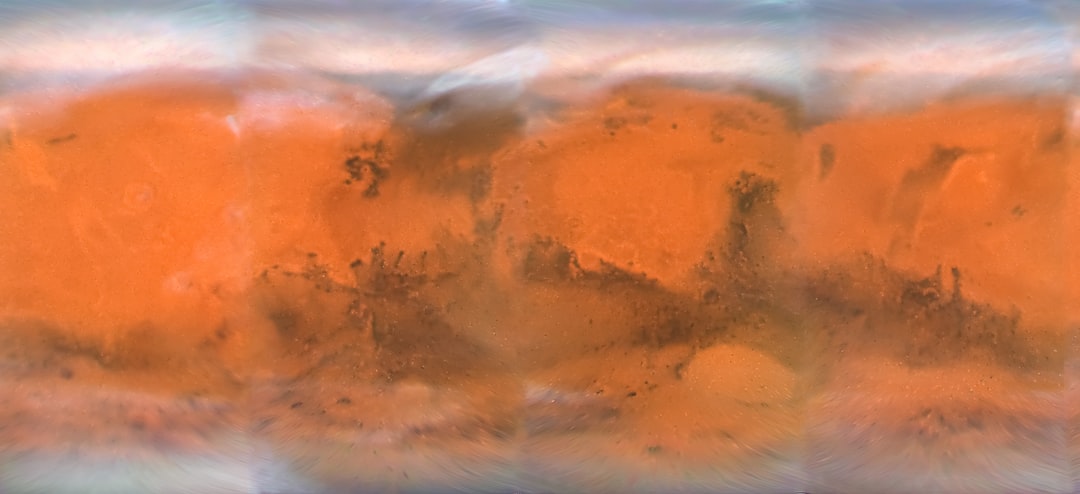
The fifth solar energetic particle event, which struck Mars in June 2018, was different in one critical respect: it arrived during one of the most dramatic global dust storms ever recorded on the planet. Martian dust storms are a well-known and scientifically fascinating phenomenon. Regional storms occur frequently, but occasionally — roughly once every three to four Martian years — they expand into planet-encircling events that shroud the entire globe in a thick, ochre haze for weeks or even months.
The 2018 event was one of those rare, planet-wide tempests. It was so severe and so sustained that it robbed NASA's Opportunity rover of the sunlight it needed to charge its solar panels, ultimately silencing the beloved spacecraft after nearly 15 years of surface operations. The storm was extensively monitored by orbital assets, including NASA's Mars Reconnaissance Orbiter and the ESA Mars Express mission, providing an exceptionally rich dataset.
A solar flare and coronal mass ejection erupt from the Sun's surface, captured in extreme ultraviolet light by NASA's Solar Dynamics Observatory. (Credit: NASA/GSFC/Solar Dynamics Observatory)
It was during this overlap — a raging global dust storm coinciding with a significant SEP event — that the researchers found something unexpected: a genuine, measurable heating signature in the Martian lower atmosphere that could not be readily attributed to the dust storm alone.
Two Forces, One Unexpected Interaction
Dust storms are themselves powerful drivers of atmospheric heating on Mars. Suspended dust particles are highly efficient at absorbing incoming solar shortwave radiation, warming the atmosphere directly rather than through the slow process of surface heating. This is why major Martian dust storms can raise atmospheric temperatures by tens of degrees Kelvin across vast regions. The effect is well-documented and well-modelled.
But the heating pattern the team observed in June 2018 did not match the signature of dust-driven warming alone. The spatial and temporal character of the temperature anomaly suggested an additional energy source — one consistent with particle precipitation from the SEP event interacting with, or amplifying, the atmospheric response already driven by the dust. In other words, the two phenomena appeared to be compounding each other's effects rather than operating as independent, additive processes.
- Dust storm heating operates primarily through absorption of shortwave solar radiation by suspended particulates, warming the atmosphere from the middle levels downward.
- SEP-driven heating involves direct energy deposition by high-energy particles, which ionise atmospheric molecules and generate heat as a secondary effect.
- The combined signature observed in June 2018 appeared to exceed what either mechanism could plausibly produce in isolation, suggesting a non-linear or synergistic interaction.
- Crucially, the elevated dust loading during the storm may have altered the atmospheric structure in ways that changed how, and at what altitudes, the incoming SEP energy was ultimately deposited.
This hypothesis — that the dusty, structurally altered atmosphere of a global storm might interact with SEP energy differently than a clear Martian atmosphere would — is scientifically plausible and opens a rich vein of future inquiry. It is also the kind of insight that only emerges when you look at multiple phenomena simultaneously rather than in isolation.
Why Caution Is Warranted — and Why the Result Still Matters
The researchers are admirably cautious about the strength of their conclusion. One coincident event is not proof of a physical mechanism. In science, a single anomalous data point can reflect a true underlying phenomenon, a statistical fluctuation, an unidentified confounding variable, or some combination of all three. The team is explicit that their finding represents a preliminary hint rather than an established result, and that confirmation will require observations of additional overlapping SEP and dust storm events — events that, by their nature, are rare and unpredictable.
"Mars' atmosphere might respond to combinations of events in ways that studying solar activity or dust storms in isolation would never reveal — a reminder that complex systems rarely behave as the sum of their parts."
Nevertheless, the result is significant for several reasons. First, the discovery was entirely serendipitous: the team was not looking for dust storm interactions. They only noticed the June 2018 anomaly because the heating signal appeared in one case and not the other four, prompting them to investigate what made that event different. That kind of accidental discovery — the observation that does not fit — has a storied history as a driver of scientific progress.
Second, the implications for Martian atmospheric modelling are potentially substantial. Current models of Mars' climate generally treat space weather forcing and dust storm dynamics as separate, non-interacting systems. If the two can genuinely compound one another, those models may be systematically underestimating the extremes that the Martian atmosphere can reach — with consequences for everything from weather prediction on future crewed missions to the interpretation of ancient Martian climate records preserved in the geology.
Broader Implications for Mars Exploration
The practical stakes of understanding Martian space weather are not abstract. Radiation exposure is one of the principal hazards facing any human mission to Mars, and SEP events represent some of the most acute radiation risks astronauts would face both in transit and on the surface. If SEP events interact with Martian dust storms in ways that alter atmospheric energy transport — and potentially surface radiation levels — then mission planners will need far more sophisticated models of these coupled phenomena than currently exist.
Data from missions such as NASA's Perseverance rover, which carries the MEDA (Mars Environmental Dynamics Analyzer) instrument package specifically designed to monitor atmospheric conditions and radiation, will be invaluable in building that understanding. Future dedicated space weather monitoring infrastructure in Mars orbit has also been proposed by multiple space agencies as a prerequisite for safe human exploration.
For the moment, this team's work is a compelling reminder that Mars remains a planet full of surprises — and that the most interesting discoveries are sometimes the ones you find while looking for something else entirely.
Key Takeaways
- A multi-institutional team investigated whether solar energetic particle (SEP) events could heat the lower Martian atmosphere, examining five candidate events.
- Four events showed no significant heating signal; the fifth, in June 2018, coincided with Mars' most severe global dust storm in recent memory.
- During this overlapping event, the team detected lower-atmosphere heating inconsistent with dust storm dynamics alone, suggesting a possible synergistic interaction.
- The result is preliminary and based on a single coincident event, but points toward a previously unconsidered coupling between space weather and Martian meteorology.
- If confirmed, the finding would require revisions to Martian atmospheric models and has direct relevance to radiation safety planning for future human missions.
- The discovery was entirely accidental — a reminder of the enduring role of serendipity in scientific progress.
Source: NAM 2025 — "First study hints solar storms may alter the weather during Martian dust storms." For further reading on Martian atmospheric science, visit the NASA Mars Exploration Program.