Life On Earth May Have Had A Cold Start: New Insights Into the Origins of Life
After decades of hypothesizing about the origin of life on Earth, researchers in the field of astrobiology remain captivated — and confounded — by two of science's most profound questions: how did simple molecules first become complex, life-enabling ones, and how did our early Earth manage to harbor liquid water on its surface despite receiving far less energy from the Sun than it does today? These twin puzzles sit at the very heart of understanding not just how life emerged here, but whether it could emerge elsewhere in the cosmos.
"I strongly believe that life started as soon as energy and nutrients became available to create complex organic molecules out of simpler molecules." — Vladimir Airapetian, Senior Astrophysicist, NASA Goddard Space Flight Center
Vladimir Airapetian, a senior astrophysicist at NASA Goddard Space Flight Center, shared his team's latest findings at the recent Origins 2026 conference in Paris — a gathering that brought together some of the world's foremost researchers in astrobiology, planetary science, and prebiotic chemistry. His work challenges long-held assumptions about what conditions are truly necessary for life to take hold, and offers a provocative new framework: that life on Earth may have begun not in warm, sun-drenched pools, but in a much colder, more hostile environment than previously imagined.
The Faint Young Sun Paradox: A Frozen Earth That Wasn't
At the core of Airapetian's research lies one of planetary science's most enduring mysteries — the Faint Young Sun Paradox. First formally described by astronomers Carl Sagan and George Mullen in 1972, this paradox arises from a fundamental property of stellar evolution: stars gradually grow brighter as they age. Over 4 billion years ago, our young Sun was approximately 25% to 27% fainter than it is today. Standard climate models predict that such reduced solar luminosity should have left Earth as a permanently frozen, ice-covered world — yet geological and geochemical evidence strongly indicates the presence of liquid water on Earth's surface as far back as 4.4 billion years ago.
"Under such a faint Sun, Earth should be a frozen ball, but we know that it wasn't," says Airapetian. "Standing liquid water was available." He and colleagues believe that while Earth's poles and mid-latitudes may indeed have been locked under ice, an equatorial belt remained free of permanent glaciation — a narrow but potentially life-sustaining zone.
- The Sun was approximately 25–27% less luminous during Earth's early history (~4 billion years ago).
- Standard models predict a fully frozen Earth under these conditions.
- Geological evidence shows liquid water existed, contradicting simple models.
- An equatorial band of open water may have been the cradle of early life.
- The paradox remains one of planetary science's most debated unsolved problems.
Traditionally, scientists have proposed that a thick carbon dioxide (CO₂) atmosphere served as a powerful greenhouse blanket, warming early Earth sufficiently to keep water liquid. But this solution, while mathematically plausible, creates a serious biochemical problem — one that Airapetian's team has now put under a sharper lens.
The Carbon Dioxide Trap: Too Much of a Good Thing
Here the two conundrums become deeply entangled. To warm the early Earth enough to sustain liquid water in the absence of a bright young Sun, prevailing models require pumping enormous quantities of carbon dioxide into the atmosphere. However, CO₂ readily dissolves in water, particularly in the small ponds and lakes that many scientists believe served as incubators for early prebiotic chemistry — the chemistry that preceded and ultimately gave rise to life.
"If you pump too much carbon dioxide into the atmosphere, it will get absorbed into small little ponds and create very acidic conditions," says Airapetian. "But we know that we need alkaline conditions, not acidic conditions, for life."
This is not a trivial chemical distinction. The formation of key biological precursor molecules depends critically on environmental pH. A striking example lies in the chemistry of ribose, the five-carbon sugar that forms the structural backbone of ribonucleic acid (RNA). RNA is widely considered the key molecule in the leading scientific hypothesis for the origin of life — the "RNA World" hypothesis — which proposes that RNA molecules capable of both storing genetic information and catalyzing chemical reactions were the precursors to DNA-based life as we know it.
Crucially, alkaline boron compounds play an essential role in stabilizing ribose in solution — preventing it from rapidly breaking down before it can participate in longer molecular chains. In highly acidic conditions produced by dissolved CO₂, this stabilization fails, and the pathway toward informational molecules like RNA and DNA becomes dramatically less probable.
"Without ribose, you can't produce stable, informational RNA and DNA molecules," says Airapetian. This biochemical constraint effectively rules out an extreme CO₂-rich atmosphere as the sole solution to the Faint Young Sun Paradox, at least if life is to get started in small surface ponds.
Solar Superflares: Nature's Particle Accelerators
If not CO₂, what provided both the energy to warm the planet and the chemical spark to jumpstart molecular complexity? Airapetian and his colleagues propose a compelling alternative rooted in the violent nature of young stars. Our early Sun, like many young solar-type stars observed today, was far more magnetically active than its current middle-aged self — prone to unleashing superflares orders of magnitude more powerful than any solar flare recorded in the modern era.
These superflares were accompanied by massive coronal mass ejections (CMEs) — eruptions that hurled billions of tons of magnetized plasma outward at speeds of several thousand miles per second, generating powerful shock waves that propagated through the early solar system. You can explore current solar activity and CME research through NASA's Heliophysics Division.
When these energetic eruptions reached the early Earth, they produced streams of highly energetic protons that penetrated deep into the upper atmosphere. As these protons cascaded downward, they collided with and shattered molecules of molecular nitrogen (N₂) and carbon dioxide (CO₂) — generating reactive atomic fragments that could then recombine into far more complex molecular species. This process, known as energetic particle chemistry, is essentially nature's own version of the famous Miller-Urey experiment, but operating on a planetary scale.
The key product of this high-energy atmospheric chemistry, in Airapetian's model, is nitrous oxide (N₂O) — a potent greenhouse gas that is much more effective at warming a planet, molecule for molecule, than CO₂, and crucially, one that does not produce the same acidifying effect when dissolved in water.
Nitrous Oxide: An Unexpected Planetary Thermostat
In their atmospheric models, Airapetian and colleagues introduced nitrous oxide at a concentration of approximately ten percent of experimentally derived early Earth atmospheric compositions. The results were striking. Even under the diminished glow of the Faint Young Sun, this level of nitrous oxide was sufficient to warm an equatorial band of Earth's surface to temperatures of approximately 2 to 3 degrees Celsius above freezing — cold by modern standards, but warm enough for liquid water to persist, chemistry to proceed, and life to conceivably take hold.
This scenario — a cold, partially ice-covered Earth with a narrow equatorial liquid water zone — is what Airapetian calls a "cold start" to life. Far from being a drawback, the relatively cold temperatures may have been actively advantageous for early prebiotic chemistry. Cold environments slow evaporation, meaning that small lakes and ponds could retain not only water but also the dissolved organic molecules dissolved within them — including critically important molecules like hydrogen cyanide (HCN), a key precursor in the synthesis of amino acids and nucleobases.
- Nitrous oxide is a far more potent greenhouse gas than CO₂ at equivalent concentrations.
- It does not acidify water when dissolved, preserving alkaline conditions favorable for life.
- Cold temperatures reduce evaporative loss of key prebiotic molecules such as HCN.
- An equatorial band of ~2–3°C liquid water could sustain basic chemistry.
- Superflare-driven N₂O production may solve both the warming and chemistry problems simultaneously.
For more background on prebiotic chemistry and the RNA World hypothesis, NASA's Astrobiology Program maintains an extensive archive of research and resources.
Implications for the Search for Life Beyond Earth
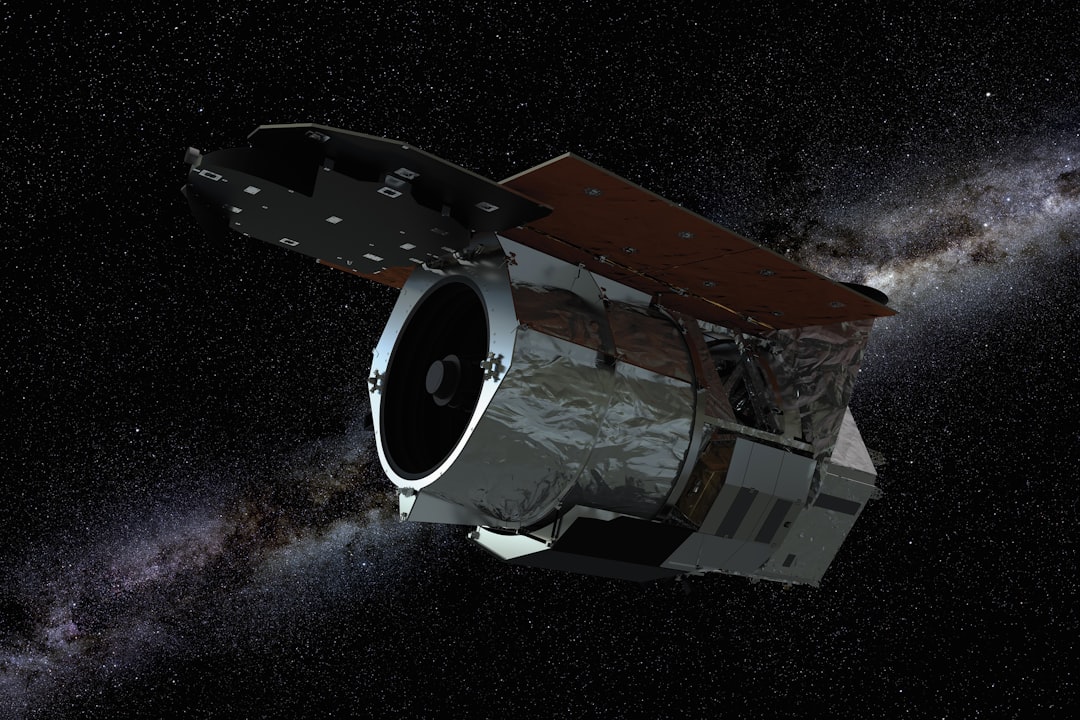
Airapetian's framework carries profound implications for how we search for life elsewhere in the universe. Over the next two decades, an array of powerful new ground- and space-based observatories — including the James Webb Space Telescope and future missions currently in development — will turn their instruments toward rocky, Earth-sized planets orbiting distant stars, hunting for biosignatures: chemical fingerprints in planetary atmospheres that hint at biological processes.
Airapetian argues that detecting nitrous oxide in the atmosphere of a rocky exoplanet should be elevated to a top-priority biosignature target. Not just because it is itself biologically produced on modern Earth (largely by microbial processes in soils and oceans), but because its presence in an early planetary atmosphere would signal that the chemical conditions necessary for prebiotic complexity — abundant reactive nitrogen, moderate temperatures, and non-acidifying greenhouse warming — are in place.
"We need to look for the spectroscopic signatures of nitrous oxide, because a nitrogen-rich and carbon-dioxide-rich atmosphere is a basic prerequisite for prebiotic chemistry." — Vladimir Airapetian
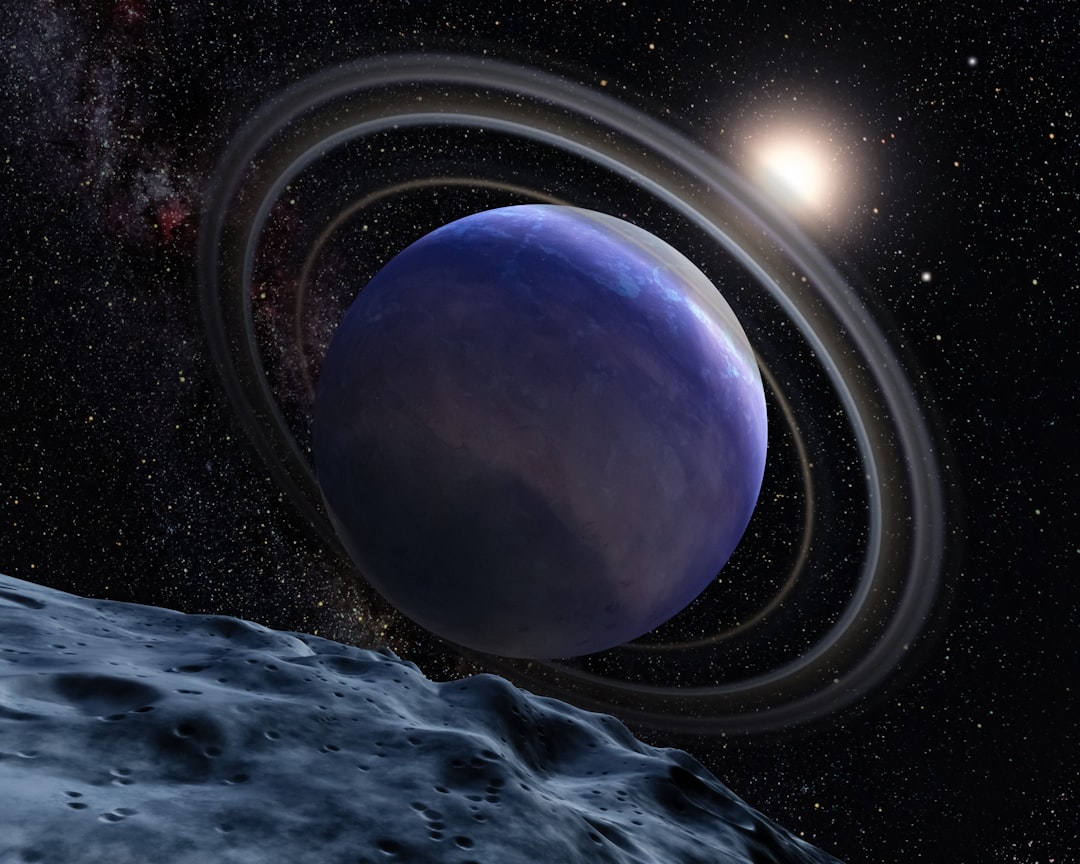
At the same time, Airapetian tempers expectations about one of astronomy's most exciting frontiers: the search for life around red dwarf (M-dwarf) stars. These dim, cool stars are the most common type in the Milky Way — making up over 70% of all stars in our galaxy — and many of them host rocky planets in their habitable zones. However, the habitable zones around red dwarfs lie extremely close to the star, forcing any potentially habitable planet into a very tight orbit.
This proximity has dire consequences. Red dwarf stars are notoriously magnetically active, and their habitable-zone planets are subjected to relentless bombardment by stellar radiation and energetic particles — far exceeding anything experienced by early Earth. While some stellar activity may be productive for prebiotic chemistry, the extreme and persistent flaring of red dwarfs could repeatedly strip away planetary atmospheres and sterilize any emerging biochemistry before it can gain a foothold. The European Space Agency's exoplanet research program is actively studying these challenges as part of its long-term astrobiology roadmap.
An Unsolvable Puzzle — Or the Beginning of an Answer?
We may never know with certainty exactly when or how life first ignited on Earth. The geological record of that remote era has been largely erased by billions of years of plate tectonics, erosion, and metamorphism. But Airapetian remains pragmatically optimistic. He acknowledges that while the specific pathway life took on Earth may be lost to deep time, the underlying chemistry — the prebiotic signatures that preceded and enabled biological complexity — may be detectable on worlds far beyond our solar system.
"Prebiotic chemistry anywhere is going to look very similar," he says, "but once it advances, diverges, and becomes more complex, we cannot predict what pathway it will take." This humbling acknowledgment reflects one of astrobiology's deepest truths: while the universe may favor certain chemical starting points, the breathtaking diversity of environments across billions of planets means that the story of life — wherever it arises — may be written in forms we have yet to imagine.
For now, Airapetian and his colleagues are focused on the first chapter of that story: finding the spectroscopic traces of nitrous oxide and other prebiotic markers in the atmospheres of distant rocky worlds. It is, perhaps, the most ambitious scientific detective story ever undertaken — searching across light-years of space for the chemical whispers of life's very beginnings. Further reading on planetary habitability and biosignature science is available through the NASA Exoplanet Exploration Program.
Key Takeaways
- Earth's early life may have originated under cold, partially glaciated conditions, not warm tropical pools.
- The Faint Young Sun Paradox may be resolved not by extreme CO₂ levels, but by nitrous oxide produced by stellar superflare activity.
- Nitrous oxide preserves the alkaline chemistry essential for ribose stability and RNA formation.
- Young solar-type stars produce superflares that energize atmospheric chemistry, potentially seeding prebiotic molecular complexity.
- Red dwarf stars may be poor candidates for life-hosting planets due to excessive and persistent flare activity.
- Future telescopes should prioritize searching for nitrous oxide spectral signatures in exoplanet atmospheres as a key biosignature.