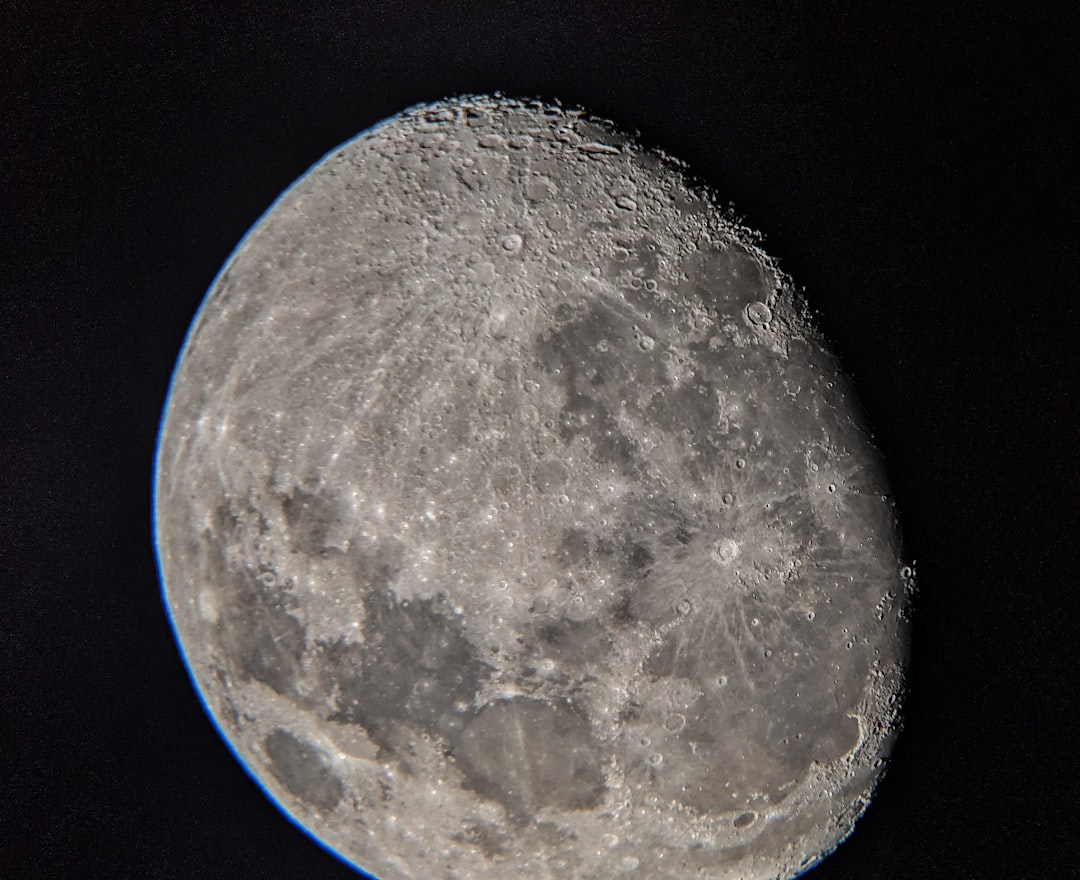
When Carl Sagan immortalized the phrase "we are made of star-stuff" in his groundbreaking series Cosmos, he captured one of astronomy's most profound truths. Yet the mechanism by which stellar material actually reached Earth and became part of our biological makeup has remained a subject of intense scientific debate. For decades, the prevailing theory suggested that isotopes forged in supernova explosions traveled through space aboard microscopic dust grains, eventually coalescing into planets and, ultimately, into living organisms. However, revolutionary new research from the University of Copenhagen is fundamentally rewriting this cosmic origin story, revealing that ice—not dust—was the primary courier of stellar material across the interstellar void.
In a landmark study led by Dr. Martin Bizzarro and his team at the Centre for Star and Planet Formation, researchers have uncovered compelling evidence that challenges our understanding of both how Earth acquired its chemical building blocks and how our planet itself formed. Published in a prestigious scientific journal, this research demonstrates that supernova remnants were captured and transported within icy particles as they journeyed through the interstellar medium, rather than embedded in rocky dust grains as previously believed. This discovery carries profound implications not only for cosmochemistry but also for planetary formation theory, potentially validating the controversial pebble accretion model over the traditional giant impact hypothesis.
The Zirconium Connection: A Cosmic Tracer Revealed
The breakthrough hinges on an unlikely protagonist in the cosmic drama: zirconium, specifically its isotope Zr-96. While zirconium might seem an obscure choice for cosmochemical investigation, this particular isotope possesses a unique and invaluable characteristic—it can only be synthesized in the extreme conditions of supernova explosions. This makes Zr-96 an ideal tracer for tracking supernova material through space and time, functioning as a kind of cosmic fingerprint that reveals the journey of stellar matter from exploding stars to planetary bodies.
Dr. Bizzarro's team recognized that by examining where Zr-96 concentrated within meteorites—pristine samples of early solar system material—they could determine whether supernova isotopes traveled on dust or ice. The methodology was elegantly simple yet remarkably effective: researchers collected samples from a diverse array of meteorite classifications, including carbonaceous chondrites, ordinary chondrites, and enstatite chondrites, each representing different formation environments in the early solar system.
Revolutionary Research Methodology
The experimental approach employed by the Copenhagen team was both ingenious and meticulous. They subjected meteorite samples to weak acetic acid treatment, a technique that selectively dissolves water-associated minerals and clay components while leaving the rocky, silicate matrix intact. This chemical separation allowed researchers to distinguish between materials that had been transported via ice (which would dissolve in the acid) versus those carried by dust grains (which would remain in the rocky residue).
The results were nothing short of extraordinary. Analysis revealed that Zr-96 concentrations in the acid-soluble leachates were up to 5,000 parts per million higher than in the undissolved rocky material. This dramatic disparity provides compelling evidence that ice, not dust, served as the primary vehicle for transporting supernova isotopes through the protoplanetary disk that eventually formed our solar system.
"When a supernova explodes, it doesn't merely eject dust particles," explains the research team. "A significant portion of the ejected material becomes atomized and embeds directly into icy particles forming in the cooling stellar remnants and surrounding interstellar medium."
Implications for Planetary Architecture and Formation
The ice-transport mechanism has profound implications for understanding the chemical architecture of our solar system. The distribution of supernova isotopes across planetary bodies follows a predictable pattern based on their distance from the Sun, a relationship scientists call the "mixing line." This linear correlation reveals a fundamental truth about planetary composition: the closer a planet formed to our star, the more likely its ice-borne supernova isotopes were to sublimate away.
Consider the inner rocky planets—Mercury, Venus, Earth, and Mars. These worlds formed within what astronomers call the snow line, the boundary beyond which water ice remains stable in the protoplanetary disk. Inside this boundary, temperatures were high enough that icy particles melted or sublimated, releasing their gaseous components—including the precious Zr-96—which could then escape or be swept away by solar radiation. Consequently, these inner planets exhibit notably depleted levels of supernova isotopes compared to their outer solar system counterparts.
In stark contrast, the outer planets—Jupiter, Saturn, Uranus, and Neptune—formed beyond the snow line where ice remained stable. These giant worlds and their moons consequently retained far higher concentrations of supernova-derived isotopes, creating the linear mixing line that extends from the inner to outer solar system. This pattern, revealed through the Zr-96 analysis, aligns perfectly with theoretical predictions of ice-mediated transport.
The Pebble Accretion Revolution
Perhaps even more revolutionary are the implications for planetary formation theory. The research provides compelling support for the pebble accretion model, a relatively recent theory that challenges the traditional view of planetary formation through giant impacts between Mars-sized protoplanets.
According to pebble accretion theory, planets grow by accumulating centimeter-to-meter-sized "pebbles" that drift inward through the protoplanetary disk. As these icy pebbles cross the snow line and approach the forming Earth, their ice sublimates, releasing volatile gases—including the Zr-96 atoms embedded within. These gases would then be lost to space or swept into the Sun, meaning that Earth would accrete very little of the supernova isotope despite being built from material that originally contained it.
The observational data strongly supports this scenario. Earth's relative depletion in Zr-96 compared to asteroids and meteorites suggests our planet couldn't have formed primarily through collisions of larger, asteroid-sized bodies that retained their supernova isotopes. Instead, the evidence points toward accretion from countless small pebbles that shed their volatile, isotope-rich ices before incorporation into the growing planet.
Ancient Inclusions Tell a Stratified Story
The research team's investigation of Calcium-Aluminum-rich Inclusions (CAIs) revealed another fascinating dimension to this cosmic narrative. CAIs represent some of the oldest solid materials in the solar system, having formed approximately 4.567 billion years ago in the scorching inner regions of the protoplanetary disk. These millimeter-sized white inclusions, found embedded in meteorites, serve as time capsules preserving conditions from the solar system's earliest moments.
Remarkably, the Copenhagen team discovered that Zr-96 concentrations in CAIs varied dramatically—some contained abundant supernova isotopes while others were severely depleted. This heterogeneity suggests that CAIs formed in distinctly different environments within the protoplanetary disk, likely at different vertical heights within the disk's structure.
This observation led researchers to propose a stratified disk model. When Zr-96-bearing gases were released from sublimating ice, they didn't remain uniformly distributed throughout the disk. Instead, the disk developed a layered structure: lighter gaseous components, enriched in supernova isotopes, migrated toward the upper and lower surfaces of the disk's "pancake" structure, while heavier dust grains concentrated in the dense midplane. CAIs forming in the gas-rich outer layers would incorporate more Zr-96, while those condensing in the dust-dominated midplane would contain less, explaining the observed variation.
Broader Implications for Cosmochemistry and Astrobiology
This research fundamentally reshapes our understanding of matter distribution in protoplanetary disks and has implications extending far beyond our own solar system. The findings suggest that the chemical composition of planets around other stars may follow similar patterns, with ice-mediated transport creating predictable gradients of stellar nucleosynthesis products based on distance from the host star.
For astrobiologists, understanding how supernova material reached Earth provides crucial context for the origin of life. Many elements essential for biology—including carbon, nitrogen, oxygen, and phosphorus—were synthesized in stellar furnaces and distributed through mechanisms similar to those revealed by the Zr-96 research. The ice-transport pathway may have been crucial for delivering these life-building elements to the early Earth in forms that could be incorporated into prebiotic chemistry.
Future Research Directions and Validation
While the Copenhagen team's findings are compelling, they represent the beginning rather than the end of this scientific journey. Several avenues for future research emerge from this work:
- Extended isotopic surveys: Examining additional supernova-produced isotopes beyond Zr-96 to confirm the ice-transport mechanism applies broadly across the periodic table
- Sample return missions: Analysis of pristine samples from asteroids like those being returned by NASA's OSIRIS-REx and JAXA's Hayabusa2 missions could provide uncontaminated material for testing these hypotheses
- Computational modeling: Sophisticated simulations of protoplanetary disk dynamics incorporating ice sublimation and gas transport to validate the proposed mechanisms
- Exoplanetary applications: Investigating whether similar patterns exist in other planetary systems, particularly those with well-characterized compositional data
- Laboratory experiments: Recreating the conditions of ice formation and supernova isotope incorporation to understand the physical chemistry involved
A New Chapter in Our Cosmic Origin Story
The revelation that we are made of "star-ice" rather than merely "stardust" may seem like a subtle distinction, but it represents a paradigm shift in our understanding of cosmic chemistry and planetary formation. This research demonstrates how scientific understanding evolves through careful observation, innovative methodology, and willingness to challenge established theories.
Dr. Bizzarro's work exemplifies the power of interdisciplinary cosmochemistry, combining expertise in isotope geochemistry, meteoritics, and planetary science to address fundamental questions about our origins. If validated by subsequent research, this study may indeed be recognized as a landmark contribution to both pre-planetary chemistry and planetary formation theory.
Carl Sagan's poetic insight that we are made of star-stuff remains as true and profound as ever. The mechanism may have involved ice rather than dust, and the formation process may have been gradual pebble accretion rather than catastrophic collisions, but the fundamental truth endures: every atom in our bodies—the calcium in our bones, the iron in our blood, the carbon in our DNA—was forged in the nuclear furnaces of ancient stars and delivered to Earth through cosmic processes we are only now beginning to fully understand. Whether carried on ice or dust, we remain, in the most literal sense, children of the stars.