Coldest Lava Exoplanet Found to Hold an Atmosphere — Rewriting the Rules of Planetary Science
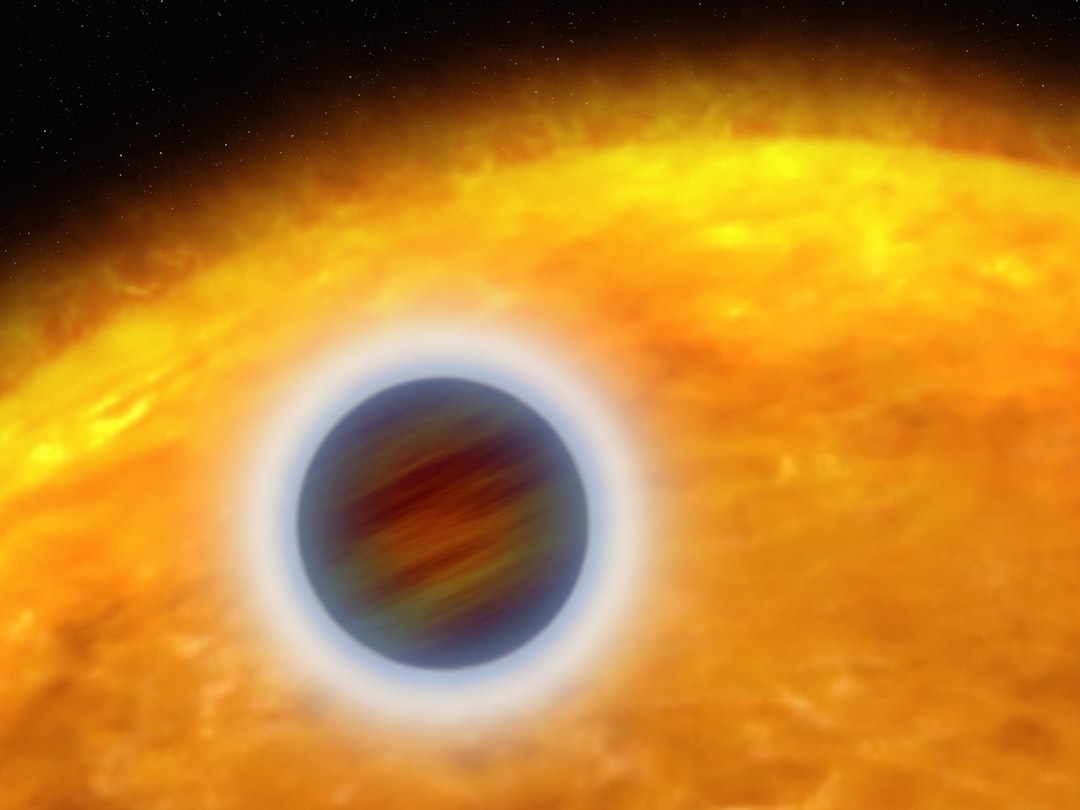
Exoplanets continue to challenge our understanding of planetary formation, evolution, and the conditions necessary to support life as we know it. While scientists have long used planets within our own solar system as analogs for distant worlds, the discovery of exoplanets with extremely short orbital periods — some completing a full orbit in mere hours — forces researchers to constantly reassess what planets can endure over the course of their lifetimes. Among the most dramatic of these alien worlds are the so-called "lava world" exoplanets: rocky planets orbiting so dangerously close to their host stars that their surfaces are perpetually molten, sculpted not by geological time but by relentless stellar radiation.
For years, a persistent and puzzling divide has existed within this exotic class of worlds. Hotter lava worlds — those with surface temperatures exceeding roughly 2,000 Kelvin — have been confirmed to host tenuous atmospheres, sustained by the evaporation of molten rock itself. Yet cooler lava worlds, those sitting at the lower end of the temperature spectrum, have consistently been found to be bare, airless rocks, scoured clean of any gaseous envelope. This dichotomy has left planetary scientists searching for answers about what truly governs the ability of these extreme worlds to retain and maintain an atmosphere.
Now, an international team of researchers may have found a crucial piece of that puzzle. Their study of an Earth-sized lava world orbiting its star in less than one Earth day presents compelling new evidence that challenges the established narrative — and opens a remarkable window into the early history of our own planet.
The Study: Peering Into an Alien Furnace
As detailed in a recent study published in The Astrophysical Journal Letters, researchers from the United States, United Kingdom, China, and Spain present new observational evidence that an unusually "cold" lava world may harbor an atmosphere — a finding that defies current theoretical models. The key instrument in this groundbreaking work was NASA's James Webb Space Telescope (JWST), the most powerful space-based observatory ever constructed and one uniquely suited to probing the atmospheres of distant rocky worlds through its sensitive infrared detectors.
The target of their investigation is HD 3167 b, an exoplanet located approximately 154 light-years from Earth in the constellation Cepheus. With a radius roughly 1.6 times that of Earth and a mass approximately 4.8 times Earth's, HD 3167 b falls into the category of a super-Earth — a class of planets with no direct analogue in our own solar system. It completes a full orbit around its host star in just 0.96 Earth days, placing it in extreme proximity to its stellar companion. To learn more about how JWST is revolutionizing exoplanet science, visit the official NASA JWST Mission Page.
A K-Type Star Host
HD 3167 b orbits a K-type star — a class of stars that are both smaller and cooler than our own Sun, with surface temperatures ranging from approximately 3,900 to 5,200 Kelvin compared to the Sun's ~5,778 Kelvin. Despite their relative dimness, K-type stars are estimated to comprise the largest stellar population in the Milky Way Galaxy, making them of enormous interest to astronomers studying planetary habitability and evolution. Because K-type stars are cooler, a planet must orbit closer to receive the same amount of stellar energy that Earth receives from the Sun — but this proximity comes with severe consequences, including extreme tidal forces and intense radiation bombardment.
The Science of Secondary Eclipses
The team's key discovery hinged on a sophisticated observational technique known as secondary eclipse photometry. A secondary eclipse — distinct from a standard transit — occurs when an exoplanet passes behind its host star from our perspective. By carefully measuring the tiny dip in total light received as the planet disappears, and then measuring the light restored when it re-emerges, astronomers can isolate the thermal emission from the planet's dayside and infer its surface or atmospheric temperature with remarkable precision.
When JWST observed HD 3167 b's secondary eclipse in mid-infrared wavelengths, the results were striking. The exoplanet's dayside surface was found to be significantly cooler than theoretical models had predicted for a bare, airless rock at its orbital distance. This discrepancy is highly significant: a bare rock with no atmosphere would efficiently absorb stellar radiation on its dayside and re-emit it directly as heat, producing a predictably high temperature. A lower-than-expected dayside temperature, however, suggests that something is redistributing that heat — and the most compelling explanation is the presence of an atmosphere capable of transporting energy from the planet's perpetually sunlit dayside to its permanently dark nightside.
"Despite how inhospitable they are for life, we're also interested in studying these kinds of planets because we think early Earth might have looked a lot like a lava world. We think that very early in the solar system's history, when the terrestrial planets formed, they were extremely hot due to the energy from all of the planetesimal collisions. Earth had what's known as a magma ocean stage with an entirely liquid surface. This result gives us a window into studying what conditions may have been like in Earth's first couple of million years."
— Brandon Park Coy, PhD student, Department of the Geophysical Sciences, University of Chicago, and lead author of the study.
Tidal Locking and the Dayside–Nightside Divide
A critical factor in understanding HD 3167 b is the phenomenon of tidal locking. Exoplanets orbiting this close to their host stars experience immense tidal forces — gravitational interactions so powerful that they synchronize the planet's rotation with its orbital period. The result is that one hemisphere permanently faces the star, bathed in relentless radiation and heat, while the opposite hemisphere is locked in perpetual darkness and extreme cold. This permanent division creates dramatic temperature gradients that would tear apart any conventional atmospheric model.
For a tidally locked lava world, the prospect of heat redistribution from dayside to nightside via an atmosphere is particularly extraordinary. It implies the existence of powerful atmospheric circulation patterns — perhaps analogous to the jet streams of gas giant planets — capable of ferrying thermal energy across thousands of kilometers against an almost incomprehensible temperature divide. If confirmed, this would make HD 3167 b one of the most extreme examples of atmospheric dynamics ever identified on a rocky exoplanet.
Lava Worlds in Context: From Io to Distant Exoplanets
The study of lava world exoplanets has evolved considerably since the early 2000s, though it is important to distinguish them from the most famous lava world in our own solar system: Io, the innermost of Jupiter's four large Galilean moons. Io hosts hundreds of active volcanoes — more than any other body in the solar system — making it the most geologically active world we know of. However, Io's volcanic fury is not driven by proximity to the Sun. Instead, it arises from tidal heating: the gravitational tug-of-war between the massive Jupiter and neighboring Galilean moons Europa and Ganymede flexes Io's interior, generating immense frictional heat that fuels its volcanic activity. You can explore more about Io and Jupiter's system via the NASA Solar System Exploration page.
Lava exoplanets, by contrast, are seared from the outside in. The extraordinary temperatures — often exceeding 1,500 to 3,000 Kelvin on their daysides — literally melt rock, creating magma oceans on their surfaces. As this molten rock evaporates, it forms a tenuous mineral vapor atmosphere, composed of species such as sodium, silicon monoxide, and magnesium oxide, which would be entirely alien compared to anything in our solar system. Studying these atmospheric compositions offers direct insights into the mineralogical makeup of rocky exoplanet surfaces, with implications for understanding planetary formation across the galaxy. NASA's Exoplanet Exploration Program maintains an extensive database of known exoplanets and ongoing research in this field.
A Window Into Earth's Fiery Youth
Perhaps the most profound implication of this research is not what it tells us about distant alien worlds, but what it reveals about our own planet's ancient past. The early Earth — roughly 4.5 billion years ago — is believed to have passed through a dramatic magma ocean stage, during which the relentless bombardment of planetesimals (the building blocks of planets) kept its surface entirely molten. During this epoch, the young Earth likely possessed a thick, transient atmosphere composed of vaporized rock and volatile gases, which eventually cooled and condensed as the bombardment waned.
Studying HD 3167 b and similar lava worlds provides scientists with a rare opportunity to observe a present-day analogue of this ancient terrestrial process. By understanding how these worlds gain, maintain, or lose their atmospheres under extreme conditions, researchers can refine their models of how Earth transitioned from a molten, hellish world to one capable of sustaining oceans, continents, and ultimately, life. For further reading on planetary formation and the early solar system, the European Space Agency's planetary science resources offer an excellent primer.
Key Findings at a Glance
- Target planet: HD 3167 b, located ~154 light-years from Earth
- Size and mass: Approximately 1.6× Earth's radius and 4.8× Earth's mass (super-Earth)
- Orbital period: ~0.96 Earth days — less than one full day
- Host star type: K-type star — smaller and cooler than the Sun
- Key observation: Dayside temperature significantly cooler than predicted for a bare rock
- Proposed explanation: An atmosphere redistributing heat from the dayside to the nightside
- Scientific significance: First "cold" lava world to show potential evidence of atmospheric retention
- Broader implications: Offers a window into Earth's early magma ocean stage and the conditions of young rocky planets
Looking Ahead: The Future of Lava World Research
The findings surrounding HD 3167 b represent a significant step forward, but many questions remain. Researchers will need to conduct follow-up observations to confirm the atmospheric hypothesis, characterize its composition, and determine whether the heat redistribution signal is consistent across multiple epochs. JWST's continued observing campaigns on a range of lava world targets — including the well-studied 55 Cancri e and LHS 3844 b — will be essential in building a comparative dataset that can reveal the full diversity of this exotic planetary class. You can follow JWST's latest science results at the Space Telescope Science Institute.
What the work of Coy and colleagues makes abundantly clear is that lava worlds are far more complex and scientifically rich than their hellish reputations might suggest. Far from being merely cautionary tales of planetary extremes, they are dynamic laboratories — preserved snapshots of the violent, molten origins shared by all rocky planets, including our own. As JWST continues to turn its golden mirror toward these distant furnaces, each observation promises to deepen our understanding not only of alien worlds, but of the remarkable planetary history that made life on Earth possible.