Asymmetric Space Waves Map Pressure on Earth's Magnetic Shield
Earth's magnetic field — the invisible, dynamic barrier generated by the churning of molten iron deep within our planet's outer core — stands as one of the most critical components for the existence of life as we know it. This magnetosphere shields us from a relentless barrage of harmful space weather, including intense solar radiation from the Sun and high-energy cosmic rays originating from the far reaches of our galaxy, including those produced by distant supernova explosions. Without this protective cocoon, the unimpeded solar wind would gradually strip away our atmosphere — a fate that planetary scientists believe befell Mars billions of years ago after its own magnetic field faded. But a fundamental question has long puzzled researchers: which regions of the magnetosphere bear the greatest burden when filtering out incoming space radiation?
Now, a collaborative team of researchers from the United States and Finland may be one significant step closer to answering that question. Their new study presents compelling evidence that certain regions of Earth's magnetic field experience dramatically greater levels of stress and deformation from space weather than others — and that this stress is distributed in a surprisingly asymmetric fashion. These findings, published in the prestigious journal Geophysical Research Letters, hold profound implications not only for our understanding of Earth's magnetospheric dynamics, but also for our comprehension of magnetic fields protecting other worlds throughout the solar system and beyond.
The Kelvin-Helmholtz Instability: Waves at the Edge of Space
At the heart of this research lies a fascinating and long-studied physical phenomenon known as the Kelvin-Helmholtz instability (KHI). Named after the 19th-century physicists Lord Kelvin and Hermann von Helmholtz, this instability arises at the interface between two fluids — or in this case, two plasma environments — moving at different velocities. A familiar analogy can be found in everyday nature: the rolling, billowing waves that form on the surface of a lake when wind blows across it, or the swirling vortices at the edge of a fast-moving river current. In space, this same physics plays out on a monumental scale at the boundary of Earth's magnetosphere, called the magnetopause, where the supersonic flow of solar wind meets and presses against our planet's magnetic field.
For their study, the researchers employed a series of sophisticated magnetohydrodynamic (MHD) computer models to simulate the complex interaction between Earth's magnetosphere and the solar wind. The solar wind — a continuous stream of charged particles, primarily electrons and protons, ejected from the Sun's corona at speeds ranging from 400 to 800 kilometers per second — represents the primary energetic force that our magnetic shield must deflect and absorb. By carefully modeling how this supersonic plasma flow generates KHI wave patterns along the magnetopause, the team was able to probe the spatial and temporal distribution of magnetospheric stress in unprecedented detail. The primary motivation driving this research is the ever-growing need to understand space weather and develop more accurate space weather prediction models, which have critical applications for modern technological infrastructure.
Abundant Asymmetry: A Non-Mirror Universe at the Magnetopause
The team's most striking finding was that the KHI waves exhibit strongly asymmetric, or non-mirror-like, behavior across different regions of Earth's magnetosphere. Rather than displaying a uniform or symmetrical pattern of wave activity, the magnetic boundary behaves quite differently depending on where you look. Specifically, the wave activity does not match between the northern and southern hemispheres, and it also differs significantly between the dawn-side and dusk-side of the planet — indicating that the magnetosphere experiences measurably different levels of impact, pressure, and interaction from the incoming solar wind depending on location.
The researchers identified several key physical drivers responsible for this asymmetry:
- Hemispheric seasonality: Whether a given hemisphere is experiencing winter or summer plays a significant role, with the winter hemisphere consistently exhibiting the strongest wave activity — a finding tied to the differing ionospheric conductivity between sunlit and dark hemispheres.
- Dawn-dusk asymmetry: The orientation of the solar wind's own magnetic field, known as the Interplanetary Magnetic Field (IMF), determines whether the dawn or dusk flank of the magnetosphere experiences stronger KHI wave growth and energy transfer.
- Magnetic field orientation: The local geometry and inclination of Earth's magnetic field lines at the magnetopause boundary play a crucial role in either suppressing or amplifying the growth of KHI waves at specific locations.
- Plasma density gradients: Variations in plasma density across the magnetopause boundary influence the rate at which KHI instabilities can develop and propagate along the boundary layer.
These combined factors produce a magnetospheric environment that is far more complex and spatially variable than previously appreciated in many predictive models, suggesting that simplified, symmetric treatments of the magnetopause may be insufficient for capturing the true behavior of Earth's magnetic shield during active space weather events.
"This finding grew out of a long process of thinking through what I was seeing. In 2020, when I was visiting NASA as a postdoctoral researcher, I noticed unusual simulation images of the magnetosphere. I later realized that they showed Kelvin–Helmholtz waves at the edge of the magnetosphere, and that the different behavior of the waves on different sides was part of the same phenomenon." — Dr. Lauri Holappa, Academy Research Fellow, University of Oulu, and lead author of the study.
Dr. Holappa's account underscores a recurring theme in scientific discovery: that some of the most important breakthroughs emerge not from direct hypothesis testing, but from the careful, patient observation of anomalies in data. His years-long journey from a puzzling simulation image to a published, peer-reviewed finding about fundamental magnetospheric asymmetry exemplifies the iterative and often serendipitous nature of frontier research.
Why Space Weather Matters More Than Ever
Understanding space weather — and the solar wind in particular — has evolved from a purely academic pursuit into an urgent technological and societal priority. Modern civilization is deeply dependent on satellite infrastructure for GPS navigation, telecommunications, financial transactions, and weather forecasting. Intense geomagnetic storms, driven by solar activity, can disrupt or permanently damage satellites in orbit, induce dangerous electrical currents in power grid infrastructure on the ground, and pose radiation hazards to astronauts and passengers aboard high-altitude polar flights. The NOAA Space Weather Prediction Center and similar agencies around the world now provide real-time monitoring and forecasts precisely because the stakes have become so high.
Yet the scientific curiosity driving space weather research stretches back centuries. Galileo Galilei is credited among the earliest systematic observers of sunspots using his pioneering telescope in the early 1600s — unknowingly documenting the visible signature of solar magnetic activity. It was not until 1843, however, that the German amateur astronomer Heinrich Schwabe — after 17 years of meticulous observation — discovered the approximately 11-year cycle of solar activity, now known as the solar cycle, during which the Sun oscillates between periods of magnetic calm (solar minimum) and intense activity (solar maximum). This foundational discovery remains central to all space weather forecasting today.
The dawn of the Space Age in the mid-20th century transformed the field from a ground-based observational science into a multi-dimensional discipline spanning in-situ measurement, remote sensing, and theoretical modeling. Pioneering spacecraft such as Explorer 1 (1958) led directly to the discovery of the Van Allen radiation belts by James Van Allen — a landmark moment in understanding Earth's magnetospheric structure. Subsequent missions by NASA and ESA's Cluster mission, the ESA Cluster constellation, and many others have provided increasingly detailed multi-point measurements of the magnetopause and the KHI phenomenon in particular. The very term "space weather" was formally coined and popularized in the scientific literature during the 1990s, reflecting the field's maturation into a recognized discipline with real-world forecasting goals.
Broader Implications: From Earth to Exoplanets
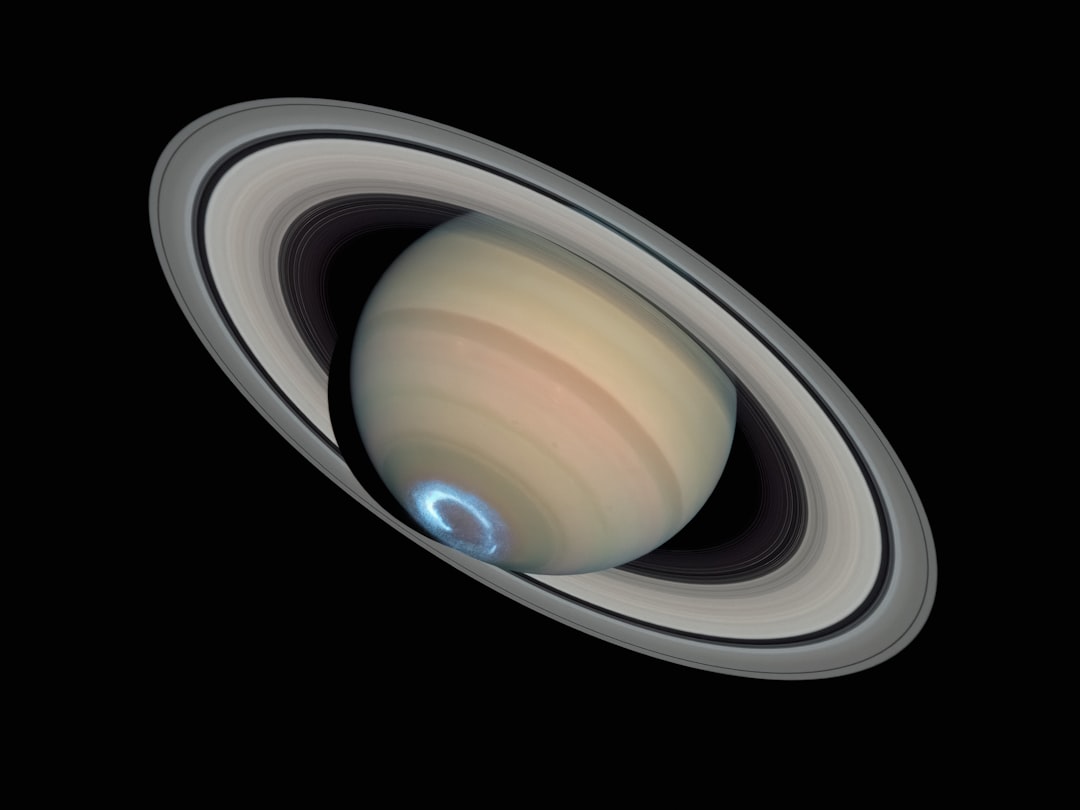
The significance of this new research extends well beyond Earth's own magnetic bubble. The KHI and magnetospheric asymmetry documented in this study are likely universal processes occurring at the magnetopauses of other magnetized planets within our solar system, including Jupiter, Saturn, Uranus, and Neptune. Understanding how asymmetric wave-driven transport of energy and plasma operates at Earth's magnetopause provides a theoretical framework that can be applied to interpret observations from missions like NASA's Juno spacecraft at Jupiter and future planned missions to the outer solar system.
Furthermore, as astronomers increasingly discover exoplanets in the habitable zones of distant stars, assessing whether those planets possess functional magnetic shields has become a key criterion in evaluating their potential habitability. The physics of KHI-driven plasma transport and magnetospheric stress — now better understood thanks to studies like this one — will be essential tools for theoretically modeling the protective capacity of exoplanetary magnetospheres, even when direct measurement remains far beyond our current technological reach.
On a more immediate timescale, improving our models of magnetospheric asymmetry has direct consequences for the accuracy of next-generation space weather forecasting systems. If predictive models fail to account for dawn-dusk asymmetries, hemispheric seasonal differences, and the variable influence of IMF orientation on KHI wave activity, they may systematically underestimate the vulnerability of the magnetosphere in specific sectors — leading to inadequate warnings before potentially damaging geomagnetic storm events.
Looking Ahead
The research conducted by Dr. Holappa and his colleagues represents a meaningful stride in our ongoing quest to decode the dynamic, asymmetric nature of Earth's magnetic shield. By leveraging the power of advanced MHD simulations to reveal where and why the magnetopause experiences its greatest stresses, the team has added an important new layer of nuance to our understanding of how our planet maintains its habitable environment in the face of a constantly churning, energetic space environment. Future studies combining these theoretical advances with in-situ data from satellite constellations — and perhaps dedicated next-generation magnetospheric observation missions — will be essential to validating and expanding upon these findings. The universe, as ever, rewards those who look carefully and think patiently about what they see.