The James Webb Space Telescope continues to revolutionize our understanding of the early universe, delivering observations that challenge and refine our theories of cosmic evolution. In a groundbreaking discovery presented at the 247th meeting of the American Astronomical Society, researchers have identified what may be the earliest confirmed barred spiral galaxy ever observed—a cosmic structure that existed when the universe was merely 2 billion years old. This remarkable finding, designated COSMOS-74706, provides crucial constraints on the timeline of galactic architecture development and demonstrates that complex galactic structures emerged far earlier than many astronomers previously anticipated.
Led by Daniel Ivanov, a graduate student at the University of Pittsburgh, the research team utilized the unprecedented infrared capabilities of the James Webb Space Telescope to peer back approximately 11.5 billion years into cosmic history. What makes this discovery particularly significant is not just the galaxy's age, but the spectroscopic confirmation of its structure—a level of certainty that previous candidates for early barred spirals have lacked. This validation represents a major milestone in understanding how the fundamental building blocks of galactic architecture came into being during the universe's formative epochs.
Understanding Galactic Evolution and the Hubble Sequence
To fully appreciate the significance of this discovery, we must first understand the conventional framework of galactic evolution. The Hubble Sequence, developed by astronomer Edwin Hubble in 1926, provides a morphological classification system that has long guided our understanding of how galaxies form and transform over cosmic time. According to this framework, galaxies typically begin their existence as elliptical galaxies—spheroidal collections of stars characterized by relatively little gas, dust, or active star formation. These early structures represent the first generation of gravitationally bound stellar systems in the universe.
Through processes of galactic mergers and accretion, these elliptical systems gradually evolve into spiral galaxies, distinguished by their characteristic rotating disk structures and graceful spiral arms that wind outward from a central bulge. These spiral arms are not static features but rather density waves—regions where stars, gas, and dust temporarily accumulate as they orbit the galactic center. The spiral structure plays a crucial role in ongoing star formation, as the compression of gas clouds within these arms triggers the collapse and ignition of new stellar nurseries.
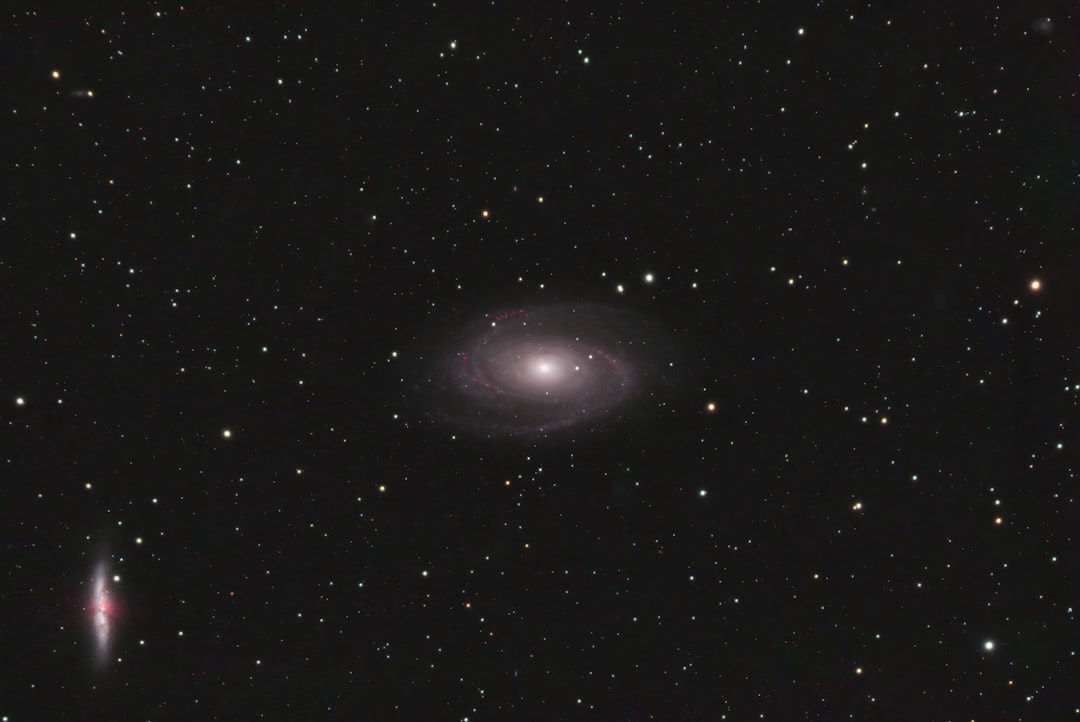
Among spiral galaxies, approximately two-thirds exhibit an additional structural feature: a central bar. These barred spiral galaxies, including our own Milky Way galaxy, possess a linear arrangement of stars extending across their central regions. Far from being merely aesthetic features, these bars serve critical functions in galactic evolution. They act as cosmic conveyor belts, channeling gas from the outer disk regions inward toward the galactic nucleus, where it can fuel the supermassive black hole lurking at the galaxy's heart or trigger intense bursts of star formation in the central bulge.
The Revolutionary Power of Spectroscopic Confirmation
What distinguishes the COSMOS-74706 discovery from previous claims of ancient barred spirals is the definitive nature of spectroscopic verification. While astronomers have previously reported observations of barred spiral galaxies at comparable or even greater distances, these earlier candidates suffered from significant methodological limitations that cast doubt on their true nature and age. The two primary techniques used in those studies—gravitational lensing and redshift photometry—each carry substantial uncertainties that complicate definitive conclusions.
Gravitational lensing, while providing natural magnification of distant objects, introduces optical distortions that can blur and warp the light from background galaxies. The massive foreground galaxy or galaxy cluster acting as the gravitational lens creates multiple images and stretches the light in ways that make it challenging to accurately reconstruct the true morphology of the lensed object. This distortion can potentially create the appearance of structures that don't actually exist or obscure features that do, making it difficult to conclusively identify bars and spiral arms.
Similarly, photometric redshift measurements—which estimate a galaxy's distance by analyzing the colors of light it emits across different wavelength bands—carry uncertainty margins of 10-15%. While useful for large-scale surveys, this level of imprecision can translate to errors of hundreds of millions of years in age estimates for distant galaxies. For a galaxy observed at high redshift, such uncertainties could mean the difference between observing a structure that formed 2 billion years after the Big Bang versus one that formed 2.3 billion years later—a distinction that significantly impacts our understanding of the pace of galactic evolution.
The team's use of spectroscopic analysis circumvents these limitations entirely. By dispersing the galaxy's light into its component wavelengths and measuring the precise positions of emission and absorption lines, spectroscopy provides an exact measurement of redshift with uncertainties of less than 1%. This technique allowed Ivanov and his colleagues to determine with confidence that COSMOS-74706 existed approximately 11.5 billion years ago, corresponding to a redshift of z ≈ 2.0, when the universe was just 2 billion years old—a mere 15% of its current age.
Analyzing the Structure of COSMOS-74706
The detailed observations of COSMOS-74706 reveal a galaxy exhibiting remarkably mature structural features for such an early cosmic epoch. Webb's high-resolution infrared imaging, processed with data from the Space Telescope Science Institute, clearly shows the characteristic morphology of a barred spiral: a prominent central bar structure extending across the galactic nucleus, with spiral arms winding outward in logarithmic spirals from the bar's endpoints. This configuration demonstrates that the fundamental mechanisms driving bar formation and spiral structure were already operating efficiently when the universe was in its relative infancy.
The presence of a well-defined bar at this epoch carries profound implications for our understanding of galactic dynamics and dark matter distribution. Bars form through gravitational instabilities in rotating galactic disks—specifically, they arise when the disk achieves sufficient mass and rotational velocity to become dynamically unstable. The formation requires a delicate balance: the disk must be massive enough to be self-gravitating, yet not so dominated by random stellar motions that the organized rotation is disrupted. The fact that COSMOS-74706 achieved this balance so early suggests that massive, well-ordered galactic disks were assembling more rapidly in the early universe than some theoretical models predicted.
"This galaxy was developing bars 2 billion years after the birth of the Universe. Two billion years after the Big Bang. It's the highest redshift, spectroscopically confirmed, unlensed barred spiral galaxy," explained Daniel Ivanov. "In principle, I think that this is not an epoch in which you expect to find many of these objects. It helps to constrain the timescales of bar formation. And it's just really interesting."
Theoretical Predictions Versus Observational Reality
The discovery of COSMOS-74706, while surprising, was not entirely unprecedented from a theoretical standpoint. Advanced cosmological simulations incorporating dark matter dynamics, gas physics, and stellar feedback processes have long suggested that bar structures could potentially form in galaxies as early as 12.5 billion years ago—just 1.3 billion years after the Big Bang. These simulations model the complex interplay of gravitational forces, gas cooling and heating, star formation, and supernova feedback that govern galactic evolution across cosmic time.
However, a persistent challenge in modern astrophysics has been the observational confirmation of these theoretical predictions. Computer simulations can explore parameter spaces and push calculations to extreme conditions, but without observational validation, they remain hypothetical scenarios rather than established facts about our universe. The identification of COSMOS-74706 provides precisely this validation, demonstrating that the physical processes modeled in simulations were indeed operating in the real early universe. This convergence of theory and observation represents a triumph for computational astrophysics and validates decades of work refining our understanding of galactic physics.
The rarity of such early barred spirals also tells us something important about the statistical distribution of galaxy types in the early universe. While COSMOS-74706 proves that barred spirals could exist 2 billion years after the Big Bang, the difficulty in finding such objects suggests they were uncommon. This scarcity indicates that the conditions necessary for bar formation—sufficient disk mass, appropriate rotational velocity, and relative dynamical stability—were challenging to achieve in the chaotic, merger-rich environment of the early universe. Most galaxies at this epoch were likely still in earlier evolutionary stages, either assembling their initial stellar populations or undergoing frequent mergers that disrupted organized structures.
Implications for Galactic Evolution and Future Research
The confirmation of COSMOS-74706 as an authentic early barred spiral has far-reaching implications for multiple areas of astrophysical research. First, it provides a crucial temporal constraint on bar formation timescales, establishing that the physical mechanisms driving bar instabilities were operational within the first 2 billion years of cosmic history. This constraint will force theorists to refine their models of galactic evolution, ensuring that simulations can reproduce not only the eventual formation of bars but their emergence on the observed timescales.
Second, this discovery informs our understanding of supermassive black hole growth in the early universe. As mentioned earlier, galactic bars play a critical role in funneling gas toward the central regions of galaxies, where it can accrete onto the supermassive black holes that reside in galactic nuclei. The presence of a bar in COSMOS-74706 suggests that this feeding mechanism was already operational 11.5 billion years ago, potentially explaining how some supermassive black holes achieved their enormous masses so rapidly in the early universe—a phenomenon that has long puzzled astronomers.
Third, the observation has implications for understanding the regulation of star formation across cosmic time. Bars not only transport gas inward but also, paradoxically, can suppress star formation in the outer disk regions by stabilizing the disk against the gravitational instabilities that trigger star formation. The early emergence of bars like that in COSMOS-74706 suggests that this star formation regulation mechanism began operating earlier than previously thought, potentially influencing the overall star formation history of the universe.
The Path Forward with Next-Generation Observatories
The discovery of COSMOS-74706 opens exciting avenues for future research with the James Webb Space Telescope and other next-generation facilities. Astronomers will now search for additional examples of early barred spirals to determine whether COSMOS-74706 represents an exceptional case or the tip of an iceberg of similar galaxies waiting to be discovered. Statistical studies of the frequency of bars at different cosmic epochs will provide crucial data for testing and refining theoretical models of galactic evolution.
Complementary observations with facilities like the Atacama Large Millimeter Array (ALMA) could probe the molecular gas content and kinematics of early barred spirals, revealing how gas flows through these structures and feeds central star formation and black hole growth. Meanwhile, future missions such as the ESA's Euclid space telescope, designed to map the large-scale structure of the universe, will provide context for understanding how common or rare galaxies like COSMOS-74706 were in different cosmic environments.
Key Takeaways from This Discovery
- Earliest Confirmed Barred Spiral: COSMOS-74706 represents the highest-redshift, spectroscopically confirmed, unlensed barred spiral galaxy ever observed, existing just 2 billion years after the Big Bang
- Methodological Breakthrough: The use of spectroscopic confirmation eliminates the uncertainties inherent in gravitational lensing and photometric redshift measurements, providing definitive proof of the galaxy's age and structure
- Theoretical Validation: The discovery confirms predictions from cosmological simulations suggesting that bars could form in galaxies as early as 12.5 billion years ago, bridging the gap between theory and observation
- Evolutionary Insights: The presence of a mature bar structure indicates that complex galactic dynamics, including gas transport mechanisms and disk instabilities, were operational much earlier in cosmic history than many models suggested
- Black Hole Implications: The early emergence of bars provides a mechanism for rapid supermassive black hole growth in the early universe through efficient gas funneling to galactic centers
Conclusion: Rewriting the Timeline of Cosmic Architecture
The identification of COSMOS-74706 as a barred spiral galaxy existing merely 2 billion years after the Big Bang represents a significant milestone in our quest to understand how the universe's grand architecture came into being. This discovery, made possible by the extraordinary capabilities of the James Webb Space Telescope and validated through rigorous spectroscopic analysis, pushes back the timeline for the emergence of complex galactic structures and demonstrates that the universe was organizing itself into mature, dynamically sophisticated systems far earlier than many astronomers anticipated.
As Daniel Ivanov and his team continue to analyze their data and search for additional examples of early barred spirals, we stand on the threshold of a new era in galactic astronomy. Each discovery made with Webb peels back another layer of cosmic history, revealing the processes and timescales that transformed the simple, primordial universe of the Big Bang into the rich tapestry of galactic diversity we observe today. COSMOS-74706 is not merely a distant galaxy—it is a window into a formative epoch when the fundamental structures that would shape billions of years of cosmic evolution were first taking form, reminding us that the universe's capacity for self-organization and complexity emerged far more rapidly than we ever imagined.