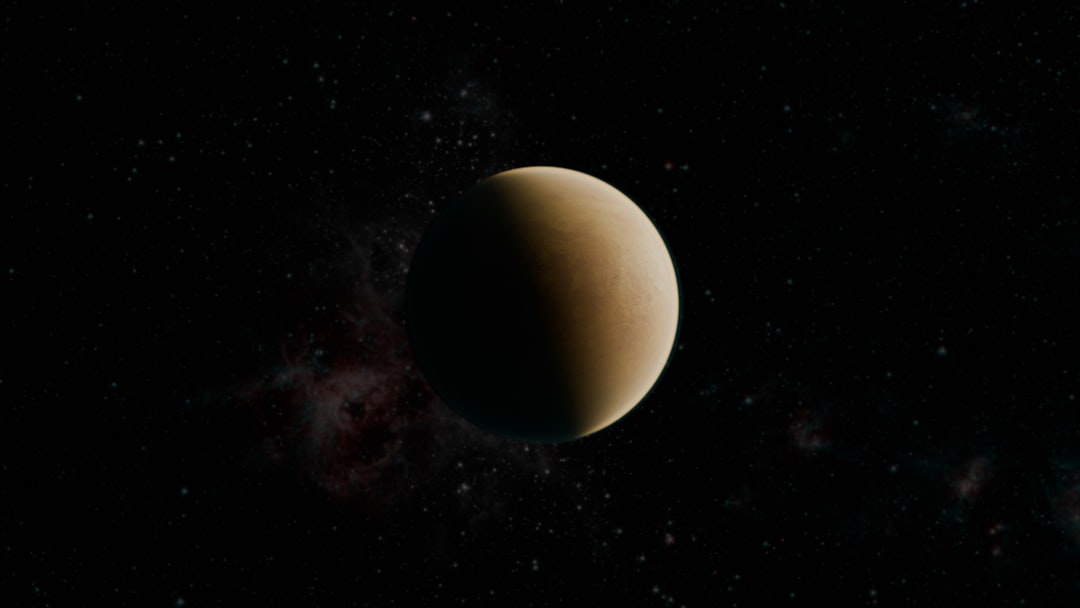
In the pantheon of hostile planetary environments within our solar system, Venus stands as perhaps the most formidable challenge to exploration. While its surface conditions—with temperatures soaring to 464°C (872°F) and atmospheric pressure exceeding 90 times that of Earth—render it virtually inaccessible to conventional spacecraft, a remarkable opportunity exists in the planet's upper atmosphere. Between altitudes of 47 and 70 kilometers above the scorching surface, conditions become surprisingly Earth-like, with moderate temperatures and manageable atmospheric pressure. This unique environmental niche has inspired a groundbreaking proposal that could revolutionize our approach to exploring Earth's enigmatic twin planet.
A team of researchers led by Kyle Horn, a Ph.D. candidate at the Massachusetts Institute of Technology's Department of Aeronautics and Astronautics, has developed an innovative concept for aerial robotic platforms, or aerobots, capable of operating in Venus's atmosphere for up to a decade. Their revolutionary approach incorporates In-Situ Resource Utilization (ISRU) technology to overcome the primary limitation that has plagued previous aerobot designs: the gradual loss of buoyant gases that keeps these platforms aloft. By harnessing Venus's abundant atmospheric carbon dioxide through advanced electrochemical processes, this new design could usher in an unprecedented era of sustained planetary exploration.
The research, presented at the 2026 Lunar Planetary Science Conference in The Woodlands, Texas, represents a collaboration between MIT, NASA's Jet Propulsion Laboratory, MIT's Haystack Observatory, and OxEon Energy LLC. This interdisciplinary effort addresses one of the most significant challenges in Venus exploration: how to maintain long-duration atmospheric missions on a planet where the environmental extremes have destroyed every surface probe within hours of landing.
The Technical Innovation Behind Extended Venus Exploration
At the heart of this revolutionary aerobot design lies Solid Oxide Electrolysis (SOE), a sophisticated high-temperature electrochemical process that converts Venus's carbon dioxide-rich atmosphere into useful products. The SOE system employs solid ceramic electrolytes to split CO₂ molecules into oxygen gas (O₂) and carbon monoxide (CO), both of which serve critical functions for the aerobot's operation. This technology, while proven in terrestrial applications for carbon capture and energy storage, has never before been adapted for planetary exploration in such an innovative manner.
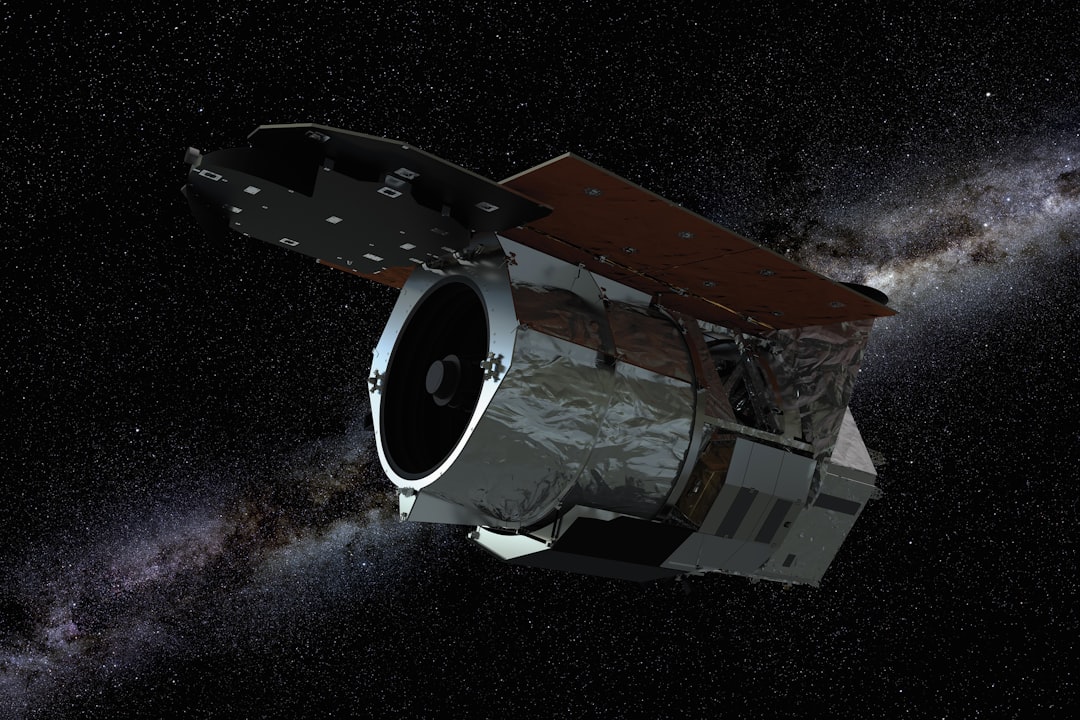
The proposed aerobot features a 12.5-meter diameter balloon designed to operate primarily at an altitude of 61 kilometers, where Venus's atmospheric conditions are most favorable for extended operations. The platform would carry a 20-kilogram suite of scientific instruments, powered by solar arrays generating a continuous 10 watts of electricity. When the balloon's buoyancy begins to degrade due to helium loss—an inevitable consequence of diffusion through the envelope material and microscopic punctures—the aerobot would descend to approximately 50 kilometers altitude to engage its ISRU system and replenish its lifting gas supply.
"The integration of ISRU capabilities fundamentally transforms the operational paradigm for Venus atmospheric exploration. Rather than being constrained by the initial supply of lifting gas, our aerobot can essentially 'refuel' itself using the planet's own atmosphere, extending mission duration from months to potentially a decade or more," explains the research team in their conference presentation.
Overcoming Venus's Unique Challenges
Venus presents a particularly vexing challenge for solar-powered aerial vehicles due to the planet's super-rotating atmosphere. The upper atmospheric winds on Venus travel at speeds exceeding 100 meters per second, completing a full circumnavigation of the planet in just four Earth days—far faster than Venus's own 243-day rotation period. This phenomenon means that any aerial platform drifting with these winds would experience a 50-hour nightside traverse, creating extended periods without solar power availability.
The ISRU-enabled aerobot addresses this challenge through its dual-use electrochemical system. During daylight hours, solar panels power both the scientific instruments and the SOE process, which generates and stores oxygen and carbon monoxide. During the extended Venusian night, these stored gases can be recombined through oxy-fuel combustion or specialized electrochemical cells to generate supplemental electrical power, ensuring continuous operation of critical systems and instruments.
Groundbreaking Scientific Investigations
The extended operational lifetime enabled by ISRU technology opens unprecedented opportunities for comprehensive scientific investigations that would be impossible with shorter-duration missions. According to research from NASA's Venus Exploration Program, many of the planet's most intriguing phenomena occur over timescales of months to years, requiring sustained observation to fully understand.
Seismic and Volcanic Activity Monitoring
One of the most ambitious aspects of the proposed mission involves detecting and characterizing seismic events on Venus's surface through infrasound wave analysis. Infrasound—acoustic waves with frequencies below the threshold of human hearing—can propagate through planetary atmospheres and be detected at altitude. The aerobot, operating at approximately 55 kilometers altitude, would be ideally positioned to detect these waves generated by potential volcanic eruptions or seismic activity on the surface below.
Venus is believed to be volcanically active, with some studies suggesting recent eruptions may have occurred within the past few decades. However, without sustained monitoring, confirming this activity and understanding its frequency and distribution remains challenging. A decade-long mission could provide the continuous monitoring necessary to detect and characterize volcanic events, offering crucial insights into Venus's geological evolution and internal heat budget.
Investigating Magnetic Anomalies
While Venus lacks a global magnetic field like Earth's, the aerobot mission could conduct Thermoremanent Magnetism (TRM) investigations to search for localized magnetic anomalies in the planet's crust. Although the extreme surface temperatures—well above the Curie point for most magnetic minerals—would seem to preclude the preservation of magnetic signatures, weak TRM signals and small-scale magnetic anomalies might still be detectable through repeated passes over target areas.
These measurements, while necessarily conducted from altitude rather than at the surface, could provide valuable information about Venus's geological history and the composition of its crust. The ability to make multiple passes over the same regions throughout the mission would allow for signal averaging and the detection of subtle magnetic features that might be missed in a single flyby.
Unraveling Atmospheric Mysteries
Perhaps the most scientifically valuable aspect of an extended Venus atmospheric mission involves studying the planet's complex and dynamic atmosphere. Research published in the journal Nature Astronomy has highlighted numerous atmospheric phenomena on Venus that remain poorly understood, many of which vary over timescales that require years of continuous observation to fully characterize.
The Sulfur Dioxide Enigma
One of Venus's most perplexing atmospheric mysteries involves dramatic variations in sulfur dioxide (SO₂) concentrations that occur over decade-long periods. Observations from multiple spacecraft, including the Pioneer Venus Orbiter and the European Space Agency's Venus Express, have documented order-of-magnitude changes in SO₂ abundance in the upper atmosphere. However, the driving mechanism behind these variations remains unclear.
Several hypotheses have been proposed, including:
- Volcanic outgassing: Episodic volcanic eruptions could inject large quantities of SO₂ into the atmosphere, which then gradually decline through chemical reactions and deposition
- Atmospheric circulation changes: Variations in atmospheric dynamics might alter the transport of SO₂ from lower to upper atmospheric layers
- Photochemical processes: Changes in solar activity or atmospheric composition could affect the rate at which SO₂ is destroyed by photochemical reactions
- Surface-atmosphere interactions: Chemical weathering processes at the surface might vary over time, affecting the atmospheric SO₂ budget
A ten-year aerobot mission could observe multiple complete cycles of SO₂ variation, providing the sustained measurements necessary to distinguish between these competing hypotheses and potentially identify the true mechanism driving this phenomenon.
Atmospheric Energy Transport and Dynamics
The vertical transport of energy through Venus's atmospheric layers exhibits cyclical variations that correspond to the planet's 225-day orbital period around the Sun. These variations affect cloud formation, atmospheric chemistry, and the planet's overall energy balance. However, year-to-year variability in these processes remains largely uncharacterized due to the lack of long-duration observational missions.
According to atmospheric models developed by researchers at ESA's Venus Express mission, understanding this variability is crucial for comprehending Venus's climate system and its evolution over geological timescales. A decade-long aerobot mission could observe ten complete Venusian years, providing unprecedented data on interannual variability and long-term trends in atmospheric behavior.
Engineering Challenges and Solutions
While the scientific potential of an ISRU-enabled aerobot is compelling, realizing this vision requires overcoming significant engineering challenges. The SOE system must operate reliably in Venus's unique atmospheric environment, where temperatures at the operational altitude range from 0°C to 75°C, and the atmosphere consists primarily of carbon dioxide with trace amounts of sulfuric acid and other corrosive compounds.
The research team has addressed these challenges through careful materials selection and system design. The solid oxide electrolyzer cells must withstand thermal cycling as the aerobot ascends and descends for gas replenishment operations, while also resisting chemical attack from atmospheric constituents. Advanced ceramic materials and protective coatings are being evaluated to ensure long-term durability under these conditions.
Additionally, the aerobot's envelope must be designed to minimize helium diffusion while remaining lightweight enough for efficient operation. Advanced polymer materials with low permeability to helium, combined with multi-layer construction techniques, can significantly reduce gas loss rates compared to earlier balloon designs.
Implications for Future Venus Exploration
The development of ISRU-enabled aerobots represents more than just an incremental improvement in Venus exploration technology—it could fundamentally transform our approach to studying not only Venus but other planetary atmospheres as well. The ability to sustain atmospheric platforms for years rather than months opens possibilities for comprehensive, long-term studies that were previously impossible.
For Venus specifically, understanding why this planet—so similar to Earth in size and composition—evolved along such a dramatically different path remains one of the most important questions in planetary science. Venus likely possessed liquid water oceans early in its history, but underwent a catastrophic runaway greenhouse effect that transformed it into the hellish world we observe today. Determining the timing and mechanisms of this transformation has profound implications for understanding planetary habitability and the long-term evolution of Earth's climate.
The mission concept also aligns with NASA's strategic objectives for Venus exploration, which emphasize the need for sustained atmospheric measurements and the investigation of potential biosignatures in the planet's cloud layers. Recent discoveries of phosphine in Venus's atmosphere—though controversial—have renewed interest in the possibility that microbial life might exist in the temperate cloud layers, making long-duration atmospheric missions even more scientifically valuable.
Furthermore, the enhanced payload capacity enabled by ISRU could allow the aerobot to carry deployable assets, such as small atmospheric probes that could be released to study different altitude regions or surface-penetrating probes designed to survive long enough to transmit data from the hellish surface environment. This flexibility would make each aerobot mission a platform for multiple complementary investigations.
As humanity expands its exploration of the solar system, technologies like ISRU-enabled aerobots demonstrate how innovative engineering solutions can overcome seemingly insurmountable environmental challenges. The lessons learned from developing and operating such systems on Venus will inform future missions to other worlds with substantial atmospheres, from the methane-rich skies of Titan to the turbulent clouds of the ice giants. In pushing the boundaries of what's possible in planetary exploration, we not only unlock the secrets of other worlds but also develop capabilities that may prove invaluable for humanity's long-term future among the stars.