A Supermassive Black Hole Gets Blamed for Quenching Star Formation
Some of the most massive galaxies in the observable Universe appear to be missing a striking number of stars — far fewer than astronomers would expect given their size and age. This phenomenon, known as galaxy quenching, has puzzled astrophysicists for decades. After all, birthing new stars is one of a galaxy's most fundamental processes as it grows and evolves over cosmic time. Now, according to Xin "Cindy" Xiang of the University of Michigan, something powerful is suppressing — or "quenching" — the births of stars in these galaxies, and the prime suspect is none other than the supermassive black hole lurking at their cores.
Xiang led a team of researchers who deployed the cutting-edge X-Ray Imaging and Spectroscopy Mission (XRISM) to study powerful outflows from the accretion disks of supermassive black holes. These regions blaze brilliantly in X-rays, due to the fantastically high energies expended by material spiraling into the gravitational abyss. Depending on the strength and frequency of winds emanating from such regions, they may play a pivotal role in regulating — and ultimately suppressing — star formation across entire galaxies. To understand exactly what was happening, the team required extraordinarily high-resolution spectral studies of X-ray emissions from near the black hole.
"Previously, without XRISM, we could only see broad features of the outflows. But you need to be able to resolve fine features to answer important questions. What is their structure and geometry? How are the winds launched and when are they launched?" — Xin "Cindy" Xiang, University of Michigan
Creating an Environment That Suppresses Stars
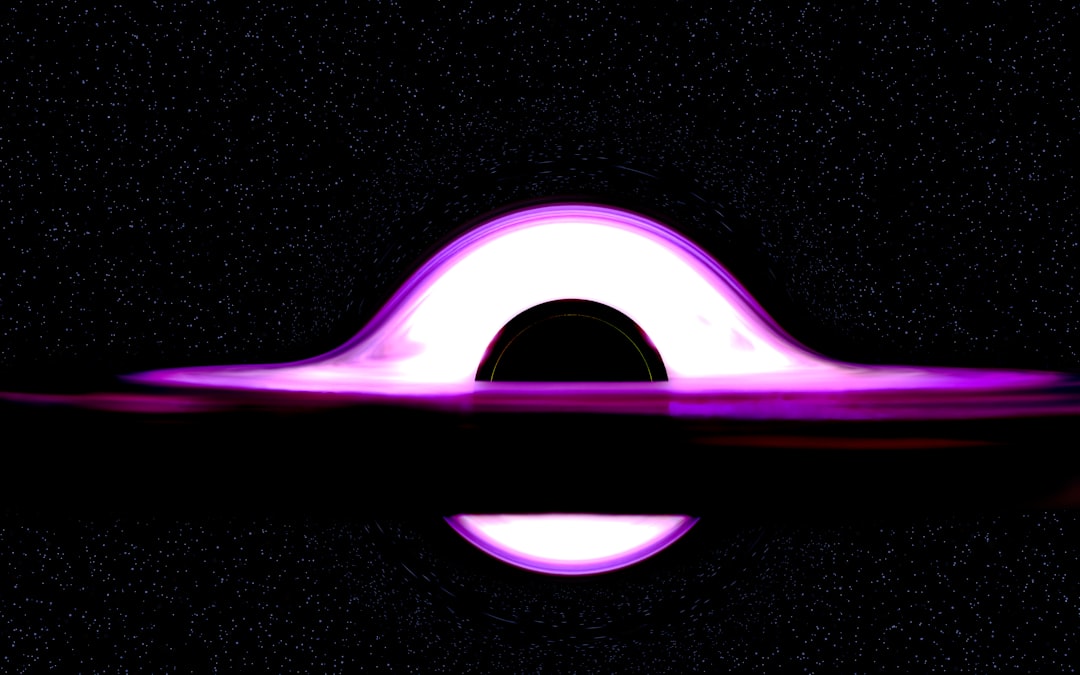
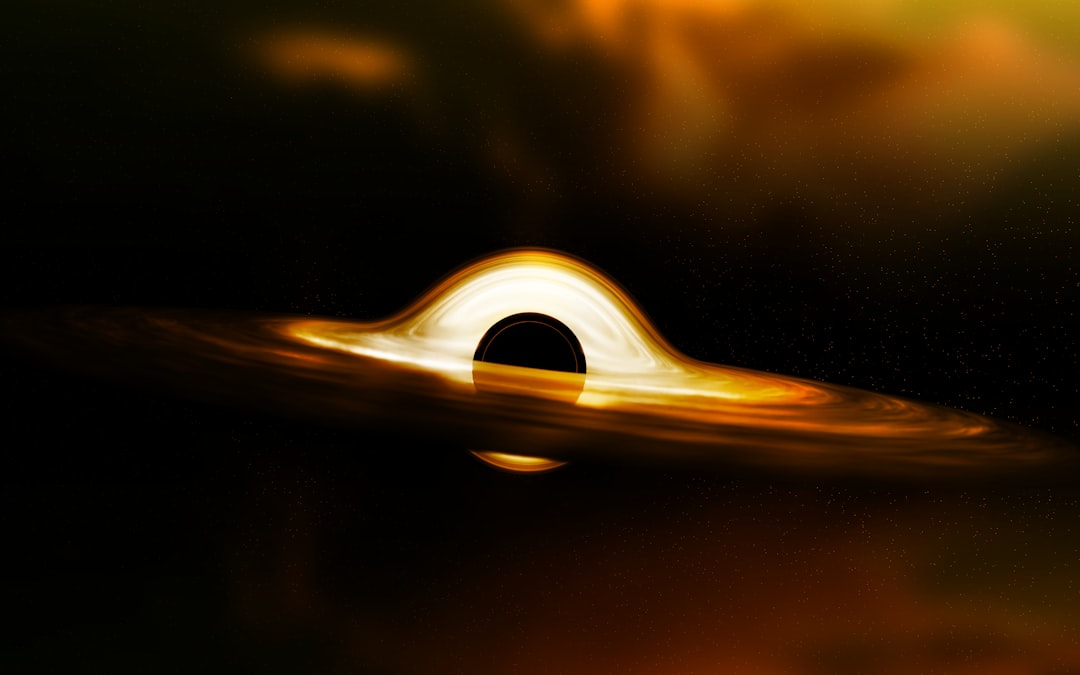
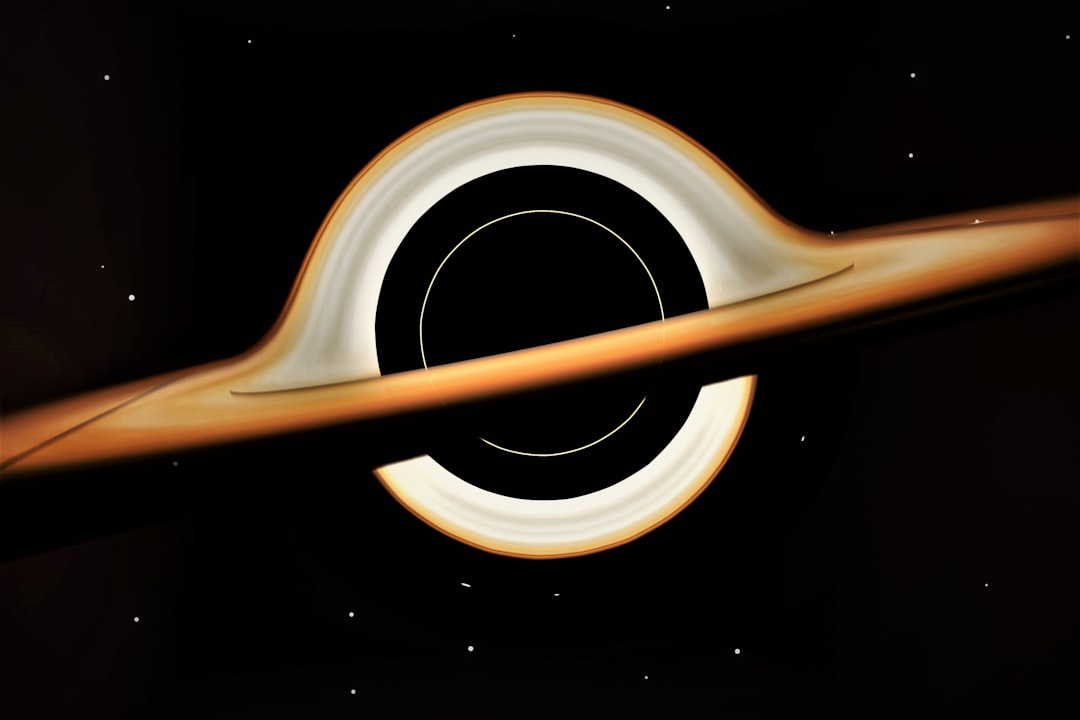
Supermassive black holes — objects that can contain millions to billions of times the mass of our Sun — reside at the centers of nearly all large galaxies, including our own Milky Way. Like their smaller stellar-mass counterparts, they feed voraciously on any material that strays within their immense gravitational reach: gas, dust, entire star systems, and even light itself cannot escape once it crosses the event horizon. Infalling material does not plunge directly into the black hole; instead, it accumulates in a swirling structure called an accretion disk — a vast, flattened region of superheated gas and plasma that orbits the black hole at tremendous speeds.
The accretion disk surrounding a supermassive black hole represents one of the most energetically extreme environments in the known Universe. Within this disk, gases and dust particles collide and mix at ferocious speeds, while powerful magnetic fields thread through the entire structure, accelerating charged particles and generating electromagnetic radiation across a vast spectrum. The resulting friction and gravitational compression heat the material to tens of millions of degrees — hot enough to strip electrons from atoms and create a blazing plasma. This plasma radiates prodigiously across the spectrum, from radio waves all the way up to high-energy X-rays and gamma rays, making active galactic nuclei among the most luminous persistent objects in the Universe.
Like a cosmic cauldron perpetually boiling over, this superheated disk can also violently expel material outward in the form of powerful accretion disk winds. When these winds are energetic enough, they can sweep through the host galaxy, physically displacing vast clouds of cold gas — precisely the raw material that galaxies require to assemble new stars. This so-called AGN feedback mechanism has become one of the central concepts in modern galaxy evolution theory, as it elegantly explains why the most massive galaxies in the Universe tend to be "red and dead" — populated by old, red stars and largely bereft of ongoing star formation.
- Thermal AGN feedback: Winds from the accretion disk heat surrounding gas, preventing it from cooling and collapsing into new stars.
- Kinetic AGN feedback: High-velocity outflows physically blow gas out of star-forming regions or out of the galaxy entirely.
- Radiation pressure: Intense electromagnetic radiation from the AGN can push gas and dust outward, further disrupting star-forming clouds.
- Jet-mode feedback: Relativistic jets launched from near the black hole can inject enormous amounts of mechanical energy into the surrounding intergalactic medium.
Catching the Black Hole's Outflow in NGC 4151
To investigate these processes in unprecedented detail, Xiang and her team trained XRISM's powerful instruments on NGC 4151, a well-studied Seyfert galaxy located approximately 62 million light-years from Earth in the constellation Canes Venatici. NGC 4151 is sometimes nicknamed the "Eye of Sauron" by astronomers due to its distinctive appearance in certain images, and it hosts one of the nearest and brightest Active Galactic Nuclei (AGN) in the sky — making it an ideal laboratory for studying black hole feedback in exquisite detail.
AGN represent a particularly active phase in a supermassive black hole's life cycle — a period of rapid growth during which the black hole consumes surrounding gas at prodigious rates and releases staggering amounts of energy in the process. This energetic activity does not occur in isolation; it profoundly shapes the evolutionary trajectory of the entire host galaxy. The Hubble Space Telescope has revealed that NGC 4151 displays the classic signature of AGN feedback in action: vibrant blue star-forming regions exist in its outer spiral arms, far from the galactic center, while the inner regions — closest to the voracious black hole — are conspicuously quiet, with little ongoing star formation.
XRISM provided the team with an unparalleled high-resolution view of the winds flowing outward from the accretion disk at the heart of NGC 4151's AGN. This level of spectral resolution was simply impossible to achieve with previous generations of X-ray observatories, which could only detect the broad, blurred outlines of these outflows rather than resolving their intricate fine structure.
"With XRISM, we have the greatest resolution observing the brightest AGN, and we're getting the richest information on outflows that we have observed so far for an accretion disk." — Xin "Cindy" Xiang, University of Michigan
What XRISM Reveals: The Timing and Structure of Black Hole Winds
One of the study's most significant revelations is that the most powerful winds capable of suppressing star formation do not blow continuously. Instead, they appear to turn on and off in a complex pattern tied to the black hole's feeding behavior. To disentangle this variability, Xiang devised an innovative analytical framework. She systematically analyzed hundreds of days of observational data from NGC 4151, searching for peaks in X-ray brightness that would serve as indicators of particularly strong wind episodes.
A critical component of her analysis involved carefully examining the spectral hardness of the detected X-rays — essentially, whether the X-ray photons detected by XRISM carried relatively high or low energies. By correlating this spectral hardness with wind strength across multiple observations, she could begin to build a predictive framework for understanding when and why the most powerful outflows occur. She synthesized all of these variables — X-ray luminosity, spectral shape, and timing — into a single diagnostic metric she named the "color intensity index", or colloquially, "cindicity."
"Partly because my name is Cindy. But the idea is that, in the future, you could tell me the cindicity of your source at this moment and I can tell you the probability that you're seeing a fast outflow." — Xin "Cindy" Xiang, University of Michigan
The results for NGC 4151 were striking. The fastest, most energetic winds were found to be strongest when the X-ray emission was spectrally hard — dominated by higher-energy photons — but simultaneously relatively faint in overall luminosity. Even more remarkably, the fastest winds were not associated with the brightest X-ray flares themselves; instead, they typically appeared approximately 10,000 seconds — just under three hours — after a flare event. This represents the first direct observational timing link ever established between a black hole flaring event and the subsequent launch of powerful disk winds, offering a tantalizing glimpse into the dynamic, cause-and-effect relationship between a black hole's feeding behavior and its energetic output.
How Black Hole Winds Strangle Star Formation
The implications of these findings for our understanding of galaxy evolution are profound. The primary mechanism by which an AGN suppresses star formation in its host galaxy involves the disruption of cold, dense gas clouds — the nurseries from which new stars are born. When powerful accretion disk winds sweep outward through the galaxy, they can interact with these gas clouds in several devastating ways. Most directly, the winds can simply physically sweep gas away from star-forming regions, dispersing it throughout the galactic disk or, in the most extreme cases, ejecting it entirely into the vast, near-empty intergalactic medium. Once this gas is spread too thinly, no region will contain sufficient material to trigger the gravitational collapse necessary to begin forming new stars.
Beyond simple dispersal, AGN winds can also shock-heat surrounding gas clouds, raising their temperature to the point where thermal pressure prevents gravitational collapse — effectively "sterilizing" would-be stellar nurseries. The intense radiation field from the AGN can further photodissociate molecular gas, breaking apart the complex molecules needed to shield star-forming cores. Simultaneously, the black hole's own relentless accretion directly removes gas from the galactic reservoir, consuming material that might otherwise eventually participate in future episodes of star formation. The cumulative effect of all these processes is the same: the galaxy is progressively starved of the gas it needs to grow through the birth of new stars.
Xiang's team identified multiple distinct types of disk winds in the outflows from NGC 4151, revealing a richer and more complex outflow structure than previously appreciated. Critically, all of these outflow components displayed outflow rates equal to or greater than the mass accretion rate of the black hole itself — meaning that for every gram of material the black hole consumed, at least as much gas was being expelled outward by its winds. This finding underscores just how dramatically AGN feedback can reshape the gas budget of an entire galaxy. For a more detailed exploration of the role of black holes in galaxy evolution, the Chandra X-ray Center offers extensive resources.
Broader Implications for Galaxy Evolution
The significance of this research extends far beyond NGC 4151. Cosmological simulations of galaxy formation — such as the IllustrisTNG project — have long relied on AGN feedback as a critical ingredient to reproduce the observed properties of massive galaxies in the Universe. Without it, simulated galaxies grow too large, form too many stars, and fail to match the "red and dead" elliptical galaxies we observe today. However, the precise physical mechanisms and timing of this feedback have remained frustratingly poorly constrained by observations — until now.
By establishing a robust, quantitative relationship between observable X-ray properties and the strength of disk winds through the "cindicity" metric, Xiang and her team have provided astronomers with a powerful new predictive tool. In the future, researchers studying other AGN across the Universe will be able to apply this framework to assess the likelihood and strength of powerful outflows in real time — without requiring the same intensive, multi-hundred-day observational campaigns needed to establish the relationship in NGC 4151. This has transformative potential for studies of AGN feedback across cosmic time, including during the epoch of peak galaxy formation activity some 10 billion years ago.
Furthermore, these results highlight the extraordinary scientific promise of the XRISM mission, a joint endeavor between the Japan Aerospace Exploration Agency (JAXA), NASA, and the European Space Agency (ESA). XRISM's Resolve instrument — a microcalorimeter spectrometer capable of detecting tiny changes in X-ray photon energies with unprecedented precision — is opening an entirely new window onto the energetic processes occurring in the immediate vicinity of supermassive black holes. As the mission continues to observe a wider range of AGN, it promises to revolutionize our empirical understanding of how black holes shape the cosmic landscape around them.
- XRISM's spectral resolution is approximately 30–40 times sharper than previous X-ray observatories for key emission features.
- NGC 4151 hosts a supermassive black hole with an estimated mass of roughly 40 million solar masses.
- The "cindicity" metric could be applied to any AGN observed by XRISM, enabling rapid assessment of outflow activity.
- Outflow rates in NGC 4151 were found to match or exceed the accretion rate, confirming significant mass loss from the system.
- The ~3-hour delay between X-ray flares and peak wind speed provides new constraints on the launching mechanism of accretion disk winds.
The team's measurements and conclusions regarding the winds flowing from NGC 4151's supermassive black hole represent a significant step forward in our ability to predict when and how powerfully AGN outflows operate in other galaxies. This enhanced predictive capability, in turn, stands to deepen scientists' understanding of the full lifecycle of AGN across cosmic history — and ultimately, of why some of the Universe's most massive galaxies stopped growing long ago, their star-forming potential extinguished by the very black holes that once helped build them. Further reading on this research is available through NASA's official XRISM coverage.