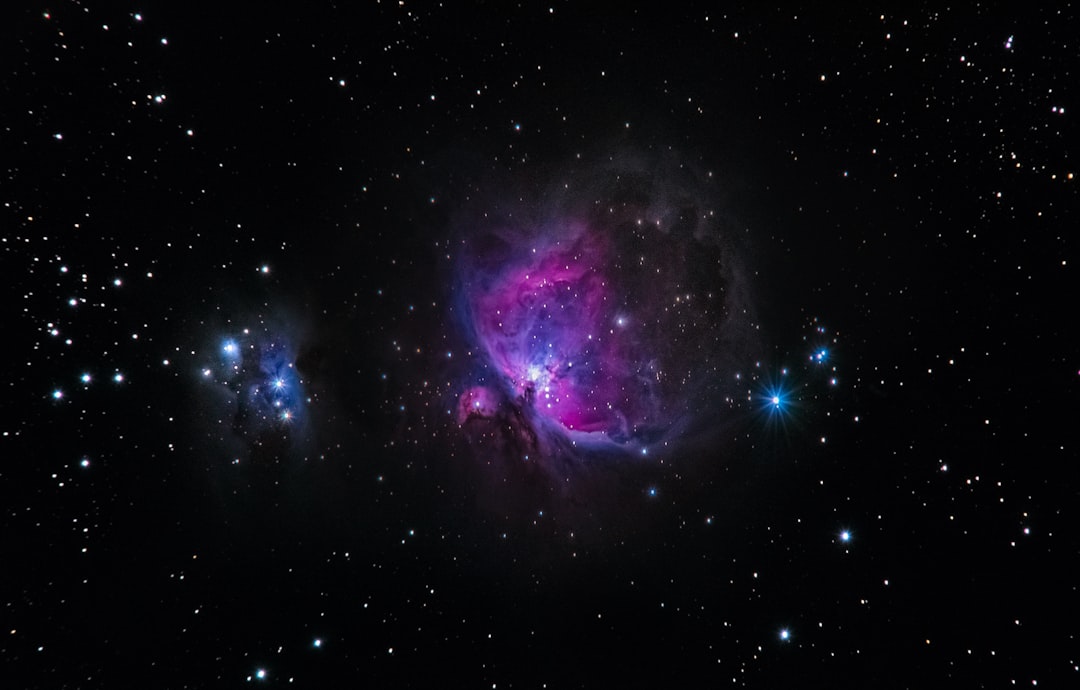
In the vast cosmic theater of stellar death, few celestial objects capture the imagination quite like NGC 1514, commonly known as the Crystal Ball Nebula. This spectacular planetary nebula, located approximately 1,500 light-years from Earth in the constellation Taurus, serves as a magnificent testament to the final acts of a dying binary star system. While fortune tellers might claim crystal balls reveal the future, this cosmic crystal ball offers us something far more valuable—a window into the past, showing us events that unfolded during the early medieval period on Earth.
Recent observations from the International Gemini Observatory and the James Webb Space Telescope have unveiled unprecedented details about this ethereal structure, revealing a complex interplay of stellar winds, mass loss, and binary dynamics that have sculpted one of nature's most beautiful cosmic monuments. The nebula represents not just the death of one star, but the dramatic finale of a stellar partnership that has been locked in a gravitational dance for billions of years.
The Misnomer of Planetary Nebulae: A Historical Perspective
Before delving into the specifics of NGC 1514, it's essential to understand the somewhat misleading terminology. Planetary nebulae have absolutely nothing to do with planets—the name is a historical accident from the era of early telescopic astronomy. When the renowned astronomer William Herschel discovered the Crystal Ball Nebula in 1790, he coined the term "planetary nebula" because these fuzzy, disk-like objects resembled the appearance of planets like Uranus (which Herschel himself had discovered) when viewed through the primitive telescopes of the 18th century.
In reality, planetary nebulae represent one of the most crucial phases in stellar evolution, occurring when low-mass to intermediate-mass stars—those between about 0.8 and 8 solar masses—reach the end of their fusion-powered lives. As these stars exhaust their nuclear fuel, they expel their outer atmospheric layers into space, creating expanding shells of ionized gas and dust that glow brilliantly when illuminated by the hot stellar remnant at their center.
The Binary Heart of the Crystal Ball
At the center of NGC 1514 lies a fascinating binary star system that has orchestrated the nebula's creation and continues to shape its evolution. This stellar duo consists of two very different objects, each at a distinct stage of stellar death. The primary star is a hot, sub-luminous O-type star, an exotic stellar object that represents an exposed helium core. These unusual stars are among the hottest stellar objects in the universe, with surface temperatures exceeding 100,000 Kelvin, yet they appear relatively dim because of their extremely small size—roughly equivalent to Earth's orbital diameter around the Sun.
According to research published by The Astrophysical Journal, sub-luminous O-type stars typically form through binary interaction, where a star loses most of its hydrogen envelope to a companion star. In NGC 1514, this process has left behind a compact helium-burning core that is now in its final stages of nuclear fusion, destined to cool and fade into a white dwarf—a stellar ember no larger than Earth but containing roughly the mass of our Sun.
The companion star is an A0III giant, a star that has exhausted the hydrogen in its core and expanded to many times its original size. This giant star has left the main sequence—the stable phase of stellar life where our Sun currently resides—and is now fusing hydrogen in a shell around its inert helium core. Currently, this giant companion is the primary source of illumination for the nebula, its intense radiation causing the expelled gases to fluoresce in a spectacular display of cosmic colors.
Sculpting Beauty Through Stellar Winds
The remarkable asymmetry and complex structure of the Crystal Ball Nebula result directly from the binary nature of its central stars. Unlike the simple, spherical shells that might form around a single dying star, NGC 1514 displays a rich tapestry of lobes, wisps, shells, and voids—all carved by the interaction between the two stars and their powerful stellar winds.
The binary pair orbits their common center of mass every nine years, which represents the longest known orbital period for any binary system within a planetary nebula. This relatively leisurely orbital dance allows the stars' winds to create intricate patterns as they sweep through the surrounding material. As the sub-luminous O-type star races around its companion at speeds of tens of kilometers per second, its fast stellar wind collides with slower-moving material previously expelled during earlier mass-loss episodes, creating shock waves that compress and heat the gas, causing it to glow.
"The Crystal Ball Nebula demonstrates how binary interactions can transform the simple, spherical shells we might expect from single stars into complex, multi-lobed structures of extraordinary beauty. Each wisp and tendril tells a story of stellar winds, orbital dynamics, and mass transfer between companions."
Revealing Hidden Structures: Multi-Wavelength Observations
While the Gemini North telescope's optical portrait of NGC 1514 reveals stunning detail in the visible light spectrum, the James Webb Space Telescope has penetrated deeper, using its infrared capabilities to unveil structures completely invisible to optical telescopes. JWST observations have revealed a pair of concentric rings surrounding the main nebula, structures that tell the story of earlier episodes in the stars' evolutionary history.
These rings, which research published in 2025 suggests are composed primarily of dust rather than gas, likely formed during an earlier phase of mass loss from the central binary system. The rings' presence indicates that the stellar death process has been episodic rather than continuous, with periods of intense mass loss separated by quieter intervals. The rings' shapes have been subsequently modified by asymmetric fast winds from the binary pair, creating the complex morphology we observe today.
The multi-wavelength approach to studying NGC 1514 exemplifies modern astronomical methodology. By combining observations from instruments like Gemini North, which excels at capturing visible light, with infrared data from JWST and ultraviolet observations from space-based telescopes, astronomers can construct a comprehensive picture of the nebula's structure, composition, and evolution. Each wavelength regime reveals different aspects of the nebula: optical light shows ionized gas, infrared penetrates dust to reveal cooler structures, and ultraviolet highlights the hottest regions near the central stars.
The Physics of Stellar Death
Understanding NGC 1514 requires grasping the fundamental physics governing stellar evolution. When a star like those in the Crystal Ball Nebula exhausts the hydrogen fuel in its core, it can no longer generate the outward pressure needed to counteract gravitational collapse. The core contracts and heats up, while the outer layers expand dramatically, transforming the star into a red giant or, in more massive cases, a supergiant.
During this phase, the star becomes unstable, pulsating and shedding mass through powerful stellar winds. Over thousands of years, these winds can expel a significant fraction of the star's mass—sometimes more than half—into the surrounding space. As this material drifts outward, it cools and may condense into dust grains, the building blocks of future planetary systems and, ultimately, the raw material for new generations of stars.
The Hubble Space Telescope has documented hundreds of planetary nebulae throughout our galaxy, each representing a unique variation on this theme of stellar death. Some are spherical, others bipolar, and still others, like NGC 1514, display complex multi-lobed structures. These variations arise from differences in the progenitor stars' masses, rotation rates, magnetic fields, and—crucially—whether they exist in binary systems.
Cosmic Recycling: The Nebula's Ultimate Fate
Planetary nebulae like NGC 1514 are transient phenomena on cosmic timescales. Typically lasting between 10,000 and 25,000 years, they represent merely a brief moment in the galaxy's 13.6-billion-year history. As the nebula continues to expand, driven by the initial impulse of the stellar winds and ongoing pressure from radiation, it will gradually fade and disperse into the interstellar medium—the thin gas and dust that fills the space between stars.
This dispersal is not an ending but a transformation. The material expelled by the dying stars, enriched with elements heavier than hydrogen and helium that were forged in the stars' nuclear furnaces, will eventually be incorporated into new clouds of gas and dust. These clouds may collapse under their own gravity to form new stars and planetary systems, continuing the great cosmic cycle of stellar birth, life, death, and rebirth that has operated since the first stars ignited in the early universe.
The European Space Agency estimates that planetary nebulae return approximately 15 solar masses of material to the interstellar medium each year across our entire galaxy. This continuous enrichment process has gradually increased the metallicity—the abundance of elements heavier than helium—of the galaxy over billions of years, making possible the formation of rocky planets like Earth and, ultimately, the emergence of life.
Scientific Significance and Future Research
NGC 1514 serves as a valuable laboratory for studying several key astrophysical processes:
- Binary stellar evolution: The nebula provides insights into how stars interact and exchange mass in close binary systems, a process that affects the majority of stars in our galaxy.
- Nucleosynthesis: By analyzing the nebula's chemical composition through spectroscopy, astronomers can determine which elements were created during the stars' lifetimes, testing models of stellar nuclear fusion.
- Hydrodynamics: The complex shapes and structures within NGC 1514 allow researchers to study how stellar winds interact with previously expelled material, creating shock waves and turbulent flows.
- Dust formation: The rings revealed by JWST provide clues about how and when dust grains form in the cooling gas around dying stars, a crucial step in the formation of planets.
- White dwarf evolution: By observing the sub-luminous O-type star as it transitions toward becoming a white dwarf, astronomers can refine their understanding of the final stages of stellar evolution for low and intermediate-mass stars.
The Broader Context: Planetary Nebulae in Galactic Evolution
While NGC 1514 is remarkable in its own right, it represents just one example of a phenomenon that plays a crucial role in galactic chemical evolution. Astronomers estimate that several thousand planetary nebulae exist in our Milky Way galaxy at any given time, though many are obscured by dust or located in crowded regions that make them difficult to observe individually.
Studies using data from surveys conducted by observatories around the world have revealed that planetary nebulae serve as important tracers of galactic structure and stellar populations. Their distribution throughout the galaxy, their chemical compositions, and their kinematic properties all provide valuable information about the history of star formation and the evolution of our galaxy over billions of years.
Furthermore, planetary nebulae may play a role in the ionization of the interstellar medium. The intense ultraviolet radiation from their hot central stars can ionize hydrogen atoms in the surrounding space, creating bubbles of ionized gas that can extend far beyond the visible nebula. This ionization affects the thermal balance and chemistry of the interstellar medium, influencing the conditions under which new stars can form.
Conclusion: A Cosmic Monument to Stellar Mortality
The Crystal Ball Nebula stands as a stunning reminder that death in the cosmos is neither simple nor inglorious. Through the combined efforts of ground-based observatories like Gemini North and space-based instruments like the James Webb Space Telescope, we can appreciate not just the beauty of NGC 1514, but the complex physics and intricate dynamics that have shaped this celestial masterpiece over thousands of years.
As we gaze at images of this ethereal structure, we're witnessing events that occurred when the Roman Empire was at its height, yet the light is only now reaching our telescopes. In another 10,000 years, the nebula will have faded and dispersed, its atoms scattered across light-years of space, awaiting incorporation into future generations of stars and planets. The binary stars at its heart will have cooled to become white dwarfs, slowly radiating away their remaining heat over trillions of years.
NGC 1514 reminds us that we are all made of star stuff—the very atoms in our bodies were forged in stellar furnaces and dispersed through space by events similar to those we observe in the Crystal Ball Nebula. In studying these cosmic monuments to stellar death, we are, in a very real sense, investigating our own origins and understanding the processes that made our existence possible. The nebula's beauty is more than aesthetic; it represents the fundamental cycles of matter and energy that drive the evolution of the universe itself.