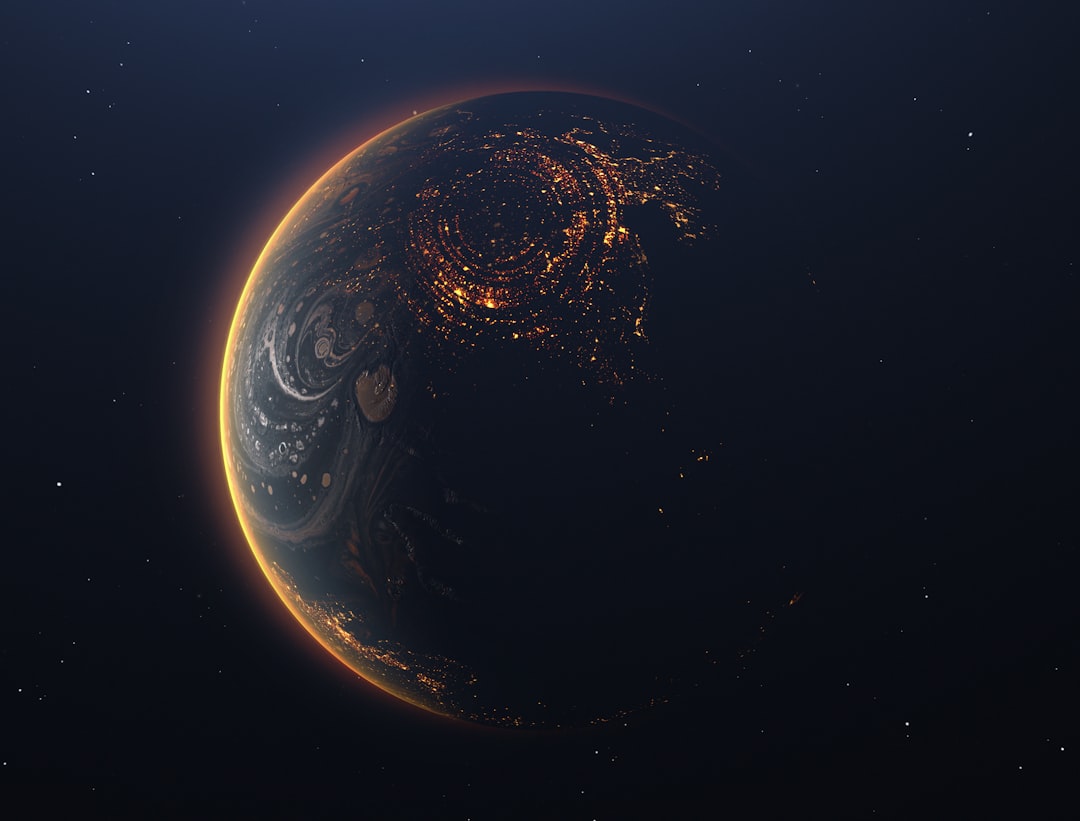
What Can We Actually Find on an Exoplanet? Part 1: The Atmospheric Fingerprint
In 1990, the Voyager 1 spacecraft, then six billion kilometers from Earth and destined to become humanity's most far-flung emissary, turned its camera around and took one final portrait of home. The resulting image is now legendary: a haunting, humbling vision of our tiny, fragile world — a single pale blue dot suspended in a scattered sunbeam, as the late astronomer Carl Sagan so memorably described it. In that photograph, everything humanity had ever known or built or loved was compressed into a fraction of a single pixel.
Now imagine you are an alien civilization, technologically sophisticated and patient, hunting for life on other worlds. After centuries of searching, you've found a promising candidate: a rocky planet orbiting a medium-sized star squarely within its habitable zone — that narrow orbital band where liquid water could theoretically pool on a planet's surface. And let's say that even with the most advanced instruments at your disposal, all you have is that pale blue dot. Or worse: a single pixel. An image not even large enough to resolve a sphere, let alone a continent, an ocean, or a city.
Everything you will ever know about this world — its oceans, its continents, its weather systems, and whatever life crawls or breathes or builds upon its surface — must be coaxed out of that one infinitesimal smudge of light. What could you possibly figure out? As it turns out, a genuinely absurd amount. But only if you are clever, extraordinarily patient, and willing to build the most audacious scientific instruments ever conceived by a technological species.
Reading Light Across the Void: The Basics of Transit Spectroscopy
Let's begin with what we can do today, using the machines already in operation — floating, to be precise, a million or more kilometers from Earth, but dutifully beaming their data home across the void. The primary technique we use to interrogate the nature of a distant planet, and to search for the chemical traces of life, is called transit spectroscopy.
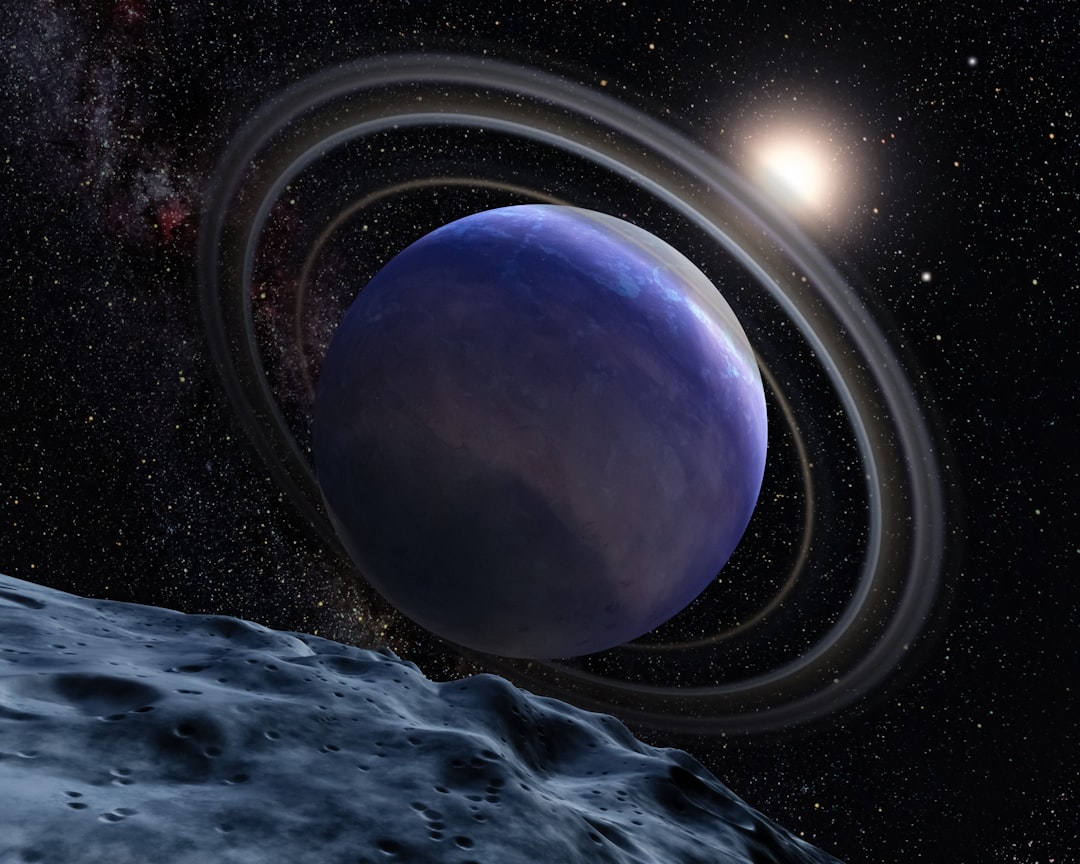
The principle is elegant, even if the execution is brutally difficult. When a planet crosses in front of the disk of its parent star — an event astronomers call a transit — a thin sliver of starlight passes through the planet's atmosphere before continuing its journey to our telescopes. That atmosphere is not empty. It is full of molecules, and here is the critical fact: different molecules absorb different wavelengths of light. Water vapor has its own characteristic absorption bands. Methane has others. Carbon dioxide, oxygen, ozone — each one imprints a unique pattern of missing wavelengths onto the light that passes through it. Every molecule, in effect, carries a distinct spectral fingerprint.
So the technique, described with disarming simplicity, is this: compare the starlight measured while the planet transits in front of its star to the starlight measured when the planet is absent. Whatever wavelengths are missing from the transit spectrum were absorbed by molecules in the planet's atmosphere. Those missing wavelengths are your fingerprint — a chemical inventory of a world you cannot see, written directly into the light that has crossed light-years of interstellar space to reach you.
"The atmosphere is the most accessible part of a distant world. It is where the planet's chemistry, geology, and potentially its biology announce themselves to the cosmos."
This is not a new idea. The foundations of spectroscopy were laid in the 19th century, when scientists like Gustav Kirchhoff and Robert Bunsen established that each element and compound absorbs and emits light at characteristic wavelengths. Astronomers have used stellar spectroscopy to determine the chemical composition of stars for over a century. What is new — and staggeringly ambitious — is applying this same logic to the thin atmospheric halos of planets orbiting other stars, trillions of kilometers away.
For deeper background on how spectroscopy underpins modern planetary science, NASA's Exoplanet Exploration program provides an excellent overview of the techniques being used and developed.
The Mountain of Technical Difficulty
The reason transit spectroscopy is so formidably challenging is that the signal is almost incomprehensibly faint. For an Earth-sized planet orbiting a Sun-like star, the planet's atmosphere modifies the total starlight by roughly one part in ten thousand. And that is the overall dimming caused by the planet blocking starlight — the atmospheric signal embedded within that is finer still. Detecting the subtle chemical fingerprints of individual molecules within that already-microscopic signal is an exercise in extracting whispers from an ocean of noise.
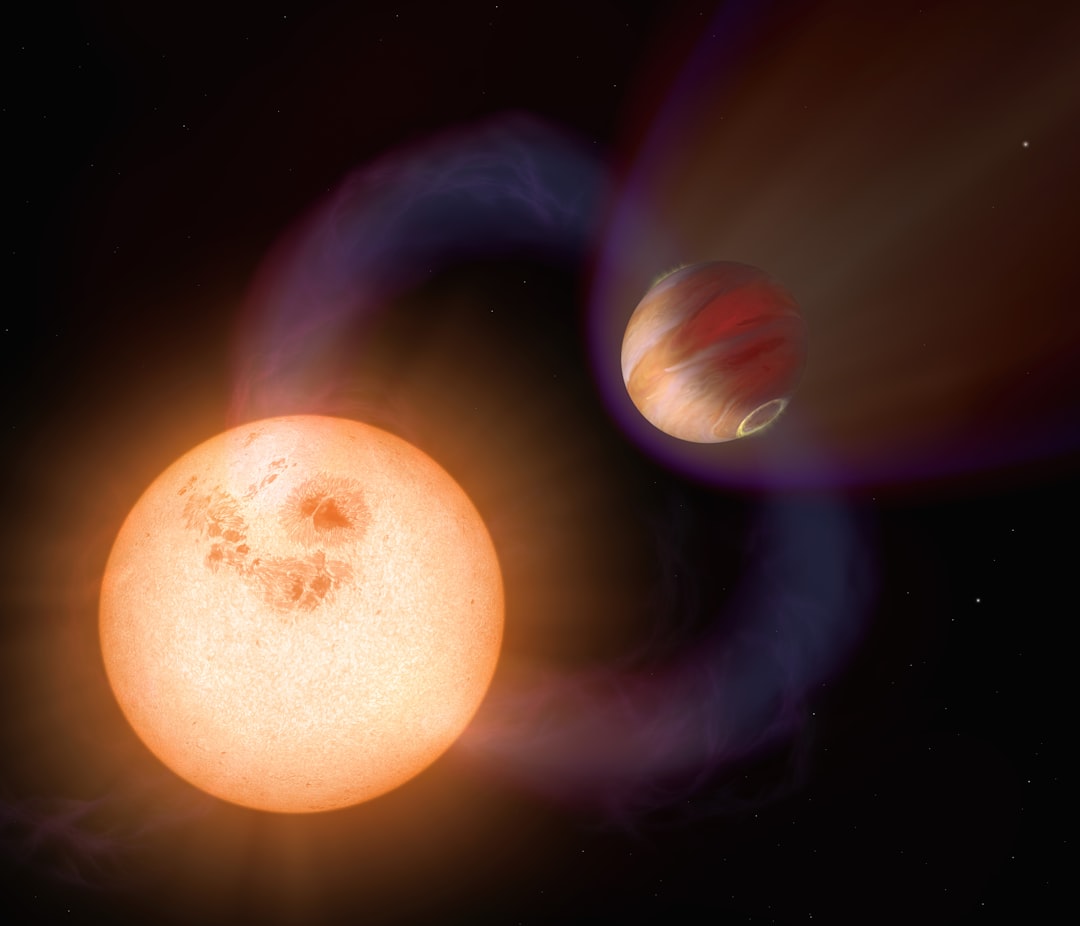
To make matters more complicated, stars are not perfectly stable lanterns. They pulse, flicker, and are riddled with surface features — sunspots, faculae, and stellar granulation — all of which introduce their own variability into the light curve and can masquerade as or obscure atmospheric signals. Separating a genuine planetary atmospheric absorption feature from instrumental artifacts and stellar noise is one of the central technical challenges of the field, demanding exquisitely calibrated instruments and sophisticated data reduction pipelines.
- An Earth-sized planet blocks roughly 0.01% of a Sun-like star's light during a transit.
- Atmospheric biosignature signals can be orders of magnitude smaller than this already-tiny dimming.
- Stellar variability, instrument noise, and systematic errors all threaten to overwhelm the planetary signal.
- Multiple transits must often be observed and stacked to build sufficient statistical confidence — a process that can take years.
- The planet must transit its star along our line of sight, a geometric alignment that only a fraction of exoplanetary systems will fortuitously provide.
This is exactly why we build monster telescopes. Larger mirrors collect more photons, and more photons mean better statistics and more reliable signal detection. Every meter of mirror aperture is a weapon in the war against noise.
The James Webb Space Telescope: A Glimpse at the Possible
Launched on Christmas Day 2021, the James Webb Space Telescope (JWST) represents the most sophisticated astronomical observatory ever placed in space. With its 6.5-meter segmented gold-coated beryllium mirror — roughly seven times the light-collecting area of the Hubble Space Telescope — it operates primarily in the infrared portion of the spectrum, where many of the molecular fingerprints most relevant to planetary science are most pronounced.
JWST has already demonstrated its capabilities in atmospheric characterization. Early results have revealed the atmospheric composition of gas giant exoplanets with unprecedented detail, detecting carbon dioxide, sulfur dioxide, water vapor, and other molecules. These are extraordinary achievements. But it is critical to understand what JWST was and was not designed to do. It was built to serve an extraordinarily broad scientific mandate: studying the earliest galaxies formed after the Big Bang, witnessing star formation within molecular clouds, probing the environments of supermassive black holes, and characterizing planetary atmospheres, among dozens of other programs. Biosignature detection is just one item on a very long scientific menu.
For more on JWST's scientific capabilities and early results, see the Space Telescope Science Institute's James Webb mission portal.
The four molecules that astronomers consider the canonical biosignature cocktail are:
- Oxygen (O₂): On Earth, atmospheric oxygen is almost entirely a product of oxygenic photosynthesis — the metabolic process by which plants, algae, and cyanobacteria convert sunlight, water, and carbon dioxide into organic matter, releasing O₂ as a byproduct. Without continuous biological replenishment, free oxygen would be rapidly consumed by reactions with surface rocks and reduced gases.
- Ozone (O₃): A photochemical derivative of oxygen. Solar ultraviolet radiation converts a fraction of atmospheric O₂ into ozone in the upper atmosphere, forming the stratospheric ozone layer. Crucially, ozone has strong absorption features in the mid-infrared, making it potentially detectable by JWST even when O₂ itself is harder to see. Ozone also acts as a shield against biologically damaging UV radiation — its presence may indicate not just biology, but a biosphere sophisticated enough to have oxygenated its own atmosphere.
- Methane (CH₄): Produced in enormous quantities by anaerobic microorganisms — methanogens — that thrive in oxygen-poor environments such as wetlands, deep-ocean sediments, and animal digestive systems. Methane is also produced abiotically by volcanoes and certain geochemical reactions, which complicates its interpretation as a biosignature when detected alone.
- Water vapor (H₂O): Not a biosignature in isolation, since water can exist in the atmospheres of geologically active worlds without any life whatsoever. However, liquid water is the universal solvent of terrestrial biochemistry — every life form we know requires it — and its atmospheric presence signals that a world may be within a temperature range compatible with life as we understand it.
The reason these four together are so compelling is rooted in chemical thermodynamics. In a purely abiotic atmosphere at chemical equilibrium, oxygen and methane simply cannot coexist in abundance. They react with each other — oxygen oxidizes methane into carbon dioxide and water — and the process is fast on geological timescales. Detect both gases simultaneously in significant concentrations and you are looking at a system being driven out of chemical equilibrium by some ongoing process. On Earth, that process is life. Photosynthetic organisms continuously pump oxygen into the atmosphere while methanogenic organisms continuously pump methane into it, holding the atmosphere in a state of productive, biologically sustained disequilibrium.
"Life does not merely inhabit a planet — it transforms it. The presence of life rewrites a planet's atmospheric chemistry, and those rewritten equations are, in principle, readable from across the galaxy."
This concept — that life maintains planetary atmospheres in a state of chemical disequilibrium — was first formally articulated by the chemist and inventor James Lovelock in the 1960s, initially as a strategy for remotely detecting life on Mars. His insight that we should look not just for individual chemicals but for chemically improbable combinations remains the conceptual foundation of the biosignatures field today.
JWST's Real Chances: Rocky Planets Around Red Dwarfs
Here is where candid realism is necessary. The faintest signal JWST can reliably extract from noisy data is approximately 10 parts per million — a threshold set by the telescope's design, its photon budget, and the fundamental limits of infrared detector technology in space. For an Earth-like planet orbiting a Sun-like star, the biosignature cocktail signals fall well below this threshold. JWST could, in principle, be staring at a genuinely inhabited world and be utterly unable to distinguish its atmospheric chemistry from instrumental noise.
JWST's best — and perhaps only realistic — opportunity for biosignature detection lies with rocky planets orbiting M-dwarf stars, commonly known as red dwarfs. These are the smallest, coolest, and most numerous stars in the galaxy. Because they are so much dimmer than the Sun, a transiting planet's atmosphere blocks a significantly larger fraction of the total starlight, boosting the relative atmospheric signal. The geometry is more favorable. The physics is more forgiving.
The most promising current target system is TRAPPIST-1, a cool red dwarf star approximately 40 light-years from Earth hosting seven known rocky planets, three of which orbit within the habitable zone. NASA's TRAPPIST-1 resource page details the ongoing observations and what has already been discovered. JWST is actively observing these worlds, and early results — while not yet revealing definitive biosignatures — are constraining what kinds of atmospheres these planets can and cannot have, which is itself scientifically invaluable.
But even this best-case scenario carries sobering limitations. Astronomers estimate that JWST might accumulate sufficient transit observations of perhaps two or three promising rocky planets over its operational lifetime to have any meaningful chance of glimpsing biosignature-level signals. And those planets could easily be barren. Statistically, they probably are — because most worlds are, as far as we can tell, lifeless. Life, if it exists elsewhere, may be rare. Or its atmospheric signatures may be subtler than the canonical cocktail we're looking for. Or the red dwarfs themselves, prone to intense stellar flares, may continuously strip the atmospheres from their planets before life ever gets a foothold.
The challenges posed by stellar flares and their impact on potentially habitable worlds are explored in detail by the European Space Agency's exoplanet science portal.
The Philosophical Weight of a Pixel
There is something almost vertiginous about the ambition of this enterprise. We are attempting to determine whether a rock orbiting a distant star hosts living organisms — using only the subtle modifications those organisms might imprint on a sliver of starlight, diluted across light-years of interstellar space, arriving at a mirror the size of a large living room. The audacity of it is staggering.
And yet the logic is sound. Life, if it exists on other worlds, cannot hide completely. It metabolizes. It exhales. It transforms. And if it transforms its planet's atmosphere the way life has transformed Earth's — filling it with oxygen that should not be there, with methane that should have reacted away millennia ago — then the evidence of its existence is, in principle, encoded in every photon of light that passes through that atmosphere and eventually reaches a telescope sensitive enough to read it.
The question is whether our current tools are sensitive enough. For JWST, the honest answer is: barely, if at all, in the most favorable scenarios imaginable. We are at the threshold of being able to ask the question. We are not yet at the threshold of being able to answer it — not for true Earth analogs around Sun-like stars.
For a comprehensive technical overview of the current state of exoplanet atmospheric science, the NASA Exoplanet Science Institute's community report on biosignatures provides invaluable context on where the science stands and where it must go.
So Is It Hopeless?
Not even close. The James Webb Space Telescope is not the endgame — it is the beginning of the endgame. It is the first instrument capable of genuinely attempting atmospheric characterization of rocky exoplanets. Its results, whatever they are, will teach us how stars and planets misbehave in ways we cannot anticipate from theory alone. Every observation is a calibration of our ignorance, a narrowing of the space of possibilities.
And the next generation of observatories is already being designed with a singular, laser-focused purpose: to find another living Earth. Not to study the early universe. Not to map star-forming regions. Not to observe a hundred different targets. Just one job: to detect the atmospheric fingerprint of biology on a pale blue dot orbiting another star.
In Part 2, we meet the machine being built for that one extraordinary purpose — and explore just