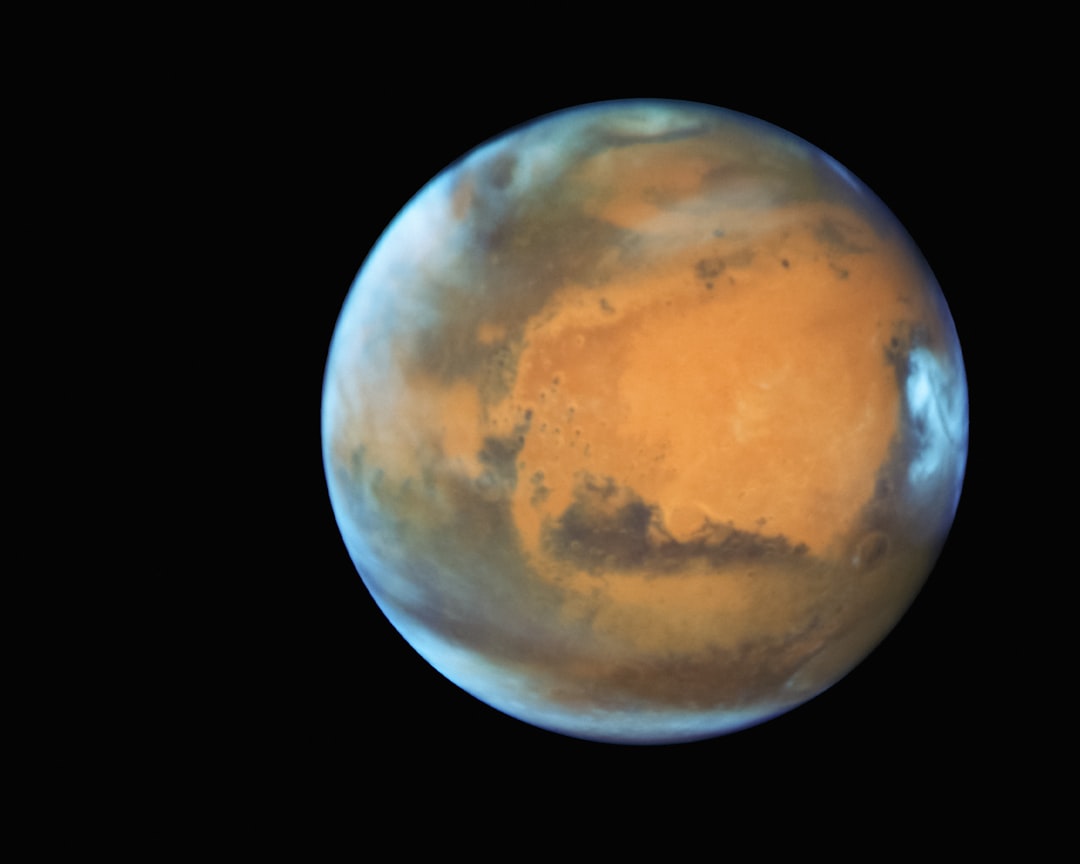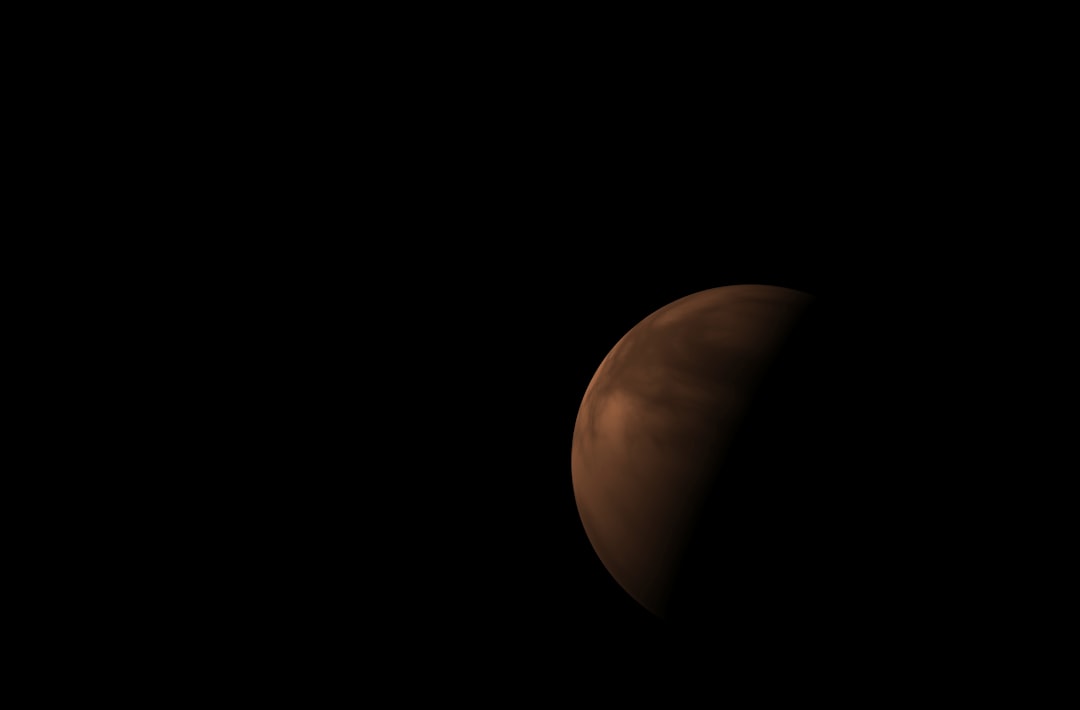
The Red Planet has long been characterized as a static, frozen wasteland—a planetary fossil suspended in geological stasis. However, groundbreaking imagery from the European Space Agency's Mars Express orbiter is challenging this perception in dramatic fashion. Recent high-resolution photographs reveal that Utopia Planitia, one of Mars' largest impact basins, is experiencing surprisingly rapid geological transformation. A vast blanket of dark volcanic ash is actively spreading across the region's distinctive rust-colored terrain—a process occurring at speeds that are extraordinary by planetary geology standards.
This discovery represents a paradigm shift in our understanding of Martian surface dynamics. While Mars lacks the tectonic activity and hydrological cycles that continuously reshape Earth's surface, the planet is far from dormant. The High Resolution Stereo Camera (HRSC) aboard Mars Express has captured evidence of environmental processes that are actively sculpting the Martian landscape in real-time—or at least, in what passes for real-time on geological scales.
The implications extend beyond mere academic curiosity. Understanding these dynamic processes is crucial for future human exploration missions, as they reveal an active planetary environment with subsurface ice reserves, ongoing wind erosion patterns, and crustal movements that could impact landing site selection and long-term habitat planning.
A Tale of Two Eras: Comparing Viking to Mars Express Observations
The story of Utopia Planitia's transformation begins with NASA's Viking orbiters, which first photographed this region in 1976 during humanity's pioneering orbital reconnaissance of Mars. These initial images captured a landscape that appeared relatively uniform, dominated by the characteristic ochre dust that gives Mars its distinctive red appearance. Fast forward nearly half a century to Mars Express's recent observations, and the contrast is striking.
In the span of approximately 48 years—barely a geological instant—the region has undergone visible transformation. A substantial deposit of dark material has spread across significant portions of Utopia Planitia, creating a stark visual dichotomy between the ancient ash deposits and the surrounding rust-colored regolith. This rate of change is remarkable; while 50 years represents multiple human generations, in planetary geology terms, it's equivalent to the blink of an eye. The fact that we can observe such dramatic changes over this timeframe suggests that Mars' surface is far more dynamic than previously assumed.
The comparative analysis between Viking-era imagery and contemporary Mars Express data provides planetary scientists with a rare opportunity: the ability to track geological processes in action. Such observational datasets are invaluable for understanding the rates and mechanisms of surface modification on other worlds.
Volcanic Legacy: The Ancient Origins of Martian Ash Deposits
The dark material spreading across Utopia Planitia isn't recent volcanic ejecta—it's an ancient deposit being revealed or redistributed by contemporary processes. Spectroscopic analysis indicates that these ash deposits are composed primarily of mafic minerals, particularly olivine and pyroxene. These iron- and magnesium-rich silicates are characteristic of basaltic volcanism, the dominant form of volcanic activity on Mars.
These minerals were forged in the intense heat of Martian magma chambers billions of years ago, during an era when massive shield volcanoes like Olympus Mons—the largest volcano in the solar system—were actively erupting. During this volcanic epoch, explosive eruptions would have generated massive plumes capable of injecting ash high into Mars' atmosphere, where prevailing winds could distribute it across vast distances before it settled onto the surface.
The presence of relatively pristine olivine in these deposits serves as a geological time capsule, providing crucial evidence about Mars' climatic history. Olivine degrades rapidly when exposed to liquid water, so its preservation indicates that Mars has remained predominantly arid since these volcanic deposits were emplaced billions of years ago.
This mineralogical evidence aligns with our broader understanding of Martian climate evolution. While early Mars may have possessed liquid water on its surface, the planet transitioned to its current cold, dry state relatively early in its history, preserving these ancient volcanic deposits in a state that would be impossible on Earth's water-rich surface.
Wind-Driven Transformation: Aeolian Processes on the Red Planet
The mechanism driving the apparent "creep" of dark ash across Utopia Planitia is most likely aeolian activity—the geological term for wind-driven processes. Mars' thin atmosphere, though only about 1% as dense as Earth's, is still capable of generating substantial dust storms and sustained winds that can transport fine particles across vast distances.
Two primary hypotheses explain the observed changes. First, prevailing winds may be actively transporting dark ash particles across the landscape, causing the dark deposit to expand into previously dust-covered areas. This process, known as saltation, involves particles bouncing along the surface in a cascading effect that can move substantial amounts of material over time.
Alternatively—or perhaps simultaneously—winds may be deflating the lighter, rust-colored surface dust layer, exposing darker ash deposits that have been buried for potentially hundreds of millions of years. This deflation process is common in arid environments on Earth and could explain the patchy, irregular boundaries observed between the dark and light regions.
The actual mechanism likely involves a combination of both processes. Mars' seasonal cycle drives atmospheric circulation patterns that vary throughout the Martian year, creating periods of enhanced wind activity that could alternately deposit or erode surface materials. Understanding these wind patterns is crucial for future missions, as dust accumulation on solar panels and other equipment poses significant operational challenges.
Subsurface Secrets: Scalloped Depressions and Hidden Ice Reserves
Beyond the spreading ash blanket, Mars Express imagery revealed another fascinating feature: scalloped depressions scattered throughout the region. These peculiar landforms, characterized by their rounded shapes and wavy edges, are telltale signs of subsurface ice and its interaction with the Martian environment.
These depressions form through a process involving either climatic shifts or surface erosion that exposes buried ice deposits. When subsurface ice becomes exposed to Mars' thin atmosphere, it sublimates—transitioning directly from solid to gas without passing through a liquid phase. This sublimation removes support from the overlying regolith, causing the ground to become unstable and collapse, creating the characteristic scalloped appearance.
The presence of these features in Utopia Planitia isn't entirely surprising. Previous missions, including NASA's Mars Odyssey orbiter, have detected substantial subsurface ice deposits in this region—estimated to contain approximately as much water as Lake Superior. This represents one of the most significant known water ice reserves on Mars outside the polar caps, making Utopia Planitia a region of considerable interest for future human exploration.
Impact Craters as Geological Windows
Among the most striking features captured in the new imagery is a 15-kilometer-wide impact crater situated within the dark ash blanket. This crater serves as a natural geological cross-section, revealing multiple layers of Martian history in a single feature.
The crater is surrounded by its own ejecta blanket—lighter-colored material excavated and thrown outward during the meteorite impact. This lighter material contrasts sharply with the surrounding dark ash, providing clear evidence that the impact occurred after the volcanic ash was deposited but before it spread to its current extent.
Within the crater itself, researchers identified sinuous lineations—wavy patterns that indicate the slow, glacial movement of subsurface ice. These features, similar to terrestrial glacial flow patterns, suggest that substantial ice deposits exist beneath the crater floor and are slowly deforming under their own weight and Martian temperature variations.
Tectonic Activity: Evidence of Crustal Stress
Perhaps most surprising are the graben structures extending up to 20 kilometers from the crater—long, shadowy tectonic ditches that form when crustal blocks drop down between parallel faults. These features are unambiguous evidence that Mars' crust in this region is experiencing extensional stress—being pulled apart by tectonic forces.
While Mars lacks the plate tectonics that continuously reshape Earth's surface, the planet does experience crustal stresses related to cooling, volcanic loading, and other internal processes. The presence of active graben formation indicates that tectonic processes continue to modify the Martian surface, albeit at much slower rates than on Earth.
Implications for Mars Exploration and Planetary Science
These observations from Mars Express fundamentally challenge the notion of Mars as a geologically dead world. The planet exhibits a complex interplay of processes including:
- Active aeolian transport: Continuous wind-driven modification of surface materials creating observable changes over decadal timescales
- Subsurface ice dynamics: Extensive buried water ice reserves that sublimate and deform, creating distinctive surface features
- Ongoing tectonic activity: Crustal stresses generating new geological structures, particularly in regions with volcanic loading
- Climate-driven surface changes: Seasonal and longer-term variations in atmospheric conditions affecting surface stability and ice exposure
For future human missions to Mars, understanding these dynamic processes is essential. The presence of accessible subsurface ice in regions like Utopia Planitia makes them attractive targets for exploration and potential resource utilization. However, the active nature of surface modification—including wind erosion, ice sublimation, and potential crustal instability—must be carefully considered in mission planning and habitat design.
As orbital reconnaissance continues with increasingly sophisticated instruments, including those aboard the Mars Reconnaissance Orbiter and future missions, we will undoubtedly discover additional examples of "rapid" geological change across the Martian surface. Each observation refines our understanding of planetary processes and brings us closer to the day when humans might witness these transformations firsthand—even if, by human standards, they unfold at a glacial pace.
The creeping volcanic ash of Utopia Planitia serves as a powerful reminder that Mars, despite its ancient surface and thin atmosphere, remains a dynamic world. Far from being a static museum piece, the Red Planet continues to evolve, sculpted by the same fundamental forces—wind, ice, and tectonics—that shape planetary surfaces throughout the solar system. Understanding these processes not only illuminates Mars' present state but also provides crucial insights into its past habitability and future potential as a destination for human exploration.