Upgraded Sardinia Radio Telescope To Continue Probing Mysterious Fast Radio Bursts
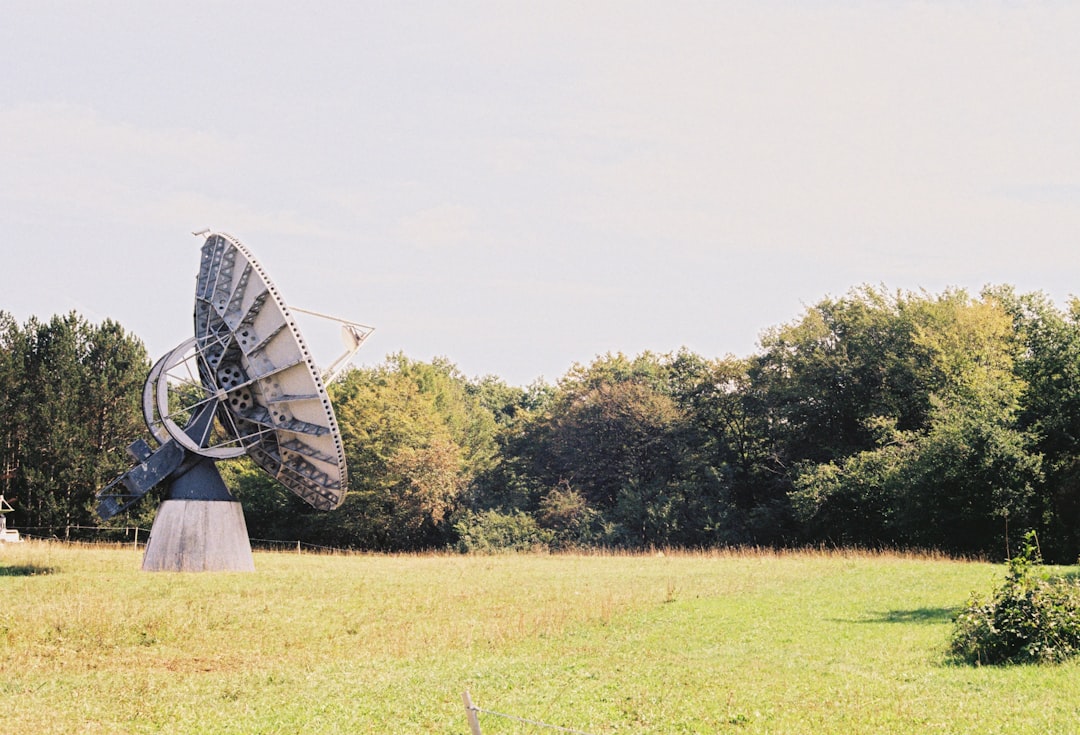
It's a tough, winding haul to reach the Sardinia Radio Telescope (SRT). An hour or so inland from the hardscrabble Italian port city of Cagliari, its rugged, mountainous locale belies a state-of-the-art 64-meter radio telescope that, in a decade of operation, has continually made headlines in the world of radio astronomy. Perched on a plateau rising some 700 meters above the Mediterranean Sea, the telescope's remote site was chosen with deliberate scientific intent — it is sheltered from disruptive winds, enjoys a relatively radio-quiet electromagnetic environment, and benefits from the natural shielding provided by the surrounding Sardinian highlands.
A stone's throw from miles of sheep and cow pastures, the SRT might seem an unlikely frontier of cutting-edge astrophysics. Yet this juxtaposition of pastoral tranquility and technological sophistication is precisely what makes it one of Europe's most remarkable scientific assets. The telescope's fully steerable dish, kept in its precise parabolic alignment by over a thousand separate aluminum panels — each supported by individual electromechanical actuators — can track celestial objects with extraordinary accuracy across a vast swath of the radio spectrum.
A Landmark Discovery: The Lowest-Frequency Fast Radio Burst
The SRT's biggest scientific achievement to date has been the first detection of a Fast Radio Burst (FRB) at the lowest radio frequency ever recorded. Fast Radio Bursts are among the most perplexing phenomena in modern astrophysics — intense, millisecond-duration pulses of radio waves originating at cosmological distances, releasing in a fraction of a second as much energy as the Sun emits over days or even weeks. First discovered in archival data in 2007 by astronomer Duncan Lorimer, FRBs have since captivated the scientific community and sparked vigorous theoretical debate.
In the SRT's landmark case, FRB 180916 was detected at just 328 MHz — a frequency roughly equivalent to conventional UHF television broadcasts — originating from a star-forming region within a massive spiral galaxy lying nearly 500 million light-years away in the northern constellation of Cassiopeia. This detection pushed the known boundaries of FRB observations to lower frequencies than ever before, opening a new observational window on these extraordinary events and challenging theoretical models of their emission mechanisms.
"A typical burst from FRB 180916 is emitted in milliseconds. This means that a lot of energy is released in a very short time and that the engine behind it is very powerful, because it keeps losing this kind of energy and supplying more." — Maura Pilia, Radio Astronomer, Cagliari Astronomical Observatory
When fully operational, the 60-million-euro SRT routinely observes across a remarkable frequency range — from 300 MHz up to 116 GHz — spanning wavelengths from mainstream television broadcasts at the lower end to the radar systems found in modern automobiles at the upper end. This exceptional bandwidth makes the SRT one of the most versatile radio observatories in the world. Currently, however, the telescope is offline undergoing a significant technical upgrade, expected to be completed by at least September. The upgrade is necessary not only to enhance general radio astronomy capabilities, but also because the SRT serves as a critical node in the European Space Agency's (ESA) deep space tracking network.
The Two Faces of Fast Radio Bursts
The astrophysical community has recognized that not all FRBs are alike. A fundamental distinction separates those that appear as one-off, non-repeating bursts from those that repeat — sometimes with striking, almost clock-like periodicity. This dichotomy has profound implications for understanding their origins and may even indicate that FRBs represent not one but multiple distinct physical phenomena.
- Non-repeating FRBs could plausibly be caused by a single catastrophic, one-time event — such as the cataclysmic merger of two neutron stars, the collapse of a supramassive neutron star, or another terminal explosion that destroys the progenitor object entirely.
- Repeating FRBs, like FRB 180916, by definition cannot arise from a one-time destructive event. Their source must survive each burst and reload its energy reservoir on timescales of hours, days, or weeks.
- Periodic repeaters — a subset of repeating FRBs — display remarkable regularity in their activity cycles, with FRB 180916 famously exhibiting a 16.35-day activity cycle, active for roughly four days before going quiet for twelve.
"Repeaters cannot be caused by a one-time explosion," explained Maura Pilia, a radio astronomer at the Cagliari Astronomical Observatory in Sardinia. In the case of repeat bursters, the current favored explanation is that magnetars — an exotic class of neutron star — are responsible for producing them.
Magnetars: The Prime Suspects
Magnetars are the most magnetically extreme objects known to science. They are a rare subclass of neutron stars — themselves the incredibly dense remnants of massive stars that have undergone supernova explosions — possessing magnetic fields roughly a thousand times stronger than those of ordinary neutron stars, and quadrillions of times stronger than Earth's own magnetic field. These extraordinary fields, with strengths reaching up to 1015 Gauss, drive intense high-energy activity and are thought to be powered by the gradual dissipation of enormous reservoirs of magnetic energy stored within the star.
Strong supporting evidence for the magnetar hypothesis arrived in April 2020, when astronomers detected a bright radio burst from SGR 1935+2154, a known magnetar within our own Milky Way Galaxy. This event, observed simultaneously by the CHIME telescope in Canada and the STARE2 instrument in the United States, was energetically consistent with a scaled-down version of a cosmological FRB, providing the most compelling direct evidence yet linking magnetars to the FRB phenomenon.
Yet the broader picture remains complex. While our own Milky Way Galaxy is home to a number of known magnetars, all FRBs detected to date appear to be extragalactic — originating far beyond our own galaxy. This raises important questions about the specific conditions that give rise to FRB-producing magnetars and why we have not detected more events from our galactic neighbors.
One thing astronomers agree upon: the source of these FRBs must be an astrophysically compact object. The millisecond timescale of the bursts places a strict upper limit on the physical size of the emission region — by the laws of physics, the source can be no larger than the distance light travels in a few milliseconds, roughly a few hundred kilometers. This constraint immediately narrows the field of candidates to black holes, neutron stars, or white dwarfs.
- White dwarfs, though compact, are the least energetic of the three and cannot plausibly generate the immense power output of observed FRBs.
- Black holes do not typically produce the kind of coherent, short-duration radio emission characteristic of FRBs.
- That leaves neutron stars — and specifically magnetars — as the most physically motivated and observationally supported candidates.
For context, consider that our Sun's brightest solar flares — themselves powerful enough to disrupt satellite communications and power grids on Earth — unfold over periods of minutes to hours. An FRB releases comparable or greater energy in just a few milliseconds. This staggering energy density places FRBs firmly in the realm of the most extreme astrophysical phenomena in the known universe. Learn more about the growing catalog of detected FRBs through the CHIME/FRB public catalog.
What SRT Observations Reveal About FRB 180916
The SRT's low-frequency capabilities have yielded important physical constraints on the nature of FRB 180916 and its immediate environment. The successful detection of this FRB at 328 MHz carries a powerful implication: the source cannot be enshrouded in a thick, dense nebula. Such a surrounding cloud of ionized gas would scatter and absorb low-frequency radio waves, effectively blocking the kind of signal the SRT detected. The fact that the burst penetrated to Earth at these low frequencies suggests that the immediate environment around FRB 180916's source is relatively clean and unobscured.
"SRT observations have shown that FRB 180916 can't be enshrouded in a thick nebula; that would block low frequency radiation," noted Pilia. This leads astronomers to conclude that FRB 180916 is likely not among the youngest FRB sources — young magnetars are typically embedded in dense supernova remnants — but is perhaps in a middle-aged stage of its evolution, having cleared much of its surrounding debris while remaining highly active.
The host galaxy of FRB 180916, imaged by the 8-meter Gemini-North telescope of NOIRLab on Hawaii's Maunakea, further contextualizes the burst. The galaxy is a massive spiral system, and FRB 180916 appears associated with a star-forming arm — a region rich in young, massive stars and the supernova explosions they eventually produce, making it a plausible nursery for exotic neutron stars.
Beyond FRBs: A Broader Survey of Transient Phenomena
While FRBs represent one of the SRT team's most exciting pursuits, the telescope's scientific portfolio extends across a rich landscape of transient astrophysical phenomena. The team regularly monitors a suite of energetic objects that light up briefly across multiple wavelengths, seeking to understand whether these seemingly disparate phenomena share common physical roots.
- Magnetars: Monitored for their X-ray outbursts and potential radio counterparts, providing a direct galactic laboratory for FRB physics.
- Microquasars: Stellar-mass black holes accreting material from companion stars and launching powerful relativistic jets, offering insights into jet-driven radio emission mechanisms.
- Gamma-Ray Bursts (GRBs): The universe's most energetic explosions, potentially sharing progenitor systems or emission physics with FRBs.
- Pulsars: Rapidly rotating neutron stars emitting regular radio pulses, whose giant pulses and magnetospheric activity may represent a scaled-down, nearby analog of FRB emission physics.
"There could be a link in how all these systems work," said Pilia. "We also regularly monitor pulsars and try to study their single and giant pulses. The pulsars' magnetospheric activity might be a scaled-down version of what happens in FRBs." This comparative approach — studying the full ecosystem of neutron star phenomena — is central to the SRT team's strategy for ultimately cracking the FRB mystery. For a broader perspective on pulsar science, the National Radio Astronomy Observatory (NRAO) offers extensive educational resources.
The SRT's Observational Advantage: Simultaneous Multi-Frequency Coverage
One of the SRT's key technical strengths for FRB science is its ability to perform simultaneous observations at multiple frequencies. Thanks to its advanced dual-beam receiver system, the telescope can observe simultaneously at 300 MHz and 1.5 GHz — a capability that is invaluable for characterizing the frequency-dependent properties of transient events like FRBs.
This multi-frequency simultaneity is scientifically crucial. FRBs have been detected across a wide frequency range, from 110 MHz to 8 GHz, and their spectral behavior — how their brightness, duration, and arrival time vary with frequency — encodes vital information about both the emission mechanism and the intervening plasma the signal traverses on its journey across the cosmos. The frequency-dependent delay of radio pulses, known as dispersion, can be used to probe the density of electrons along the line of sight, offering a powerful tool for studying the distribution of matter in the intergalactic medium.
Starquakes and the Unpredictability of Cosmic Violence
Perhaps the most intellectually humbling aspect of FRB science is the fundamental unpredictability of these events — a characteristic that mirrors some of Earth's most challenging natural phenomena. The leading physical picture for repeating FRBs invokes the concept of starquakes on the surface of magnetars.
Just as tectonic stresses build slowly within the Earth's crust before being catastrophically released as an earthquake, the immensely powerful and dynamic magnetic fields threading a magnetar's crust are thought to generate enormous mechanical stresses over time. The magnetar's solid crust — composed of matter at densities exceeding that of atomic nuclei — can fracture when these stresses exceed a critical threshold, releasing stored energy explosively.
"When immense forces are sort of trapped and then released, a burst will happen," explained Pilia. "But just as in the case of earthquakes, this is not predictable." This stochastic, threshold-driven nature of starquakes explains both the episodic character of repeating FRBs and the practical impossibility of predicting exactly when the next burst will occur — a sobering parallel between the most extreme objects in the universe and the geological violence that shapes our own planet.
The surface of a magnetar, in this picture, is a perpetually turbulent environment where the interplay of ultra-strong magnetic fields, nuclear-density matter, and rapid rotation creates conditions with no analog in terrestrial physics. "Magnetar surfaces can be sort of turbulent due to extremely high magnetic fields," said Pilia. "So, we might expect moments when something 'breaks' and gives rise to bursting phenomena."
Open Questions and the Road Ahead
Despite remarkable progress in recent years — driven by facilities like the SRT, CHIME, the Five-hundred-meter Aperture Spherical Telescope (FAST) in China, and the global network of radio observatories — fundamental questions about FRBs remain stubbornly unanswered.
- Do non-repeating and repeating FRBs represent fundamentally different physical phenomena, or merely different manifestations of the same underlying engine?
- Do non-repeating FRBs arise from one-time catastrophic events that leave no surviving remnant — such as neutron star mergers — while repeaters are powered by long-lived magnetars?
- What