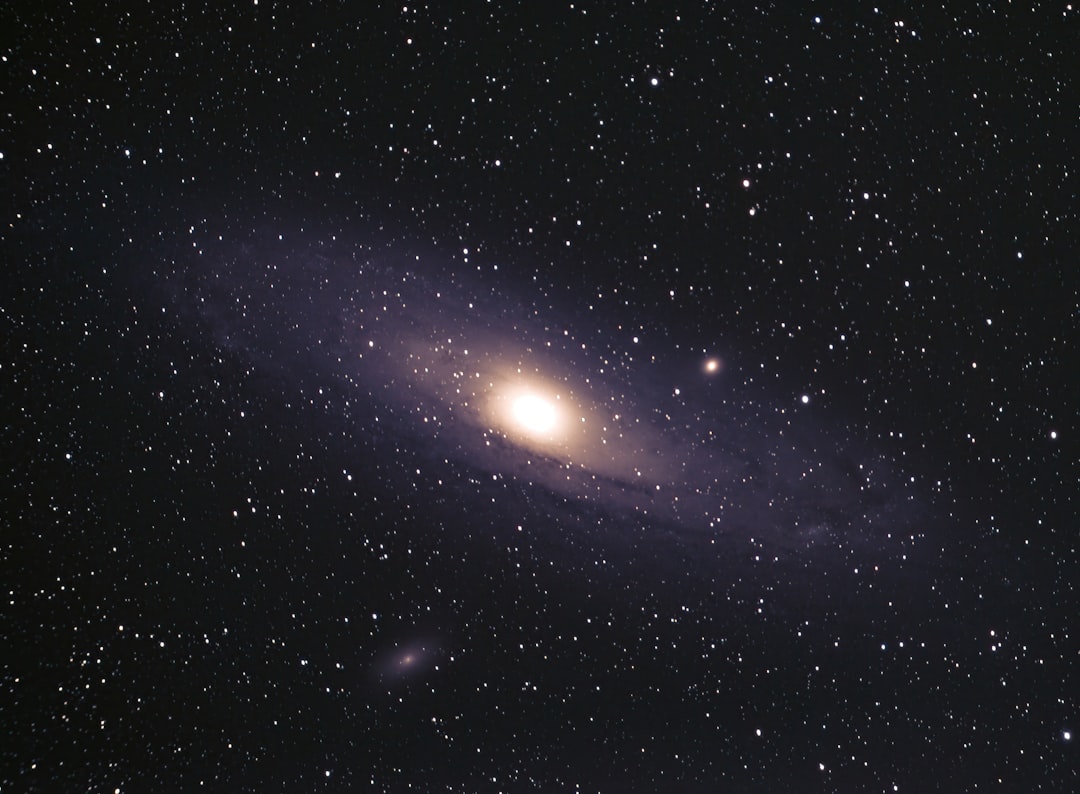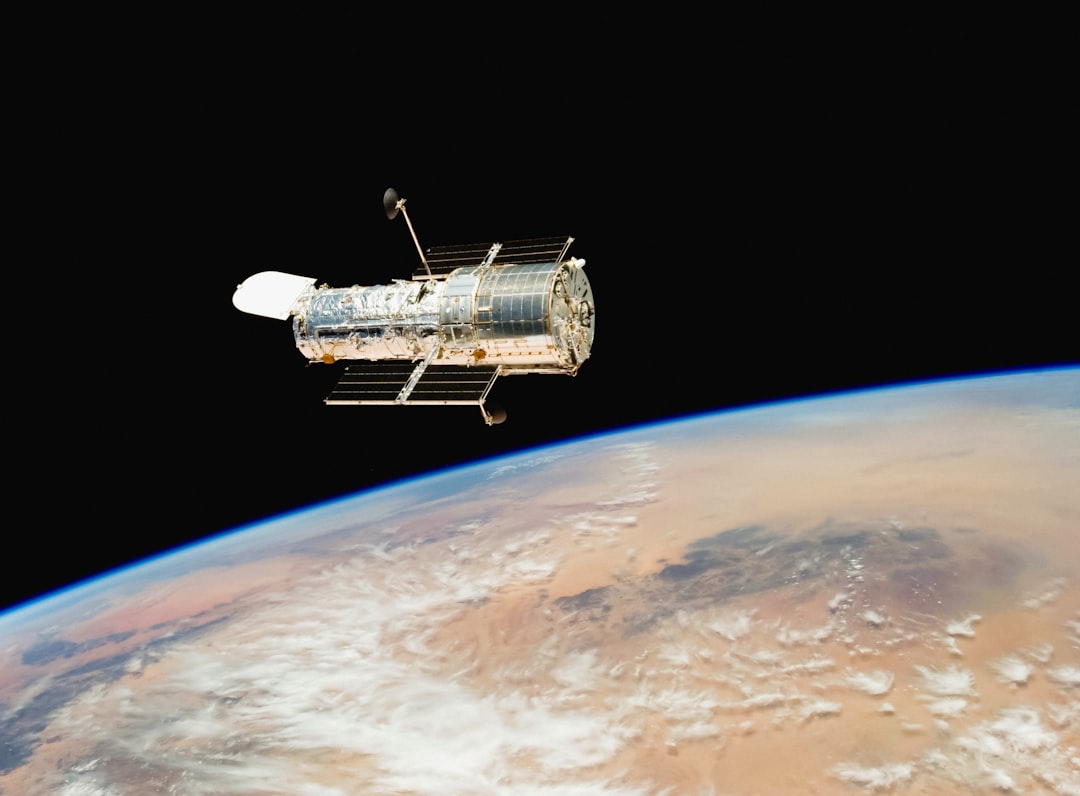
The Euclid Space Telescope Has Found 31 New Ancient Quasars, Including the Most Distant Ever Discovered
In a landmark achievement for modern cosmology, the European Space Agency's (ESA) Euclid space telescope has identified 31 new high-redshift quasars, including the two most distant ever discovered. These ancient cosmic beacons, blazing with the light of trillions of suns, offer an extraordinary window into the Universe's earliest epoch — a time when the first galaxies were just beginning to carve their place in the cosmos. The findings, published in Astronomy and Astrophysics, represent a transformative leap in our ability to probe the infant Universe and are already reshaping our understanding of how the largest structures in existence came to be.
What Is Euclid, and Why Does It Matter?
Euclid was launched by the ESA in July 2023 with a primary mission to map the geometry of the "dark Universe" — the invisible scaffolding of dark matter and the mysterious repulsive force known as dark energy that together account for roughly 95% of the Universe's total energy content. Equipped with a 600-megapixel visible-light camera (VIS) and a near-infrared photometer and spectrometer (NISP), Euclid is conducting a sweeping, six-year survey of more than one-third of the entire sky. By the end of its mission, it will have characterized the shapes, distances, and clustering of over a billion galaxies.
Although Euclid was not specifically engineered to hunt for quasars, its design characteristics make it almost uniquely suited to the task. Its wide-field optics, combined with sensitive near-infrared photometry and spectroscopy, allow it to detect faint light from sources at extreme cosmological distances — exactly the kind of signal produced by luminous quasars in the early Universe. As the authors of the new study note, "Euclid has long been anticipated to revolutionise the search for high-z quasars."
"Euclid is a true game-changer. Before, we could only find a handful of the very brightest ancient quasars, but Euclid lets us search far more efficiently across huge areas of sky to capture much fainter light. It's a unique tool for quasar hunting." — Daming Yang, Lead Author, Leiden University
Learn more about the Euclid mission and its science goals at the ESA Euclid Mission page.
Understanding Quasars: Cosmic Lighthouses from the Dawn of Time
Quasars — short for quasi-stellar objects — are among the most energetic phenomena in the known Universe. They are a class of active galactic nuclei (AGN), powered by supermassive black holes (SMBHs) with masses ranging from hundreds of millions to tens of billions of solar masses. As matter falls toward the black hole, it forms a superheated accretion disk that radiates prodigious amounts of energy across the entire electromagnetic spectrum. At their peak, quasars can outshine their entire host galaxy by a factor of hundreds or even thousands, making them detectable across vast cosmic distances.
Because light travels at a finite speed, observing quasars at high redshift (denoted z) is equivalent to looking back in time. A quasar at z = 7 is seen as it appeared when the Universe was less than 800 million years old — a mere 6% of its current age of 13.8 billion years. These objects are therefore not just intrinsically fascinating; they serve as powerful time machines, allowing astronomers to directly observe conditions in the very young Universe.
The existence of billion-solar-mass black holes so early in cosmic history poses one of the deepest puzzles in astrophysics. Standard models of black hole growth through accretion struggle to explain how SMBHs could have grown so large in such a short time after the Big Bang. Each new high-redshift quasar discovery adds another data point that challenges — and ultimately refines — our theoretical understanding of early Universe evolution. For background on black hole science, visit NASA's Black Holes Overview.
The Discovery: 31 Quasars at the Edge of the Observable Universe
The new research, led by Daming Yang, a PhD researcher in astronomy at Leiden University in the Netherlands, reports the discovery of 31 quasars in the redshift range 6.6 < z < 7.8. These objects were identified from approximately 3,000 square degrees of sky surveyed during the first 1.5 years of the Euclid Wide Survey (EWS) — roughly 7.5% of the total sky area the mission will ultimately cover.
The two most distant quasars in the sample set new records for the most ancient ever found. The first is at z = 7.7, and the second at z = 7.69, both surpassing the previous record holder at z = 7.64. At these redshifts, these quasars were radiating with the luminosity of trillions of suns just 670 million years after the Big Bang — when the Universe had reached only about 5% of its current age. Their light has traveled approximately 13.1 billion light-years to reach us.
Critically, 12 of the 31 new quasars are at z ≥ 7, which corresponds to the Universe's first 770 million years. This single discovery more than doubles the total number of known quasars at this extreme redshift range — a feat that previously took astronomers more than a decade of dedicated searching to accumulate just ten confirmed examples.
"We report the discovery of 31 new high-z quasars in the redshift range 6.6 < z < 7.8. These quasars were selected from approximately 3,000 deg² of sky covered during the first 1.5 years of the Euclid Wide Survey, representing the initial results of the Euclid high-z quasar search." — Yang et al., 2026, Astronomy & Astrophysics
How Were They Found? The Role of Machine Learning and Ground-Based Follow-Up
Identifying high-redshift quasars in enormous imaging surveys is a formidable technical challenge. At these extreme distances, quasars have had their ultraviolet light completely absorbed by intervening neutral hydrogen in the intergalactic medium, a phenomenon known as the Lyman-break. This causes them to appear entirely invisible in optical wavelengths shorter than a certain threshold, while remaining detectable in the infrared. The challenge is that this spectral signature can mimic the colors of cool foreground stars and brown dwarfs within our own Milky Way galaxy, leading to a significant rate of false positives.
To overcome this, the research team employed a sophisticated combination of machine-learning classification algorithms and Bayesian probabilistic techniques, applied to Euclid's multi-band photometric data. These methods allowed the team to efficiently rank candidates by their probability of being genuine high-redshift quasars rather than contaminating sources.
Candidates were then confirmed through follow-up spectroscopic observations using three of the world's most powerful ground-based observatories:
- W. M. Keck Observatory (Mauna Kea, Hawai'i) — using its Low Resolution Imaging Spectrometer (LRIS)
- Magellan Telescopes (Las Campanas Observatory, Chile) — using the Folded-port InfraRed Echellette (FIRE) spectrograph
- Large Binocular Telescope (LBT) (Mount Graham, Arizona) — providing additional spectral confirmation
This multi-facility approach underscores the collaborative nature of modern astronomical discovery: space-based wide-field surveys identify candidates at scale, while the world's premier ground-based observatories provide the definitive confirmations.
The Epoch of Reionization: A Pivotal Cosmic Milestone
All 31 newly discovered quasars reside within — or at the tail end of — the Epoch of Reionization (EoR), one of the most consequential periods in cosmic history. Spanning roughly from z = 6 to z = 9 (approximately 550 to 900 million years after the Big Bang), the EoR marks the Universe's transition from a cold, dark, neutral-hydrogen-filled void into the ionized, transparent cosmos we observe today.
During this epoch, the first stars and galaxies ignited and began flooding the Universe with ultraviolet radiation, gradually ionizing the surrounding neutral hydrogen gas. This process — cosmic reionization — fundamentally restructured the intergalactic medium (IGM) and set the stage for all subsequent galaxy formation. Quasars in the EoR are particularly valuable probes because their spectra encode information about the ionization state of the gas through which their light travels, effectively acting as cosmic spectrographs of the early IGM.
By assembling a statistically meaningful sample of EoR quasars, researchers can now map the progression of reionization more accurately than ever before. You can explore more about this pivotal period at HubbleSite's resource on the Epoch of Reionization.
Dark Matter, Supermassive Black Holes, and the Lambda-CDM Model
Beyond their intrinsic fascination, these newly discovered quasars carry profound implications for our understanding of cosmic structure formation. According to the leading cosmological model — Lambda-CDM (Lambda Cold Dark Matter) — galaxies form within gravitational wells created by dark matter halos. For a galaxy to host a quasar as luminous as those found here just 670 million years after the Big Bang, an extraordinarily massive dark matter halo must have assembled remarkably quickly — challenging the standard model's predictions for early structure growth.
Recent years have seen a growing tension in cosmology: observations from missions like Euclid and the James Webb Space Telescope (JWST) have repeatedly revealed galaxies and black holes that are more massive and more mature in the early Universe than theoretical models predict. This emerging pattern — sometimes called the "impossible early galaxy problem" — may point to revisions needed in our models of dark matter behavior, black hole seeding mechanisms, or the physics of early star formation.
Crucially, until now, researchers were largely forced to rely on statistical outliers — the most extreme, most luminous quasars — to test these models. The 31 new quasars provide a far more representative population with which to probe cosmological models. A larger, more complete sample enables statistically rigorous measurements of the quasar luminosity function at high redshift — effectively a census of how many black holes of a given mass existed at a given cosmic time — which is a powerful discriminator between competing theoretical frameworks.
"This finding more than doubles the number of quasars we know of that are so ancient. The Euclid team has taken a true 'census' of quasars at the dawn of the Universe for the first time. It's a big step towards understanding these fascinating objects on a more fundamental level." — Antonio La Marca, ESA Research Fellow, Euclid Team
For more context on the Lambda-CDM model and current challenges to it, visit the ESA's Cosmology Explained page.
The Bigger Picture: What Comes Next?
The 31 quasars announced in this study were identified from only the first 3,000 square degrees of the Euclid Wide Survey — approximately 15% of the total planned coverage of roughly 14,000 square degrees by the end of the decade. With each new data release, the sample is expected to grow dramatically. Astronomers anticipate that by the end of Euclid's primary mission, it could identify hundreds of quasars at z > 6.5, transforming the statistical power available for studying the early Universe.
The key scientific questions that this growing sample will help address include:
- How did supermassive black holes grow to billions of solar masses within the Universe's first billion years?
- What is the role of dark matter halos in seeding the formation of the earliest massive galaxies?
- How did quasar-driven radiation contribute to the Epoch of Reionization?
- Does the quasar luminosity function at high redshift match the predictions of the Lambda-CDM model?
- What is the relationship between early black hole mass and host galaxy mass, and how did it evolve over cosmic time?
Complementary data from the James Webb Space Telescope, which can perform deep spectroscopic follow-up of individual targets discovered by Euclid, will be instrumental in answering many of these questions. The two missions form a powerful synergy: Euclid finds the targets at scale across the sky, while JWST dissects them in exquisite detail. Find out more about JWST's science goals at WebbTelescope.org.
"Ancient quasars are rare discoveries. They're interesting in themselves, but also time machines that enable us to explore the early Universe and understand how the first generation of galaxies came to be." — Valeria Pettorino, ESA Euclid Project Scientist and Study Co-Author
Conclusion: A New Era of High-Redshift Quasar Science
The discovery of 31 new high-redshift quasars by the Euclid Space Telescope marks not just a numerical milestone, but a qualitative shift in the field. For the first time, astronomers have a statistically meaningful sample of quasars from the Universe's first billion years — one that spans a range of luminosities and redshifts representative of the broader population, rather than consisting purely of extraordinary outliers. This is precisely the kind of data that allows theoretical models to be rigorously tested and refined.
As Euclid continues its survey of the sky, accumulating data year after year through the end of the decade, the sample will only grow. Combined with the spectroscopic power of JWST and the next generation of extremely large ground-based telescopes, these ancient quasars will yield answers to some of the most profound questions in all of astrophysics: How did the