Seven Needles, 800,000 Haystacks: How AI Is Unlocking the Secrets of Quasar Lenses
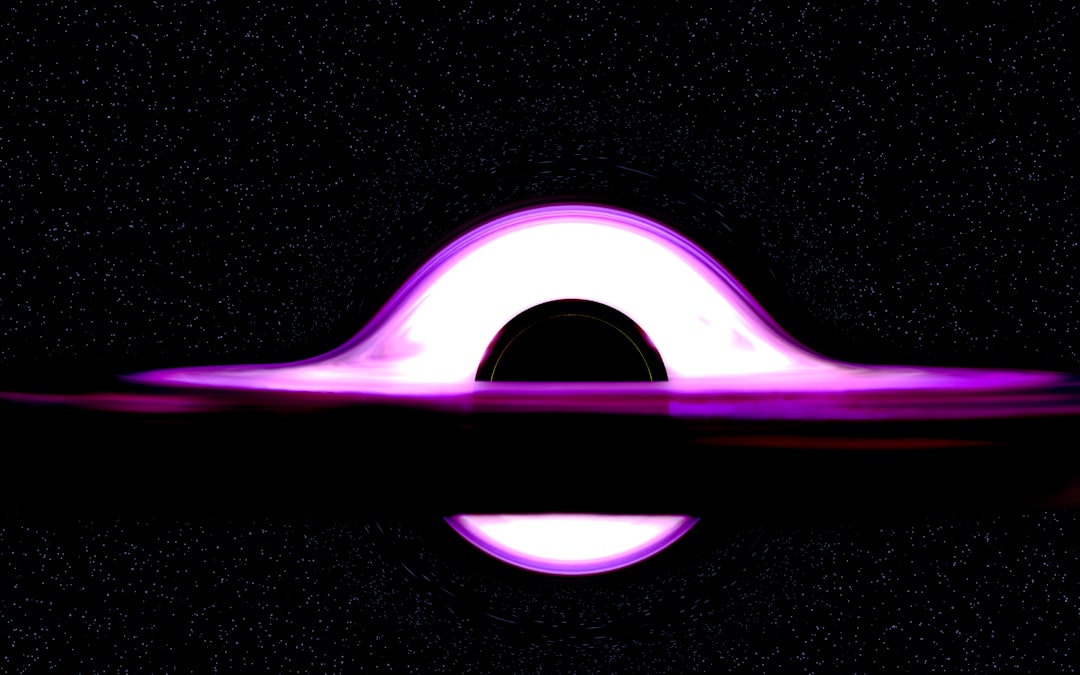
Quasars are the most luminous sustained objects in the observable universe — titanic beacons forged in violence and gravity at the hearts of distant galaxies. At their cores sit supermassive black holes, each consuming surrounding matter at prodigious rates, releasing energy so ferocious that some quasars shine tens of thousands of times brighter than the entire Milky Way galaxy combined. They can be detected across billions of light-years of cosmic space, making them extraordinary probes of the early universe. Yet for all their brilliance, quasars present astronomers with a profound paradox: they are simultaneously among the easiest objects to detect and the hardest to study in depth.
The problem is one of contrast. The blinding glare emanating from a quasar's central engine — known as the active galactic nucleus (AGN) — overwhelms the comparatively faint light of the surrounding host galaxy. Astronomers find themselves in the position of trying to study a lighthouse while staring directly into its beam. You can see the beacon, but not the lighthouse itself. Understanding the relationship between a black hole and its host galaxy requires seeing both clearly — a challenge that has long stymied researchers.

Gravitational Lensing: Nature's Own Telescope
A potential solution to this dilemma arrives courtesy of one of Einstein's most elegant predictions: gravitational lensing. As described by General Relativity, mass warps the fabric of spacetime, and light — obediently following the curvature of that fabric — bends as it passes near massive objects. When a galaxy is positioned between Earth and a more distant light source, the intervening galaxy acts as a natural cosmic lens, distorting, magnifying, and sometimes producing multiple images of the background object.
The degree of that distortion is not merely a curiosity — it is a measurement. By carefully analyzing the geometry of the lensed arcs or multiple images, astronomers can calculate the precise mass of the foreground lensing galaxy, including its dark matter halo, with a fidelity that few other techniques can match. Crucially, this method works regardless of how luminous the foreground galaxy is. That makes it a uniquely powerful tool when the foreground galaxy happens to host a blazing quasar at its center.
"Gravitational lensing gives us a rare, physics-driven ruler to measure the total mass of a galaxy — its stars, gas, dust, and dark matter combined — independently of how much light it emits."
The challenge, however, is a purely practical one: finding these systems. A quasar host galaxy that is simultaneously acting as a gravitational lens for a more distant background galaxy requires an extraordinarily precise alignment along our line of sight. Such configurations are exceedingly rare in the sky, and until recently, only a handful were known to exist. Identifying them from the ground, amid hundreds of thousands of spectroscopic observations, is akin to finding seven needles in 800,000 haystacks.
DESI: The Catalogue That Changed the Scale of the Problem
The Dark Energy Spectroscopic Instrument (DESI), mounted on the 4-meter Mayall Telescope at Kitt Peak National Observatory in Arizona, is one of the most ambitious spectroscopic surveys ever undertaken. Its primary mission is to map the large-scale structure of the universe by measuring the spectra of tens of millions of galaxies and quasars, ultimately probing the nature of dark energy — the mysterious force accelerating the universe's expansion. In the course of this mission, DESI has amassed a catalogue containing approximately 800,000 quasar spectra.
That number is extraordinary, but it immediately presents a new kind of problem. No team of astronomers, however dedicated, could meaningfully inspect 800,000 spectra by eye in any reasonable timeframe. Searching that catalogue for rare, subtle signatures of gravitational lensing — where the spectrum of a background galaxy is faintly superimposed on the dominant quasar signal — demands a fundamentally different approach.
Training a Neural Network on Synthetic Lenses
Everett McArthur, a graduate student at The Ohio State University, led a team that devised an elegant solution rooted in modern machine learning. The team's goal was to train a neural network to recognize the spectroscopic fingerprint of a lensing event: a quasar spectrum with an additional, subtle overlay of emission lines from a background galaxy at a different redshift. In principle, this is a tractable pattern-recognition problem. In practice, it faced an immediate obstacle.
Machine learning models require large training datasets — ideally thousands of labeled examples — to learn reliable patterns. Real, confirmed quasar lenses number only in the dozens globally. There were nowhere near enough genuine examples to train a robust classifier. McArthur's team solved this with a creative shortcut: they manufactured their training data. By mathematically blending authentic quasar spectra with authentic background galaxy spectra in physically realistic proportions, they synthesized thousands of mock lensing signals. The network was taught what a lensed quasar spectrum ought to look like using fakes assembled from real scientific ingredients.
- The team started with the full DESI catalogue of approximately 800,000 quasar spectra.
- A neural network trained on synthetic lensing spectra reduced the candidate list to roughly 200 objects.
- Expert human astronomers then visually inspected those 200 candidates.
- The final result: seven high-confidence gravitationally lensed quasar systems.
- This finding approximately doubles the total number of such systems previously known to science.
The use of synthetically augmented training data to compensate for the scarcity of real examples is a technique gaining traction across observational astronomy, and McArthur's application of it here is a clear demonstration of its power. The neural network served as an extraordinarily efficient first-pass filter, compressing an impossible manual task into a manageable one.

Seven Systems, Profound Implications
Seven confirmed candidates may sound like a modest harvest from a field of 800,000, but context transforms the number. The known population of gravitationally lensed quasar host galaxies was already vanishingly small, and doubling that population in a single study represents a significant leap. Each of the seven systems lies at a distance of at least five to six billion light-years from Earth — meaning we observe them as they existed roughly halfway through the current age of the universe, a cosmologically rich epoch when both galaxy formation and black hole growth were proceeding rapidly.
Confirming these candidates with certainty will require higher-resolution follow-up imaging, most likely from the Hubble Space Telescope or, looking ahead, the James Webb Space Telescope. Sharp optical imaging will reveal whether the characteristic arcs or multiple images expected from gravitational lensing are genuinely present — the definitive geometric proof that lensing is occurring.
If the candidates are confirmed, each one becomes a uniquely valuable scientific laboratory. The lensing geometry will yield a precise measurement of the total mass of the host galaxy, while the quasar itself provides direct evidence of an actively accreting supermassive black hole at that galaxy's center. This pairing is precisely what researchers need to rigorously test one of the most important open questions in galaxy evolution: the co-evolution of galaxies and their central black holes.
The Black Hole–Galaxy Connection
Decades of observations have established a striking empirical relationship: the mass of a galaxy's central supermassive black hole correlates tightly with the properties of the galaxy's stellar bulge — in particular, its mass and the velocity dispersion of its stars. This M–σ relation suggests that black holes and their host galaxies did not evolve independently, but grew in concert through a process of mutual feedback. When a black hole accretes matter and becomes an active quasar, it can drive powerful winds and jets that heat or expel gas from the galaxy, potentially regulating star formation across scales thousands of times larger than the black hole itself.
Yet quantifying this relationship precisely — especially in systems where the black hole is currently active and blazing as a quasar — has been extraordinarily difficult, precisely because the quasar outshines its host galaxy. Gravitationally lensed quasars offer a rare workaround: the lensing mass measurement is immune to the quasar's glare, delivering the galaxy's total mass even when its light is buried under the AGN's brilliance. Each new lensed quasar system is therefore a potential calibration point for our models of how the universe's largest structures assembled themselves over cosmic time. For further reading on this relationship, see the NASA Galaxy Science overview.
A Technique That Scales With the Data
Perhaps the most significant contribution of McArthur's work is not the seven systems themselves, but the methodology that produced them. His central argument is one of generalizability: a neural network trained to detect one category of spectroscopic anomaly — in this case, a superimposed background galaxy signal — can be retrained, with appropriate synthetic data, to hunt for entirely different categories of rare events. The technique is not specific to lensed quasars. It is a general-purpose toolkit for rare-event detection in large spectroscopic surveys.
This matters enormously because the era of data abundance in astronomy is only just beginning. DESI will ultimately collect spectra for tens of millions of objects. The forthcoming Vera C. Rubin Observatory's Legacy Survey of Space and Time (LSST) will image billions of astronomical sources. The ESA Euclid mission is already returning data on hundreds of millions of galaxies across a third of the sky. In this environment, the bottleneck in astronomy is no longer the collection of data — it is the extraction of knowledge from data that already exists.
"As survey catalogues swell past the point where anyone can look at everything, the interesting question stops being what we have observed and becomes what we can still find in what we already have."
— Everett McArthur, Ohio State University
McArthur's approach exemplifies a broader paradigm shift in observational astrophysics. Human visual inspection — once the gold standard for identifying unusual objects — is being supplemented, and in some domains superseded, by machine learning classifiers trained on the hybrid of simulated and observational data. The DESI catalogue alone almost certainly contains dozens or hundreds of other rare astrophysical phenomena waiting to be surfaced by the right algorithm. The seven lensed quasars are a proof of concept as much as a discovery.
What Comes Next
The immediate next step is confirmation. High-resolution imaging from space-based observatories will be required to resolve the lensing arcs or point-spread function anomalies expected around each candidate. Spectroscopic follow-up at large ground-based telescopes will help independently verify the redshifts of the background galaxies, constraining the lensing geometry and the implied mass of each foreground quasar host. If the systems survive this scrutiny, detailed lens modeling will extract the mass distributions of their host galaxies with a precision few other methods can approach.
Beyond these seven, the team's methodology points toward a systematic program: applying similar trained classifiers to the ever-growing DESI dataset as it expands with continued survey operations. Combined with upcoming datasets from Rubin, Euclid, and eventually the Nancy Grace Roman Space Telescope, the coming decade may see the population of known lensed quasars grow from dozens to hundreds — sufficient, for the first time, to perform statistically robust population studies of black hole–galaxy co-evolution across cosmic time.
In the vast haystack of modern astronomical data, algorithms like McArthur's are becoming indispensable guides. The universe has been generous enough to hide remarkable things in plain sight — encoded in spectra collected and archived, waiting to be recognized. The question, as he rightly frames it, is no longer whether the needles are there. It is whether we have built a sharp enough magnet to find them.