In a groundbreaking demonstration of astronomical coordination and technological prowess, the Vera C. Rubin Observatory has successfully completed its first end-to-end alert system test, culminating in the identification and classification of four distinct supernovae. This achievement represents a pivotal milestone in time-domain astronomy, validating a sophisticated ecosystem of telescopes, software platforms, and machine-learning algorithms designed to capture fleeting cosmic events before they vanish from view. The successful operation of this intricate network offers astronomers a tantalizing preview of the revolutionary science that will emerge during the observatory's ambitious Legacy Survey of Space and Time (LSST).
Since releasing its stunning "first light" images last summer, the Rubin Observatory has been preparing to embark on an unprecedented decade-long survey that will fundamentally transform our understanding of the cosmos. This $473 million facility, perched high in the Chilean Andes, will systematically scan the entire visible sky every few nights, generating an astronomical data deluge of approximately 30 petabytes over its operational lifetime. The observatory's primary scientific objectives encompass investigating the mysterious nature of Dark Matter and Dark Energy, cataloging potentially hazardous near-Earth objects, and detecting transient phenomena across the universe—from nearby asteroids to the most distant exploding stars.
The recent validation of the alert follow-up system marks a crucial technical achievement that will enable the global astronomical community to maximize the scientific return from Rubin's observations. With the observatory expected to generate millions of alerts nightly once full operations commence, the ability to rapidly filter, prioritize, and coordinate follow-up observations becomes absolutely essential for capturing time-sensitive astronomical events.
The Architecture of Discovery: Building a Responsive Alert Ecosystem
The National Science Foundation (NSF) has orchestrated the development of an extraordinarily sophisticated alert response infrastructure, integrating multiple cutting-edge components into a seamless observational pipeline. At the heart of this system lies ANTARES (Arizona–NOIRLab Temporal Analysis and Response to Events System), one of several "broker" platforms equipped with advanced machine-learning algorithms designed to intelligently process the torrential stream of incoming alerts.
These broker systems serve as the critical first line of analysis, employing sophisticated pattern recognition to distinguish genuinely interesting astronomical phenomena from instrumental artifacts, known objects, and routine variations. ANTARES and its companion brokers must perform this triage in near real-time, as many transient events—particularly supernovae in their earliest phases—can change dramatically within hours or even minutes of detection.
Once ANTARES identifies promising candidates, the alerts flow into the Gemini Observation and Analysis of Targets System (GOATS), an intelligent observation request manager developed by the Science User Support Department at Gemini Observatory. GOATS automatically evaluates each potential target, considering factors such as observational feasibility, scientific priority, current telescope availability, and weather conditions across multiple sites. This automated decision-making capability proves essential when dealing with the sheer volume of alerts Rubin will generate.
The Global Telescope Network: AEON's Coordinated Response
The Astronomical Observatory Event Network (AEON) represents an unprecedented international collaboration, linking some of the world's most powerful telescopes into a coordinated rapid-response system. This network encompasses facilities spanning multiple continents and time zones, including the NSF's Cerro Tololo Inter-American Observatory (CTIO) in Chile, the Southern Astrophysical Research Telescope (SOAR), both Gemini North (Hawaii) and Gemini South (Chile) telescopes, and the globally distributed Las Cumbres Observatory network.
The geographic and instrumental diversity of AEON provides crucial advantages for time-domain astronomy. When a transient event occurs, the network can maintain nearly continuous observational coverage as Earth rotates, with different facilities picking up observations as targets become visible from their locations. Furthermore, the varied instrumentation across these observatories—from wide-field imagers to high-resolution spectrographs—enables comprehensive characterization of detected phenomena.
During the recent validation campaign, this coordinated network responded to 18 separate alerts generated by Rubin Observatory. The team deployed an impressive array of instruments, including the Dark Energy Camera (DECam), the Goodman spectrograph mounted on SOAR, and the Gemini Multi-Object Spectrographs (GMOS) on both Gemini telescopes. Complementary imaging from Las Cumbres Observatory's 1-meter and 2-meter telescopes provided crucial confirmation data, demonstrating the power of multi-facility collaboration.
Supernova Science: Cosmic Explosions as Cosmological Tools
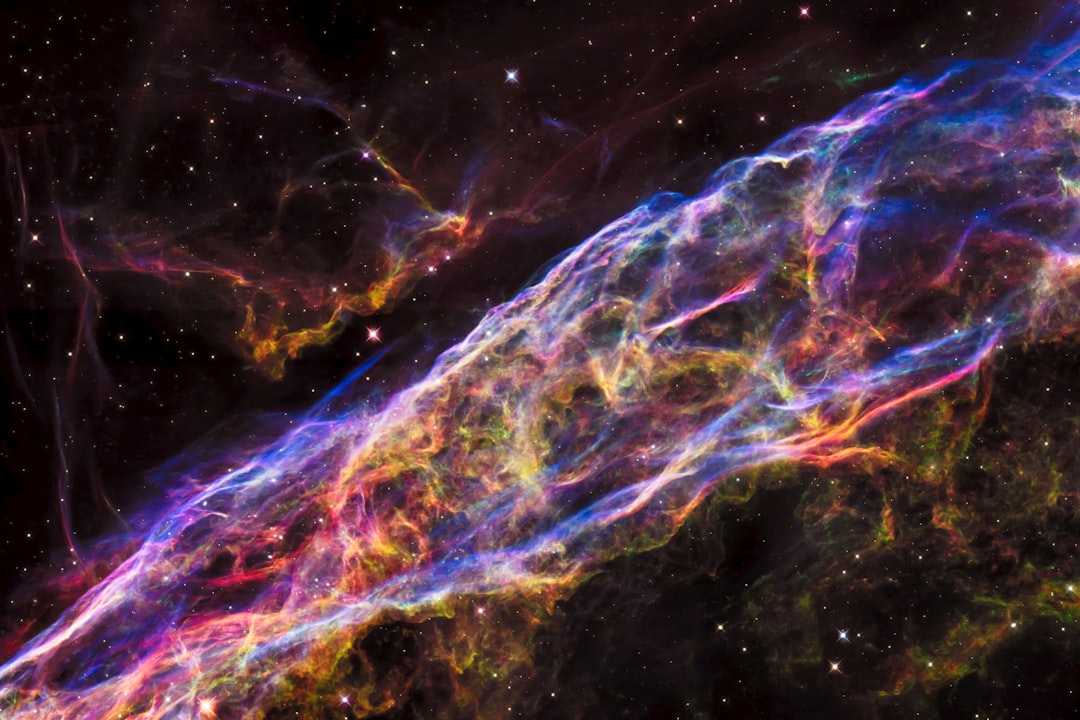
The successful classification of four supernovae during this test run highlights the system's capability to advance one of astronomy's most critical research areas. The detected supernovae included one Type II, one candidate Type Ic, and two Type Ia events—each representing fundamentally different physical processes and offering unique scientific insights.
Type II supernovae mark the catastrophic deaths of massive stars that retain their hydrogen-rich outer envelopes until the moment of explosion. These stellar behemoths, typically eight to fifty times the Sun's mass, end their lives when nuclear fusion can no longer support their cores against gravitational collapse. The resulting explosion releases as much energy in a few weeks as the Sun will emit over its entire 10-billion-year lifetime.
Type Ic supernovae also originate from massive stars, but these progenitors have shed their outer hydrogen and helium layers before exploding—either through powerful stellar winds or through mass transfer to a companion star. These "stripped-envelope" supernovae provide crucial information about stellar evolution in binary systems and the complex interactions between orbiting stars.
Perhaps most significant for cosmology are the two Type Ia supernovae detected during the test campaign. These explosions occur when white dwarf stars—the dense remnants of Sun-like stars—accrete material from companion stars until reaching a critical mass threshold. The remarkable uniformity of Type Ia explosions makes them invaluable as "standard candles" for measuring cosmic distances. Indeed, observations of distant Type Ia supernovae in the late 1990s provided the first compelling evidence that the universe's expansion is accelerating, a discovery that revealed the existence of Dark Energy and earned the 2011 Nobel Prize in Physics.
Measuring the Universe's Expansion
The ability to rapidly detect and characterize Type Ia supernovae holds profound implications for refining measurements of the Hubble-Lemaître Constant—the rate at which the universe expands. Current measurements of this fundamental parameter show a troubling discrepancy, with values derived from observations of the early universe differing from those obtained through local distance measurements. This "Hubble tension" represents one of the most pressing puzzles in modern cosmology, potentially signaling new physics beyond our current understanding.
By detecting supernovae earlier in their evolution and obtaining more comprehensive observational data through rapid follow-up, the Rubin alert system could help resolve this cosmic conundrum. Early-time observations prove particularly valuable, as they capture the initial shock breakout and provide constraints on the progenitor system that are impossible to obtain from later observations.
Technological Triumph: Validating a Decade of Development
"The time-domain community, including NOIRLab, has been building the infrastructure needed to do efficient follow-up from Rubin alerts for over ten years, and it is very rewarding to see the entire ecosystem working as we had envisioned. Lessons learned from the demonstration will be used to improve the systems that we will provide to the community," said Bryan Miller, lead for science operations development at Gemini Observatory.
This statement from Miller underscores the extraordinary planning and coordination required to create such a responsive observational system. The successful end-to-end demonstration represents the culmination of intensive software development, algorithm refinement, and inter-institutional collaboration spanning more than a decade.
The validation campaign also revealed areas for optimization and improvement. The team identified bottlenecks in data processing pipelines, refined alert classification algorithms based on real-world performance, and adjusted observation scheduling strategies to maximize efficiency. These insights will prove invaluable as the system scales up to handle the full flood of alerts expected during LSST operations.
Looking Forward: A New Era of Time-Domain Astronomy
The implications of this successful demonstration extend far beyond the four supernovae detected during the test run. Once the LSST begins in earnest, the Rubin Observatory will revolutionize our ability to study the dynamic universe, detecting and characterizing billions of transient events over its ten-year mission lifetime.
The scientific opportunities are staggering in their breadth and depth. Beyond supernovae, the alert system will enable rapid follow-up of:
- Gravitational wave counterparts: Electromagnetic signals associated with colliding neutron stars and black holes detected by LIGO and Virgo observatories, providing multi-messenger insights into extreme physics
- Tidal disruption events: Stars torn apart by supermassive black holes, illuminating the properties of these cosmic monsters and their surrounding environments
- Fast-evolving transients: Mysterious rapid explosions that challenge our understanding of stellar death and exotic physics
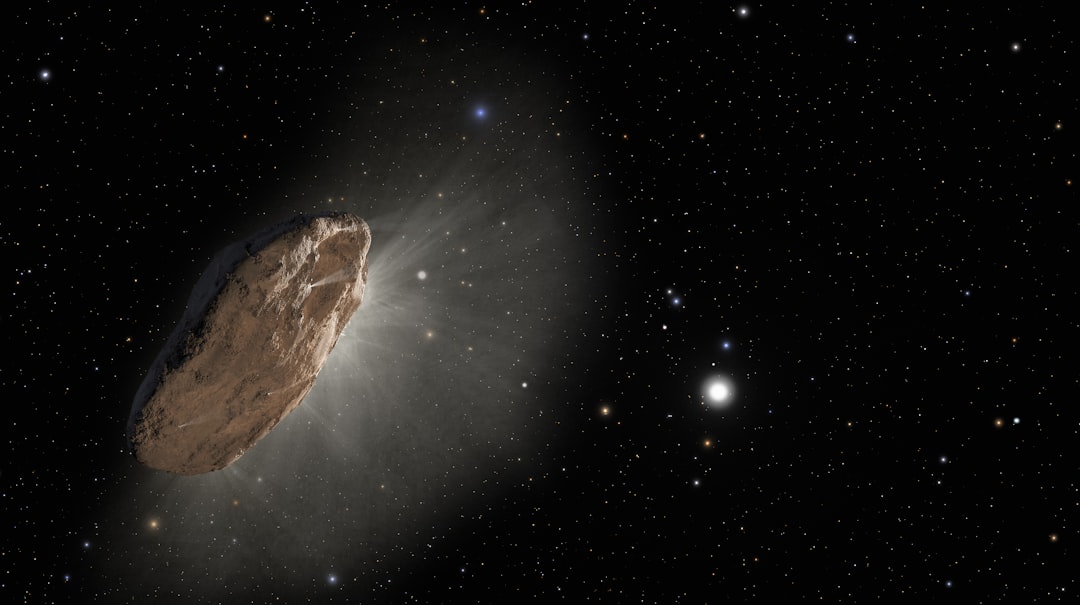
- Interstellar objects: Visitors from other solar systems like 'Oumuamua and Borisov, offering glimpses of planetary formation in distant stellar systems
- Near-Earth asteroids: Potentially hazardous objects requiring rapid characterization for planetary defense
Preparing for the Data Deluge
As the astronomical community prepares for the unprecedented data volume from Rubin Observatory, the successful validation of the alert ecosystem provides confidence that the infrastructure can handle the challenge. The system's ability to automatically process, classify, and coordinate follow-up observations will be essential for extracting maximum scientific value from the survey.
Moreover, the open-access philosophy underlying the LSST ensures that astronomers worldwide—from major research institutions to small colleges—will have access to these alerts and the opportunity to participate in follow-up campaigns. This democratization of access to cutting-edge astronomical data promises to accelerate discovery and broaden participation in frontier research.
The recent demonstration also highlights the critical importance of international collaboration in modern astronomy. No single institution or nation possesses all the resources necessary to fully exploit the scientific potential of facilities like Rubin Observatory. The AEON network exemplifies how coordinated global efforts can achieve scientific outcomes impossible for any individual observatory.
Implications for Fundamental Physics and Cosmology
Beyond cataloging cosmic phenomena, the Rubin alert system will contribute to addressing some of the deepest questions in physics. The systematic detection and characterization of thousands of Type Ia supernovae will enable unprecedented precision in mapping the universe's expansion history, potentially revealing subtle deviations from predictions of the standard cosmological model that could point toward new physics.
Similarly, the detection of rare transient events—perhaps including entirely new classes of phenomena not yet imagined—could provide crucial insights into extreme physics inaccessible in terrestrial laboratories. The universe serves as the ultimate experimental facility, with energies and conditions that dwarf anything achievable on Earth, and systematic surveys like LSST offer our best opportunity to discover and study these natural experiments.
As the Rubin Observatory transitions from commissioning to full operations, the astronomical community stands on the threshold of a transformative era in time-domain astronomy. The successful validation of the alert follow-up ecosystem demonstrates that the technological infrastructure is ready to meet this challenge, ensuring that fleeting cosmic events will be captured, characterized, and understood before they fade from view. The four supernovae detected during this test run represent merely the first drops in what will become a flood of discovery, fundamentally reshaping our understanding of the dynamic universe.