Nearby "Super-Earth" Could Host Life After All: A Revised Look at GJ 3378b
In 2024, astronomers made a tantalizing discovery just around the corner in cosmic terms: a rocky exoplanet designated GJ 3378b, orbiting a dim red dwarf star a mere 25 light-years from Earth, in the direction of the northern constellation Camelopardalis (the Giraffe). Initial observations based on radial velocity measurements suggested the planet was roughly five times as massive as Earth — a hefty Super-Earth whose crushing surface conditions seemed to rule out any prospect of habitability. Now, thanks to a painstaking revised analysis led by researchers from the University of California, Irvine (UC Irvine), the picture has changed dramatically. The planet now appears to be just 2.3 times Earth's mass, and — crucially — it may reside squarely within its star's habitable zone (HZ), the region around a star where liquid water could theoretically exist on a planetary surface.
The implications are profound. At 25 light-years away, GJ 3378b ranks among the closest potentially habitable worlds ever identified, placing it firmly on the shortlist of targets for next-generation telescopes that will attempt to directly image exoplanets and search for the chemical fingerprints of life.
The Research Team and Their Instruments
The new analysis was spearheaded by Paul Robertson, an Associate Professor of Physics and Astronomy at UC Irvine, who led a broad, multi-institutional collaboration. His team included researchers from the Center for Planetary Systems Habitability at the University of Texas, the Astrophysics & Space Institute, the Anton Pannekoek Institute for Astronomy, the Center for Exoplanets and Habitable Worlds, the Astrobiology Research Center, the NSF National Optical-Infrared Astronomy Research Laboratory, NASA's Jet Propulsion Laboratory (JPL), NASA's Goddard Space Flight Center, and numerous universities and research institutes worldwide.
Central to this work is a specialized instrument known as the Habitable-zone Planet Finder (HPF), mounted on the Hobby-Eberly Telescope at McDonald Observatory in Texas. Since its commissioning in 2018, the HPF has become one of the most powerful tools in the exoplanet hunter's arsenal, specifically engineered to detect Earth-mass and Super-Earth-mass planets orbiting cool, dim red dwarf stars.
"Our mantra is 'follow the water.' It's the one thing every known living thing on Earth needs, so that's the first thing we look for when trying to find environments that could sustain life. The Habitable-zone Planet Finder is optimized to use infrared light. As stars get smaller, they get cooler, and most of their energy comes out in infrared wavelengths. So, we put an infrared spectrometer on a 10-meter telescope, and that gives us more raw light-collecting power to observe these faint stars." — Paul Robertson, UC Irvine
The HPF detects planets using the radial velocity method, which measures tiny, periodic shifts in a star's spectral lines caused by the gravitational tug of an orbiting planet. As a planet orbits, it causes its host star to "wobble" slightly — moving alternately toward and away from Earth. These Doppler shifts are extraordinarily subtle for small rocky planets, requiring instrumentation of exceptional stability and precision operating in the near-infrared portion of the electromagnetic spectrum.
"The name of the game is precision. In order to find those low-mass planets, you're always looking for tiny signals. If your instruments aren't precise enough, you won't find them. You can't find them." — Michael Endl, Center for Planetary Systems Habitability, University of Texas, Austin
Why Red Dwarf Stars Matter
Red dwarf stars — also known as M-dwarf stars — are the most abundant stellar type in the known universe, accounting for an estimated 70% to 75% of all stars in the Milky Way and up to 90% of stars in elliptical galaxies. Their sheer numerical dominance makes them statistically important targets in humanity's search for habitable worlds. Observations have further revealed that M-dwarfs are remarkably efficient at forming rocky, terrestrial planets, and that these planets frequently orbit within or near the stellar habitable zone — a consequence of the HZ being much closer in for these cool, low-luminosity stars.
However, red dwarfs are a double-edged sword for habitability. They are notoriously magnetically active, prone to powerful stellar flares that can bombard close-orbiting planets with intense ultraviolet and X-ray radiation. This energetic activity can erode planetary atmospheres over geological timescales, potentially stripping away the very conditions needed for life. Furthermore, planets orbiting within the HZ of a red dwarf are so close to their star that they are likely subject to tidal locking — one hemisphere permanently facing the star in perpetual daylight while the other freezes in eternal night. Whether life could endure, or even thrive, under such conditions remains one of the most actively debated questions in astrobiology.
- Prevalence: Red dwarfs make up ~70–75% of all stars in the Milky Way galaxy.
- Rocky planet hosts: Observational evidence suggests M-dwarfs frequently host terrestrial planets within their habitable zones.
- Habitable zone proximity: For a typical red dwarf, the HZ lies between roughly 0.1 and 0.4 AU — far closer than Earth's 1 AU orbit around the Sun.
- Stellar activity: Frequent flares and elevated UV/X-ray output pose significant challenges to atmospheric retention and surface habitability.
- Tidal locking: Close-in planets are likely tidally locked, creating extreme temperature contrasts between hemispheres.
Despite these challenges, red dwarfs remain a primary focus of NASA's exoplanet research programs precisely because of their abundance and the relative ease with which their planets can be detected and characterized compared to Sun-like stars.
A Planet Reborn: Revising the Mass and Orbit of GJ 3378b
When GJ 3378b was first announced in 2024, it carried a sobering profile. Estimated at roughly five Earth masses, it fell into the category of a dense, massive Super-Earth. While such a planet could theoretically hold onto an atmosphere — and a thick one at that — the resulting surface pressure would be crushing, and the dense gaseous envelope would likely create a runaway greenhouse effect akin to Venus, or worse. Habitability seemed remote.
Robertson's team undertook an exhaustive re-analysis of the HPF data, applying refined stellar activity corrections to disentangle the subtle planetary signal from the star's own variability — a notoriously tricky problem when working with active red dwarfs. The result was a significantly reduced mass estimate: approximately 2.3 times Earth's mass. This places GJ 3378b in a much more promising regime. A planet of this size and mass is far more likely to be a true rocky world, analogous to a larger version of Earth or Venus, rather than a dense mini-Neptune blanketed by a thick, crushing hydrogen-helium envelope.
Equally important was the revision of the planet's orbital period — from an initial estimate of approximately 25 days down to 21 days. While this might seem counterintuitive (a shorter orbit means the planet is closer to its star), for a cool red dwarf, a 21-day orbital period places the planet comfortably within the habitable zone — the "Goldilocks region" where surface temperatures could permit liquid water. This is in stark contrast to our own Solar System, where Earth's 365-day orbit around the much more luminous Sun keeps us in the HZ at a distance of approximately 150 million kilometers (1 AU).
A Delicate Balance: Habitability Versus Atmospheric Loss
The revised orbital period brings good news and a cautionary note in equal measure. A closer orbit around an active red dwarf means the planet is exposed to higher levels of stellar radiation and energetic particle flux. Depending on the strength of any planetary magnetic field and the history of the star's flare activity, this radiation environment could gradually erode or completely strip away an atmosphere — eliminating the very conditions that make surface liquid water possible.
Conversely, a planet of 2.3 Earth masses may possess sufficient gravity to retain a secondary atmosphere even under moderate bombardment, particularly if volcanic outgassing continuously replenishes atmospheric gases. The relationship between planetary mass, magnetic field strength, stellar activity, and atmospheric longevity is one of the central unsolved problems in planetary science. GJ 3378b, sitting at the nexus of these competing forces, represents an ideal natural laboratory in which to study them.
Scientists also note an intriguing parallel with Proxima Centauri b, the closest known exoplanet to Earth at just 4.2 light-years, which similarly orbits within the habitable zone of a red dwarf and faces comparable questions about atmospheric survival and tidal locking. ESO's announcement of Proxima Centauri b in 2016 galvanized the field and demonstrated that habitable-zone rocky planets around red dwarfs are not merely theoretical constructs — they exist, and they are nearby.
The Road Ahead: Next-Generation Observatories
Confirming the nature and potential habitability of GJ 3378b will require observations beyond the current state of the art. Fortunately, an unprecedented generation of astronomical facilities is nearing completion, and GJ 3378b — precisely because of its proximity — will be among their prime targets.
- Giant Magellan Telescope (GMT): Under construction in Chile's Atacama Desert, the GMT will feature a primary mirror equivalent to 24.5 meters in diameter, offering extraordinary light-collecting power and angular resolution for direct imaging studies.
- Extremely Large Telescope (ELT): ESO's ELT, also under construction in Chile, will boast a 39-meter segmented primary mirror — the largest optical/near-infrared telescope ever built — capable of capturing light directly from nearby rocky exoplanets.
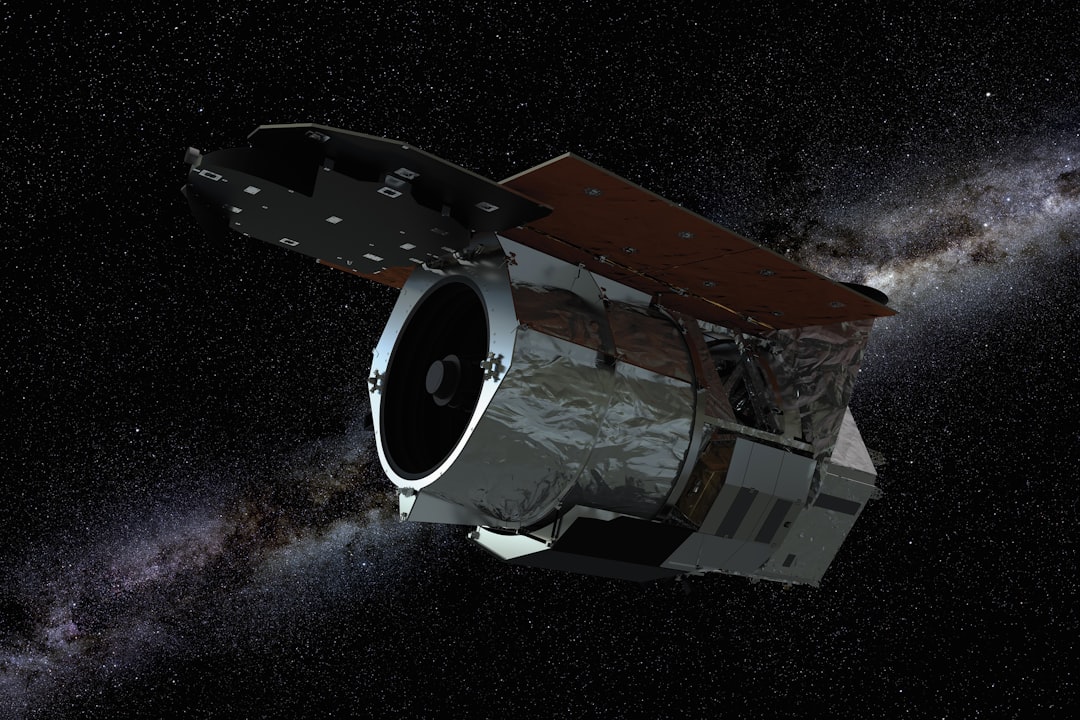
- Habitable Worlds Observatory (HWO): A future NASA flagship space telescope concept designed specifically to directly image Earth-like planets in the habitable zones of Sun-like stars, and to spectroscopically analyze their atmospheres for biosignatures.
These observatories will deploy a suite of advanced technologies — including adaptive optics (AO) systems to correct for atmospheric blurring, coronagraphs to block the overwhelming glare of the host star, and high-resolution spectrometers to dissect the chemical composition of planetary atmospheres. Crucially, GJ 3378b's proximity to Earth makes it an especially favorable target: the angular separation between the planet and its host star on the sky, though still tiny, will be larger than for more distant systems, improving the prospects for direct detection.
Researchers will specifically search for biosignatures — chemical species in a planet's atmosphere whose presence in combination would be difficult to explain by purely geological or chemical processes and thus would hint strongly at biological activity. Key biosignature gases include oxygen (O₂), ozone (O₃), methane (CH₄), and nitrous oxide (N₂O), particularly when detected together in a thermodynamic disequilibrium. The detection of any such combination in GJ 3378b's atmosphere would represent one of the most transformative scientific discoveries in human history.
"The ultimate goal is biosignatures. We really want to know, 'Are we alone in the universe?' We are still in the reconnaissance phase of our solar neighborhood, trying to find the planets around the nearest stars because those will be the easiest ones to detect a biosignature on. This planet brings us one step closer to knowing all of our neighbors and, ultimately, which might be hospitable for life." — Michael Endl, University of Texas, Austin
Building the Catalog of Nearby Habitable Worlds
GJ 3378b does not stand alone. The HPF instrument has, since 2018, been systematically building a catalog of potentially habitable planets around nearby red dwarf stars — a reconnaissance survey of our stellar neighborhood that will serve as the primary target list for next-generation direct imaging missions. Each new planet added to this catalog, particularly those as close as 25 light-years, represents a milestone in humanity's long search for a second living world.
The work also underscores the critical importance of precision instrumentation and careful data analysis. As the GJ 3378b story illustrates, a planet dismissed as too massive and inhospitable can be rehabilitated into a genuine habitability candidate through improved methodology — a reminder that our current census of potentially habitable worlds may be systematically underestimating the frequency and diversity of life-friendly environments in our galactic backyard.
For further reading on exoplanet research and the search for habitable worlds, visit the NASA Exoplanet Exploration program and the McDonald Observatory at the University of Texas at Austin.