NASA's Hubble Space Telescope Marks Its 200,000th Orbit by Witnessing a Gravitationally Lensed Supernova
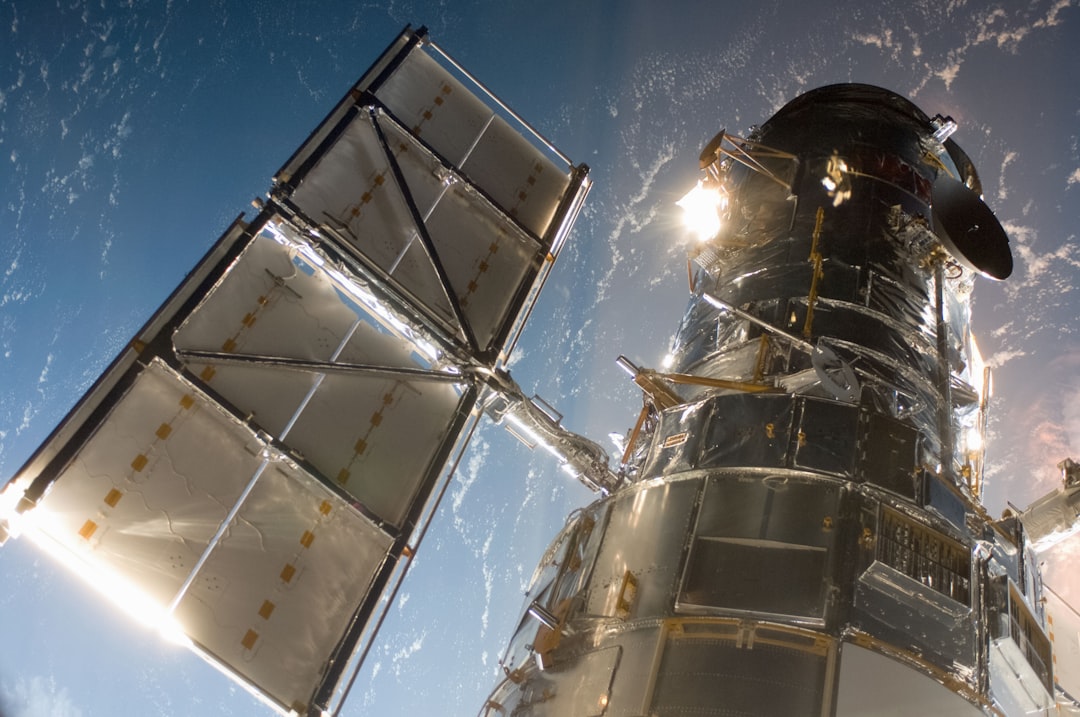
On Saturday, September 19, 2025, the iconic Hubble Space Telescope completed its 200,000th orbit of Earth, cementing yet another extraordinary milestone in the storied history of this venerable space observatory. Over the course of its remarkable career, Hubble has traveled more than 8 billion kilometers (5 billion miles) through space, gathered in excess of 1.7 million individual observations of the Universe, and fundamentally reshaped our understanding of the cosmos. Earlier this year, the telescope also celebrated its thirty-sixth year of continuous science operations — a longevity that exceeds even the International Space Station by approximately nine years, a testament to the enduring engineering excellence and dedicated stewardship of the mission.
"Hubble has fundamentally changed our understanding of the Universe, from the age of the cosmos to the existence of dark energy. Its 200,000th orbit is a reminder that great science has no expiration date." — NASA Hubble Mission Team
What makes this milestone particularly poetic is the nature of the observation Hubble performed on the very day it crossed this historic threshold. In keeping with the central scientific legacy for which the telescope was named — the precise measurement of the expansion rate of the Universe, known as the Hubble Constant (H₀) — astronomers directed the observatory toward one of the most compelling targets in the modern era of cosmology: a massive galaxy cluster serving as a natural gravitational lens around a distant, exploding star.
The Target: Galaxy Cluster MACS J0417
The subject of Hubble's landmark 200,000th-orbit observation is MACS J0417, a colossal galaxy cluster situated approximately 4.65 billion light-years from Earth in the southern constellation Eridanus. Galaxy clusters of this scale are among the most massive gravitationally bound structures in the known Universe, containing hundreds to thousands of individual galaxies, vast reservoirs of hot intracluster gas, and enormous quantities of dark matter — the invisible substance that accounts for roughly 27% of the Universe's total energy content.
It is precisely the immense mass of MACS J0417 that makes it so scientifically valuable. According to Einstein's General Theory of Relativity, mass warps the fabric of spacetime, causing light from more distant background objects to bend around foreground structures. This phenomenon — known as gravitational lensing — effectively transforms massive galaxy clusters into natural cosmic telescopes, magnifying and distorting light from objects that would otherwise be far too faint or distant to observe directly. The study of such lensing systems is a cornerstone of modern observational cosmology, enabling astronomers to probe structures and events at the very frontier of the observable Universe.
- Cluster designation: MACS J0417 (Massive Cluster Survey catalog)
- Distance from Earth: ~4.65 billion light-years
- Host constellation: Eridanus
- Role: Acts as a powerful gravitational lens, magnifying background sources
- Scientific value: Enables mass distribution mapping and Hubble Constant refinement
Rediscovering Supernova Athena: A Cosmic Detective Story
At the heart of this observation campaign lies Supernova Athena, a stellar explosion first detected by the James Webb Space Telescope (JWST) in the course of its deep field surveys. Supernovae of a specific class — known as Type Ia supernovae — are among the most powerful tools available to cosmologists. Because Type Ia supernovae arise from the thermonuclear detonation of white dwarf stars that have accreted mass up to a near-uniform threshold (the Chandrasekhar limit of approximately 1.4 solar masses), they explode with a remarkably consistent intrinsic luminosity. This predictability allows astronomers to use them as "standard candles" — objects of known brightness that can be compared to their observed brightness to calculate precise cosmic distances spanning hundreds of millions to billions of light-years.
After JWST's initial detection of Supernova Athena, the explosion faded from view as expected. However, the laws of gravitational optics offer a remarkable second chance. Because the gravitational field of MACS J0417 bends light traveling along multiple distinct paths, photons from the same event can reach Earth at measurably different times — a phenomenon known as time-delay gravitational lensing. This means Supernova Athena is predicted to reappear in a new location within the lensed field, potentially visible again somewhere between now and early March 2027.
Hubble will maintain a vigilant watch over MACS J0417 throughout this window, scanning for the supernova's reemergence in a different region of the image. This kind of "supernova rerun" is extraordinarily rare and scientifically invaluable — the most celebrated prior example being Supernova Refsdal, which was predicted and subsequently confirmed to reappear by Hubble in 2015, validating our models of gravitational lensing with extraordinary precision. You can learn more about lensed supernovae research through the HubbleSite official resource.
Unlocking the Hubble Constant Through Cosmic Timing
The scientific payoff from observing Supernova Athena's reappearance extends far beyond the spectacle itself. By precisely measuring the time delay between the supernova's multiple appearances — caused by light traveling different path lengths through the warped spacetime around MACS J0417 — astronomers can construct a detailed model of the cluster's mass distribution, including the contribution of its dark matter halo. These mass maps are critical inputs for one of the most pressing debates in contemporary astrophysics.
Furthermore, through parallax measurements derived from observing the supernova from slightly different vantage points in its lensed images, scientists can independently measure the recessional velocity of the background galaxy — that is, the speed at which cosmic expansion is carrying it away from us. These measurements feed directly into refining the Cosmic Distance Ladder, the hierarchical framework of overlapping distance measurement techniques that ultimately anchors our best estimates of the Hubble Constant.
The Hubble Constant — denoted H₀ and expressed in units of kilometers per second per megaparsec (km/s/Mpc) — describes how rapidly the Universe is expanding. Currently, a significant and unresolved discrepancy exists between two primary methods of measuring H₀: measurements of the Cosmic Microwave Background by the ESA Planck mission yield a value of approximately 67.4 km/s/Mpc, while measurements using the local distance ladder (including Cepheid variable stars and Type Ia supernovae) consistently return values closer to 73 km/s/Mpc. This discrepancy — known as the "Hubble Tension" — represents one of the most significant outstanding problems in modern cosmology, and lensed supernovae like Athena may provide an entirely independent, complementary measurement that helps resolve it.
"The Hubble Tension is not merely a technical dispute about numbers — it may be pointing us toward entirely new physics beyond our current cosmological model. Lensed supernovae offer one of our sharpest tools to cut through the ambiguity."
A Symphony of Space Observatories
One of the most exciting dimensions of this observing campaign is the complementary partnership between Hubble and JWST. While Webb originally detected Supernova Athena using its unparalleled sensitivity to infrared light — ideal for probing the most distant, redshifted objects in the Universe — Hubble brings its own irreplaceable strengths to the table. Hubble's precision instruments operate primarily in visible and ultraviolet wavelengths, enabling detailed studies of stellar populations, interstellar dust, and the fine morphological structure of lensed arcs and multiple images that Webb's longer infrared wavelengths cannot resolve with the same clarity.
This symbiotic relationship between the two flagship observatories exemplifies the broader strategy of multi-wavelength astronomy — the understanding that no single telescope can reveal all of the Universe's secrets, and that the cosmos is best understood by combining observations across the full electromagnetic spectrum. To explore JWST's capabilities and current science programs, visit the Space Telescope Science Institute's JWST portal.
This scientific partnership is poised to grow even richer in the near future. The Nancy Grace Roman Space Telescope, currently scheduled to commence science operations in early 2027, will add another powerful dimension to this observational arsenal. Roman's extraordinarily wide field of view — approximately 100 times that of Hubble's infrared camera — will enable large-scale surveys capable of detecting thousands of Type Ia supernovae across cosmic time, dramatically increasing the statistical power available to constrain the Hubble Constant and illuminate the nature of dark energy.
Thirty-Six Years of Transformative Science
As Hubble surpasses its 200,000th orbit, it is worth pausing to appreciate the sheer breadth of its contributions to human knowledge. Launched aboard the Space Shuttle Discovery on April 24, 1990, the telescope has survived a famously flawed mirror, a bold spacewalk repair mission in 1993, four subsequent servicing missions, and the cancellation of a planned fifth servicing flight — emerging from each challenge more capable than before. Among its landmark achievements:
- Provided key evidence for the accelerating expansion of the Universe, leading to the discovery of dark energy and the 2011 Nobel Prize in Physics
- Refined the age of the Universe to approximately 13.8 billion years through precise Hubble Constant measurements
- Revealed that supermassive black holes reside at the centers of virtually all large galaxies
- Captured the iconic Hubble Deep Field images, revealing thousands of previously unknown galaxies in a seemingly blank patch of sky
- Enabled the detailed characterization of exoplanet atmospheres through transmission spectroscopy
- Documented the evolution of galaxies across billions of years of cosmic history
After more than three and a half decades in orbit, Hubble's watch over the cosmos continues without pause. Its 200,000th orbit — marked not by ceremony but by science, not by rest but by the patient search for a reappearing supernova — is perhaps the most fitting tribute imaginable to an observatory that has spent its entire existence expanding the horizons of human understanding. For the latest news and imagery from the mission, visit the NASA Hubble Space Telescope official page.
As long as Supernova Athena remains hidden in the warped light of MACS J0417 — and as long as Hubble remains vigilant in its watch — the Universe continues to offer up its secrets, one extraordinary orbit at a time.