A groundbreaking NASA-supported investigation is reshaping our understanding of how Earth acquired the fundamental building blocks necessary for life to emerge on our planet. This revolutionary research, conducted by scientists at Rice University's Department of Earth, Environmental and Planetary Sciences and published in the prestigious journal Science Advances, suggests that the gas giant Jupiter played a pivotal role in determining which chemical ingredients reached the early Earth—and challenges long-held assumptions about the cosmic delivery system that made life possible.
For decades, the prevailing scientific consensus has maintained that life-essential elements (LEEs) arrived on Earth primarily through bombardment by comets and asteroids originating from the outer reaches of our Solar System. This model, tied to the Late Heavy Bombardment period that occurred between 4.1 and 3.8 billion years ago, has now been called into question by compelling new evidence. The Rice University team's findings indicate that our planet's inventory of critical elements like phosphorus and nitrogen—both absolutely essential for the chemistry of life—came predominantly from the inner Solar System, with Jupiter's massive gravitational influence serving as the cosmic gatekeeper that determined their distribution.
This paradigm shift has profound implications not only for understanding Earth's unique path to habitability but also for assessing the potential for life on exoplanets orbiting distant stars. The research suggests that the presence of a Jupiter-like giant planet in a solar system may be a crucial factor in creating the right chemical conditions for life to emerge on rocky, terrestrial worlds.
The Ancient Mystery of Life's Chemical Origins
The question of how life emerged from non-living matter approximately 4 billion years ago remains one of the most captivating puzzles in all of science. While paleontological evidence and geological records have conclusively demonstrated that life began on Earth's seafloor—likely around hydrothermal vents where mineral-rich superheated water provided both energy and chemical building blocks—the precise mechanisms by which our planet acquired its life-enabling chemistry have remained frustratingly unclear.
All known life on Earth requires the same fundamental suite of elements, collectively known by the memorable acronym CHNOPS: carbon, hydrogen, nitrogen, oxygen, phosphorus, and sulfur. These elements didn't exist in the early universe; they were forged through stellar nucleosynthesis in the cores of the first generation of massive stars, known as Population III stars. When these stellar giants exhausted their nuclear fuel and exploded as supernovae after relatively brief lifespans of mere tens of millions of years, they scattered these newly-created heavy elements throughout the cosmos in vast clouds of gas and dust.
Approximately 4.6 billion years ago, our Sun formed from one such enriched nebula, with the remaining material gradually coalescing into a circumstellar disk that eventually gave birth to the planets, moons, asteroids, and comets that populate our Solar System today. Understanding exactly how and when Earth received its particular complement of life-essential elements has been a central challenge for planetary scientists and astrobiologists.
Traditional Models and Their Limitations
The conventional theoretical framework has long attributed Earth's acquisition of LEEs to carbonaceous chondrites—primitive stony meteorites that formed in the outer Solar System between two and four million years after the first solid materials condensed from the solar nebula. These ancient rocks, which still fall to Earth today, contain significant quantities of organic compounds and volatile elements, making them seemingly ideal candidates for delivering the ingredients necessary for life.
However, as the Rice University research team points out, this timeline presents a significant problem. The accretion age of chondrites—the period when they formed—occurred millions of years after Earth's initial formation had already begun. This temporal mismatch raises serious questions about whether these outer Solar System objects could have been the primary source of Earth's earliest inventory of life-essential elements, particularly during the planet's formative stages when its fundamental chemical composition was being established.
Meteorites recovered on Earth fall into two broad categories, each originating from planetesimals that formed at distinctly different times in Solar System history. Iron meteorites, composed primarily of metallic iron-nickel alloys, come from the oldest generation of planetesimals that formed within the first million years after the solar nebula began to condense. Stony chondrites, by contrast, represent a second generation that appeared 2-3 million years later and constitute the vast majority of meteorites found on our planet's surface today.
Jupiter's Gravitational Gateway: A Revolutionary Discovery
To resolve these contradictions and develop a more accurate picture of early Solar System chemistry, the research team employed a sophisticated combination of laboratory experiments and geochemical modeling. Their innovative approach involved reconstructing a detailed map of phosphorus-to-nitrogen (P/N) ratios across different regions of the early Solar System during two distinct epochs of planetesimal formation.
The results revealed a striking and unexpected pattern. During the first generation of planetesimal formation, objects in the outer Solar System exhibited higher P/N ratios, with these ratios decreasing progressively toward the inner Solar System. However, this trend completely reversed during the second generation, when chondrite-forming planetesimals in the inner Solar System displayed higher P/N ratios than their outer Solar System counterparts.
The team's analysis points to a single, dramatic explanation for this reversal: the formation and growth of Jupiter. As the massive gas giant coalesced and rapidly accumulated mass, its powerful gravitational field fundamentally altered the dynamics of material flow throughout the Solar System. During the first generation of planetesimal formation, an outward flow of material from the inner to outer Solar System elevated P/N ratios in the outer regions. But once Jupiter achieved sufficient mass, its gravity effectively created a barrier that restricted the movement of phosphorus and nitrogen from the inner to outer Solar System.
"For our own solar system, Jupiter's presence and growth history, indeed, seem to have played a critical role in determining the distribution of the basic chemical ingredients necessary for habitable worlds. It remains an open question whether a life-essential element budget similar to Earth's can be established without a Jupiter-like planet in the population," explained Dr. Rajdeep Dasgupta, senior author of the study and professor at Rice University.
Implications for Earth's Geochemical Evolution
The research team's findings are further reinforced by sophisticated geochemical accretion models that simulate how Earth accumulated material during its formation. These models demonstrate that Earth's present-day P/N signature—the specific ratio of phosphorus to nitrogen found in our planet's rocks and atmosphere—is best reproduced by assuming that the dominant source of these elements came from inner Solar System planetesimals, regardless of whether those planetesimals were iron-rich bodies from the first generation or chondritic objects from the second generation.
This conclusion represents a fundamental departure from previous models and carries several important implications:
- Early Chemical Delivery: Earth likely acquired its essential phosphorus and nitrogen inventory very early in its formation history, potentially within the first few million years, rather than through later bombardment from outer Solar System objects
- Jupiter's Protective Role: The gas giant's gravitational influence may have protected the inner Solar System from excessive volatile delivery while simultaneously concentrating life-essential elements in the region where terrestrial planets formed
- Inner Solar System Diversity: The chemical diversity among inner Solar System planetesimals was sufficient to provide Earth with the complete suite of elements necessary for life, without requiring contributions from more distant regions
- Planetary Architecture Matters: The specific configuration of a planetary system—particularly the presence, mass, and orbital characteristics of giant planets—may be a critical factor in determining whether rocky planets receive appropriate chemical inventories for life
The Broader Context of Solar System Formation
To fully appreciate the significance of these findings, it's essential to understand the chaotic and dynamic nature of the early Solar System. During the first several hundred million years after the Sun's formation, the nascent planetary system was a far more turbulent environment than the relatively stable configuration we observe today. Planetesimals and protoplanets engaged in countless collisions, with gravitational interactions between growing bodies constantly reshuffling orbital configurations.
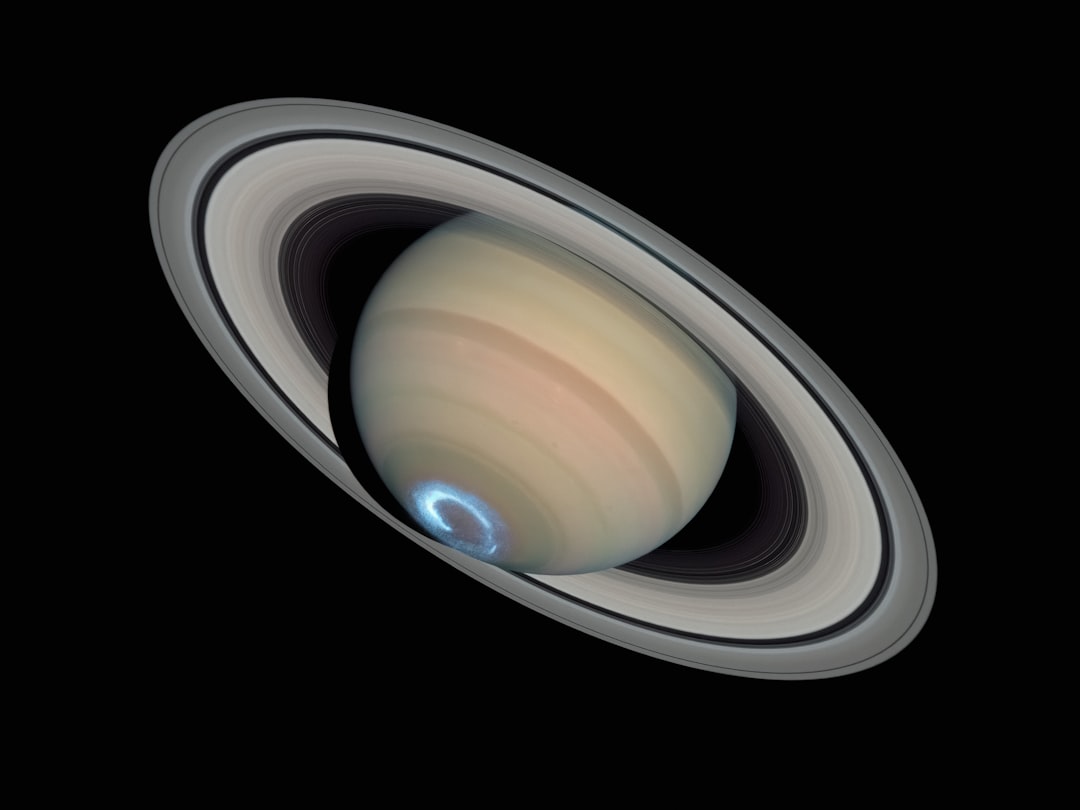
The formation of the giant planets, particularly Jupiter and Saturn, had profound effects on this early chaos. Computer simulations of Solar System evolution suggest that Jupiter may have migrated inward toward the Sun during its early growth phase before subsequently moving outward to its current orbit—a phenomenon known as planetary migration. This migration would have dramatically affected the distribution of smaller bodies throughout the Solar System, potentially scattering some objects into the inner system while ejecting others to distant regions or even out of the Solar System entirely.
The new research adds another layer to this complex picture by demonstrating that Jupiter's gravitational influence didn't just affect the locations of planetesimals but also fundamentally shaped their chemical compositions by controlling the flow of different elements between inner and outer regions of the forming planetary system.
Implications for Exoplanetary Science and Astrobiology
Perhaps the most exciting aspect of this research extends far beyond our own Solar System. As astronomers have discovered thousands of exoplanets orbiting other stars, a central question has emerged: which of these distant worlds might be capable of supporting life? The Rice University study suggests that the answer may depend critically on the architecture of the entire planetary system, not just the properties of individual planets.
The presence of a Jupiter-like giant planet in a solar system appears to play a crucial role in establishing the right chemical conditions for life on inner terrestrial worlds. This finding could help astronomers prioritize which exoplanetary systems to study most intensively in the search for biosignatures—signs of life in the atmospheres of distant planets. Systems with confirmed giant planets in Jupiter-like orbits might be particularly promising targets for future observations with next-generation telescopes.
However, as Dr. Dasgupta notes, it remains an open question whether Earth-like chemical inventories can be established in planetary systems lacking a Jupiter analog. Future theoretical work and observations of diverse exoplanetary systems will be necessary to determine whether Jupiter-mass planets are truly essential for creating habitable worlds, or whether alternative system architectures might achieve similar results through different mechanisms.
Unanswered Questions and Future Research Directions
While the new study provides compelling evidence regarding the sources of phosphorus and nitrogen, significant questions remain about the other life-essential elements. Carbon, hydrogen, oxygen, and sulfur each have their own complex delivery histories that may involve different source regions and timing. Future research will need to apply similar analytical techniques to trace the origins of these other critical elements.
Additionally, the study opens new avenues for understanding the Late Heavy Bombardment, a period roughly 3.9 billion years ago when the inner Solar System experienced intense bombardment by asteroids and comets. If Earth had already acquired most of its life-essential elements from inner Solar System sources before this bombardment, what role did the Late Heavy Bombardment play in Earth's chemical evolution? Did it primarily deliver water, as some models suggest, or did it make other important contributions to our planet's inventory of volatile elements?
The research team's findings also raise intriguing questions about the formation of other terrestrial planets in our Solar System. Did Mars and Venus receive similar chemical deliveries from inner Solar System sources? If so, why did these planets follow such different evolutionary paths? Comparative planetary science studies, informed by this new understanding of early Solar System chemistry, may help answer these questions.
Advanced Analytical Techniques and Methodology
The Rice University team's success in reconstructing ancient Solar System chemistry relied on sophisticated analytical techniques that combine multiple lines of evidence. Their laboratory experiments involved analyzing the isotopic compositions and elemental ratios in various types of meteorites, which serve as time capsules preserving information about conditions in different regions of the early Solar System.
By measuring subtle variations in phosphorus and nitrogen isotopes and comparing these signatures to those found in Earth's rocks, the researchers could trace the likely sources of these elements. The team also employed thermodynamic modeling to understand how these elements would have been distributed between different chemical phases—such as metallic cores versus silicate mantles—in planetesimals forming at different temperatures and pressures throughout the Solar System.
These models were then integrated with dynamical simulations of planetary accretion, which track how Earth accumulated material over millions of years of collisions with smaller bodies. The combination of geochemical constraints and dynamical modeling provides a powerful framework for testing hypotheses about the sources and timing of chemical delivery to the early Earth.
The Path Forward in Origins of Life Research
This research represents a significant step forward in understanding the chemical prerequisites for life's emergence, but it also highlights how much we still have to learn. The field of astrobiology increasingly recognizes that the origin of life depends on a complex interplay of factors: the right chemical ingredients, appropriate energy sources, suitable environmental conditions, and sufficient time for complex chemistry to develop.
Future missions to primitive bodies in our Solar System, such as comets and asteroids, will continue to provide crucial data about the distribution of organic compounds and life-essential elements in different regions. Sample return missions, like NASA's OSIRIS-REx mission to asteroid Bennu and JAXA's Hayabusa2 mission to asteroid Ryugu, are already providing unprecedented insights into the chemistry of primitive Solar System materials.
As our understanding of Solar System formation and evolution continues to advance, we move closer to answering one of humanity's most profound questions: How did life begin, and how common might it be in the universe? The revelation that Jupiter's gravitational influence helped shape the chemical conditions for life on Earth reminds us that the emergence of life may depend on a delicate balance of cosmic circumstances—a realization that makes our existence all the more remarkable and precious.