NASA Selects GIMLI Mission to Probe the Marius Hills Pit in Search of a Viable Lunar Base Site
The central ambition of NASA's Artemis Program extends well beyond the historic milestone of returning humans to the Moon for the first time since the Apollo Era. At its core, Artemis is designed to establish a "sustained program of lunar exploration and development" — a long-term human presence on and around the Moon that serves as both a scientific endeavor and a proving ground for future deep-space missions, including eventual crewed expeditions to Mars. To achieve this vision, planners must grapple with one of the most fundamental challenges of long-duration lunar surface operations: protecting astronauts and equipment from the Moon's hostile environment.
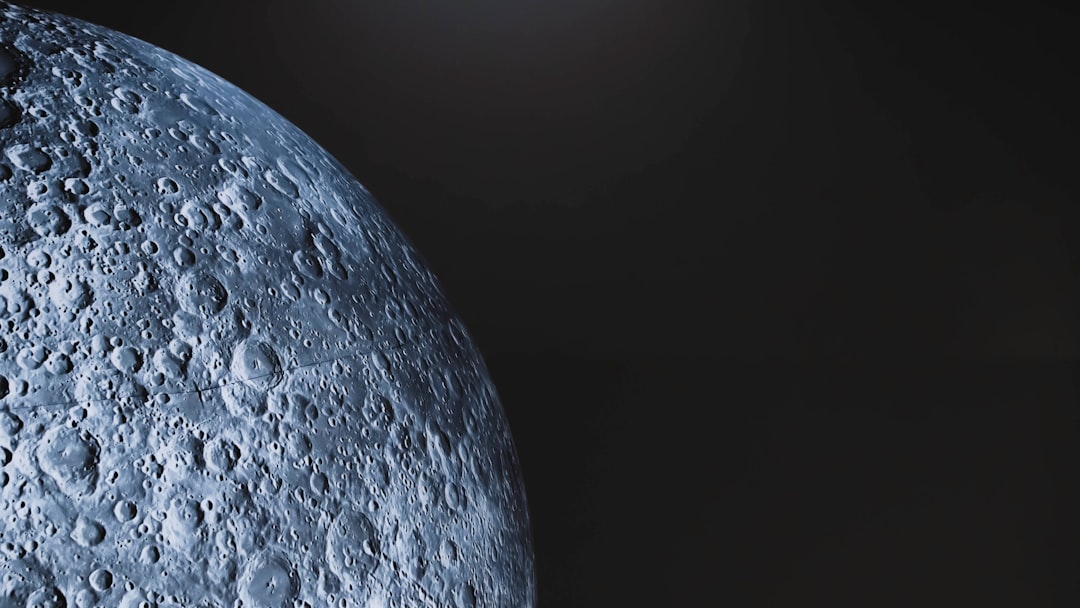
Unlike Earth, the Moon lacks a global magnetic field or a substantial atmosphere to shield its surface from solar radiation, cosmic rays, and micrometeorite impacts. Surface temperatures swing from roughly +127°C (261°F) during the lunar day to -173°C (-279°F) at night. These extreme conditions make the prospect of natural subsurface shelters — specifically, ancient lunar lava tubes — extraordinarily appealing to mission planners and planetary scientists alike. It is within this context that a bold new NASA-selected mission, GIMLI, takes on special significance.
What Is GIMLI?
The Geophysical Instruments for Marius Lunar pit Investigation (GIMLI) is a Planetary Science Institute (PSI)-led mission proposal that will conduct the first direct, surface-level investigation of a lunar pit, commonly referred to as a "skylight" — an opening in the roof of an ancient underground lava tube. The mission's primary target is the Marius Hills Pit (MHP), one of the most prominent and scientifically intriguing skylights on the lunar nearside, located within the volcanically diverse Oceanus Procellarum (the Ocean of Storms) region.
The overarching scientific goal of GIMLI is to determine whether a large, stable cave system extends beyond the opening of the MHP. If confirmed, such a subsurface cavity could represent an ideal natural habitat for future human lunar settlements — offering protection from radiation, thermal extremes, and micrometeorite bombardment with minimal need for artificial shielding infrastructure.
"GIMLI represents the type of ambitious planetary science that PSI was built to pursue. Than and his team are taking a scientific question we've been studying from orbit and have developed a way to investigate it directly on the Moon. We're excited to have PSI leading this effort and to be partnering with NASA and Honeybee Robotics to learn more about the Moon and its volcanic past."
The Science of Lunar Lava Tubes
To appreciate why GIMLI is so scientifically compelling, it helps to understand how lunar lava tubes form. During periods of intense volcanic activity — which on the Moon occurred predominantly between approximately 3.8 and 3 billion years ago — flowing basaltic lava created channels on the surface. Over time, the outer layers of these channels cooled and solidified, forming a hardened crust, while molten lava continued to flow beneath. When the eruptions eventually ceased, the remaining lava drained away, leaving behind hollow, tunnel-like structures: lava tubes.
On Earth, such lava tubes are well-documented geological features found in volcanic regions like Hawaii, the Canary Islands, and Iceland. However, lunar lava tubes are theorized to be dramatically larger than their terrestrial counterparts. Because the Moon's gravitational acceleration is approximately one-sixth that of Earth, and because ancient lunar volcanism produced extremely fluid, low-viscosity basaltic lavas, models suggest some lunar lava tubes could be hundreds of meters to potentially several kilometers in diameter — large enough to comfortably accommodate entire cities.
Evidence for these underground structures comes from several observational sources:
- Sinuous rilles: Long, winding surface channels that are interpreted as the surface expressions of collapsed or partially collapsed lava tubes.
- Skylights (lunar pits): Near-vertical holes in the lunar surface where lava tube roofs have partially collapsed, exposing the void below.
- Gravity anomalies: Data from NASA's GRAIL (Gravity Recovery and Interior Laboratory) mission revealed subtle gravitational lows consistent with the presence of large subsurface voids beneath certain regions of the Moon.
- Radar observations: Data from the SELENE (Kaguya) lunar orbiter provided indirect radar evidence suggesting an intact lava tube subsystem beneath the Marius Hills region.
The Marius Hills region is particularly noteworthy because it hosts the Moon's largest concentration of volcanic domes and cones, making it one of the most volcanically complex and scientifically valuable regions on the entire lunar surface. The Marius Hills Pit, discovered in imagery from NASA's Lunar Reconnaissance Orbiter (LRO), measures roughly 65 meters in diameter and at least 80 meters in depth, and is considered among the most promising skylights for accessing a potentially intact lava tube system.
GIMLI's Mission Architecture and Instrumentation
The GIMLI mission team will be led by Than Putzig, PSI Associate Director and Senior Scientist. The mission involves a robust international and commercial partnership:
- The Norwegian Space Agency will contribute as a key scientific partner.
- Honeybee Robotics will design and build much of the robotic hardware and instrumentation.
- NASA will provide a lander and rover through its Commercial Lunar Payload Services (CLPS) initiative, which leverages commercial aerospace companies to deliver payloads to the lunar surface.
- Funding is being provided through NASA's Payloads and Research Investigations on the Surface of the Moon (PRISM) program, which supports high-priority science investigations tied to the Artemis architecture.
What sets GIMLI apart is its sophisticated, multi-instrument geophysical approach. Rather than relying on a single technique, the mission will deploy a complementary suite of instruments designed to probe the subsurface from multiple angles:
- Ground-Penetrating Radar (GPR): Sends radar waves into the subsurface to map structural boundaries, detect voids, and characterize the layering of the lunar regolith and underlying rock.
- Active-Source Seismic Sensors: Introduces controlled seismic energy into the ground and measures the resulting wave propagation to determine subsurface properties — a technique not used in planetary science since the Apollo seismic experiments of the early 1970s.
- Gravimeter: Measures subtle variations in local gravitational acceleration to detect density contrasts, which can reveal the presence of large underground voids.
- Imaging Systems: Cameras will capture high-resolution imagery of the pit walls and surrounding surface, revealing stratigraphic layers of regolith and ancient lava flows that are invisible to orbital instruments.
"It's long been a desire of mine to reintroduce intentional active-source seismic methods to planetary science, as it has essentially not been done since the Apollo astronauts conducted the first seismic surveys on the Moon. Combining that method with ground-penetrating radar and gravity measurements makes it all the more exciting, as these methods together will allow us to get a much better understanding of subsurface properties — including the anticipated detection of a lava tube extending away from the Marius Hills pit."
Implications for Human Lunar Habitation
The potential discovery of a large, intact lava tube beneath the Marius Hills Pit would be a transformative finding for lunar exploration planning. Subsurface lava tubes offer a suite of environmental advantages that would be extraordinarily difficult and expensive to replicate with artificial structures:
- Radiation shielding: Even a few meters of rock overhead would reduce astronauts' radiation exposure to levels comparable to those on Earth's surface, dramatically lowering long-term health risks.
- Thermal stability: While the lunar surface experiences wild temperature swings, the interior of a lava tube would maintain a near-constant temperature, likely around -20°C — challenging, but vastly more manageable than surface extremes.
- Micrometeorite protection: The Moon is continuously peppered by small impactors. A lava tube roof provides a natural shield that no lightweight surface habitat can match.
- Structural integrity: If lava tubes have survived for billions of years in the lunar environment, they are likely structurally stable enough to serve as long-term infrastructure anchors.
These advantages align directly with NASA's Artemis program goals of establishing a sustained human presence on the Moon. Rather than constructing elaborate artificial radiation shields and thermal management systems, future lunar crews might simply move operations underground into a naturally sheltered environment.
Scientific Value Beyond Habitat Potential
Even if GIMLI does not confirm the existence of an extended lava tube system, the mission promises to return data of exceptional scientific value. The walls of the Marius Hills Pit expose ancient layers of lunar regolith and solidified lava flows that represent a stratigraphic record of the Moon's volcanic history — a record that orbiters and surface rovers operating on the flat lunar plains cannot access. Examining these layers could help scientists reconstruct the timing, frequency, and style of ancient lunar volcanic eruptions with unprecedented detail.
Furthermore, if a substantial subsurface cavity does exist, its interior environment may preserve a unique geochemical and geological record. Shielded from the incessant solar wind bombardment that chemically alters surface materials, the walls and floor of an ancient lava tube might contain pristine samples of early lunar volcanic material, offering a window into the Moon's deep geological past.
"Confirming a substantial lava tube would give us an insight into how volcanism operated on the Moon. Lava tubes are a common feature of basaltic volcanism on Earth, so identifying them on the Moon means we could use knowledge of such terrestrial caves to better understand lunar history."
The GIMLI team also plans to conduct a broader survey of the surrounding Marius Hills region to characterize its volcanic history through geophysical measurements. This regional data will help scientists understand the larger-scale processes that shaped one of the Moon's most geologically active provinces and, by extension, advance our understanding of volcanism across the inner Solar System.
Looking Ahead
GIMLI represents a timely convergence of scientific ambition, technological capability, and exploration planning. Delivered to the surface via NASA's growing ecosystem of commercial lunar landers through the CLPS program, GIMLI exemplifies the kind of high-value, focused science missions that can lay the groundwork for human exploration at minimal cost relative to crewed missions. The data it returns will inform not only the site selection and design of future lunar habitation concepts, but also our fundamental understanding of the Moon's geological heritage.
In the broader context of the Artemis generation, GIMLI stands as a reminder that some of the most consequential discoveries may come not from looking outward across the lunar landscape, but from peering downward — into the ancient, shadowed passages that wind beneath the Moon's cratered skin, waiting patiently for the first light of scientific inquiry to reveal their secrets.
For further information, visit the Planetary Science Institute, NASA's Artemis Program, and NASA's Lunar Reconnaissance Orbiter mission page.