The United States space agency has unveiled a dramatically restructured vision for human spaceflight that prioritizes establishing a permanent lunar settlement and launching an unprecedented nuclear-powered Mars exploration mission within the next four years. This ambitious pivot, announced by NASA leadership at the agency's Washington headquarters, represents one of the most significant strategic realignments in American space policy since the Apollo era, fundamentally reshaping how the nation will pursue deep space exploration in the coming decade.
The sweeping changes include postponing the Lunar Gateway space station concept, reimagining the transition from the International Space Station to commercial orbital platforms, and accelerating development of nuclear electric propulsion systems for interplanetary missions. At the heart of this transformation lies an explicit acknowledgment that geopolitical competition—particularly with China's rapidly advancing space program—demands faster timelines and bolder objectives than NASA's previous incremental approach could deliver.
NASA Administrator Jared Isaacman, a former commercial astronaut who took the helm of the agency earlier this year, emphasized the urgency driving these decisions. The restructured plan aims to accomplish three milestone achievements by the end of 2028: landing astronauts on the lunar surface through the Artemis 4 mission, initiating construction of a moon base with Artemis 5, and launching the Space Reactor-1 Freedom spacecraft toward Mars—all within a compressed timeline that many space experts view with a mixture of excitement and skepticism.
Strategic Pivot: From Orbital Gateway to Lunar Surface Operations
The most dramatic element of NASA's revised strategy involves fundamentally rethinking the architecture for lunar exploration. The Lunar Gateway, a moon-orbiting station that has been central to NASA's Artemis program planning for years, will be placed on indefinite hold. Instead, the agency will concentrate resources and engineering effort on establishing infrastructure directly on the lunar surface—a decision that reflects both technical realities and political imperatives.
This strategic shift doesn't mean the Gateway concept is permanently abandoned, but rather that its hardware will be repurposed for more immediate objectives. The Power and Propulsion Element originally designed for Gateway will now form the backbone of the Mars-bound nuclear spacecraft, demonstrating how NASA is attempting to maximize return on existing investments while pivoting toward new priorities. According to Isaacman, "a very decent portion" of the projected $30 billion budget over the next decade was already allocated for Gateway development, meaning the reallocation represents strategic redirection rather than entirely new spending.
The Artemis program itself has faced numerous delays and technical challenges, with the first crewed lunar landing already pushed from 2027 to 2028 due partly to development issues with SpaceX's Starship lunar lander. These setbacks underscore the ambitious nature of the new timeline, which compounds existing challenges by adding the complexity of establishing permanent lunar infrastructure.
Nuclear Propulsion: The Space Reactor-1 Freedom Mission to Mars
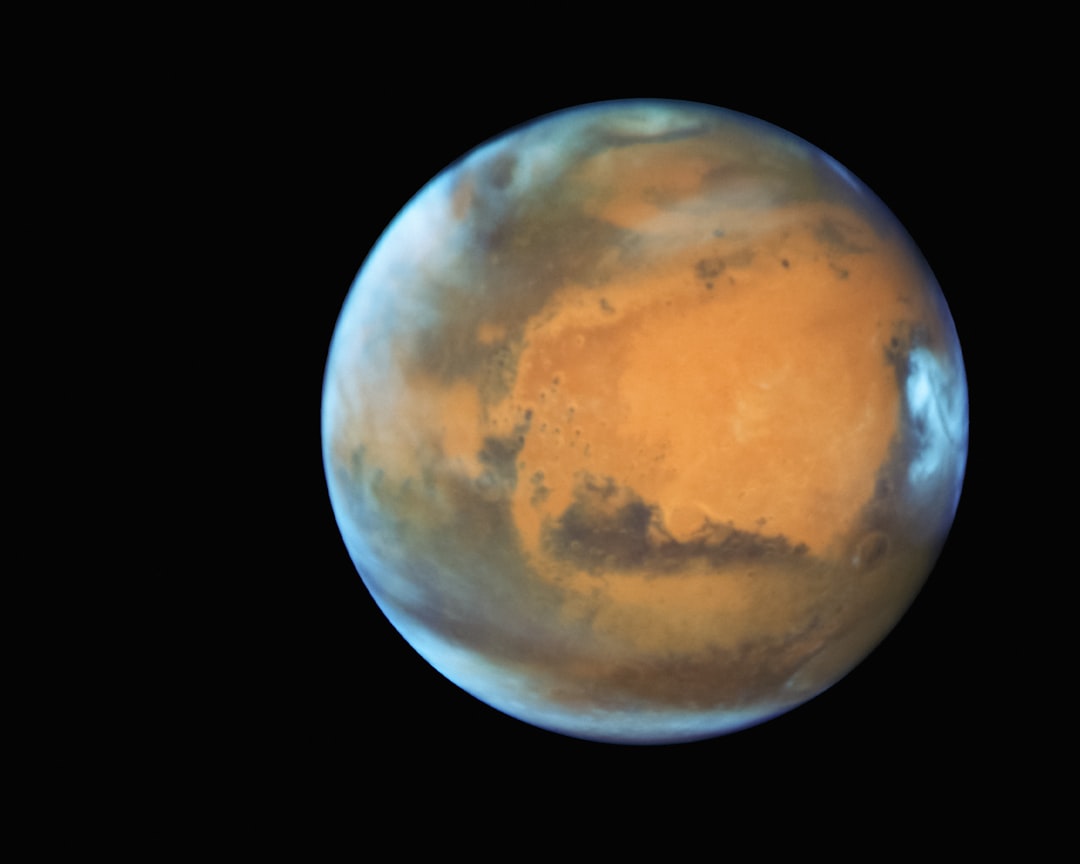
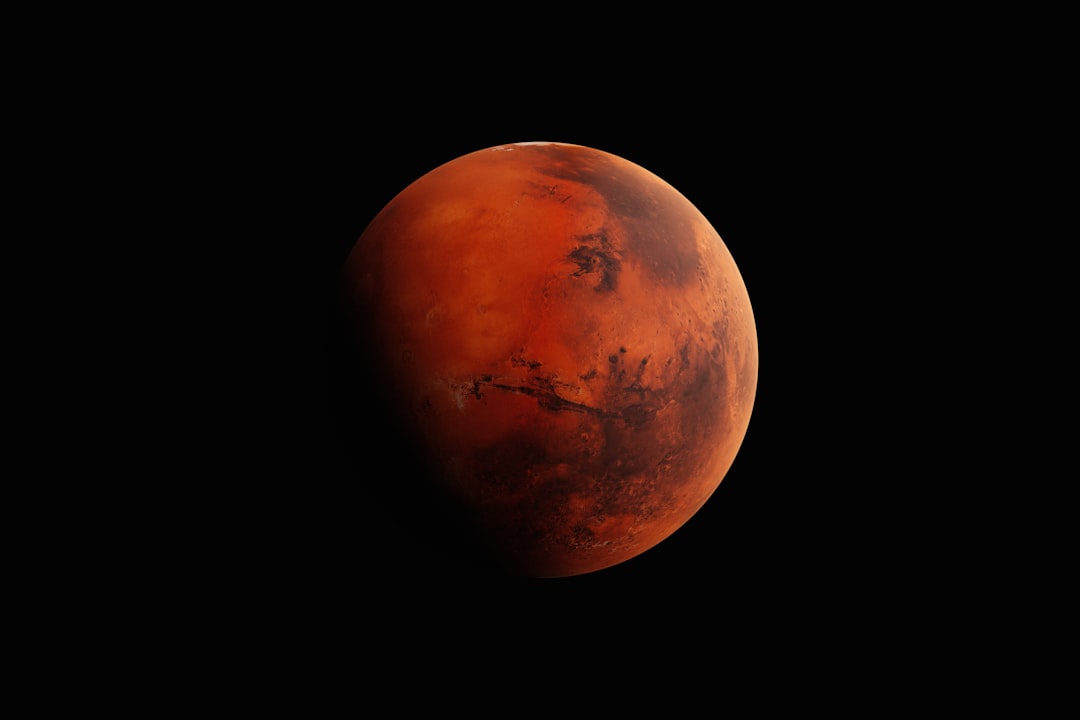
Perhaps the most technologically audacious component of NASA's new plan involves the Space Reactor-1 Freedom mission—a nuclear-powered spacecraft designed to demonstrate advanced propulsion technologies while delivering a unique payload to Mars. The mission, internally designated Skyfall, would deploy three autonomous helicopters in the Martian atmosphere, building on the revolutionary success of the Ingenuity helicopter that has far exceeded its original mission parameters on the Red Planet.
The spacecraft's nuclear electric propulsion system represents a critical technology for future deep space missions. Unlike conventional chemical rockets, nuclear electric propulsion generates thrust by using electricity from a fission reactor to accelerate ionized propellant through electromagnetic fields. This approach offers significantly higher efficiency than traditional systems, enabling faster transit times to Mars and beyond while carrying heavier payloads—essential capabilities for establishing human presence across the solar system.
Steve Sinacore, NASA's program executive for Fission Surface Power, indicated that repurposing Gateway hardware could substantially accelerate the SR-1 Freedom development timeline. However, he acknowledged that critical questions remain unresolved, including the spacecraft's ultimate disposition after deploying its helicopter payload. The 2028 launch target has drawn particular skepticism from the scientific community, with many experts questioning whether nuclear propulsion technology can mature sufficiently within such a compressed timeframe.
"Absolutely no one I know who has expertise in spaceflight or planetary exploration thinks this is either remotely plausible or a good idea to attempt on such a timeline. The dominant reaction is somewhere on the spectrum between mockery and dismay," noted Dr. Katie Mack, an astrophysicist at the Perimeter Institute for Theoretical Physics, expressing concerns shared by many in the space science community.
Three-Phase Lunar Settlement Strategy
NASA's vision for establishing a permanent human presence on the Moon unfolds through a carefully structured three-phase campaign, each building upon the previous stage's achievements and infrastructure. This methodical approach reflects lessons learned from decades of space station operations and recognizes that sustainable lunar settlement requires robust support systems developed incrementally rather than through single dramatic missions.
Phase One: Robotic Reconnaissance and Infrastructure Preparation
The initial phase emphasizes accelerating robotic missions to survey potential base locations, test critical technologies, and establish preliminary infrastructure. Key missions include the VIPER rover, which will search for water ice in permanently shadowed lunar craters—a resource essential for sustaining human presence and producing rocket propellant. The LuSEE-Night radio observatory will conduct astronomical observations impossible from Earth due to our planet's radio interference, while rocket-powered Moonfall reconnaissance drones will provide detailed mapping of candidate base sites.
These robotic precursors serve multiple purposes: validating landing technologies, characterizing the lunar environment's hazards and resources, and demonstrating systems that will support human operations. The data they collect will inform decisions about where to establish permanent infrastructure and what engineering solutions will prove most effective in the harsh lunar environment.
Phase Two: Semi-Permanent Infrastructure Development
The second phase transitions from reconnaissance to construction, establishing semi-habitable infrastructure that can support extended crew stays. This includes deploying power systems—likely a combination of radioisotope batteries for reliable baseline power and nuclear fission reactors for higher-capacity needs. NASA has been developing Kilopower fission reactors specifically for lunar and Martian surface applications, systems designed to operate autonomously in extreme environments while providing tens of kilowatts of continuous electrical power.
This phase also involves establishing basic life support infrastructure, communication systems, and landing pads to support regular crew rotations. The goal is creating an operational outpost capable of hosting astronauts for weeks or months at a time, though not yet a fully self-sustaining settlement.
Phase Three: Permanent Settlement and Expanded Operations
The final phase envisions deploying permanent habitats with comprehensive life support systems, heavy-duty pressurized rovers for extended surface exploration, and industrial facilities for resource utilization. This stage represents the transition from an outpost to a genuine settlement—a place where humans can live and work for extended periods, conducting scientific research, testing technologies for Mars missions, and potentially extracting and processing lunar resources.
The estimated $20 billion cost over seven years for the moon base program, expanding to $30 billion over a decade, represents a substantial but not unprecedented investment in space infrastructure. For context, the International Space Station has cost approximately $150 billion over its lifetime, though spread across multiple nations and decades.
Rethinking Commercial Space Station Development
NASA's revised approach to transitioning from the International Space Station to commercial orbital platforms reflects a sobering reassessment of market realities. When the agency established its Commercial Low Earth Orbit Destinations program in 2021, it anticipated that private markets for in-space services—including research, manufacturing, and space tourism—would mature rapidly enough to support independent commercial stations by the time ISS is deorbited in the 2030-2031 timeframe.
However, Dana Weigel, NASA's ISS program manager, acknowledged that these markets haven't developed as quickly as projected. The original transition strategy, which provided seed funding to companies like Axiom Space, Starlab Space, and Blue Origin's Orbital Reef, is now deemed "fraught with a lot of higher risks." Rather than waiting for fully independent commercial stations to materialize, NASA now plans to procure a government-owned Core Module that would serve as an anchor for commercial modules.
This hybrid approach offers several advantages: it ensures NASA maintains continuous human presence in low Earth orbit, provides a stable foundation for commercial partners to attach their modules, and creates a pathway for those commercial modules to eventually detach and operate as independent free-flying stations once markets mature. The strategy acknowledges that government anchor tenancy may be necessary longer than initially hoped while still pursuing the ultimate goal of transitioning to commercial platforms.
Political Context and International Competition
The aggressive timeline and strategic priorities driving NASA's restructured plan cannot be separated from their geopolitical context. Administrator Isaacman explicitly cited competition from China's space program as a primary motivation for the accelerated schedule. China has made remarkable progress in space capabilities over the past decade, including establishing its own space station, landing rovers on the Moon and Mars, and announcing plans for crewed lunar missions by 2030.
President Trump's national space policy, which emphasizes American leadership and treats space as a strategic domain rather than purely scientific endeavor, provides the political framework for these decisions. Senator Ted Cruz, chair of the Senate committee overseeing NASA's budget, endorsed the plan enthusiastically, stating: "Space is not just symbolic. It is strategic. A sustained lunar surface presence ensures America, not China, leads the next era of exploration."
The Senate Commerce Committee recently approved Cruz's bipartisan NASA Authorization Act, which includes provisions supporting lunar base development, suggesting the plan may receive Congressional backing despite its ambitious nature. However, translating authorization into actual appropriations remains an annual challenge, and the plan's success ultimately depends on sustained political and financial support across multiple budget cycles and potentially different administrations.
Technical Challenges and Expert Skepticism
While political support appears strong, the space science and engineering community has expressed considerable skepticism about the feasibility of NASA's timeline, particularly regarding the nuclear Mars mission. The concerns extend beyond general doubts about ambitious government programs to specific technical and programmatic challenges:
- Nuclear System Development: Developing, testing, and certifying a nuclear fission reactor for space propulsion within four years represents an extraordinarily compressed timeline given the technology's complexity and regulatory requirements. Previous nuclear space programs have taken decades from concept to flight.
- Lunar Lander Delays: SpaceX's Starship lunar lander is already behind schedule, and adding lunar base construction to its mission requirements increases complexity substantially. The system must not only land astronauts safely but also deliver heavy cargo and infrastructure components.
- Integration Challenges: Repurposing Gateway hardware for the Mars mission, while potentially cost-effective, introduces integration risks as systems designed for one mission profile are adapted to different requirements and environments.
- Resource Allocation: Accelerating these programs may require diverting resources from other NASA priorities, potentially impacting ongoing scientific missions and research programs that have taken years to develop.
Chase Million, a former NASA researcher and founder of data analysis company Million Concepts, characterized many details of the plan as "shocking or confusing," predicting that NASA personnel would face weeks of difficult questions from the scientific community that they may struggle to answer with the information currently available.
Implications for Space Science and Exploration
NASA's strategic pivot represents a fundamental shift in priorities that will ripple through the space science community for years. The decision to emphasize human spaceflight infrastructure over some robotic science missions reflects a particular vision of space exploration that prioritizes establishing permanent human presence over pure scientific discovery—a choice that inevitably involves tradeoffs.
"Real, important science was canceled for this," Dr. Mack noted, highlighting concerns that the restructuring may sacrifice valuable research programs to fund the accelerated human spaceflight agenda.
However, proponents argue that permanent lunar infrastructure will ultimately enable new categories of scientific research impossible with brief visits or robotic missions alone. A sustained human presence allows for complex field geology, sophisticated instrument deployment and maintenance, and the flexibility to respond to unexpected discoveries—capabilities that complement rather than replace robotic exploration.
The success or failure of this ambitious plan will likely define American space policy for the next generation. If NASA can meet even a substantial portion of its objectives, it would represent a historic achievement rivaling Apollo. If the timeline proves unrealistic and the program stumbles, it could undermine confidence in human spaceflight and lead to another prolonged period of strategic uncertainty for the agency.
As Administrator Isaacman acknowledged in his message to NASA employees, the agency faces fundamental questions about its capabilities and future direction. "There is a belief among some that NASA has drifted so far from its best days that we can no longer undertake big, bold endeavors and deliver on them," he wrote. "That is why we must take ownership of the outcomes. We will not sit on our hands and hope industry saves the day." Whether NASA can prove the skeptics wrong while meeting an extraordinarily demanding timeline remains one of the most compelling questions in contemporary space exploration.