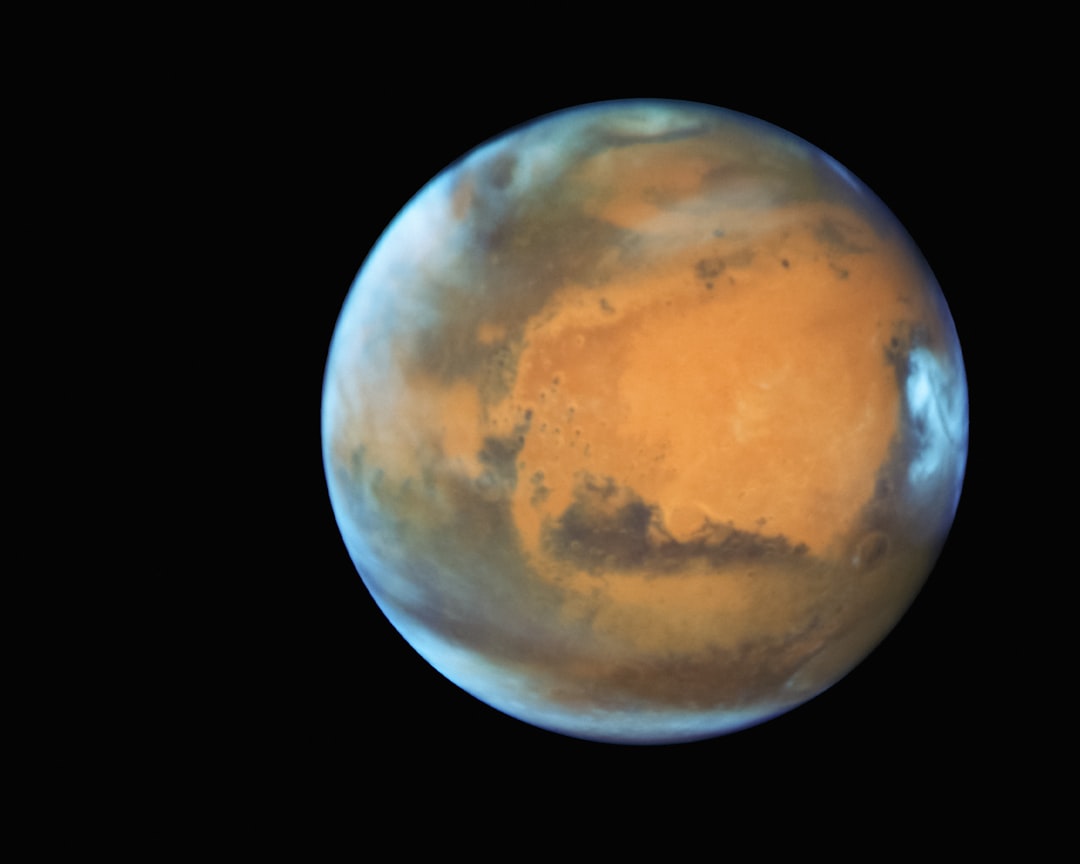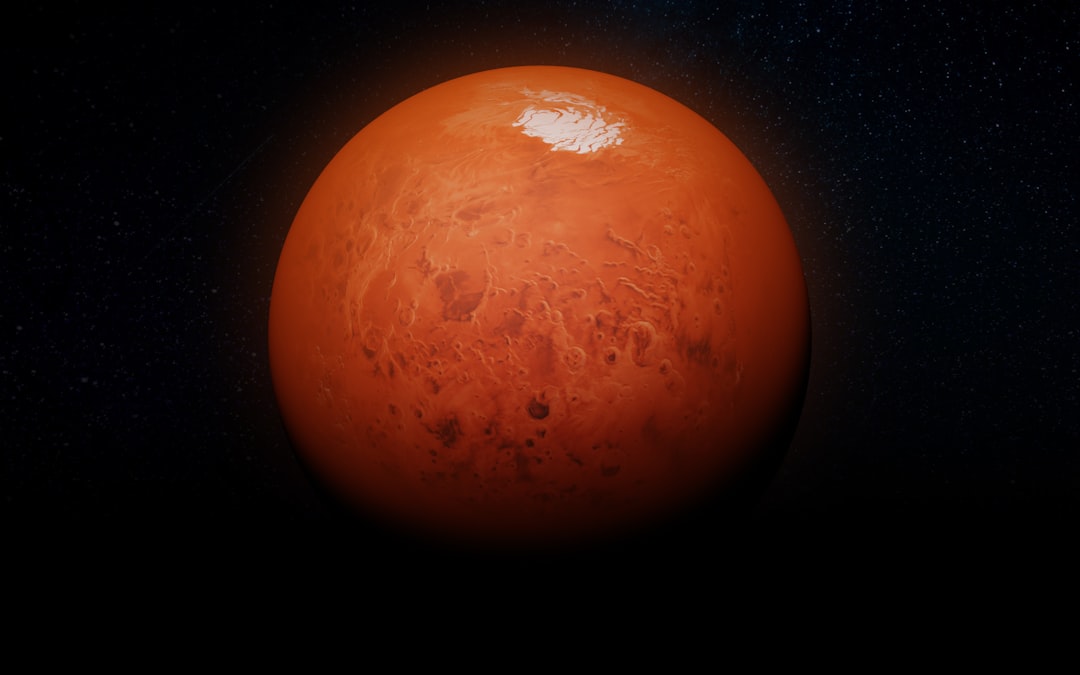
After more than a decade of groundbreaking observations orbiting the Red Planet, NASA has officially concluded that the Mars Atmosphere and Volatile Evolution (MAVEN) spacecraft cannot be recovered following a catastrophic communications failure last December. During a media teleconference held on Wednesday, June 3rd, agency officials announced the end of this historic mission, which fundamentally transformed our understanding of Martian atmospheric evolution and the planet's dramatic climate transformation over billions of years.
The MAVEN mission, which launched in November 2013, was designed to answer one of planetary science's most compelling questions: how did Mars transition from a warm, wet world potentially capable of supporting life to the cold, arid desert we observe today? Operating for an extraordinary 11 years—ten years beyond its initial one-year primary mission—MAVEN became the first spacecraft dedicated exclusively to studying the Martian upper atmosphere and its complex interactions with solar radiation. The mission's unprecedented longevity and scientific productivity generated over 800 peer-reviewed publications, establishing it as one of NASA's most successful planetary science endeavors.
The Final Communications Anomaly
The crisis began on December 6th, 2025, when MAVEN experienced an unexpected loss of signal after passing behind Mars during a routine orbital maneuver. When the spacecraft should have emerged from behind the planet and reestablished contact with NASA's Deep Space Network (DSN), ground controllers detected only silence. The brief fragment of telemetry data they managed to capture painted a troubling picture: MAVEN had entered safe mode and was rotating at an abnormally high rate, suggesting a significant disruption to its carefully maintained orbital trajectory.
This rotational instability had cascading consequences for the spacecraft's systems. The unexpected tumbling prevented MAVEN's solar panels from maintaining their optimal orientation toward the Sun, rapidly draining the spacecraft's batteries. Without sufficient power, the communication system went offline, severing the vital link between the probe and Earth. For months, NASA engineers attempted various recovery procedures, broadcasting commands through the Deep Space Network's powerful antennas and hoping for even the faintest response from the distant spacecraft.
In February, NASA convened an anomaly review board—a standard procedure for investigating spacecraft failures—to comprehensively assess MAVEN's condition and evaluate potential recovery strategies. After exhaustive analysis, the board reached a sobering conclusion: the spacecraft had entered an unrecoverable state and could no longer conduct scientific operations. While the exact root cause of the initial anomaly remains under investigation, the review board is expected to deliver its final report later this year, which will provide crucial insights for protecting future Mars missions from similar failures.
Revolutionary Discoveries About Atmospheric Escape
Despite its premature end, MAVEN's scientific legacy is nothing short of extraordinary. The mission fundamentally reshaped our understanding of how planetary atmospheres interact with solar wind—the constant stream of charged particles flowing from the Sun—and how these interactions drive atmospheric loss over geological timescales. This research has profound implications not only for Mars but for understanding planetary habitability throughout the universe.
One of MAVEN's most significant early discoveries revealed that Mars' atmospheric loss rate increases dramatically during solar storms. These violent events, characterized by sudden explosions of energetic particles that propagate throughout the Solar System, can strip away Martian atmospheric gases at rates orders of magnitude higher than normal conditions. This finding provided the first direct evidence for how solar activity could have gradually transformed Mars from a potentially habitable world to its current inhospitable state over the course of 3.7 to 4.2 billion years.
"The science MAVEN has given us is key to informing what kind of radiation protection and safety measures we must take before sending humans to Mars. The data collected from MAVEN will continue to provide valuable insight into Mars for decades to come," explained Louise Prockter, director of NASA's Planetary Science Division.
MAVEN held a unique advantage in studying these processes: it was the only spacecraft capable of simultaneously measuring both the solar wind environment and the Martian atmospheric response. This dual capability allowed scientists to directly correlate specific solar events with measurable changes in atmospheric escape rates, providing unprecedented insights into the mechanisms driving planetary climate evolution.
Measuring Atmospheric Sputtering in Real-Time
Among MAVEN's groundbreaking achievements was becoming the first mission to directly measure atmospheric sputtering around any planet. This process occurs when high-energy ions from the solar wind collide with atmospheric molecules with sufficient force to literally knock them out of the planet's gravitational grasp and into space. Understanding this mechanism is crucial for reconstructing Mars' atmospheric history and predicting the long-term atmospheric evolution of planets throughout the galaxy.
The MAVEN science team developed an ingenious method to quantify sputtering by tracking argon, a noble gas that rarely reacts chemically with other atmospheric components. Because argon is chemically inert, the only mechanism that can remove it from the Martian atmosphere is physical ejection through sputtering. By monitoring argon concentrations at various altitudes over 11 years, researchers at the Laboratory for Atmospheric and Space Physics (LASP) at the University of Colorado Boulder observed real-time atmospheric loss in action.
The data revealed argon sputtering occurring at high altitudes precisely where charged solar particles penetrated deepest into the atmosphere. This spatial correlation provided direct evidence that solar wind bombardment is indeed responsible for stripping away Mars' protective atmospheric blanket. Extrapolating these measurements backward in time, scientists concluded that Mars likely possessed a much thicker atmosphere billions of years ago—thick enough to maintain liquid water on its surface and potentially support microbial life.
Auroral Phenomena and Atmospheric Dynamics
MAVEN's comprehensive instrument suite also detected several previously unknown types of Martian auroras caused by energetic particles constantly bombarding the planet's atmosphere. Unlike Earth, which has a global magnetic field that channels auroral activity to polar regions, Mars lacks this protective shield. As a result, MAVEN discovered that protons from the solar wind create unique auroral displays that can occur anywhere across the Martian atmosphere—a phenomenon extremely rare in Earth's magnetosphere, where it appears only in small regions near the magnetic poles.
These observations have important implications for understanding how unmagnetized planets interact with their stellar environments. Research published in journals including Journal of Geophysical Research: Space Physics has used MAVEN data to develop new models of atmospheric loss for exoplanets orbiting active young stars, helping astronomers assess the habitability potential of worlds beyond our Solar System.
The Global Dust Storm of 2018
In 2018, MAVEN found itself perfectly positioned to study one of Mars' most dramatic atmospheric phenomena: a planet-encircling dust storm that grew so massive it completely obscured the surface from view. These global dust events occur only once every several Martian years, making MAVEN's detailed observations of the 2018 storm scientifically invaluable. The storm ultimately proved fatal to NASA's Opportunity rover, which lost power when dust blocked sunlight from reaching its solar panels.
MAVEN's instruments tracked how the dust storm affected Mars' upper atmosphere in unprecedented detail. The mission team discovered that heating from suspended dust particles pushed water molecules to much higher altitudes than normally possible, where ultraviolet radiation from the Sun could break them apart. The liberated hydrogen atoms then escaped to space, representing a significant pathway for water loss that had not been fully appreciated before MAVEN's observations.
This finding helped explain a long-standing mystery: geological evidence clearly shows that ancient Mars once had substantial surface water—enough to fill rivers, lakes, and possibly even a northern ocean—yet the planet today is desiccated, with only trace amounts of water ice remaining. MAVEN's data demonstrated that dust storms accelerate water loss, and over billions of years, repeated global dust events could have contributed significantly to transforming Mars from a water-rich world to the arid planet we see today.
Interstellar Visitor Observations
In one of its final scientific campaigns, MAVEN contributed to NASA's efforts to study the interstellar comet 3I/ATLAS during its historic flyby of Mars in October 2025. Over ten days, the spacecraft captured multiple images of the comet in various wavelengths as it passed at a distance of approximately 30 million kilometers (18.6 million miles). These observations included high-resolution ultraviolet images that revealed hydrogen gas escaping from the comet's nucleus—a signature of water ice sublimating as the comet approached the Sun.
These UV observations, which only a spacecraft like MAVEN could obtain, allowed scientists to analyze the comet's composition and infer details about its formation in another stellar system. The data from this encounter will be particularly valuable for comparison with observations from ESA's upcoming Comet Interceptor mission, which will study a pristine comet or interstellar object in even greater detail.
Scientific Legacy and Future Impact
As Shannon Curry, MAVEN's principal investigator at LASP, reflected on the mission's conclusion:
"The MAVEN mission has truly advanced our understanding of the Martian atmosphere and evolution. This dataset has had a tremendous impact on the field. Our science team is exceptionally proud of all of these amazing discoveries."
NASA has now begun the official decommissioning process and is archiving MAVEN's complete mission dataset for public release. This comprehensive archive will include:
- 11 years of atmospheric composition measurements tracking seasonal and solar cycle variations in Martian upper atmosphere chemistry
- Continuous solar wind monitoring data correlating solar activity with atmospheric escape rates across multiple solar cycles
- Ultraviolet spectroscopy observations revealing the vertical structure and dynamics of the Martian atmosphere
- Magnetometer measurements mapping Mars' crustal magnetic field remnants and their interaction with the solar wind
- Energetic particle data quantifying radiation environments crucial for future human exploration planning
The mission's data archive will remain an invaluable resource for planetary scientists for decades to come. Already, MAVEN observations have generated over 800 peer-reviewed scientific publications, with many more expected as researchers continue mining the full dataset. Graduate students and early-career scientists will build entire research programs on MAVEN data, ensuring the mission's scientific impact extends far beyond its operational lifetime.
Implications for Human Mars Exploration
Beyond pure science, MAVEN's measurements have critical practical applications for NASA's Artemis program and future human missions to Mars. The spacecraft's detailed characterization of radiation environments around Mars—including how solar storms dramatically increase radiation exposure—directly informs the design of habitats, spacesuits, and mission timelines to protect astronauts from harmful cosmic rays and solar particle events.
MAVEN's atmospheric loss measurements also help mission planners understand the long-term challenges of establishing a permanent human presence on Mars. Any future terraforming efforts would need to account for ongoing atmospheric escape processes that MAVEN documented in such detail. Understanding these mechanisms is essential for evaluating whether Mars could ever be transformed into a more Earth-like environment or whether human settlements will always require sealed habitats and life support systems.
The mission has also provided crucial data for testing atmospheric entry, descent, and landing models. Every spacecraft that enters the Martian atmosphere—whether robotic or eventually carrying human crews—must accurately predict how it will interact with the thin Martian air. MAVEN's precise measurements of atmospheric density, composition, and variability at different altitudes and seasons have significantly improved these models, making future landings safer and more reliable.
Looking Forward
While MAVEN's operational phase has ended, its scientific mission continues through the data it collected and the questions it raised. Future Mars orbiters will build upon MAVEN's foundation, using even more sophisticated instruments to probe atmospheric mysteries that MAVEN first revealed. The upcoming Mars Atmosphere and Climate Mission (MACM), currently in early planning stages, will extend MAVEN's atmospheric studies with enhanced capabilities for measuring trace gases and isotopic ratios that provide clues to Mars' climatic history.
Those interested in hearing the complete media teleconference announcing MAVEN's end can access the audio recording on NASA's official website. The agency has also indicated that additional details about the mission's final months and the anomaly investigation will be released as the review board completes its analysis.
As we bid farewell to this remarkable spacecraft, now silent in its eternal orbit around Mars, we can reflect on how MAVEN fundamentally transformed our understanding of planetary atmospheres and their evolution. The mission demonstrated that Mars was not always the cold, barren world we see today—it was once a dynamic planet with a thick atmosphere and abundant water, potentially capable of supporting life. Understanding how and why Mars lost that habitability is not just about reconstructing the past; it's about predicting the future habitability of countless worlds throughout our galaxy and beyond.