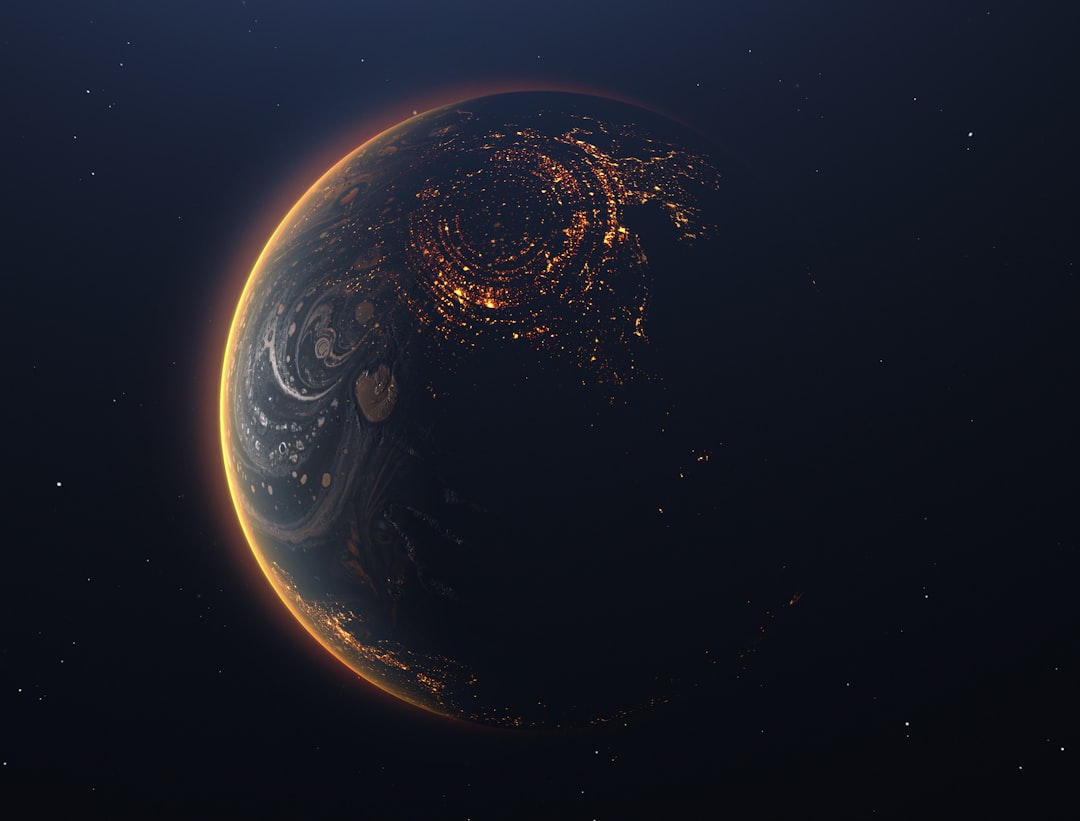
In a groundbreaking discovery that reads like science fiction, astronomers using the James Webb Space Telescope (JWST) have identified a fascinating class of distant worlds shrouded in atmospheric haze remarkably similar to diesel exhaust. These sub-Neptune exoplanets, orbiting stars dozens of light-years from Earth, appear to function as enormous chemical factories, producing polycyclic aromatic hydrocarbons (PAHs)—the same carbon-rich compounds found in soot and smog on Earth. This unexpected finding, recently published in The Astrophysical Journal Letters, challenges our understanding of planetary atmospheres and reveals that some alien worlds may be perpetually choked by a form of cosmic pollution.
The research represents a paradigm shift in how scientists approach exoplanet atmospheric studies. By applying principles from chemical engineering to planetary science, the team has uncovered atmospheric processes that transform these distant worlds into what they describe as "soot factories." This interdisciplinary approach, combining expertise from industrial chemistry with astrophysics, demonstrates how cross-pollination between scientific fields can unlock mysteries that have puzzled astronomers for years.
The implications extend far beyond academic curiosity. Understanding the atmospheric composition of sub-Neptunes—planets larger than Earth but smaller than Neptune—is crucial for characterizing the most common type of planet in our galaxy. These worlds, which have no analog in our solar system, represent a planetary category that appears to be ubiquitous throughout the Milky Way galaxy, yet their atmospheric chemistry has remained largely enigmatic until now.
The Chemistry of Cosmic Combustion Engines
The research team, led by Dr. Jeehyun Yang, a postdoctoral scholar at the University of Chicago, employed sophisticated computer modeling to simulate the atmospheric chemistry of sub-Neptunes with equilibrium temperatures ranging from approximately 500 to 800 Kelvin (227-527°C or 441-981°F). This temperature range is critical—hot enough to drive complex chemical reactions, yet cool enough for certain organic molecules to remain stable in the upper atmosphere.
Equilibrium temperature represents the theoretical temperature a planet would maintain if heated solely by its host star, without considering internal heat sources or atmospheric effects. This parameter serves as a fundamental baseline for understanding planetary climate and atmospheric dynamics. The researchers discovered that within this specific temperature window, sub-Neptune atmospheres undergo chemical processes strikingly similar to incomplete combustion in diesel engines.
The team's models incorporated multiple variables beyond temperature, including the carbon-to-oxygen ratio (C/O) and atmospheric metallicity—the abundance of elements heavier than hydrogen and helium. These factors profoundly influence which chemical reactions can occur and which molecules can form. According to research from the James Webb Space Telescope mission, measuring these atmospheric properties with precision has only recently become possible with JWST's unprecedented infrared sensitivity.
"As far as I know, this is the first time anyone has applied chemical engineering to the field of exoplanet study. I think it's a great case study that shows why having people from all different backgrounds can help us untangle these mysteries," explained Dr. Jeehyun Yang, emphasizing the innovative interdisciplinary approach that made this discovery possible.
Polycyclic Aromatic Hydrocarbons: The Building Blocks of Cosmic Soot
Polycyclic aromatic hydrocarbons (PAHs) are complex organic molecules consisting of multiple fused benzene rings—carbon atoms arranged in hexagonal patterns. On Earth, PAHs form during incomplete combustion of organic materials and are found in everything from diesel exhaust to grilled food to cigarette smoke. They're also present in interstellar space, where they're thought to account for a significant fraction of all carbon in the universe, as documented by research from the European Space Agency.
In the context of exoplanet atmospheres, PAHs act as a critical intermediary in atmospheric chemistry. The research reveals that these molecules form in the deeper, hotter regions of sub-Neptune atmospheres through a cascade of chemical reactions. As atmospheric circulation patterns transport gases upward, the PAHs are carried to the cooler upper atmosphere, where they can condense into aerosol particles—tiny solid or liquid droplets suspended in the gas.
The study found that PAH production peaks at an equilibrium temperature of approximately 600 Kelvin. At higher temperatures, the molecules become unstable and break apart. At lower temperatures, the chemical reactions that produce PAHs proceed too slowly to generate significant quantities. This creates a "Goldilocks zone" for soot production—a specific temperature range where conditions are just right for these cosmic combustion engines to operate at maximum efficiency.
A Gallery of Soot-Shrouded Worlds
The researchers identified nine specific exoplanets whose observed characteristics align with their theoretical models of soot-producing atmospheres. These worlds, observed by both JWST and the Hubble Space Telescope, span distances from 32 to 150 light-years from Earth and represent prime targets for follow-up observations:
- GJ 436 b (32 light-years): One of the closest sub-Neptunes with atmospheric measurements, orbiting a red dwarf star
- GJ 1214 b (48 light-years): The most promising candidate for hosting a soot-rich atmosphere based on its optimal temperature, C/O ratio, and metallicity
- HD 97658 b (70 light-years): A warm sub-Neptune with measured atmospheric properties consistent with PAH production
- GJ 3090 b (73 light-years): A recently characterized world falling within the critical temperature range
- LP 791-18 c (86 light-years): A sub-Neptune with potential volcanic activity that could influence atmospheric chemistry
- TOI-836 c (90 light-years): Part of a multi-planet system offering comparative atmospheric studies
- GJ 9827 d (97 light-years): The smallest planet in the sample, near the boundary between rocky and gaseous worlds
- GJ 3470 b (100 light-years): A well-studied sub-Neptune with extensive atmospheric observations
- TOI-674 b (150 light-years): The most distant candidate, representing the outer limits of detailed atmospheric characterization
GJ 1214 b: The Poster Child for Atmospheric Soot Production
Among these candidates, GJ 1214 b stands out as the most compelling example of a soot factory world. Located approximately 48 light-years from Earth in the constellation Ophiuchus, this exoplanet has been extensively studied since its discovery and continues to reveal surprising characteristics that align perfectly with the new atmospheric models.
GJ 1214 b possesses a mass approximately 6.26 times that of Earth and a radius 2.74 times larger, placing it firmly in the sub-Neptune category. These dimensions suggest a composition fundamentally different from rocky planets like Earth or gas giants like Neptune—likely a rocky core surrounded by a thick envelope of hydrogen and helium, possibly with a layer of high-pressure water or other volatiles beneath the atmosphere.
The planet completes an orbit around its host star in just 1.58 Earth days, placing it extraordinarily close to its red dwarf sun. Red dwarf stars, the most common type of star in the galaxy, are smaller and cooler than our Sun, but GJ 1214 b orbits so closely that it receives intense stellar radiation. This proximity results in tidal locking—the planet always presents the same face to its star, just as the Moon always shows the same face to Earth.
JWST observations have revealed dramatic temperature differences between GJ 1214 b's permanent dayside and nightside, indicating that the planet's atmosphere does not efficiently redistribute heat. This poor heat transport suggests a thick, hazy atmosphere that blocks thermal radiation from circulating globally. The planet's equilibrium temperature of approximately 550 Kelvin places it near the peak of the PAH production curve identified in the study, while spectroscopic measurements indicate high atmospheric metallicity—an abundance of heavy elements that provides the raw materials for complex organic chemistry.
The Mechanics of a Soot Factory
The atmospheric dynamics of worlds like GJ 1214 b create conditions remarkably similar to incomplete combustion in internal combustion engines. In the deeper atmosphere, where temperatures and pressures are higher, carbon-rich gases undergo thermal decomposition and recombination reactions. Simple molecules like methane and carbon monoxide react to form increasingly complex hydrocarbons, eventually building up to PAHs with dozens of carbon atoms.
As these molecules form, atmospheric convection—driven by the intense heating from the nearby star—carries them upward. In the cooler upper atmosphere, the PAHs can condense into tiny particles, creating a persistent haze layer that gives these planets their characteristic featureless spectra when observed from Earth. This haze scatters and absorbs starlight, making it challenging to probe the deeper atmospheric composition—a phenomenon that has puzzled astronomers studying sub-Neptunes for years.
Implications for Planetary Science and Astrobiology
This discovery has profound implications for our understanding of planetary diversity and evolution. The existence of soot factory worlds demonstrates that atmospheric chemistry can vary far more dramatically than previously imagined. While scientists had theorized about methane-rich atmospheres on sub-Neptunes, the prevalence of PAH-dominated atmospheres suggests that many of these worlds may be shrouded in organic haze rather than simple gas mixtures.
From an astrobiological perspective, PAHs play a complex role. On one hand, these molecules are considered prebiotic compounds—potential building blocks for life. PAHs have been found in meteorites and are thought to have delivered organic material to the early Earth. On the other hand, the extreme conditions on these soot-choked worlds—intense radiation, extreme temperatures, and toxic atmospheric chemistry—make them inhospitable for life as we know it.
The research also has implications for understanding planetary habitability in systems with red dwarf stars. Since red dwarfs are the most common stars in the galaxy and frequently host rocky planets in their habitable zones, understanding how atmospheric chemistry varies with stellar type and planetary properties is crucial for identifying potentially habitable worlds. Planets that develop thick organic hazes may be less likely to maintain surface conditions suitable for life, even if they orbit at the right distance from their star.
Future Observations and Research Directions
The identification of specific target exoplanets for soot detection opens exciting opportunities for future observations. JWST's Mid-Infrared Instrument (MIRI) and Near-Infrared Spectrograph (NIRSpec) are particularly well-suited for detecting the spectroscopic signatures of PAHs. These molecules have distinctive absorption and emission features in the infrared spectrum that should be detectable if present in sufficient quantities in exoplanet atmospheres.
Future research will focus on obtaining high-quality spectra of the candidate planets identified in this study. By comparing observed spectra with the theoretical models, astronomers can confirm whether PAHs are indeed present and determine their abundance. This will require multiple observations during planetary transits—when the planet passes in front of its star from our perspective—allowing starlight filtered through the atmosphere to be analyzed for chemical signatures.
The interdisciplinary approach pioneered by this research team—applying chemical engineering principles to astrophysics—points toward new methodologies for studying exoplanet atmospheres. Future studies may incorporate expertise from fields as diverse as industrial chemistry, atmospheric science, and materials science to develop more sophisticated models of exotic atmospheric processes. Research programs at institutions like the Space Telescope Science Institute are already planning observational campaigns to test these predictions.
The Broader Context of Exoplanet Atmospheric Studies
This discovery arrives at a pivotal moment in exoplanet science. Since the first confirmed detection of an exoplanet orbiting a Sun-like star in 1995, astronomers have discovered more than 5,000 worlds beyond our solar system. Early studies focused simply on detecting these planets and measuring their basic properties—mass, radius, and orbital characteristics. Now, with advanced space telescopes like JWST, the field has entered an era of atmospheric characterization, where scientists can analyze the chemical composition and physical properties of alien skies.
Sub-Neptunes represent a particularly important category for study because they're the most common type of planet discovered by surveys like NASA's Kepler mission, yet they have no analog in our solar system. Understanding their atmospheric properties helps fill a crucial gap in our knowledge of planetary formation and evolution. The discovery that many sub-Neptunes may be shrouded in organic haze rather than clear hydrogen-helium atmospheres fundamentally changes how we interpret observations and plan future studies.
The research also highlights the importance of considering atmospheric dynamics alongside chemical composition. The transport of PAHs from deep, hot regions to the cool upper atmosphere demonstrates that exoplanet atmospheres are dynamic systems with complex circulation patterns. Understanding these patterns is essential for interpreting observations and determining which molecules we should expect to detect at different atmospheric levels.
Technological Advances Enabling Discovery
This breakthrough would not have been possible without recent advances in both observational technology and computational modeling. JWST's unprecedented infrared sensitivity allows astronomers to detect subtle spectroscopic features that were invisible to previous telescopes. The telescope's large mirror and advanced instruments can collect enough light from distant exoplanets to analyze their atmospheric composition in detail.
Equally important are advances in computational chemistry and atmospheric modeling. The simulations used in this study required sophisticated software capable of tracking thousands of chemical reactions occurring simultaneously under extreme conditions. Modern supercomputers can now perform these calculations with sufficient accuracy and speed to explore parameter space systematically, testing how atmospheric composition varies with temperature, metallicity, and other factors.
The combination of cutting-edge observations and theoretical models creates a powerful synergy. Models predict what we should observe if certain atmospheric processes are occurring, while observations test those predictions and refine the models. This iterative process drives scientific progress and deepens our understanding of exotic worlds that we can never visit directly.
Looking Toward the Future
As JWST continues its mission and future telescopes come online, our understanding of exoplanet atmospheres will grow exponentially. The discovery of soot factory worlds is just the beginning. Future research will explore how atmospheric chemistry varies across the full range of planetary types, from hot Jupiters to potentially habitable rocky worlds. Scientists will investigate how stellar activity, planetary magnetic fields, and atmospheric escape processes influence the long-term evolution of planetary atmospheres.
The next generation of ground-based telescopes, including the Extremely Large Telescope (ELT) and the Giant Magellan Telescope (GMT), will complement space-based observations with their own unique capabilities. These massive instruments will be able to directly image some exoplanets and study their atmospheres with unprecedented detail, potentially detecting seasonal variations, weather patterns, and other dynamic phenomena.
Perhaps most exciting is the possibility of discovering unexpected atmospheric chemistry on worlds unlike any we've yet imagined. If sub-Neptunes can function as soot factories, what other exotic atmospheric processes might occur on planets with different compositions, temperatures, or host stars? Each new discovery expands our understanding of what's possible in the universe and reminds us that nature's creativity far exceeds our imagination.
The identification of diesel smog-like atmospheres on distant worlds may seem like a curious footnote