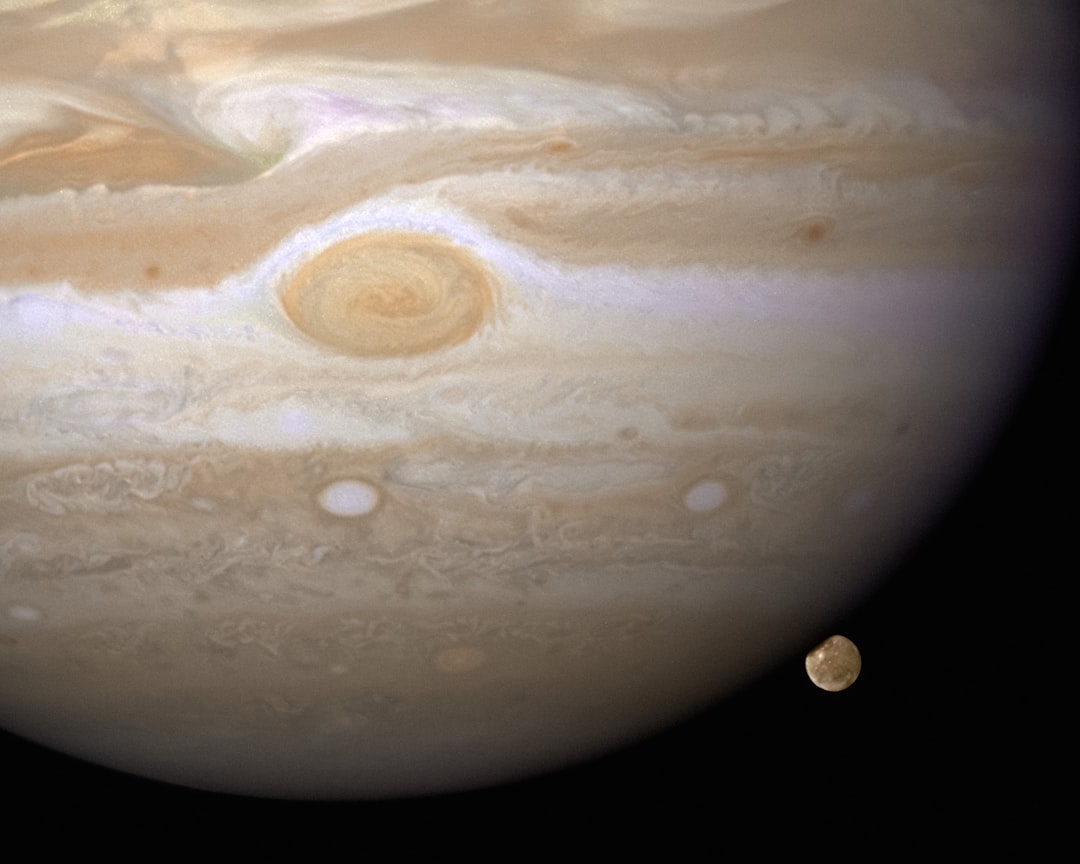
When NASA's Juno spacecraft arrived at Jupiter in 2016, it revolutionized our understanding of the solar system's largest planet. Among its many groundbreaking discoveries, recent analysis of data from Juno's Microwave Radiometer (MWR) has revealed that lightning storms on Jupiter may unleash electrical discharges up to one million times more powerful than the most intense lightning bolts on Earth. This extraordinary finding challenges our fundamental understanding of atmospheric electricity and raises profound questions about the mechanisms driving weather systems on gas giant planets.
The research, published in AGU Advances under the title "Radio Pulse Power Distribution of Lightning in Jupiter's 2021–2022 Stealth Superstorms," represents a significant leap forward in planetary meteorology. Lead author Michael Wong, a planetary scientist at UC Berkeley's Space Sciences Laboratory, and his team analyzed hundreds of lightning pulses detected during a unique window of opportunity when isolated superstorms could be studied in unprecedented detail. The implications extend far beyond Jupiter itself, offering insights into atmospheric dynamics on exoplanets and the fundamental physics of electrical discharge in hydrogen-dominated atmospheres.
The Evolution of Jovian Lightning Research
Our knowledge of Jupiter's electrical activity has evolved dramatically over the past several decades. Prior to Juno's arrival, virtually all observations of Jovian lightning came from spacecraft viewing the planet from an equatorial perspective, focusing primarily on the nightside where optical flashes could be easily detected against the darkness of space. Every major mission that encountered Jupiter—from the Pioneer and Voyager spacecraft to Galileo, Cassini, and New Horizons—captured evidence of lightning activity, confirming that electrical storms are a fundamental feature of the planet's atmosphere.
When NASA's New Horizons spacecraft flew past Jupiter in 2007 during its gravity-assist maneuver toward Pluto, it captured remarkable images of lightning at polar latitudes—a significant finding that hinted at the complexity of Jupiter's storm systems. Each blob visible in those images represented multiple lightning flashes, blurred together by the camera's exposure time. However, these optical observations had inherent limitations: they could only detect lightning on the nightside, and the planet's thick, multi-layered cloud system often obscured the true intensity of the electrical discharges.
Juno's Revolutionary Microwave Detection System
The Microwave Radiometer Instrument (MWR) aboard Juno has fundamentally transformed our ability to study Jovian lightning. Unlike optical instruments that detect visible light flashes, the MWR operates in the radio spectrum, offering two critical advantages that make it exceptionally well-suited for measuring lightning statistics on Jupiter.
The first advantage relates to how electromagnetic waves interact with planetary ionospheres. An ionosphere behaves like plasma, which has a characteristic frequency below which electromagnetic waves cannot propagate through it. This phenomenon is familiar to anyone who has listened to AM radio—these lower-frequency waves bounce off Earth's ionosphere rather than passing through it. However, the MWR detects pulses at frequencies higher than Jupiter's plasma frequency, allowing these signals to travel directly from the lightning source to the instrument without being reflected or absorbed. This provides a clear, unobstructed measurement of the lightning's radio emissions.
The second advantage stems from the MWR's sophisticated antenna array. The instrument features six separate antennas, each tuned to detect a specific range of frequencies spanning from 600 MHz to 22 GHz. One antenna operates at the high-frequency end of the radio spectrum, perfectly positioned to capture the microwave pulses generated by lightning discharges. Crucially, radio waves can penetrate Jupiter's deep, opaque atmosphere, while optical signals are blocked by multiple cloud layers. As the research team explains, this means the MWR measures the typical pulse power in storms rather than just the high-power outliers that might break through the clouds to produce visible flashes.
"Lightning on Jupiter tells us about convection, which is how the atmosphere churns and transports heat from below. Convection operates a little bit differently on Earth and Jupiter because Jupiter has a hydrogen-dominated atmosphere, so moist air is heavier and harder to bring upward," explained lead author Michael Wong.
The Physics Behind Jovian Convection
Understanding why Jupiter's lightning is so powerful requires examining the fundamental differences in atmospheric dynamics between Earth and the gas giant. On Earth, moist convection occurs when water vapor—which is lighter than dry air—rises through the atmosphere. This relatively easy upward movement allows storms to develop with moderate energy inputs. However, Jupiter's atmosphere is dominated by hydrogen and helium, creating a dramatically different scenario.
In Jupiter's hydrogen-rich environment, moist air (containing water, ammonia, and other condensable gases) is actually heavier than the surrounding atmosphere. For a storm to rise through this dense medium, it must possess significantly more energy than a comparable terrestrial storm. When these powerful convective systems finally reach the upper atmosphere and release their accumulated energy, the result is lightning of extraordinary intensity and winds of devastating power. This fundamental difference in atmospheric composition and convective mechanics helps explain why Jovian lightning can be orders of magnitude more powerful than anything experienced on Earth.
Discovery of the Stealth Superstorms
A critical challenge in studying Jupiter's lightning has been the planet's nearly continuous electrical activity along belts that encircle the globe. This constant barrage of lightning makes it extremely difficult to isolate individual storm systems and accurately measure their properties. However, a fortunate opportunity arose in 2021-2022 when there was an unusual pause in storm activity along Jupiter's north equatorial belt. This rare quiet period allowed Wong and his team to identify and track individual large storms with unprecedented precision.
By combining observations from the Hubble Space Telescope, Juno's JunoCam instrument, and contributions from dedicated amateur astronomers around the world, the researchers pinpointed the exact locations of isolated superstorms. They could then correlate these visual observations with the radio pulse data from the MWR, finally resolving the long-standing uncertainty about whether they were measuring lightning location or lightning strength.
What Wong discovered were what he termed "stealth superstorms"—massive storm systems that persisted for months and fundamentally altered Jupiter's cloud structure, yet remained relatively inconspicuous because they only reached modest heights compared to other Jovian superstorms. These stealth storms proved to be prolific lightning producers, generating continuous electrical activity while maintaining a lower profile than the towering convective systems that dominate other regions of Jupiter's atmosphere.
Unprecedented Measurement Precision
During the observation period, Juno made twelve passes over the region containing these isolated storms. On four of these flybys, the spacecraft came close enough to detect and measure the microwave static generated by lightning discharges. The data revealed an average of three lightning flashes per second in each of the four storms, with Juno detecting 206 separate pulses of microwave radiation during one particularly productive pass. In total, the research team analyzed 613 individual lightning pulses, creating the most comprehensive dataset of Jovian lightning power measurements ever assembled.
"Because we had a precise location, we were able to just say, 'OK, we know where it is. We're directly measuring the power,'" Wong stated, highlighting the breakthrough that made these measurements possible.
The statistical analysis revealed median pulse power values ranging from 27 to 214 watts over the MWR bandpass—well within the instrument's sensitivity range and providing reliable measurements of lightning strength. This represented a major advancement over previous studies that could only estimate lightning power based on optical observations subject to atmospheric interference.
Comparing Jovian and Terrestrial Lightning: A Complex Challenge
One of the most challenging aspects of this research involves making meaningful comparisons between Jupiter's lightning and Earth's lightning. The difficulty arises because researchers are essentially comparing measurements taken at different radio wavelengths, using different instruments, under vastly different atmospheric conditions. It's a classic case of comparing apples to oranges, complicated further by the complex nature of lightning itself.
Lightning is not a simple phenomenon that can be characterized by a single measurement. A lightning discharge releases energy across multiple forms and frequencies:
- Electromagnetic radiation: Including visible light (optical), radio waves at various frequencies, and potentially X-rays and gamma rays
- Thermal energy: Heating the surrounding atmosphere to temperatures exceeding 30,000 Kelvin
- Acoustic energy: Producing thunder through rapid atmospheric expansion
- Chemical energy: Triggering chemical reactions in the atmosphere and producing compounds like nitrogen oxides on Earth
When researchers measure microwave emissions from lightning, they're sampling only a portion of the total energy release. The challenge becomes even more complex when trying to extrapolate from measurements at one frequency to estimate the total power across all frequencies. This requires assumptions about the spectral energy distribution—how the lightning's energy is distributed across different wavelengths—and these assumptions carry significant uncertainties.
The Million-Fold Power Estimate
The striking claim that Jupiter's lightning could be up to one million times more powerful than terrestrial lightning represents the upper end of a wide range of estimates. This extreme value depends on using a particular power-law slope to extrapolate measurements across a large frequency range—an inherently uncertain process. As the researchers carefully note in their paper, the actual power comparison could range from Jovian lightning being similar in strength to terrestrial lightning at comparable radio frequencies, to being 10^6 times stronger.
To put this in perspective, a typical lightning bolt on Earth releases approximately one gigajoule (one billion joules) of total energy—enough to power 200 average homes for one hour. Based on Wong's analysis, a single bolt of Jupiter's lightning could release anywhere from 500 to 10,000 times that amount, translating to between 500 gigajoules and 10 terajoules per discharge. At the upper end of estimates, this would make Jovian lightning comparable to some of Earth's most extreme electrical phenomena, known as "superbolts"—exceptionally powerful lightning strikes that occur primarily over oceans.
Implications and Future Research Directions
The discovery of these extraordinarily powerful electrical discharges on Jupiter raises fundamental questions about the physics of lightning and atmospheric electricity. Scientists cannot simply assume that the mechanisms governing lightning on Earth apply equally to Jupiter's alien environment. Several factors could contribute to the enhanced power of Jovian lightning:
Atmospheric composition: Jupiter's hydrogen-dominated atmosphere versus Earth's nitrogen-oxygen mixture could fundamentally alter how electrical charges separate and accumulate within storm clouds. The different molecular properties and ionization potentials of these gases might enable much higher voltage buildups before discharge occurs.
Storm scale and geometry: Terrestrial thunderstorms typically extend about 10 kilometers vertically, while Jupiter's superstorms can breach the 100-kilometer mark. This order-of-magnitude difference in scale means that electrical charges must bridge much greater distances, potentially requiring—and releasing—far more energy in the process.
Energy accumulation: Because moist convection on Jupiter requires overcoming the planet's heavy, hydrogen-rich atmosphere, storms may need to accumulate substantially more thermal energy before they can rise and generate lightning. This could result in more powerful electrical discharges when the energy is finally released.
"This is where the details start to get exciting, where you can ask, 'Could the key difference be hydrogen versus nitrogen atmospheres, or could it be that the storms are taller on Jupiter and so there's greater distances involved? Or could it be that greater energy is available because with moist convection on Jupiter, you have a bigger buildup of heat needed before you can generate the storm to create lightning?' It's an active area of research," Wong noted.
Next Steps in Jovian Meteorology
The research team emphasizes that future studies must address several key uncertainties to refine our understanding of Jupiter's lightning. Most critically, scientists need measurements at more closely matched radio frequencies to enable direct comparisons between terrestrial and Jovian lightning without relying on uncertain extrapolations. The European Space Agency's JUICE mission (Jupiter Icy Moons Explorer), scheduled to arrive at Jupiter in 2031, may provide additional data to complement Juno's observations.
Another crucial question is whether the lightning observed in the stealth superstorms represents typical Jovian lightning or an anomalous extreme. As Juno continues its extended mission—now in its tenth year of operations—it will encounter different storm types across various latitudes and atmospheric conditions, helping to establish whether these power levels are common or exceptional.
Understanding Jupiter's lightning also has implications beyond the solar system. As astronomers discover and characterize exoplanets orbiting distant stars, many of which are gas giants similar to Jupiter, the insights gained from studying Jovian meteorology become templates for understanding atmospheric processes on worlds we may never visit directly. The extreme conditions on Jupiter serve as a natural laboratory for testing our theories of atmospheric physics under conditions impossible to replicate on Earth.
The Broader Scientific Context
This research represents just one piece of Juno's remarkable legacy of discoveries. Since entering orbit around Jupiter, the spacecraft has revealed that the planet's magnetic field is far more powerful and complex than previously thought, with localized regions of intense magnetism scattered across the surface. It has shown that Jupiter's distinctive cloud bands extend thousands of kilometers deep into the atmosphere, driven by powerful jet streams that persist far below the visible cloud tops.
Perhaps most spectacularly, Juno's observations of Jupiter's polar regions revealed chaotic yet stable configurations of cyclones—massive storm systems arranged in geometric patterns around each pole. At the north pole, eight cyclones surround a central cyclone, while the south pole features five circumpolar cyclones. These structures have persisted throughout Juno's mission, representing a form of atmospheric organization never before observed in the solar system.
The lightning research adds another dimension to our understanding of Jupiter's dynamic atmosphere, revealing that the planet's weather systems operate at energy scales that dwarf anything experienced on Earth. As Wong and his colleagues continue to analyze data from Juno's ongoing mission, each new discovery reinforces the notion that Jupiter, despite centuries of telescopic observation, still holds profound mysteries waiting to be unraveled.
Whether Jupiter's lightning proves to be one million times more powerful than Earth's or "merely" hundreds of times stronger, the fundamental message remains clear: the solar system's largest planet hosts atmospheric phenomena of staggering intensity, driven by processes we are only beginning to understand. As our instruments become more sophisticated and our theoretical models more refined, Jupiter continues to serve as both a laboratory for testing our understanding of planetary science and a reminder of the awesome power of natural forces operating on cosmic scales.