A cosmic mystery has been unfolding right beneath our feet—or more precisely, falling gently onto our planet's surface from the depths of space. Scientists have discovered that Earth has been receiving a continuous shower of extraterrestrial iron atoms for tens of thousands of years, particles forged in the violent deaths of massive stars and delivered to us through an invisible cloud of interstellar material. This remarkable finding, revealed through painstaking analysis of ancient Antarctic ice, provides direct evidence that our Solar System is currently traversing a vast cosmic cloud, leaving a detectable signature in Earth's frozen archives.
The discovery centers on Iron-60, a rare radioactive isotope that serves as an unmistakable fingerprint of stellar catastrophe. Unlike the stable iron that makes up everything from our blood cells to skyscrapers, Iron-60 can only be synthesized in the extreme conditions within massive stars—and it only reaches Earth when those stars meet their explosive end as supernovae. With a half-life of just 2.6 million years—a cosmic blink of an eye—any Iron-60 present during our planet's formation 4.5 billion years ago has long since decayed into more stable elements. This means that every single atom of Iron-60 detected on Earth today must have arrived from beyond our Solar System, making it an invaluable tracer of recent cosmic events.
The Puzzle of Modern Stardust
For years, astrophysicists had documented evidence of ancient supernova encounters that showered our Solar System with Iron-60. These cosmic bombardments, occurring millions of years ago, left their mark in deep-sea sediments and even in lunar rocks collected during the Apollo missions. The timeline made sense: massive stars exploded relatively nearby in astronomical terms, and their debris eventually reached Earth, settling into geological layers that scientists could analyze millennia later.
But then came an unexpected twist. Researchers analyzing Antarctic surface snow less than two decades old discovered something that shouldn't have been there: fresh Iron-60. The finding was perplexing because there had been no recent supernova explosions close enough to Earth to explain this modern influx of stellar material. The nearest supernova candidates were thousands of light-years away—far too distant to deposit measurable quantities of Iron-60 on our planet within such a short timeframe. This paradox demanded a new explanation, one that would revolutionize our understanding of the interstellar environment surrounding our Solar System.
Journey Through the Local Interstellar Cloud
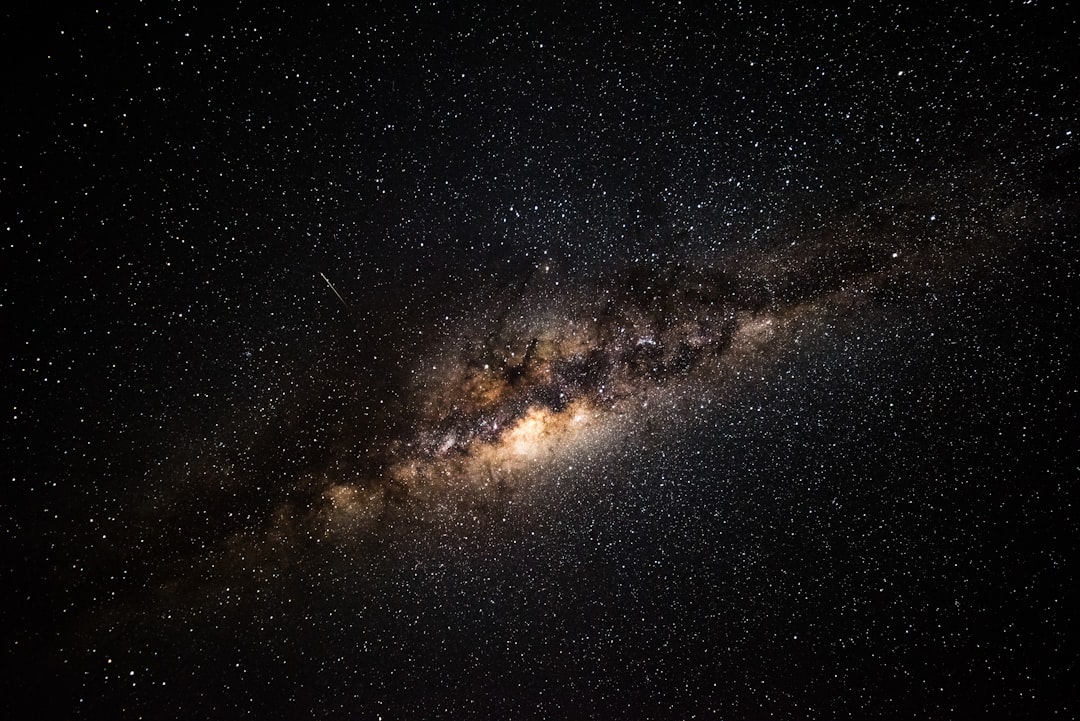
The solution to this cosmic puzzle lay in understanding our Solar System's current neighborhood. At this very moment, our sun and its family of planets are sailing through the Local Interstellar Cloud (also known as the Local Fluff), an enormous but diffuse region of gas and dust stretching across approximately 30 light-years of space within the Milky Way galaxy. This tenuous cloud, with a density of just a few thousand atoms per cubic centimeter, serves as a vast reservoir of material ejected from ancient supernovae that occurred millions of years ago.
Scientists hypothesized that this interstellar cloud might be acting as a cosmic storage depot, gradually releasing Iron-60 accumulated from long-past stellar explosions. As our Solar System moves through this cloud at approximately 26 kilometers per second, Earth would continuously encounter and collect these ancient stellar remnants—like a car driving through fog, with water droplets accumulating on the windshield. However, proving this theory required extraordinary evidence from Earth's most pristine natural archive: Antarctic ice.
Decoding the Ice Core Record
An international research team led by Dr. Dominik Koll and Professor Anton Wallner at the Helmholtz-Zentrum Dresden-Rossendorf (HZDR) undertook an ambitious investigation using ice cores from the EPICA (European Project for Ice Coring in Antarctica) drilling project. These ice cores, extracted from depths corresponding to snowfall between 40,000 and 80,000 years ago, capture a critical period in cosmic history: the era when our Solar System first entered the Local Interstellar Cloud.
The logistics of this research were staggering. The team transported approximately 300 kilograms of pristine Antarctic ice from Bremerhaven, Germany, to their laboratory in Dresden. Through meticulous chemical processing involving multiple stages of purification and isolation, they extracted just a few hundred milligrams of dust—the accumulated fallout of tens of thousands of years of cosmic precipitation. Within this minuscule sample, they needed to find and count individual Iron-60 atoms, a task that pushed the boundaries of analytical chemistry and nuclear physics.
"It's like searching for a needle in 50,000 football stadiums filled to the roof with hay. The machine finds the needle in an hour," explained Annabel Rolofs from the University of Bonn, describing the extraordinary sensitivity required for this research.
Revolutionary Detection Technology
The actual detection of Iron-60 atoms required one of the world's most sophisticated scientific instruments: the Heavy Ion Accelerator Facility at the Australian National University in Canberra. Currently, this facility represents the only instrument on Earth with sufficient sensitivity to detect Iron-60 in such vanishingly small quantities. The technique, known as accelerator mass spectrometry, uses powerful electric and magnetic fields to separate atoms by their mass with extraordinary precision.
The process works by accelerating ions to high velocities and then passing them through a series of increasingly selective filters. Unwanted atoms are systematically removed until only the target isotope—in this case, Iron-60—remains for counting. This technology can distinguish between isotopes that differ by just a single atomic mass unit, even when the target isotope is outnumbered by billions of similar atoms. The sensitivity is so extreme that researchers can detect individual Iron-60 atoms among quadrillions of other particles.
The Smoking Gun: Temporal Variation
The most compelling evidence came not from simply detecting Iron-60, but from observing how its concentration varied over time. The ice core analysis revealed that between 40,000 and 80,000 years ago, significantly less Iron-60 was reaching Earth compared to more recent samples. This temporal variation proved crucial for ruling out alternative explanations.
If the Iron-60 signal were merely the slow, steady decay of material from million-year-old supernova events, the concentration should remain relatively constant or decline gradually over time. Instead, the data showed a clear increase as our Solar System moved deeper into the Local Interstellar Cloud. This pattern strongly suggests that our Solar System was initially traversing a less dense region of the cloud before drifting into the thicker, more particle-rich area where it currently resides.
Key Findings from the Research
- Continuous Influx: Iron-60 has been falling on Earth continuously for at least 40,000 years, providing direct evidence of our passage through the Local Interstellar Cloud
- Density Variations: The concentration of Iron-60 increased as our Solar System moved from the cloud's edge into denser regions, matching theoretical models of interstellar cloud structure
- Ruling Out Alternatives: The temporal variation in Iron-60 concentration definitively excludes the possibility that this material comes from the slow decay of ancient supernova debris
- Cosmic Timeline: The data provides a precise timeline of our Solar System's entry into the Local Interstellar Cloud, occurring approximately 40,000-80,000 years ago
- Ongoing Process: Modern Antarctic snow continues to show Iron-60 signatures, confirming that this cosmic precipitation remains active today
Implications for Solar System Science
This discovery has profound implications for understanding how our Solar System interacts with its galactic environment. The Local Interstellar Cloud isn't just an empty void—it's a dynamic, structured region with varying densities and compositions that can directly affect conditions within our Solar System. The cloud's material may influence everything from the heliosphere's shape (the bubble of solar wind that surrounds our Solar System) to the flux of cosmic rays reaching Earth.
Previous research using data from NASA's Voyager spacecraft, which have now crossed into interstellar space, has shown that the boundary between the solar wind and interstellar medium is far more complex than once thought. The Iron-60 measurements provide complementary ground-based evidence of this interaction, offering a different perspective on how interstellar material penetrates the Solar System's protective bubble.
Future Research Horizons
The research team's work is far from complete. Our Solar System is expected to exit the Local Interstellar Cloud in just a few thousand years—a brief moment in cosmic terms but potentially long enough to gather additional crucial data. The scientists plan to analyze ice cores from before our Solar System entered the cloud, seeking samples that predate the 80,000-year threshold. These older samples should show a dramatic decrease or absence of Iron-60, providing a clear "before and after" snapshot of this cosmic transition.
The Beyond EPICA project, an ambitious international effort to drill even deeper into Antarctic ice, aims to recover samples dating back 1.5 million years. This extended record could reveal previous encounters with other interstellar clouds or supernova events, building a comprehensive history of our Solar System's journey through the galaxy. Each layer of ice acts as a time capsule, preserving not just Earth's climate history but also a record of cosmic events that have shaped our planetary environment over hundreds of millennia.
Furthermore, this research methodology could be applied to studying other rare isotopes that might reveal different aspects of cosmic history. Scientists are particularly interested in isotopes like Plutonium-244 and Samarium-146, which could provide additional clues about nearby supernovae and the nucleosynthesis processes that create heavy elements in stellar explosions.
A Cosmic Perspective on Earth's Environment
Perhaps most remarkably, this research reminds us that Earth exists not in isolation but as part of a dynamic galactic ecosystem. The "stardust" falling on our planet isn't merely poetic metaphor—it's literal truth. Every year, thousands of Iron-60 atoms settle onto Earth's surface, invisible messengers from stellar cataclysms that occurred millions of years ago and thousands of light-years away. These atoms, forged in the nuclear furnaces of dying stars and carried across the galaxy by interstellar winds, become part of Earth's geological record, waiting for scientists with sufficiently sophisticated tools to read their story.
As we continue to explore our cosmic neighborhood with increasingly powerful instruments, from space-based observatories to ground-based accelerator facilities, we're discovering that the boundaries between "terrestrial" and "extraterrestrial" are far more permeable than once imagined. Our planet constantly exchanges material with space, and understanding these exchanges helps us comprehend not just Earth's place in the cosmos, but the fundamental processes that govern matter and energy throughout the universe.
The gentle rain of stardust falling on Earth today connects us directly to the most violent and energetic events in the cosmos, a reminder that we are, quite literally, made of star stuff—and that we continue to accumulate more with each passing moment.