Finding Life on Enceladus Could Be Easier Than We Thought, Says New Research
Enceladus, one of Saturn's 146 known moons, has rapidly emerged as one of the most scientifically compelling destinations in our Solar System. Roughly 500 kilometers in diameter — small enough to fit within the borders of the United Kingdom — this icy moon punches far above its weight when it comes to astrobiological potential. Like a growing family of so-called "Ocean Worlds" identified across our Solar System, Enceladus harbors a vast, global liquid water ocean sandwiched between its frozen surface crust and its rocky, silicate core. Now, two landmark new studies suggest that detecting signs of life there could be significantly more achievable than scientists had previously estimated.
The research, led by Prof. Frank Postberg and Dr. Vanessa Helmbrecht from the Institute of Geological Sciences at Freie Universität Berlin and the Department of Earth and Environmental Sciences at Ludwig-Maximilians-Universität München, respectively, was published in two papers in the peer-reviewed journal Science Advances. Their findings carry profound implications for the design of future missions and the broader search for extraterrestrial life.
Why Enceladus? The Case for an Ocean World
Enceladus owes its remarkable internal warmth to a process known as tidal flexing. As the moon orbits Saturn, the planet's immense gravitational field — combined with the gravitational tugs of neighboring moons like Dione — continuously kneads and deforms Enceladus's interior. This mechanical energy is converted into heat, sustaining liquid water beneath a shell of ice estimated to be between 20 and 25 kilometers thick. At the boundary between the rocky core and the overlying ocean, this tidal heating drives hydrothermal activity, creating conditions strikingly similar to the deep-sea hydrothermal vent systems found on Earth — environments that teem with microbial life, entirely independent of sunlight.
This combination of liquid water, chemical energy, and organic compounds satisfies what astrobiologists consider the fundamental prerequisites for life as we know it. It is a recipe that has ignited intense scientific interest since NASA's Cassini-Huygens mission made its historic discoveries at Enceladus during its 13-year exploration of the Saturnian system.
"Enceladus is one of the few places beyond Earth where we have direct evidence for the key ingredients needed for life — liquid water, chemical energy, and organic compounds — all in one place." — A sentiment echoed widely across the planetary science community.
Cassini's Groundbreaking Discoveries
What truly set Enceladus apart from other candidate worlds was a stunning discovery made by NASA's Cassini spacecraft: enormous cryovolcanic plumes erupting from the moon's southern polar region through a series of fractures in the ice shell, colloquially known as the "tiger stripes." These geysers propel a cocktail of water vapor, ice particles, salts, silica nanoparticles, and complex organic molecules hundreds of kilometers into space at speeds exceeding 400 meters per second, feeding Saturn's diffuse E ring with fresh material.
During a series of daring low-altitude flybys — some passing as close as 25 kilometers above the surface — Cassini's instruments flew directly through these plumes and sampled their contents. Among the compounds detected were molecular hydrogen (H₂), a clear indicator of ongoing hydrothermal reactions between water and rock, as well as complex aromatic organic molecules with masses exceeding 200 atomic units, silica particles suggestive of high-temperature geochemistry, and even traces of phosphates — an essential building block of DNA and cellular membranes. Taken together, these findings transformed Enceladus from a curious icy moon into arguably the most promising habitable environment beyond Earth in our Solar System.
New Research: Biosignatures More Concentrated Than Expected
Study 1: The Slow Freezing of Ocean Droplets
In their first study, Postberg, Helmbrecht, and their colleagues tackled a fundamental question: how well-preserved and concentrated are biological or chemical signatures by the time ice grains reach space? The answer depends critically on what happens to ocean water droplets as they travel upward through the narrow, labyrinthine cracks in Enceladus's ice shell.
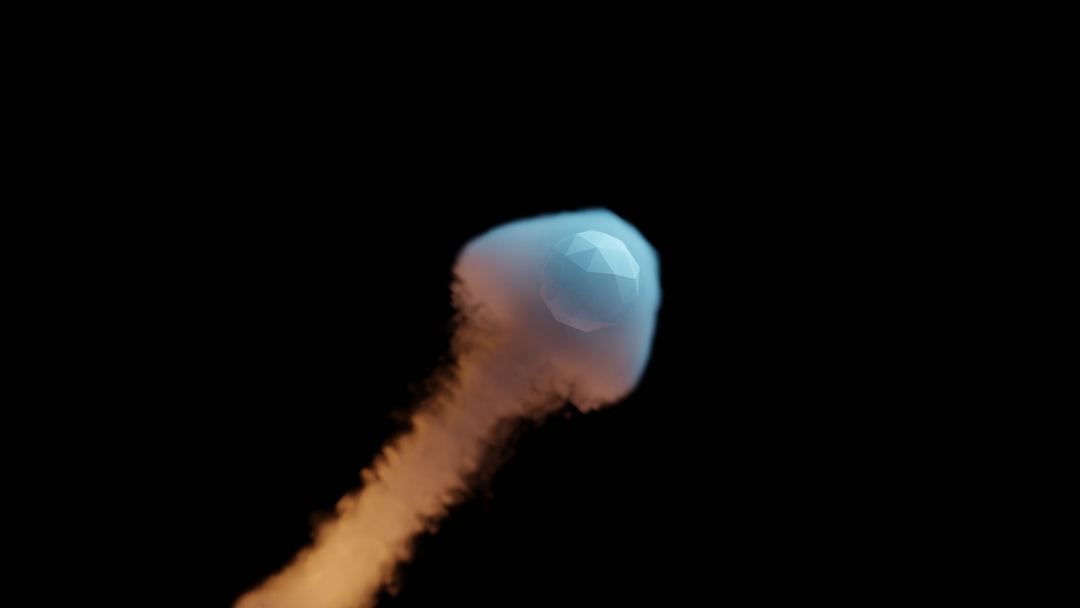
Previous models assumed a relatively rapid freezing process, which could potentially dilute or destroy delicate organic compounds before they were ejected into space. However, the new research demonstrates that ocean droplets freeze significantly more slowly than previously modeled as they migrate through the ice shell fractures. This prolonged liquid phase has important consequences: as the droplets cool and crystallize, dissolved salts, organic molecules, and potential biosignatures are selectively partitioned and concentrated into specific regions of the forming ice grain — a process known as freeze concentration.
Furthermore, as these partially frozen particles are subsequently accelerated through the vent system and into the vacuum of space, they undergo fragmentation. This fragmentation preferentially exposes the chemically enriched regions, producing ice grains that may carry highly concentrated biosignatures directly accessible to a passing spacecraft's instruments. In effect, Enceladus's own geophysical machinery acts as a natural concentrator and delivery system for potential evidence of life, making the plumes a far more efficient sampling target than previously assumed.
Study 2: Simulating Life Under Enceladus Conditions
The second study ventured into the realm of experimental astrobiology, asking whether microbial life could actually survive and metabolize under the physical and chemical conditions that characterize Enceladus's subsurface ocean. The team focused on methanogens — a class of anaerobic archaea (single-celled microorganisms) that produce methane as a metabolic byproduct by consuming hydrogen and carbon dioxide, according to the reaction:
CO₂ + 4H₂ → CH₄ + 2H₂O
This metabolic pathway is of particular relevance to Enceladus because Cassini detected both molecular hydrogen and carbon dioxide in the plumes — precisely the reactants methanogens require. Under laboratory conditions simulating the high pressure, low temperature, and chemical composition of the Enceladean ocean, the team found that methanogenic archaea could not only survive but actively produce methane. This experimentally validates the plausibility of a methanogen-based ecosystem in Enceladus's ocean and reinforces earlier modeling studies that had suggested methane detected in the plumes could, in part, have a biological origin.
The implications are significant: a spacecraft sampling Enceladus's plumes would not need to land or drill through kilometers of ice. Instead, it could directly detect methane, other metabolic byproducts, and cellular material — including lipid membranes, amino acids, or nucleotide fragments — within the ice grains themselves. As the first study shows, these compounds may be far more concentrated in plume particles than previously appreciated, dramatically lowering the detection threshold required for a successful life-detection mission.
Key Findings at a Glance
- Ocean droplets freeze more slowly than previously modeled, allowing greater concentration of organic compounds and biosignatures in ice grains.
- Fragmentation during plume acceleration exposes enriched chemical regions, making plume ice grains highly efficient carriers of potential biomarkers.
- Methanogenic archaea can survive and produce methane under simulated Enceladus ocean conditions, confirming the biochemical plausibility of life there.
- Both studies collectively suggest that a single flythrough of Enceladus's plumes by an instrumented spacecraft could be sufficient to detect meaningful biosignatures.
- Cassini previously confirmed the presence of liquid water, organic molecules, molecular hydrogen, silica, and phosphates — all key ingredients for life as we know it.
The Road Ahead: Missions to Enceladus
These findings arrive at a pivotal moment, as space agencies and private ventures worldwide are actively planning dedicated missions to Enceladus. The new research directly informs the science case and instrument design requirements for several of these proposals.
NASA's Enceladus Orbilander
The most ambitious of the planned missions is the Enceladus Orbilander, a proposed NASA Flagship-class mission currently under study. As its name implies, the Orbilander would execute a dual-phase mission: first spending approximately 18 months in orbit around Enceladus, conducting repeated flybys through the plumes and characterizing the moon's surface and interior with a comprehensive science instrument suite. It would then descend to the surface near the south polar region for a two-year landed mission, directly analyzing surface materials deposited by the plumes for chemical and biological signatures with laboratory-grade instruments. If approved and funded, the mission could launch in the 2030s, though its timeline remains subject to NASA's planetary science budget priorities.
ESA's Voyage 2050 Enceladus Mission
The European Space Agency (ESA) has also identified Enceladus as a strategic priority. Selected under its Voyage 2050 long-range planning framework, the proposed ESA L4 Enceladus Mission envisions a sophisticated orbiter with a projected launch date in the early 2040s. In addition to multiple plume flybys equipped with high-sensitivity mass spectrometers and organic compound analyzers, the mission concept includes a lander designed to touch down at the south pole, where it could directly analyze geyser deposits freshly erupted from the interior ocean — giving scientists their most direct access yet to ocean chemistry without drilling through the ice shell.
Breakthrough Enceladus: A Private Initiative
Complementing these governmental efforts, the private research organization Breakthrough Initiatives — founded by billionaire science philanthropist Yuri Milner and backed by prominent scientists including the late Stephen Hawking — has proposed Breakthrough Enceladus, a concept for a lean, cost-effective privately funded mission. The initiative reflects the growing recognition within both public and private sectors that Enceladus represents an extraordinary and time-sensitive scientific opportunity, one that need not wait for the decades-long development timelines of traditional flagship missions.
Scientific and Philosophical Implications
The broader significance of this research extends well beyond mission planning logistics. If life — even in the form of simple methanogens — were confirmed in Enceladus's ocean, it would constitute the most transformative scientific discovery in human history, demonstrating that life is not a uniquely terrestrial phenomenon but an emergent property of chemistry that arises wherever conditions permit. Given that ocean worlds are now known to exist throughout our Solar System — from Europa and Ganymede at Jupiter, to Titan at Saturn, to potentially Triton at Neptune — such a discovery would raise profound questions about the prevalence of life across the galaxy.
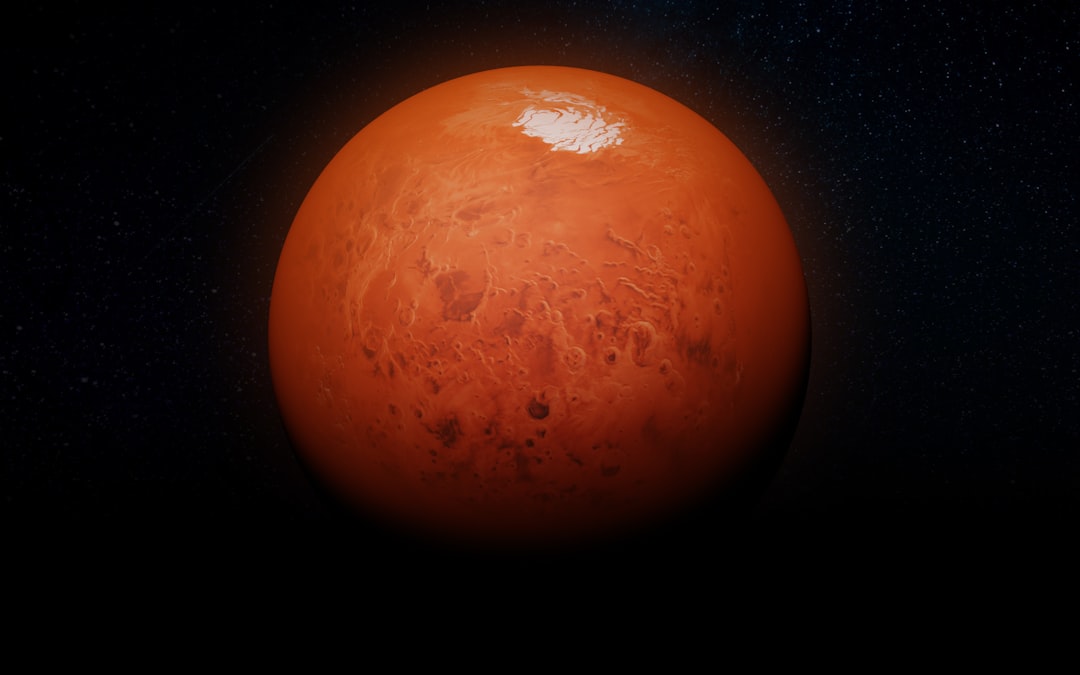
Moreover, as humanity's search for extraterrestrial life gradually pivots beyond the increasingly well-characterized surface of Mars — the focus of missions like NASA's Perseverance rover — the Ocean Worlds of the outer Solar System are claiming their rightful place at the forefront of astrobiology. With the Europa Clipper spacecraft already en route to Jupiter's moon Europa following its October 2024 launch, and with multiple Enceladus concepts maturing in parallel, the coming decades promise to be a golden age for Ocean World exploration.
Saturn's small, geyser-spewing moon — once just a faint point of light in telescopes — has already rewritten our understanding of where life might exist in the cosmos. If the new findings from Freie Universität Berlin hold up under further scrutiny, Enceladus may be prepared to rewrite it once more, by revealing that the universe's secrets are not merely accessible, but tantalizingly within reach of the instruments we can build today.