Catch a Rare Lunar Occultation of Jupiter and Saturn at Opposition in Early October 2026
The first full week of October 2026 delivers two extraordinary skywatching events that no serious amateur astronomer — or curious backyard stargazer — should miss. Saturn reaches opposition on October 4th, followed just two days later by a rare lunar occultation of Jupiter on October 6th, one of the finest such events visible from North America in years. Clear your predawn schedule, charge your camera batteries, and prepare for a celestial double-header that promises to be among the year's most memorable astronomical spectacles.
The Lunar Occultation of Jupiter: A Once-in-a-Decade Opportunity
On the morning of Tuesday, October 6th, the Moon will pass directly in front of Jupiter in an event known as a lunar occultation — a phenomenon in which the Moon's bulk physically blocks our line of sight to a background celestial object. This month's event is centered on 10:16 Universal Time (6:16 AM Eastern Daylight Time), and it ranks as one of the top skywatching events of 2026 for observers across North America.
At the time of the occultation, the Moon will be a waning crescent illuminated at approximately 20%. This particular geometry has important observational consequences: the illuminated, sunlit limb of the Moon will lead the way as Jupiter slips behind it during ingress, while Jupiter will dramatically reappear from behind the Moon's unlit, shadowed limb during egress. This means the reappearance of Jupiter will seem almost magical — the giant planet will snap back into view against a darkened edge of the Moon with no gradual dimming to warn the observer.
"A lunar occultation of a bright planet is one of those rare events where the true scale and mechanics of the solar system become viscerally real — you are watching, in real time, one world hiding another from your view."
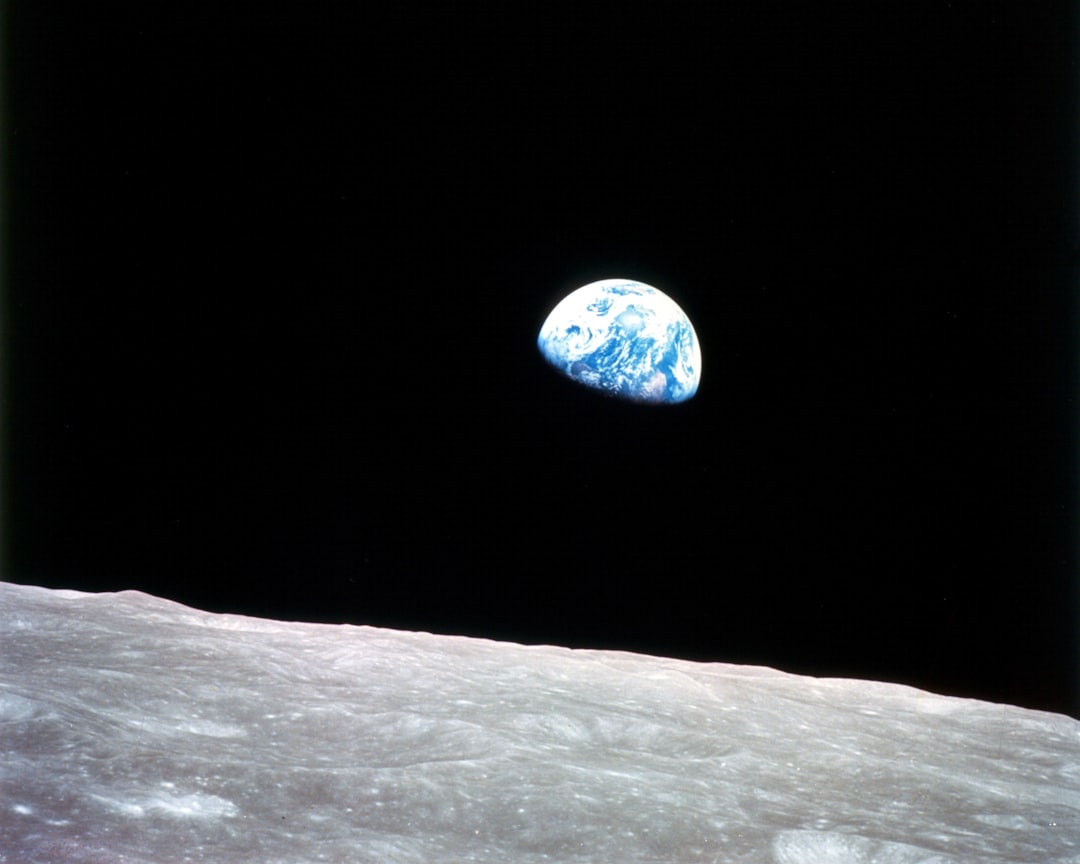
The unlit portion of the lunar disk will itself be softly illuminated by Earthshine — sunlight reflected from Earth's oceans and clouds back onto the Moon's surface — adding a ghostly, photogenic quality to the scene. This combination of Earthshine glow, the crescent's bright arc, and the sudden reappearance of Jupiter from the Moon's dark limb will make for a stunning photographic opportunity.
Timing, Visibility, and How to Watch
The occultation is visible across a broad swath of North America, occurring under predawn skies for observers in the eastern contiguous United States and Canada — a significant improvement over last month's less conveniently timed daytime occultation. Unlike a solar or lunar eclipse, a lunar occultation is a geographically localized event; exact ingress and egress times vary depending on your precise location. The International Occultation Timing Association (IOTA) maintains a comprehensive list of predicted ingress and egress times for select sites along the visibility path and is the gold standard resource for planning your observation.
Jupiter will be shining at a brilliant magnitude -1.9 and will present an apparent disk 34 arcseconds in diameter at the time of the event. Because of this relatively large apparent size, the planet will take a full 60 seconds to fully disappear behind the Moon's limb and an equally leisurely minute to fully reappear — a generous window for careful visual observation, video recording, and astrophotography. This slow, stately pace distinguishes planetary occultations from the near-instantaneous disappearances of background stars.
- Event date: Tuesday, October 6, 2026
- Central time: 10:16 UT / 6:16 AM EDT
- Jupiter's brightness: Magnitude -1.9
- Jupiter's apparent diameter: 34 arcseconds
- Ingress limb: Bright (sunlit) lunar limb
- Egress limb: Dark (shadowed) lunar limb — sudden reappearance
- Moon phase: ~20% illuminated waning crescent
Mutual Transit Season for Jupiter's Moons
Adding another layer of scientific interest to this event, October 2026 falls within a mutual transit season for the Galilean moons of Jupiter. Occurring roughly every six years when Earth passes through the plane of Jupiter's satellite system, these mutual events see Jupiter's four large moons — Io, Europa, Ganymede, and Callisto — periodically eclipsing and occulting one another as seen from Earth. Observers with moderate-aperture telescopes may be able to catch these subtle brightness dips in Jupiter's moons even as the giant planet itself undergoes its dramatic disappearance behind the Moon. For more on Jupiter and its moons, visit the NASA Jupiter Science page.
It is worth noting that the next favorable lunar occultation of Jupiter visible from the contiguous United States will not occur until September 28, 2034 — nearly a decade away. This makes the October 6th event a genuinely rare opportunity that dedicated observers should make every effort to witness.
Saturn at Opposition: Rings, Spokes, and the Seeliger Effect
Two days before Jupiter's dramatic disappearance behind the Moon, Saturn reaches opposition on October 4th, 2026. Opposition occurs when Earth passes directly between the Sun and an outer planet, placing that planet opposite the Sun in our sky. The result is a planet that rises at sunset, transits the meridian at local midnight, and sets at sunrise — remaining visible throughout the entire night and appearing at its largest, brightest, and most fully illuminated for the year.
This year's opposition carries a notable astronomical curiosity: with Saturn's position falling near the September equinox, the planet has wandered just across the boundary of the non-zodiacal constellation Cetus the Whale. Saturn is most commonly found traversing the classical zodiacal constellations, making its brief sojourn into Cetus an uncommon geometric alignment worth noting in your observing log. For finder charts and opposition geometry details, the NASA JPL Eyes on the Solar System tool provides an excellent interactive visualization.
The Ring Tilt: A Widening Vista
One of Saturn's most celebrated features — its extraordinary ring system — is currently presenting at a tilt of approximately 12 degrees as seen from Earth in late 2026, and this tilt is continuing to widen. Saturn's rings appear edge-on to Earth roughly every 13 to 15 years, corresponding to Saturn's orbital period of 29.5 years. In 2025, the rings were seen nearly edge-on, a configuration that significantly reduces the planet's apparent brightness and visual drama. From 2026 onward, the rings will progressively open up again, reaching their maximum tilt of approximately 27 degrees around 2031 — promising increasingly spectacular views over the next several years.
Even at a 12-degree tilt, Saturn through a modest backyard telescope is an arresting sight. The Cassini Division — the prominent dark gap separating the outer A ring from the brighter B ring — should be visible in telescopes with apertures of 75mm or greater under steady seeing conditions. The NASA Solar System Exploration Saturn page offers a rich scientific overview of Saturn's ring structure and history.
Mysterious Ring Spokes: An Unsolved Puzzle
Among the most intriguing phenomena to watch for on Saturn's rings are the enigmatic features known as ring spokes. First discovered by Voyager 1 in 1980 and subsequently studied in detail by the Cassini spacecraft, spokes appear as radial, wedge-shaped markings that streak across the face of the B ring, seemingly defying the differential rotation that governs the motion of ring particles at different orbital distances from Saturn.
The leading scientific hypothesis is that spokes are clouds of electrostatically levitated dust particles, lofted above the ring plane by electromagnetic forces associated with Saturn's powerful magnetosphere. Meteoroid impacts are also thought to play a triggering role. Critically, spokes are most visible when Saturn is near its equinox — when sunlight strikes the rings at a low angle, causing small, fine particles to scatter light more efficiently. Since Saturn passed through its ring-plane equinox in 2025, the months following represent a prime window for spoke observations. Patient observers with telescopes of 8 inches or larger should watch carefully for these ghostly radial features. Learn more about ring spoke science through the NASA Cassini Mission archive.
The Seeliger Effect: Opposition Surge in Saturn's Rings
Near opposition, Saturn undergoes a fascinating and measurable brightening known as the Seeliger Effect, or opposition surge. Named after German astronomer Hugo von Seeliger, who first described the phenomenon mathematically in the late 19th century, the effect occurs because at exact opposition, observers on Earth are looking directly back along their own line of sight — meaning that no shadows cast by ring particles or surface features fall toward us. Every reflective particle in the ring system contributes its maximum reflected light simultaneously, producing a surge in apparent brightness that cannot be replicated at any other viewing geometry.
The effect is directly analogous to the heiligenschein phenomenon seen on dew-covered grass, or the retroreflective glow of a road sign caught directly in headlights. The Moon near Full Moon experiences a similar surge — increasing in brightness by up to two full magnitudes (roughly six times brighter) compared to the 50%-illuminated Quarter Moon — far more than a simple halving of the illuminated disk area would predict.
"The Seeliger Effect is a beautiful reminder that brightness is not simply a matter of how much surface area is illuminated — it is profoundly shaped by the three-dimensional geometry of shadows at the microscopic scale."
For Saturn in 2026, the opposition surge is expected to produce a brightening of approximately 0.3 magnitudes — a subtle but measurable change that varies depending on how widely the rings are open (wider rings expose more ring particle surface area and amplify the effect). While 0.3 magnitudes may sound small, a trained naked-eye observer comparing Saturn to nearby reference stars over a period of weeks can detect this fading surge as the planet moves away from opposition.
Tracking the Opposition Surge with the Naked Eye
To monitor Saturn's brightness change with the unaided eye, compare it against these well-known reference stars of known and stable magnitude:
- Capella (Alpha Aurigae) — magnitude 0.08, a brilliant yellow-white star in Auriga
- Rigel (Beta Orionis) — magnitude 0.13, the bright blue-white supergiant in Orion's foot
- Near opposition, Saturn shines at approximately magnitude 0.4 to 0.7, making these zero-magnitude stars ideal comparison points as the surge fades over several weeks
There is something profoundly humbling about this exercise: with nothing more than your own eyes, you are detecting the cumulative optical effect of billions of individual ring particles — ranging in size from microscopic dust grains to house-sized boulders, composed primarily of water ice — suspended in orbit around a planet over 800 million miles from Earth. The Seeliger Effect transforms what might seem like a trivial magnitude change into a window onto the microscopic physics of one of the solar system's most spectacular structures.
Planning Your October Observations
With two major events in the opening week of October, planning is essential. For the Jupiter occultation on October 6th, find an observing site with a clear eastern horizon and set up well in advance. Video recording through a telescope eyepiece — even with a smartphone adapter — is highly recommended, as ingress and egress events can happen surprisingly quickly and the footage will be both scientifically valuable and personally rewarding to review. Submit your timing observations to IOTA, as citizen science timing data contributes meaningfully to lunar profile research.
For Saturn at opposition, any clear night in the first two weeks of October will offer excellent views. Even a small 60mm refractor will reveal the rings and the planet's golden disk. Larger apertures of 8 inches or more may reward patient observers with ring spokes, the Cassini Division, and the subtle banding of Saturn's cloud tops. The European Southern Observatory and other professional institutions continue to study Saturn's atmosphere and ring dynamics, and your own backyard observations connect you to that broader scientific endeavor.
October 2026 is shaping up to be a genuinely exceptional month for planetary observation. Whether you are a seasoned amateur astronomer with decades of experience or picking up binoculars for the first time, these events offer an accessible, awe-inspiring connection to the dynamic, ever-changing theater of our solar system. Clear skies — and steady seeing — to all.