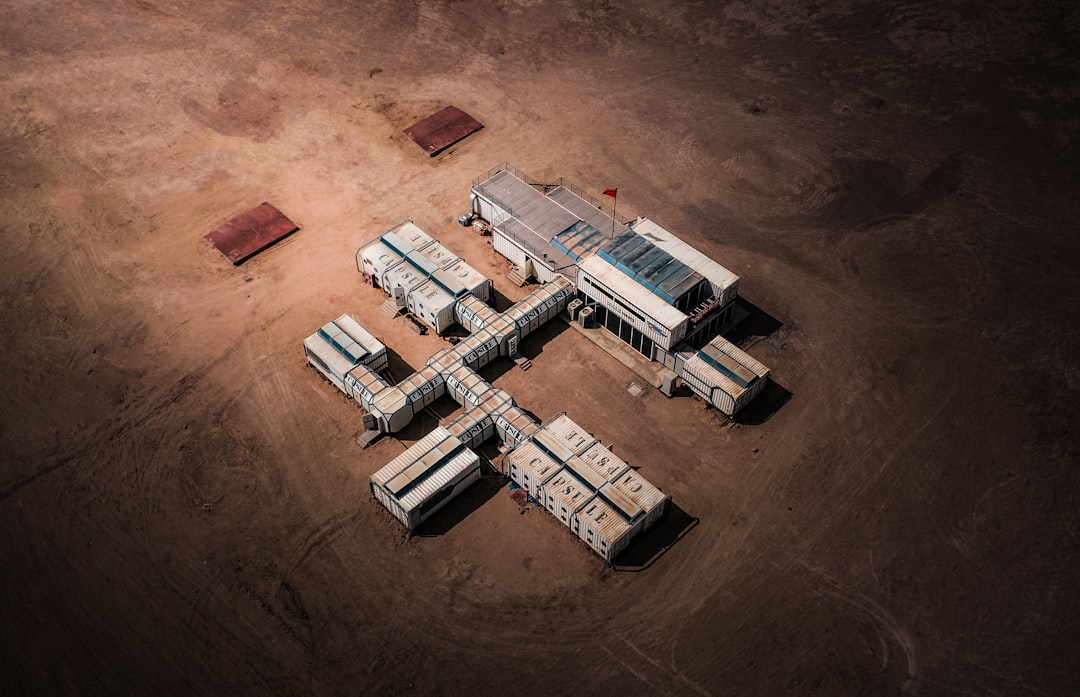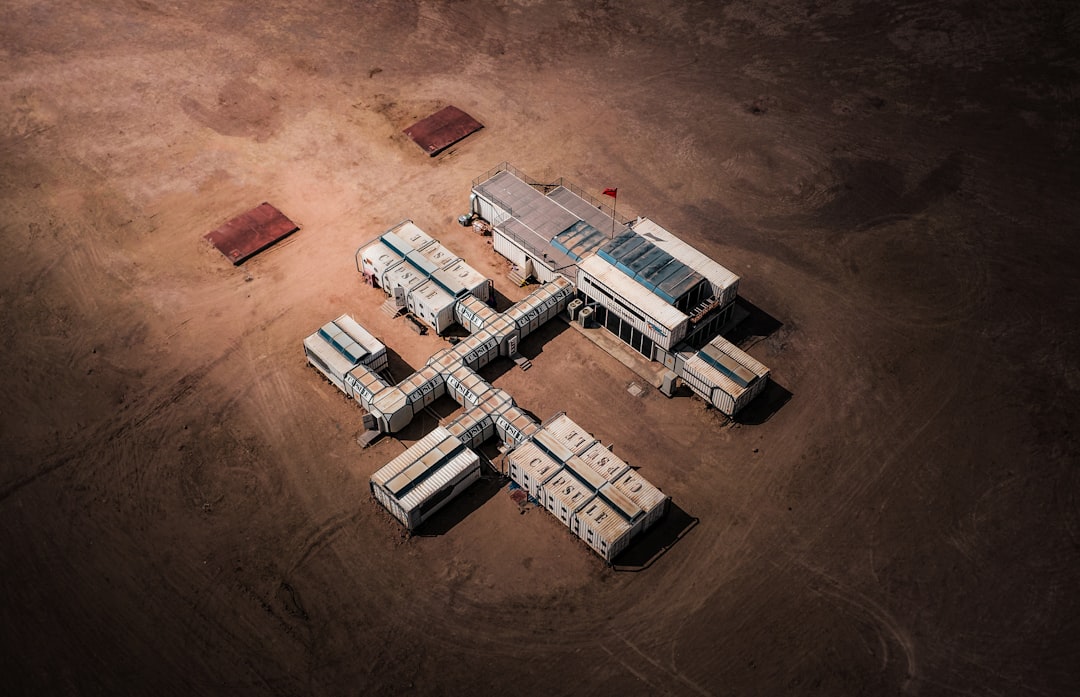
The future of human space exploration is rapidly approaching a transformative milestone: establishing permanent settlements beyond Earth. As NASA's Artemis Program advances toward sustained lunar presence, the Russo-Chinese International Lunar Research Station (ILRS) takes shape, and the European Space Agency's Moon Village concept gains momentum, one critical question looms large: How will we actually construct habitats and infrastructure on the lunar surface? Following NASA Administrator Jared Isaacman's bold commitment to establish a Moon base by the 2030s, researchers at the University of Florida have unveiled a revolutionary manufacturing technique that could fundamentally transform off-world construction—a process they've dubbed "laser origami" for its remarkable ability to shape materials without physical contact or heavy machinery.
This groundbreaking approach leverages concentrated laser forming technology to bend and shape materials ranging from metals to glass, including material derived from lunar regolith itself. Unlike traditional manufacturing that requires massive industrial equipment, molds, and direct mechanical force, this innovative method uses precisely controlled infrared laser beams to heat and manipulate materials into desired configurations. The implications extend far beyond simple construction—this technology represents a paradigm shift in how humanity might establish infrastructure across the solar system, from lunar outposts to Martian settlements and orbital manufacturing facilities.
The Revolutionary Science Behind Laser Forming Technology
At the heart of this innovation lies a sophisticated manufacturing process that fundamentally reimagines how we shape materials. Laser forming, also known as laser-assisted bending, operates on principles of controlled thermal expansion and contraction. When concentrated infrared laser energy strikes a material's surface, it creates localized heating that causes the material to expand. As the laser moves across the surface in carefully programmed patterns, different regions heat and cool at different rates, creating internal stresses that cause the material to bend into precise shapes—all without any physical contact.
Dr. Victoria M. Miller, an associate professor in the Herbert Wertheim College of Engineering and researcher with the UF Astraeus Space Institute, leads the research team that includes Nathan Fripp, Tianchen Wei, and Benjamin A. Begley from the UF Department of Materials Science and Engineering. Their research, published in the paper "Controlling the Pre-bending Delay During Laser Sheet Metal Forming Under Different Atmospheres" in Springer Nature Link, explores how atmospheric conditions affect the laser forming process—a critical consideration for space applications.
The team's DARPA-funded research phase investigated a fundamental challenge: how does the near-vacuum environment of space, or the extremely thin atmosphere of the Moon (approximately one hundred-trillionth the density of Earth's atmosphere), affect laser forming performance? This question is crucial because the heat transfer, cooling rates, and material behavior all change dramatically in different atmospheric conditions. Their findings demonstrate that laser forming remains effective even in lunar-like atmospheric conditions, opening the door to practical space manufacturing applications.
From Lunar Soil to Structural Components: The ISRU Revolution
The research team's experiments with lunar regolith simulant—materials engineered to replicate the chemical and physical properties of actual Moon soil—have yielded remarkable results. By first processing the simulant into glass using established sintering techniques, then applying their laser forming technology, the researchers successfully bent and shaped the lunar glass into functional structural forms. This two-stage process exemplifies the philosophy of In-Situ Resource Utilization (ISRU), a cornerstone strategy for sustainable space exploration.
The advantages of this approach become clear when considering the economics of space transportation. Current launch costs to the Moon range from approximately $50,000 to $100,000 per kilogram, depending on the mission architecture. Transporting prefabricated structures, heavy manufacturing equipment, and construction machinery would consume enormous portions of mission budgets and payload capacity. As Dr. Miller eloquently explained in a UF News release:
"When we build things on Earth, we have machinery. And just massive amounts of machinery and weight and volume are not really constraints when we're doing conventional manufacturing on Earth. If we have to take tools, tools are heavy, and they are big, and it costs a ton of money and a ton of resources just to get stuff into space."
By contrast, laser forming equipment is remarkably compact and lightweight. A laser system capable of forming structural components might weigh only tens of kilograms, compared to the thousands of kilograms required for traditional metalworking machinery. The raw material—lunar regolith—is literally everywhere on the Moon's surface, available in unlimited quantities and requiring no transportation from Earth.
Unprecedented Material Versatility in Extreme Environments
Perhaps the most exciting aspect of this technology is its remarkable versatility across different material types. The UF research team has successfully demonstrated laser forming on an impressive range of substances, from conventional metals and alloys to exotic materials like glass derived from lunar soil. Dr. Miller's enthusiasm about this capability reflects its transformative potential:
"The thing that I'm most excited about is that we can bend basically anything. I haven't found a material that we can't bend yet, even glass."
This material-agnostic capability opens extraordinary possibilities for space manufacturing. Consider the practical applications for lunar base construction:
- Structural frameworks: Forming metal beams and support structures from processed regolith or transported aluminum alloys, creating the skeletal framework for habitats and facilities
- Transparent components: Shaping lunar glass into windows, viewports, and protective barriers that allow natural light while providing radiation shielding
- Specialized equipment: Manufacturing custom tools, replacement parts, and scientific instruments on-demand, eliminating the need to anticipate every possible equipment failure
- Thermal management systems: Creating precisely shaped heat exchangers and thermal radiators optimized for the lunar environment's extreme temperature fluctuations
- Protective shielding: Forming curved panels and protective structures that can be assembled into radiation-resistant shelters
The European Space Agency's successful demonstration of metal 3D printing aboard the International Space Station in 2024 proved that additive manufacturing works in microgravity. The University of Florida's laser forming technology complements these advances by offering a subtractive and formative manufacturing capability that doesn't require feedstock materials beyond what's available locally.
Solving Critical Challenges for Long-Duration Space Missions
Astronauts aboard the International Space Station have long understood a frustrating reality: when equipment breaks in space, you cannot simply order a replacement part. Every tool, every spare component, every backup system must be anticipated, packed, and launched months or years in advance. This constraint creates significant logistical challenges and safety concerns. A critical tool that breaks without a spare can compromise mission objectives or even crew safety.
Laser forming technology addresses this challenge by enabling on-demand manufacturing of tools and components. Imagine an astronaut on the lunar surface who needs a specialized wrench for a repair task. Instead of hoping the right tool was packed, or improvising with inadequate alternatives, they could simply design the tool digitally and manufacture it within hours using laser forming. The same capability applies to replacement parts for life support systems, scientific instruments, or habitat components.
This manufacturing flexibility becomes even more critical for Mars missions, where communication delays of up to 22 minutes each way make real-time Earth support impossible, and resupply missions would take months or years. The ability to manufacture solutions to unforeseen problems using local materials could mean the difference between mission success and catastrophic failure.
Terrestrial Applications: Space Technology Solving Earth Challenges
The benefits of laser forming technology extend well beyond space exploration, embodying the principle that "solving for space solves for Earth." Dr. Miller and her team are already investigating applications in defense manufacturing, but the potential uses span virtually every manufacturing sector. The technology offers several compelling advantages for terrestrial applications:
Sustainable construction: In an era of climate change and resource constraints, laser forming could revolutionize building construction by reducing material waste, eliminating the need for heavy machinery at construction sites, and enabling the use of locally-sourced materials. Imagine construction sites where lightweight laser systems shape structural components from recycled materials or processed local soil, dramatically reducing the carbon footprint of building projects.
Disaster response: In regions affected by natural disasters, where infrastructure is damaged and heavy equipment may be unavailable, portable laser forming systems could enable rapid fabrication of emergency shelters, water purification components, and essential tools using whatever materials are available.
Remote location manufacturing: For communities in isolated regions where transporting heavy machinery is impractical or impossible, laser forming could provide local manufacturing capability, fostering economic development and self-sufficiency.
Flexible production: Manufacturing facilities could adapt quickly to changing product designs without retooling entire production lines, reducing waste and enabling more responsive, customized manufacturing.
The Path Forward: Integration with Artemis and Beyond
As NASA's Artemis Program progresses toward establishing a sustained human presence on the Moon, technologies like laser forming will transition from laboratory demonstrations to operational systems. The timeline aligns well with Administrator Isaacman's commitment to a lunar base by the 2030s, providing sufficient time for technology maturation, space qualification testing, and integration into mission architectures.
The University of Florida's research represents part of a broader ecosystem of space manufacturing innovations. When combined with other technologies—such as 3D printing with regolith, autonomous construction robots, and advanced materials processing—laser forming could contribute to a comprehensive manufacturing capability that makes permanent lunar settlement practical and economically viable.
Dr. Miller's vision captures the collaborative, forward-looking nature of this research:
"I think that this research reflects the direction of space research at UF because it is collaborative and future-looking. Looking at how we can build things on the moon, build things on Mars, and how we can actually make sure that astronauts stay safe and healthy."
The development of laser forming technology also highlights the critical role of university research in advancing space exploration capabilities. While NASA's Space Technology Mission Directorate and other space agencies pursue their own research programs, academic institutions provide essential innovation, train the next generation of space scientists and engineers, and explore unconventional approaches that might not fit within traditional agency programs.
Conclusion: Bending the Future of Space Exploration
The University of Florida's laser forming research represents more than just a clever manufacturing technique—it embodies a fundamental shift in how humanity will establish itself beyond Earth. By enabling the transformation of lunar soil into structural components, tools, and equipment using lightweight, flexible technology, this "laser origami" approach makes permanent space settlement more feasible and sustainable.
As we stand on the threshold of returning to the Moon, this time to stay, innovations like laser forming will prove essential to overcoming the formidable challenges of building in space. The technology's versatility, efficiency, and alignment with ISRU principles position it as a key enabler for the lunar bases, Mars settlements, and orbital facilities that will define humanity's future as a spacefaring civilization.
The journey from laboratory demonstrations to operational lunar manufacturing systems will require continued research, testing, and development. But with each successful experiment, each new material successfully formed, and each problem solved, we move closer to a future where humans don't just visit other worlds—we build on them, manufacture on them, and ultimately, call them home.