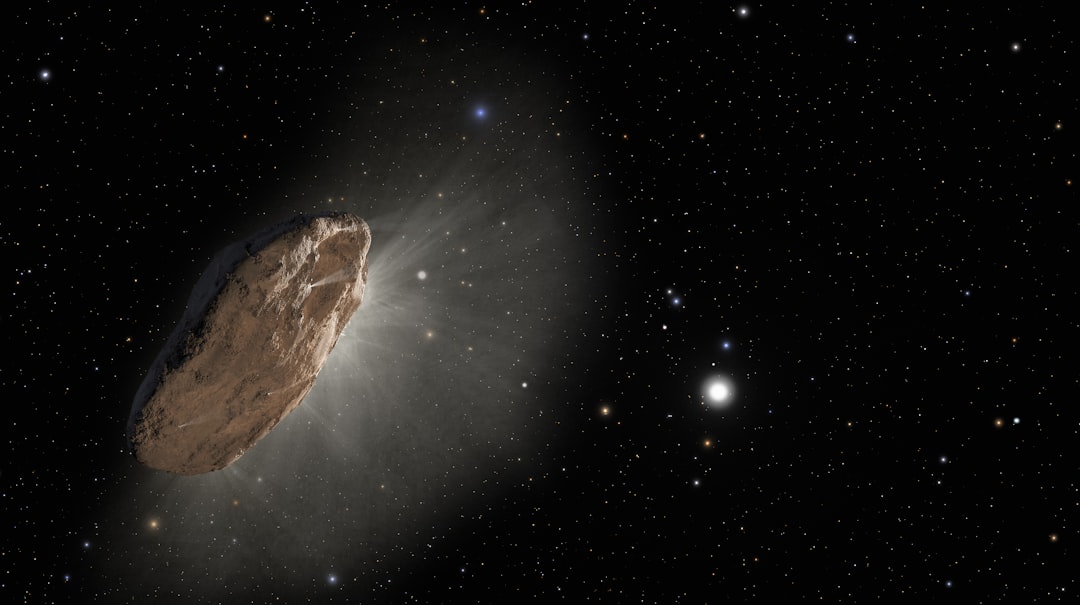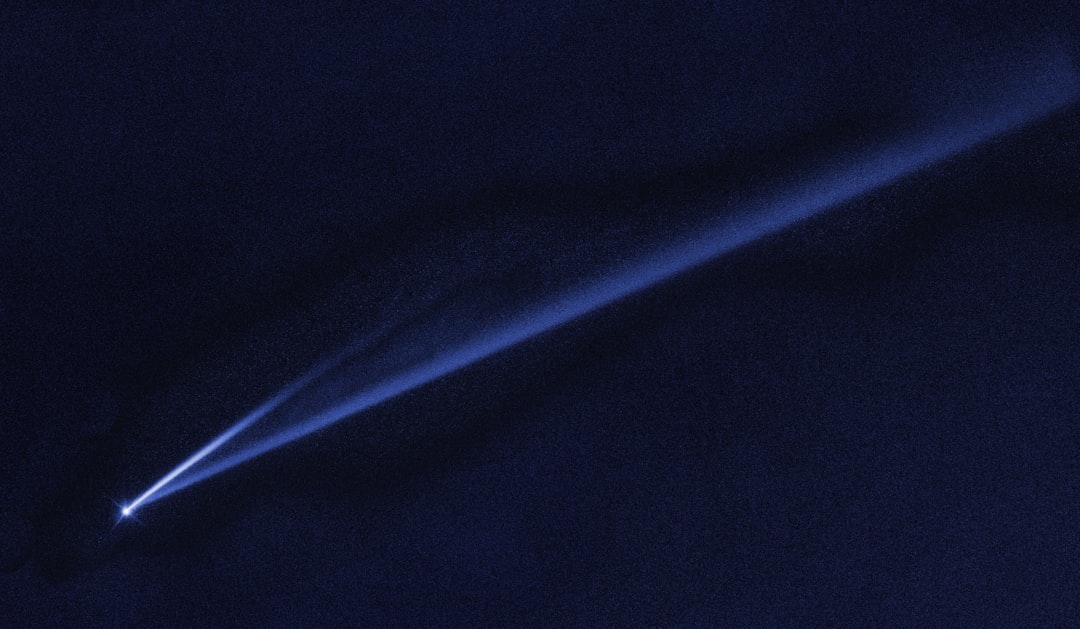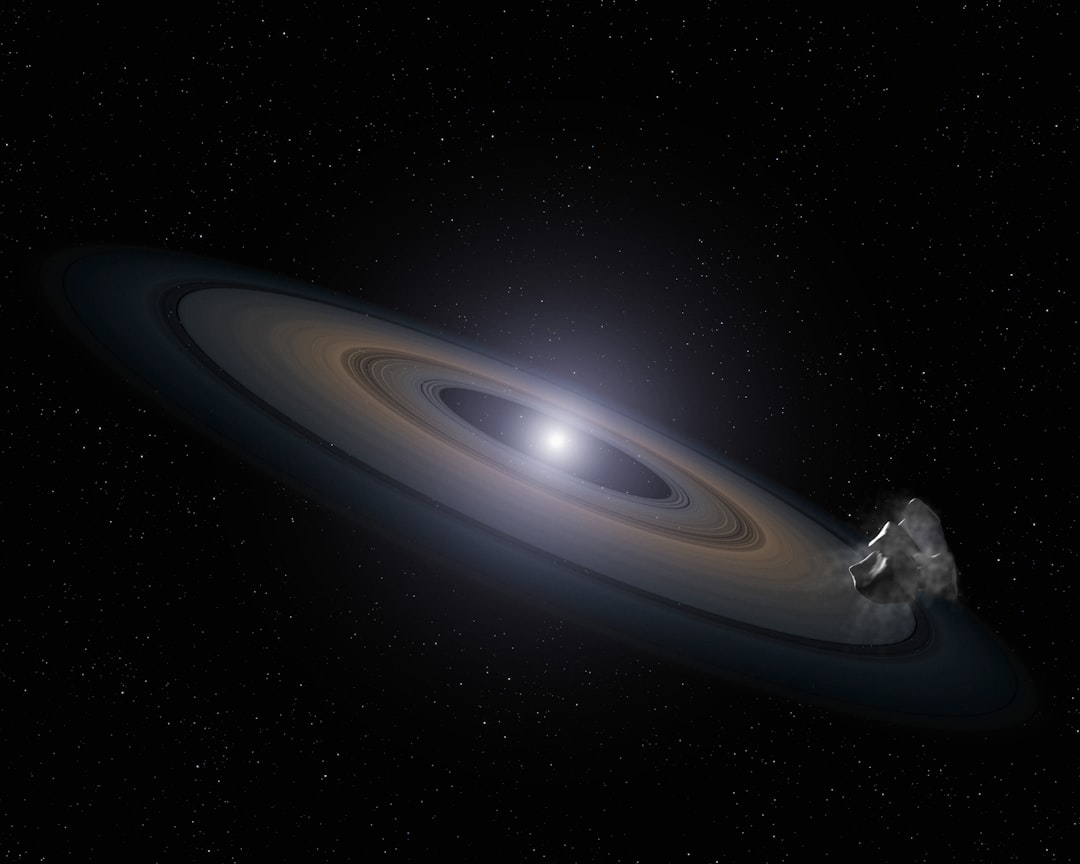
In a groundbreaking experiment that bridges laboratory physics with planetary defense, scientists have uncovered surprising properties of iron-rich asteroids that could revolutionize how we protect Earth from cosmic threats. Using one of the world's most powerful particle accelerators at CERN, researchers subjected an ancient meteorite to conditions mimicking a catastrophic atmospheric entry, revealing that metal-rich space rocks possess remarkable resilience and unexpected energy-absorption capabilities that defy conventional understanding.
The research, published in Nature Communications, addresses a critical gap in our planetary defense knowledge: how do we accurately predict and manipulate the behavior of potentially dangerous asteroids? With over 37,000 known Near-Earth Asteroids (NEAs) catalogued and millions more believed to exist in our cosmic neighborhood, understanding the structural integrity and material properties of these celestial wanderers has never been more urgent. This study specifically examined M-type asteroids—those rich in metallic iron and nickel—which represent approximately 8% of all asteroids in the main belt but have remained poorly understood in terms of their mechanical behavior under extreme stress.
The timing of this research couldn't be more relevant. Following NASA's successful DART mission in 2022, which demonstrated humanity's ability to alter an asteroid's trajectory through kinetic impact, scientists worldwide are racing to refine our understanding of asteroid composition and structural response. The DART mission successfully changed the orbital period of the asteroid moonlet Dimorphos by approximately 33 minutes, but that success raised as many questions as it answered about how different asteroid types might respond to similar interventions.
Revolutionary Testing Methods at the Frontier of Physics
The international research team employed CERN's High Radiation to Materials (HiRadMat) facility, a unique experimental setup originally designed to test materials for particle accelerators but now proving invaluable for planetary science. The researchers selected a sample from the famous Campo del Cielo meteorite, an iron meteorite that fell in Argentina approximately 4,000 to 5,000 years ago. This particular meteorite is composed primarily of iron-nickel alloy with trace amounts of other elements, making it an ideal analog for understanding M-type asteroids.
The experimental protocol was remarkably sophisticated. Scientists bombarded the meteorite sample with 440 GeV proton beams—energy levels that simulate the intense radiation and thermal stress an asteroid experiences during atmospheric entry. To put this in perspective, 440 gigaelectronvolts is roughly 440 times the rest mass energy of a proton, creating conditions of extraordinary violence in a controlled environment. What made this experiment particularly innovative was the use of Doppler vibrometry, an advanced optical technique that measures microscopic surface vibrations without physically touching the sample, allowing researchers to capture real-time data on the material's internal response to stress.
This non-destructive testing approach represents a paradigm shift in meteorite research. Traditional methods often involved breaking samples apart or conducting static compression tests that couldn't capture the dynamic behavior of materials under rapidly changing conditions. As Professor Gianluca Gregori from the University of Oxford's Department of Physics explained:
"Until now, we have relied heavily on simulations and static laboratory tests to understand how asteroid materials behave under impact or radiation. This is the first time we have been able to observe, non-destructively and in real time, how an actual meteorite sample deforms, strengthens, and adapts under extreme conditions."
Unexpected Strength: When Metal Gets Tougher Under Pressure
The results defied conventional materials science predictions in a spectacular fashion. Rather than weakening or fragmenting as expected, the iron meteorite sample demonstrated strain hardening—a phenomenon where the material actually became stronger and more resistant to deformation as stress increased. The meteorite absorbed significantly more energy than theoretical models suggested possible, with the internal structure apparently redistributing stress in ways that enhanced overall structural integrity.
The data revealed that the meteorite's heterogeneous composition—featuring crystals of varying sizes, orientations, and chemical compositions embedded in an iron-nickel matrix—created a complex network of stress pathways. This microstructural complexity acted similarly to modern engineered composites, where different materials work synergistically to distribute and dissipate energy. The researchers observed that as one region of the sample began to deform, stress was transferred to adjacent regions with different crystallographic orientations, effectively spreading the load across the entire structure.
Perhaps most surprisingly, the team found that energy could penetrate deep into the asteroid material without causing catastrophic fragmentation. This discovery contradicts the prevailing assumption that high-energy impacts would necessarily shatter metallic asteroids into smaller pieces. Instead, the internal structure appears capable of absorbing and redistributing enormous amounts of energy while maintaining overall cohesion—a property that has profound implications for both natural atmospheric entry scenarios and deliberate deflection strategies.
Reconciling the Meteorite Strength Paradox
One of the most significant contributions of this research is resolving a long-standing puzzle in planetary science: the meteorite strength paradox. For decades, scientists have noted a troubling discrepancy between two different methods of estimating meteorite strength. Observations of meteorites breaking up in Earth's atmosphere suggested they were relatively fragile, fragmenting at altitudes and speeds that implied low tensile strength. However, laboratory measurements of recovered meteorite samples consistently showed them to be much stronger than atmospheric observations suggested.
This new study provides a compelling explanation for this apparent contradiction. The researchers demonstrated that the internal stress redistribution within meteorites' heterogeneous structures means that surface observations don't accurately reflect the material's true strength. When a meteorite enters the atmosphere, the outer layers may fragment or ablate while the interior remains structurally sound, redistributing stress in ways that aren't captured by simple strength measurements. This finding suggests that previous atmospheric observations may have significantly underestimated the true resilience of metallic asteroids.
Implications for Planetary Defense Strategies
The practical applications of this research for planetary defense are substantial and multifaceted. Current deflection strategies, including kinetic impactors like DART and proposed nuclear standoff explosions, all depend critically on understanding how target asteroids will respond to sudden energy inputs. If metallic asteroids can absorb far more energy than previously believed without fragmenting, this has several important implications:
- Enhanced kinetic impactor effectiveness: Deflection missions could potentially deliver more energy to M-type asteroids without risk of creating dangerous fragments, allowing for more aggressive trajectory modifications when time is limited.
- Refined mission planning: Understanding the true strength of different asteroid types enables more accurate predictions of required impact energies and timing for successful deflection, potentially reducing mission costs and improving success probability.
- Fragment risk assessment: The discovery that metallic asteroids maintain integrity under extreme stress suggests that fragmentation—which could create multiple dangerous objects from a single threat—may be less likely than current models predict for M-type asteroids.
- Deep energy delivery: The ability to transfer energy into an asteroid's interior without surface fragmentation opens possibilities for new deflection techniques that work from within the asteroid's structure rather than merely pushing on its surface.
These findings also have implications for understanding natural impact events. The Center for Near-Earth Object Studies at NASA's Jet Propulsion Laboratory maintains detailed records of atmospheric entry events, and this research may require reinterpretation of historical data, particularly for metallic meteorite falls.
Future Research Directions and Unanswered Questions
While this study represents a major advance, it also opens numerous avenues for future investigation. The research team tested only iron-rich meteorite material, but asteroids come in many compositional varieties. Stony asteroids (S-type), which comprise about 17% of known asteroids, and carbonaceous asteroids (C-type), making up about 75% of known asteroids, may behave very differently under similar conditions. Each asteroid type presents unique challenges and opportunities for deflection strategies.
Additionally, the experiment simulated only one specific energy regime and impact geometry. Real-world asteroid deflection scenarios could involve different approach angles, impact velocities, and energy levels. The European Space Agency's upcoming Hera mission, scheduled to revisit the DART impact site, will provide crucial data on how an actual asteroid responded to kinetic impact, allowing researchers to validate and refine these laboratory findings.
Scientists are also interested in understanding how asteroid size affects these material properties. The Campo del Cielo sample, while representative of metallic asteroid composition, was necessarily small compared to the potentially hazardous asteroids that planetary defense efforts target. Scaling effects—how material behavior changes with object size—remain an important area of investigation. An asteroid hundreds of meters across might exhibit different stress distribution patterns than a hand-sized laboratory sample, though the fundamental material properties should remain consistent.
Building a Comprehensive Asteroid Threat Assessment Framework
This research contributes to a growing body of knowledge that will eventually enable a comprehensive asteroid threat assessment framework. Such a framework would integrate data on asteroid composition, internal structure, orbital dynamics, and material response to various deflection strategies. Organizations like the NASA Planetary Defense Coordination Office are working to synthesize these diverse data streams into actionable deflection plans that could be implemented should a genuine threat emerge.
The ultimate goal is to develop a catalog of asteroid types matched with optimal deflection strategies for each. An iron-rich M-type asteroid might respond best to a high-energy kinetic impactor, while a loosely consolidated C-type asteroid might require a different approach, such as a gravity tractor or sustained low-thrust propulsion. This new understanding of metallic asteroid strength represents one crucial piece of that larger puzzle.
Conclusion: Preparing for an Inevitable Challenge
While no known asteroid currently poses an imminent threat to Earth, the laws of celestial mechanics make future close encounters inevitable. The question is not whether humanity will need to deflect a dangerous asteroid, but when. This research, combining cutting-edge particle physics facilities with planetary science objectives, exemplifies the interdisciplinary approach required to address this existential challenge.
The discovery that iron-rich asteroids possess remarkable resilience and unexpected energy absorption capabilities provides both reassurance and new challenges. On one hand, it suggests that metallic asteroids may be less likely to fragment during deflection attempts, reducing the risk of creating multiple dangerous objects. On the other hand, it indicates that these objects may require more energy to deflect than previously calculated, necessitating more powerful deflection systems or longer warning times.
As our catalog of near-Earth objects continues to grow and our understanding of asteroid properties deepens, humanity's ability to protect itself from cosmic threats steadily improves. This research represents another significant step toward ensuring that when the time comes to defend our planet, we'll have the knowledge and tools necessary to succeed. The combination of missions like DART, laboratory experiments like this CERN study, and ongoing telescopic surveys creates a comprehensive planetary defense capability that previous generations could only imagine.