At this very moment, an invisible cosmic storm is passing through you. Approximately one trillion neutrinos—the universe's most elusive subatomic particles—are streaming through your body every single second. These ethereal messengers of the cosmos penetrate flesh, bone, steel, and even the entire Earth itself as though matter were nothing more than empty space. Their extraordinary ability to pass through ordinary material without interaction has earned them the nickname "ghost particles," and detecting even a single one requires massive underground facilities and extraordinary patience.
Despite their elusiveness, neutrinos represent one of astronomy's most valuable tools for peering into the hidden hearts of stars. When scientists succeed in capturing these phantom particles, they gain direct access to information about the nuclear fusion reactions occurring deep within stellar cores—information that light itself cannot provide. Now, a groundbreaking study from the University of Copenhagen's Niels Bohr Institute has produced the first comprehensive atlas mapping the neutrino emissions from every star in our Milky Way galaxy, revealing precisely where these ghost particles originate and in what quantities they flood through our cosmic neighborhood.
This revolutionary map, detailed in the journal Physical Review D, combines cutting-edge stellar evolution models with unprecedented observational data from the European Space Agency's Gaia telescope to create a detailed picture of our galaxy's neutrino landscape. The findings illuminate which regions of the Milky Way serve as the most prolific neutrino factories and provide researchers with a strategic roadmap for future detection efforts.
The Galactic Center: A Neutrino Powerhouse
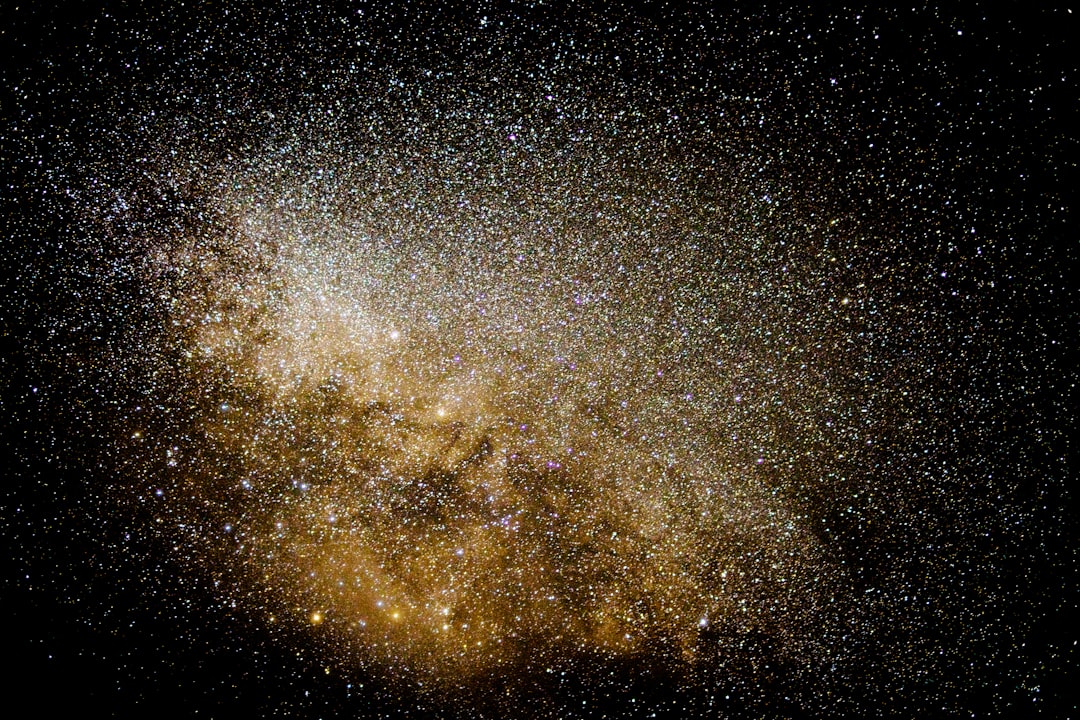
The new atlas reveals a striking pattern: the galactic center dominates neutrino production throughout the Milky Way. This dense stellar metropolis, located approximately 26,000 light-years from Earth, hosts an extraordinary concentration of stars packed into a relatively compact volume. The sheer density of stellar bodies in this region translates directly into an intense neutrino flux streaming outward in all directions.
The research team's analysis demonstrates that massive stars—those comparable to or exceeding our Sun's mass—generate the overwhelming majority of stellar neutrinos. These heavyweight stars burn their nuclear fuel at prodigious rates, with fusion reactions in their cores proceeding far more rapidly than in smaller stellar bodies. Each fusion event that converts hydrogen into helium releases not only energy in the form of photons but also produces neutrinos as byproducts of the nuclear processes.
According to lead author Pablo Martínez-Miravé, a postdoctoral researcher at the Niels Bohr Institute, the mapping reveals crucial details about stellar demographics and neutrino production:
"Now we know more precisely where to look for Galactic neutrinos. The mapping reveals that younger stars heavier than the Sun produce the most neutrinos, with production varying significantly based on stellar age and mass."
This age-mass relationship proves critical for understanding the galactic neutrino budget. Younger, more massive stars exist in a state of furious nuclear burning, racing through their fuel supplies at rates that would exhaust our Sun's reserves in mere millions of years rather than billions. This accelerated fusion translates into correspondingly elevated neutrino emission rates.
Understanding Neutrino Physics and Detection Challenges
To appreciate the significance of this new atlas, one must first understand the extraordinary nature of neutrinos themselves. These particles belong to a class of fundamental particles called leptons, and they come in three distinct varieties or "flavors": electron neutrinos, muon neutrinos, and tau neutrinos. They possess almost no mass—so little that for decades physicists believed them to be massless—and carry no electric charge, making them immune to electromagnetic forces.
The weak nuclear force represents the only fundamental interaction through which neutrinos regularly participate. This force operates only at subatomic distances, meaning neutrinos must approach incredibly close to atomic nuclei to have any chance of interaction. The probability of any given neutrino interacting with matter during its passage through Earth is approximately one in 100 billion—a testament to their ghostly nature.
This extreme elusiveness necessitates extraordinary detection methods. Facilities like the IceCube Neutrino Observatory at the South Pole and Japan's Super-Kamiokande detector employ massive volumes of material—ice or ultra-pure water—instrumented with thousands of sensitive light detectors. These installations wait patiently for the rare moments when a neutrino does interact, producing a cascade of secondary particles that generate telltale flashes of Cherenkov radiation.
Why Stellar Neutrinos Matter for Astrophysics
The value of neutrino astronomy extends far beyond the mere challenge of detection. Neutrinos offer a unique window into stellar interiors that electromagnetic radiation cannot provide. When photons are born in the nuclear furnace at a star's core, they begin an epic journey toward the surface that can take tens of thousands to millions of years. During this migration, photons scatter countless times off electrons and atomic nuclei, their energy gradually degrading from high-energy gamma rays to visible light.
By the time starlight emerges from the photosphere and travels to Earth, it carries information primarily about the star's outer layers and surface conditions. The original information about core conditions has been thoroughly scrambled by the photon's tortuous path through the stellar interior.
Neutrinos, in stark contrast, escape stellar cores almost immediately after their creation. Their weak interaction with matter means they pass through the Sun's entire mass—equivalent to 333,000 Earths—in mere seconds, emerging with their original properties essentially unchanged. When we detect solar neutrinos here on Earth, we receive direct, real-time information about nuclear reactions occurring in the Sun's core right now, not thousands of years ago.
Mapping Methodology and Data Integration
Creating the first complete neutrino atlas of the Milky Way required synthesizing multiple streams of astronomical data and theoretical models. The Copenhagen team built their map on the foundation of Gaia's unprecedented stellar census. This space telescope, launched by ESA in 2013, has measured the positions, distances, and motions of more than 1.8 billion stars with extraordinary precision.
The researchers combined Gaia's observational data with sophisticated stellar evolution models that predict how stars of different masses and ages produce neutrinos. These models incorporate our understanding of nuclear physics, stellar structure, and the various fusion pathways that operate under different temperature and pressure conditions within stellar cores.
The team's analysis revealed several key patterns in galactic neutrino production:
- Spatial Distribution: Neutrino emission concentrates heavily toward the galactic center and spiral arms where star formation actively continues, with the central bulge containing the highest density of neutrino sources per cubic light-year
- Mass Dependence: Stars with masses exceeding 1.5 solar masses contribute disproportionately to the total neutrino flux, despite representing a minority of all stars in the galaxy
- Age Correlation: Stellar populations younger than 100 million years produce neutrinos at rates orders of magnitude higher than ancient stellar populations billions of years old
- Spectral Characteristics: The energy spectrum of galactic neutrinos peaks in ranges that optimize detection probability for current-generation neutrino telescopes
Implications for Neutrino Astronomy and Fundamental Physics
This new atlas provides neutrino observatories with a strategic targeting guide for maximizing detection rates of galactic neutrinos. Rather than surveying the sky uniformly, facilities can now focus their most sensitive observations on regions predicted to produce the strongest signals. The galactic center, certain spiral arm segments, and nearby star-forming regions emerge as priority targets for extended observation campaigns.
Beyond practical detection strategies, the neutrino map enables more sophisticated searches for physics beyond the Standard Model. The Standard Model of particle physics successfully describes the behavior of known particles and forces, but physicists recognize it as incomplete. Neutrinos themselves have already revealed physics beyond the original Standard Model through their ability to oscillate between flavors—a phenomenon that requires them to have mass, contrary to the model's initial predictions.
With a precise prediction of how many neutrinos should arrive from different galactic regions, researchers can search for anomalies that might indicate new physics. If detected neutrino rates or energy spectra deviate from predictions based on standard stellar physics, such discrepancies could point toward exotic phenomena such as sterile neutrinos, neutrino decay, or interactions with dark matter.
Future Directions and Next-Generation Detectors
The Copenhagen team's atlas arrives at an opportune moment in neutrino astronomy's evolution. Several next-generation facilities currently under development or construction will possess unprecedented sensitivity to galactic neutrinos. The proposed Hyper-Kamiokande detector in Japan, with a fiducial volume eight times larger than its predecessor, will dramatically increase detection rates for stellar neutrinos from throughout the galaxy.
Similarly, expansions to IceCube and new facilities like the proposed KM3NeT detector in the Mediterranean Sea will enhance our ability to distinguish neutrinos originating from different galactic regions. These instruments will test the atlas's predictions with unprecedented precision, potentially revealing unexpected features in the galaxy's neutrino landscape.
The research also establishes a framework for time-domain neutrino astronomy. Stellar neutrino emission changes as stars evolve, with dramatic increases occurring during certain evolutionary phases. Supernovae, in particular, release vast floods of neutrinos during their core collapse, and the atlas helps identify regions where such events are most likely to occur based on stellar demographics.
Connecting the Invisible Universe to Observable Phenomena
Perhaps most intriguingly, this neutrino atlas creates new opportunities to study the relationship between visible stellar populations and their invisible neutrino emissions. By correlating neutrino detection rates with observations at other wavelengths—optical, infrared, X-ray, and gamma-ray—astronomers can develop a more complete picture of galactic structure and stellar activity.
The map also has implications for understanding galactic chemical evolution. The massive stars that dominate neutrino production also serve as the primary factories for heavy elements. When these stars explode as supernovae, they scatter newly synthesized elements throughout the galaxy, enriching the interstellar medium from which future generations of stars will form. The neutrino atlas thus provides insight into the ongoing cycle of stellar birth, evolution, and death that continuously reshapes the galaxy's composition.
As we continue to refine our understanding of these ghost particles streaming endlessly through our cosmic neighborhood, each detection brings us closer to answering fundamental questions about stellar physics, particle properties, and the hidden machinery driving galactic evolution. The invisible universe of neutrinos, once beyond our reach, is gradually coming into focus—one phantom particle at a time.